The Younger Wife, page 1
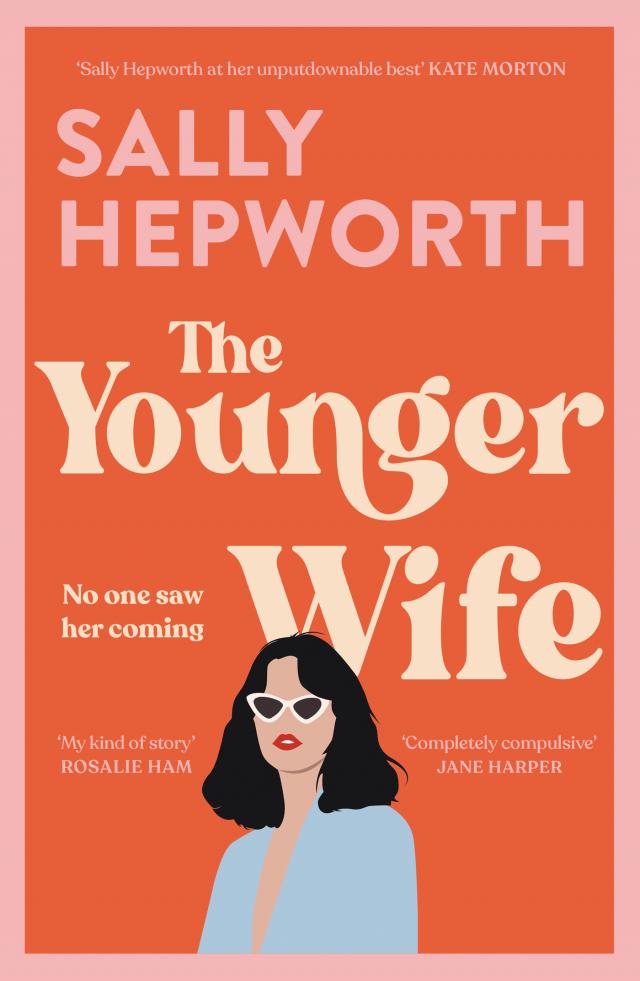


About The Younger Wife
From the New York Times bestselling author of The Good Sister and The Mother-in-Law comes a new novel of family drama and long-buried secrets.
The moment she laid eyes on Heather Wisher, Tully knew this woman was going to destroy their lives.
Tully and Rachel are murderous when they discover their father has a new girlfriend. The fact that Heather is half his age isn’t even the most shocking part. Stephen is still married to their mother, who is in a care facility with end-stage Alzheimer’s disease.
Heather knows she has an uphill battle to win Tully and Rachel over - particularly while carrying the shameful secrets of her past. But, as it turns out, her soon-to-be stepdaughters have secrets of their own.
The announcement of Stephen and Heather’s engagement threatens to set off a family implosion, with old wounds and dark secrets finally being forced to the surface.
A garage full of stolen goods. An old hot-water bottle, stuffed with cash. A blood-soaked wedding. And that’s only the beginning . . .
CONTENTS
Cover
About The Younger Wife
Dedication
Prologue
Chapter 1: Tully
Chapter 2: Rachel
Chapter 3: Heather
Chapter 4: Tully
Chapter 5: Rachel
Chapter 6: Heather
The Wedding
Chapter 7: Tully
Chapter 8: Rachel
Chapter 9: Tully
Chapter 10: Heather
Chapter 11: Tully
Chapter 12: Rachel
Chapter 13: Heather
Chapter 14: Tully
Chapter 15: Rachel
Chapter 16: Heather
The Wedding
Chapter 17: Tully
Chapter 18: Rachel
Chapter 19: Heather
Chapter 20: Rachel
Chapter 21: Tully
Chapter 22: Rachel
Chapter 23: Heather
Chapter 24: Tully
Chapter 25: Rachel
Chapter 26: Heather
Chapter 27: Rachel
Chapter 28: Heather
Chapter 29: Rachel
The Wedding
Chapter 30: Heather
Chapter 31: Tully
Chapter 32: Rachel
Chapter 33: Heather
Chapter 34: Tully
Chapter 35: Rachel
Chapter 36: Heather
Chapter 37: Rachel
Chapter 38: Tully
Chapter 39: Rachel
Chapter 40: Tully
Chapter 41: Rachel
Chapter 42: Heather
Chapter 43: Rachel
Chapter 44: Heather
Chapter 45: Tully
Chapter 46: Heather
Chapter 47: Tully
Chapter 48: Heather
Chapter 49: Rachel
Chapter 50: Heather
Chapter 51: Tully
Chapter 52: Heather
Chapter 53: Tully
Chapter 54: Heather
The Wedding
Chapter 55: Tully
Chapter 56: Rachel
Chapter 57: Heather
Chapter 58: Rachel
Chapter 59: Heather
Chapter 60: Tully
Chapter 61: Rachel
Chapter 62: Tully
Chapter 63: Heather
After the Wedding: Fiona Arthur
Chapter 64: Tully
Chapter 65: Rachel
Chapter 66: Tully
Chapter 67: Heather
Epilogue: Pamela
Acknowledgements
About the Author
Copyright page
For my beloved Great Aunty Gwen,
whose secret hot-water bottle inspired this story.
PROLOGUE
I always cry at weddings. Nothing original there, I know – except, perhaps, the reason. Most people cry out of joy, apparently, or because they’ve been catapulted back to their own wedding day and are overwhelmed by the emotion of it all. I cry because I am sad. Sad for me, sad for the bride, sad for the institution of marriage. Sad enough that it makes me cry. I’m especially sad at this wedding.
When I arrived, half an hour early, the surrounding streets were already jam-packed with shiny black Range Rovers, Mercedes and Porsches. I suppose Stephen Aston’s wedding was always going to be a fancy affair. It’s a warm day and I’m sandwiched into a pew in the non-denominational chapel, surrounded by bunches of freesias, hyacinth and snapdragons. The venue is entirely too small for the number of guests. The altar barely has space for the groom and celebrant! Lord knows where the bride will stand when she decides to show up.
I am seated towards the back and no one pays me any mind. Why would they? I’m a woman of a certain age; for years I’ve been bland and forgettable. People around me – the young, primarily – are always happy to take centre stage. My friend Miriam often laments how we have disappeared now that we are older. No one sees me anymore, Miriam says. (Hello! she shouts aggressively at the deli server who has chosen to serve the pretty young woman in the yoga pants, even though Miriam has been there longer. I suspect Miriam is not as invisible as she believes.)
Stephen is at the front, and it has to be said that, even now, he takes my breath away. He is flanked by two tiny boys in dinner suits – his grandsons, I expect. It’s ridiculous, of course; the little one isn’t much more than a toddler and the other is five, tops. They should be at home napping or playing in the mud, not standing in a chapel! Still, it doesn’t surprise me that Stephen wants this. And the guests, judging by their cooing, think it’s adorable. Stephen’s adult daughters, Rachel and Tully, are bridesmaids, no doubt at their father’s insistence. Their dresses are navy and flatter them both – no mean feat given Tully is as slim as a whippet while Rachel is what my mother used to describe as porcine. Their smiles are painted on, unconvincing, but then who would be pleased to see their father marry a woman young enough to be their sister? And while their mother looks on to boot.
I was shocked to see Pamela here. Guests had exchanged worried looks as she entered on her daughter’s arm, smiling and waving as if arriving at a red-carpet event. I’d wonder why she was invited, if I didn’t know Stephen. Despite what happened, Pamela is family, and to Stephen, family is everything.
The music changes and everyone turns to face the back of the room. The bride is fresh-faced, fake-tanned and strapped into a dress that likely cost more than the deposit for my first home. She is very attractive – slim and brunette and thirty-something. I sneak a look at Stephen. He looks proud as punch, and why wouldn’t he? Stephen may be a handsome man, but if you’re marrying a woman in her thirties when you’re in your early sixties, it has to be said you’re batting above your average.
The bride arrives at the front to find Stephen and his ex-wife standing there, but Stephen, being Stephen, manages to return her to her seat without anything being awkward – a feat that perhaps only Stephen Aston could pull off. With Pamela out of the way, the bride squeezes into the tiny space beside the groom, and the celebrant – a pigeon-shaped woman in a crisp, white pantsuit – invites everyone to be seated. The room is charged with aggressive goodwill – big unnatural smiles, wide eyes, comments about the bride’s dress (which is exquisite). Miriam recently observed that the vast majority of brides resemble the Barbie on a child’s birthday cake in their strapless gowns with skirts large enough to smuggle half-a-dozen leprechauns down the aisle. (Leprechauns, she whispered pointedly at the wedding of her niece last year. At least a dozen.) But not this bride. Heather looks positively elegant in her A-line gown.
As the celebrant starts her spiel, there’s the usual rustling in seats as people shift to get comfortable. A baby cries and is removed by his or her father. A few guests fan themselves with the wedding booklets while simultaneously trying not to touch the person on either side of them (a challenge in the cramped space). Then, just as everyone seems to have settled, Pamela stands again. The energy of the room shifts from aggressive goodwill to scandalised breath-holding as she wanders onto the altar, observing her surroundings casually as if perusing produce at the supermarket. Stephen smiles, dispelling the panic in the room. ‘Carry on,’ he says to the celebrant.
‘I now pronounce you husband and wife,’ she says uncertainly as Pamela charges past them. She appears to be interested in the stained-glass windows. They are quite beautiful. ‘You may kiss the bride.’
The kiss is chaste and imbued with what appears to be genuine affection. When they separate, Stephen, impossibly pleased with himself, gives a little fist pump and the crowd erupts in applause, with a few whistles thrown in for good measure. The noise spooks Pamela, who looks around worriedly. She grabs an ornate brass candlestick, holding it up in front of her like a shield. Stephen beams at the crowd. He’s a newlywed. An ex-wife with Alzheimer’s isn’t going to rain on his parade.
‘Now, if you’ll excuse us for a moment,’ the celebrant says, ‘I’m going to take the bride and groom into the sacristy to sign the register.’
She leads Stephen and his new wife into a room to the side of the altar. The trio is followed by the two little boys, plus Rachel and Tully and Pamela, who is still clutching the candlestick. Will someone take that poor woman home?
With the bridal party out of sight, the guests start chatting among themselves.
‘Wasn’t that lovely?’
‘What a beautiful bride!’
‘Isn’t
‘Couldn’t have happened to a nicer man!’
It seems as good a time as any to take my leave. I gather my handbag and do a quick scan for the nearest exit and I’m about to ask the young man next to me if he can let me by when I hear it. A young woman’s scream and, a fraction of a second later, a dense, meaty thud. I rise at the same time as every other guest. I peer towards the altar, but my view is obscured by large hats and bald heads. I am craning to see through the gaps between the guests when the celebrant reappears. Her face is ashen and her white pantsuit is covered in blood.
1
TULLY
One year earlier . . .
The moment she laid eyes on Heather Wisher, Tully knew this woman was going to destroy their lives. Tully was sitting in the restaurant, fiddling with the salt and pepper shakers, when she walked in, half a pace behind Dad. She looked exactly like Tully had pictured her: doe-eyed, soft-featured, chock-full of cunning. She was Rebecca De Mornay in The Hand That Rocks the Cradle. A wolf in sheep’s clothing. A viper poised to strike.
Game face on, Tully told herself as she rose to her feet and beamed. That’s what Dad had always said to her. Game face on, Tully-girl. Smile, be courteous, keep it together. Don’t let them see any chinks in the ol’ armour. Fall apart later, when you get home. Tully was already looking forward to falling apart. She had it all planned – she was going to lock herself in the bathroom, where she would take a long, hot shower and cry until she slid down the wall, racked with those deep, guttural sobs that you saw in the movies. The catharsis of a shower cry could not be overstated for a woman in her thirties. Recently, Tully had taken to booking them into her schedule ahead of time – to get out in front of them, as it were. It was a form of self-care, really. Like personal training. And botox.
‘Natalie,’ Dad said, when he was close enough. He kissed her cheek. He smelled the same as always: Omo laundry detergent and a hint of toothpaste. No aftershave, no fancy deodorants. Dad had always been old-school in this regard. At least the new woman hadn’t changed that about him. Yet. ‘This,’ he said, glancing back over his shoulder, ‘is Heather.’
Heather smiled carefully. Up until that moment, Tully hadn’t known it was possible to smile carefully, but there it was: the perfect smile for someone in her position. It reminded Tully of the smile you flashed when you bumped into someone you hadn’t seen for a while at a funeral. Rob – it’s fantastic to see you . . . and Beverly, I heard about your new business venture . . . but yes, very sad occasion. It was a lovely service. Careful smile.
Heather looked like a New York fashion editor. She wore an uncreased white shirt with tailored black pants and flat gold sandals, and she carried a Burberry trench over one arm. Her dark hair was centre-parted and tucked behind her ears, her lips were painted a tasteful nude-pink. The most striking thing about her was her youth, which Tully had been warned about, yet still found herself inadequately prepared for. Thirty-four. Three years younger than Tully. One year younger than Rachel. Twenty-nine years younger than Dad. The funny thing was, Mum was six years older than Dad. ‘I like older women,’ he’d said for most of Tully’s life.
‘Nice to meet you, Heather,’ Tully said, offering her a small, strange wave. There was always something a bit awkward about the lack of a handshake. Australia had fared exceptionally well during the COVID-19 pandemic – and since the strict lockdown had been lifted, life had continued more or less as normal, apart from a little more handwashing and a few less people at the footy. Still, some people were nervous about the handshake, and Heather, with her perfectly white shirt, seemed like the classic germophobe who would wave away a handshake and then spray Glen 20 disinfectant on her palm ‘just to be sure’. Like Tully did.
‘It’s lovely to meet you too, Natalie.’
‘Tully,’ she corrected. ‘Only my parents call me Natalie.’
It sounded like a barb, Tully thought. Maybe it was.
‘My apologies,’ Heather said sincerely. ‘Tully.’
Tully had to hand it to her. The woman was bloody faultless! The question was – what was she doing with Dad?
Tully tried to see her father through Heather’s eyes. He had sandy-grey hair – a full head of it, not bad for his age. He was tall and quite athletic. Actually, now she thought of it, he had stepped up the exercise recently. You heard about this kind of thing all the time: middle-aged men taking up marathon running to try to catch the eye of a younger woman. Often they ended up with a sixpack or some biceps before invariably having a heart attack and leaving their formerly penniless younger wives with a sizeable inheritance and the freedom to marry a man their own age. Maybe that explained Heather’s interest in Dad?
As for Dad’s intentions with Heather, it was still unclear. She knew some men liked to have young girlfriends – age-defying, mid-life-crisis sort of men with something to prove, but Dad didn’t have anything to prove. He was a heart surgeon at the top of his field. A scratch golfer. Chairman of the board of Australia Gives Life, a charity that flew patients to Australia from developing countries to have lifesaving surgery. More importantly, he was a self-confessed dork. A man who was perfectly comfortable running outside in his dressing-gown with one last bag of rubbish as the garbage truck approached. The kind who prided himself on being able to estimate the exact amount of milk to froth for Mum’s cappuccino in the morning. A man who resisted mounting pressure to buy an iPad because he didn’t understand what was wrong with a good old-fashioned desktop computer. He was . . . Dad.
‘What a view!’ Dad said, holding his arms out wide to take in Half Moon Bay. It was a beautiful day and the bifold windows were open, letting in a light breeze and offering sweeping views of the sea. There were only four window tables available, and as they were not able to be booked, Tully had arrived an hour and fifteen minutes early to secure one . . . all to impress a woman she already hated. Tully recognised the absurdity of this, but she also understood this was how it had to be. The Astons weren’t the type of family to make a scene. They never spoke ill of each other outside the family circle. They never spoke ill of each other inside the family circle. The Astons did things nicely. Civilly. And a little bit absurdly.
‘You did good, sweetie,’ Dad said, winking at Tully.
Tully knew she’d done good. She may not be running a successful business like Rachel, but she knew how to find a nice restaurant. Lunch would cost a small fortune, but one of the upsides of going out with her father was that he always paid. If Sonny was present, he and Dad would have a polite scuffle over the bill, but Dad always won. Tully wondered if, given what Sonny was calling their ‘new financial situation’, those polite scuffles would soon be a thing of the past.
‘Shall we sit?’ Heather suggested.
Heather’s voice, Tully noticed, was imbued with a solid upper-middle-class accent, prompting Tully to reassess her hypothesis that Heather’s interest in Dad was an attempt to improve her status in life. She could be a gold-digger, but judging by Heather’s Burberry trench, the woman wasn’t hard up. Which left Tully a bit stumped. If not for money or social standing, why would an attractive woman of thirty-four be interested in Dad?
They all sat. Already Tully was exhausted. She’d spent the evening before on two-year-old Miles’s bedroom floor, holding his hand as he got used to his new big-boy bed. She managed to sneak into her own bed around 2 am, before waking again at daybreak for Pilates followed by packing lunchboxes, cleaning for the cleaner and heading to preschool drop-off, where she was bailed up by Miles’s teacher for half an hour to discuss his ‘issues’. This, plus the extra half-hour she spent crying in the car afterwards, made her late for her blow-out appointment – an unnecessary expense that, in light of their new financial situation, would almost certainly cause problems when Sonny saw it on the credit card statement. But it was going to be a tough day for Tully. A day that required her game face and blow-out.
Heather reached for the wine menu. ‘What shall we drink?’
‘Let’s stick to water for now,’ Dad said, taking the wine list from Heather and setting it to the side in a gesture that Tully found curious. ‘At least until Rachel gets here.’
Rachel! Tully had nearly forgotten Rachel was coming. At the sound of her name, she felt a curious jolt of emotion. Relief, mostly. Things were always better when Rachel was here. Which was what sparked the other emotion Tully was feeling: irritation. Why did Rachel always have to be the one to make things better?