Harbinger, page 1
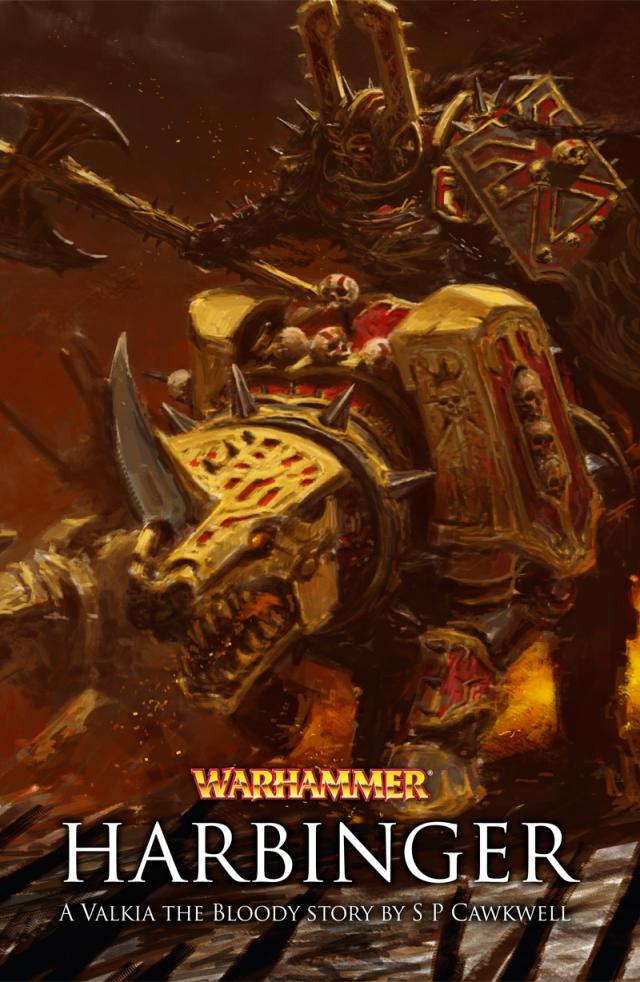


Harbinger
S P Cawkwell
‘Let him call for me. I won’t go.’
Everyone in our village has an opinion of the elder. Me, I know him best as a stubborn old fool who places too much value on his pride and appearance. He’s proud of what we’ve become. From the simple hunter-gatherers we were when he was but a boy, the years have seen us become farmers. Our existence isn’t easy, far from it. The ground does not invite healthy crop growth, and our meat comes mostly from what we find in the woods and the fish that come from the river flowing close by. Not easy, but the way we live is better than some of the more primitive tribes further north.
I have heard tell that a little way to the south is the edge of a great civilisation. Perhaps my children, or theirs, will find that place. It isn’t something likely to happen in my lifetime.
Whatever it is that keeps the elder stubborn, he is fully exerting it right now. He shakes his head when I repeat our visitor’s request to speak with him.
‘No! I won’t be dragged to a stranger’s deathbed. I owe him nothing.’
‘But…’
He places a finger to his lips suggesting that I stop my gentle rebuke. ‘I know. You’re going to tell me he’s dying. Well, that’s his problem. He is a barbarian. Why should I care? Where his kind go, trouble follows in their wake. I will see him when his body is ready for the fire. Not before.’
The elder leans back in the fur-backed chair and folds his arms across his chest. I am angry with him. It is irrational and I do not quite know why. His opinion is right, of course. The crude savages of the mountain tribes have no business bringing their blood thirst amongst my people. But this man is dying and he has asked for the elder again and again. To explain himself. His request is most sincere, of that I have no doubt.
The fire throws flickering shadows onto the wall of the elder’s hut, shadows that twist and writhe without form or shape. I consider him for a while longer. The firelight itself is a symbol of his status and power. None of us have hearth fires in our huts, bar him. I am allowed a cook fire for the brewing of my potions and unguents, but otherwise all food is cooked at the communal pit outside.
The man is older than I am by some fifteen years – no great age difference, but enough that he has outlived his enemies and is considered wiser than any other in the village. Moreover, he is a warrior of our people. I am an aging healer, the one they call Old Mother. Hardly flattering, but accurate enough.
The elder has been our tribe’s leader for ten summers, during which time he has led us to many victories against the endless attacks from the northern tribes. He has led us in opportunistic strikes against them, too. These attacks of retribution have rarely brought us anything but the loss of life. He is getting old now. War no longer sings to him as it once did. His arthritic legs and aching knees no longer carry him to the front of the battle line. His time is short. But it is his time to spend how he will.
Stubborn fool. I press on, driven by an old guilt that gnaws away at me. The guilt that came following the death of a stranger I turned away, many years ago. That lack of compassion brought about one of the most terrible battles between several tribes – including ours – I can ever recall. All because I was young and foolish and said ‘no’ to a man in need. For the rest of my life I have attempted to atone for this sin.
‘Please,’ I say for the fourth time. ‘I beg you. Grant a dying man a final favour.’ Then it hits me. The right way to get his compliance. ‘If we deny him this, how are we any better than he is? Yes, he is a barbarian, but death is the same for all. We should honour his death with as much respect as if he were one of our own. Would you let one of the village pass into the arms of the ancestors without telling their last tale?’
My words strike true. I see a look of guilt flicker in the elder’s eyes. A surge of triumph wells up within my breast as he chews on his lower lip. Even the elder knows better than to question the age-old traditions of our people. He fixes me with a long, thoughtful look and finally says the words I have been waiting to hear.
‘Very well. I will speak with this man. But when he is dead, he is taken to the edge of the village and burned outside our borders. Is that clear, healer?’
‘Crystal clear.’
I keep my expression solemn but the burden in my soul is lightened immeasurably by his agreement to see the barbarian. For two nights and three days the man has lain in my hut, clinging to life with the tenacity of the first flowers of spring. The gash in his chest weeps constantly and yet he has not died. I cannot close the wound. Nothing I do will stop the blood from flowing. I have tried medicinal remedies. I have even tried drawing the wound closed with catgut, but it bursts anew every time.
His skin is clammy: white and pale as a ghost. Until I encountered him, I had no idea that a man could suffer so much and yet not die. Such a tenacity in clinging to a shattered existence is a thing that lies far beyond my ken. His desperation to speak to the elder, before he is taken by whatever savage gods he worships, is curiously admirable.
I lead the elder to the hut where I work my craft. I have almost as high a standing amongst the villagers as he does and I am never ungrateful for the status it brings me. I was born with a gift – a natural understanding of the medicinal properties of herbs and plants. It has brought health and a god-blessed longevity to our people, a strong, hardy folk. We reach the hut and my hand hesitates on the door.
‘Prepare yourself,’ I warn the elder. ‘What you are about to see isn’t pleasant.’ He steels himself, though a lifetime of struggle and war has already shown him many ways a man might perish. He nods, a curt, anxious gesture. I open the door and the stench of death instantly reaches out with its acrid, coppery fingers to draw us in.
The air is tainted with the stink of putrefying flesh. I have treated the wound over and over, but infection is still taking hold. Combined with the man’s natural reek, that of a born warrior to whom bathing has always been anathema, the air within this room is a miasmic haze of vileness. The elder gags and makes no effort to hide it. I have gotten used to the smell over the past day or so. Without a word, I hand him a pungent bag, filled with a variety of herbs, strung onto a piece of cord. He places it over his head and brings the linen pouch to his nose, inhaling the clean scent deeply. It dispels the worst of the aroma.
Our ‘guest’ lies on the floor, a sheet loosely covering his body. My well-trained eyes note that the blood has seeped through the fabric again causing it to stick to his skin. He is a savage in every sense of the word. When he arrived, he was naked from the waist up so I have left him that way. The muscles of his torso are tightly knotted and the swarthy flesh that is exposed by the sheet bears primitive tattoos – symbology of some kind. His hair, blond and long, is tangled and matted, and the face, broad and brutish – at least what I can make out of it beneath the matted beard – is contorted with the terrible pain of his injury.
‘I am here,’ says the elder between sniffs of the scented pouch. ‘Speak to me.’
The warrior turns his head with agonised slowness towards the sound of the elder’s voice. A slow smile changes the aspect of his face in a remarkable way. I pick up the bowl of water that stands atop a table and move towards him. With gentle care, I peel back the sheet from the terrible rent in his torso, a blow that should have killed him outright.
‘This is our village elder,’ I say in my best soothing tone as I begin for the thousandth time to cleanse the stinking wound. ‘I promised you I would bring him to you. And here he is.’
The man says something to me in his guttural native tongue and I shake my head. ‘I cannot understand you. Speak as you did before. In the common tongue.’ The elder looks at me sharply and I know what he is thinking. Although some of the northern tribes have migrated south and become entirely more civilised, we have a shared ancestry that can never be denied. As such, there is a core of language in which every tribal dialect is firmly rooted. For people like the village elder, an old man who remembers harder times, the cant is a painful reminder of what we once were.
When he finally speaks, he does so with great difficulty. The shapes of the unfamiliar sounds do not come easily to him and what little strength remains within him is focused on keeping him breathing. But slowly, agonisingly so, the tale begins to shape. The light is seeping out of the day, what is left of the sun sinking below the trees. He captivates us with his words and I am reminded of the Skalds, preserving the history of the tribes in stories passed down from one generation to the next. He paints such a vivid picture that it is as clear to us as if we stood at his side, watching the series of catastrophic events unfold. In the grand theatre of our mind’s eye, we relive the warrior’s tale.
The warriors were weary as they trod the long road home. The campaign had been hard-fought, but they returned triumphant. They did not return without loss, either, for they bore the bodies of the victorious dead on makeshift litters that they carried through the ever-thickening forests that would lead them ultimately to their families. When they got there, there would be long and complicated rituals for the dead and the fallen. There would be shorter, but no less complex, rituals for the victorious living. There would be much feasting and celebration, and there would be stories.
Little wonder it was, then, that the war band moved with increasing spring in its step.
The trophies of battle were carried with reverence by some of the younger warriors. Those for whom this had been the first foray into the lif e that was the clan’s lot. The need to protect and defend what was theirs from those who tried to take it. For those trespassers, there was no quarter given.
A beast of a man walked at the head of the returning army. Powerful shoulders and a thickly muscled torso strained at the remains of a tunic that had once covered him. His face was a dark mass of whorls: tattoos that held important symbolism to his people and some that held important symbolism to him personally. Dedications to the tribe’s gods, to their elders, to their history… all of them created a mass of dark colour that left him with a threatening aspect. He was followed by those who lauded his extraordinary demonstrations of heroic bravery. Songs would do no justice to his acts of courage and bravery, but already verses were forming in the heads of those who were musically inclined.
Yes, the fight had been long and arduous, but it was over now. A great cry went up from the front of the trudging party as the first home fires were spotted curling about the tree line. The welcoming scents beckoned them forward and a certain urgency hastened their steps.
Home.
It was not much to look at. A few rickety wooden huts, accompanied by a larger number of tents and lean-to structures. A small corral off to one side housed what little livestock the villagers managed – a few goats for milk and several chickens who squawked and scattered all across the settlement. There were not many people there to greet them. Most had been present for the battle. Only the very youngest and most elderly as well as women who had been deemed too important to lose to the enemy had remained.
As they came closer, the group allowed their leader to step across the threshold of the clan’s village. He was greeted by four men whose faces were hidden behind elaborately decorated wooden masks. Each bore a unique design, and somewhere on the face of the warrior at the head of the army, the twin could be found amongst his many tattoos. One, wearing a mask that was painted to represent a stylised skull, stepped forward.
‘Step no further. Speak now to us. Speak to the Godtouched. Is the day won?’
‘The day is won,’ replied the army’s leader, the people’s champion. He dropped first to one knee and then the other before prostrating himself fully at the feet of the four, lowering his face until his nose touched the ground. When he spoke again, it was muffled by the earth at the feet of the Godtouched. ‘The day is won. Victory belongs to our people. All hail the return of Edred.’
‘You led them to this victory,’ said the man in a bird-like mask. ‘Rise up now, Edred. Rise up and receive the honours due.’ He put out a gnarled hand to the prone warrior, noting the fresh scars that his body carried, clearly visible through the hacked and mangled remnants of his leather tunic. Edred slowly raised his head and then accepted the hand of the elder, rising to his feet and being borne aloft on the soaring call of his name as the tribe demanded tales of the battle and enemies vanquished. ‘The honour of the War Leader is yours. It is well-earned.’
The warriors poured into the village with enthusiasm after the ritual of return had been observed – greeted with joy by those they had left behind and sorrow by those to who they brought the news of ultimate demise. But such sorrow could not last in the wake of tales of a great enemy vanquished by the people. Edred sought his mate in the crowd, but struggled to spot her amidst the throng. His three children, all boys, had been too young to bear blades this time. But next time…
His name was called over and over, a wave of adulation that was the sweetest sound he had ever heard. His pride swelled almost to bursting and for a fleeting moment, he allowed himself the luxury of ego.
Edred! Edred! Edred!
Two syllables repeated over and over, the sounds overlapping until his name was completely indistinguishable. He was forcibly raised onto the shoulders of the warriors, who had deposited the bodies of the fallen into the care of the women, and carried to the central ritual circle. Jostled uncomfortably, he did not object. All eyes were on him.
They worship me. The knowledge was stirring a passion within his breast: a lust for life and battle superheated his blood until he felt he could not contain the sheer exuberance any longer. Edred threw back his head, letting loose a bestial and feral roar of celebration. Let them worship him. He was divine. Thoughts of his family fled from his mind as he bathed in the adulation of his people.
They were still chanting his name over and over, and he soaked it up with the thirst of a dying man drinking a last cup of mead. He relished this moment with the same hunger that had driven him to the position of War Leader over the past years. From boy to man, Edred’s history was paved with the corpses of his many victims. Fearless on the battlefield, bold and cunning with his strategies, he had led his people to victory after victory. He glanced briefly across the head of the throng that surrounded him. Beyond their packed bodies, he saw three of the older women of the village engaged in the practice of anointing the fallen with sweet-smelling oil, painting three circles onto the faces of the dead so that they would be welcomed by the lords beyond into eternity. When the task was complete, the Godtouched who spoke for the Lord of Death would oversee the burying of their bodies at the totem in the east of the village.
Caterwauling shouts came from the press of bodies – a call for a re-telling of the story. But there were things that had yet to be attended to. The presentation of the trophy. The head of the leader of the enemy army. Edred laid a hand on the cloth sack slung over his shoulder. The bottom was soaked with dark blood, crusted from the return journey, but he opened it and reached in. He held up his other hand, trying to bring the people to silence. Gradually, the howling and cheering began to ebb, like the tide washing back from the shore until an eerie silence descended.
‘My people,’ said Edred, and he had no need to raise his voice. They hung on his every word. He welcomed it. He hungered for it. This was what it was, he thought, to be great. I am strong. I am invincible. His eyes raked across everything: the buildings, the ritual wailings of the Godtouched at the Lord’s totem, the people who gazed at him with total adoration. ‘My people. Our enemy is defeated! The foes who strove to rob us of our land are meat for the crows and we emerge as the victors! The years of suffering at their hands are ended. The future is ours!’
The silence was shattered by a fresh round of screaming delight. Edred held up his hand again and once more a shroud of peace settled gradually over their shoulders. They held onto every word he uttered, spellbound by each syllable, and he basked in their adulation. Why not drag it out just that little longer? His fingers closed around the blood-matted hair of the disembodied head within the sack.
‘With each hour, the battle grew fiercer,’ he said keeping his voice low enough that the people had to strain to hear him speak. ‘For all the hatred we bear for our enemies, they fight as well as the Headsman’s own. We lost many fine warriors to the kiss of their axes and the cowardly shots from their bows. But we would not be denied. We fought our way through their front line and when their shield wall broke, we went among them as wolves among sheep.’ A slow smile spread across his bloodstained and dirty face.
Edred was considered a handsome man amongst his people. To those outside the tribe, he was one step removed from a feral beast. The tattoos and facial hair coupled with his vast size made him seem more animal than man. His face had, over the course of the last few days of battle, picked up fresh scars, and matted gore had dried in his sandy, blond beard and long, plaited hair. His face and body became animated as he told the tale, his hands expressive, his voice low and filled with the drama of recollection.
‘The mountains have been their lands forever, but we broke them upon their slopes. We pulled them from their holes and towers and set fires in their caves. They hid like cowards behind their walls, but we would not be denied. We broke their shields. We broke their gates.’ His hands curled into fists and he beat them against his chest. Elsewhere in the crowd, the steady rhythm was picked up and accompanied the remainder of his tale.
‘We fought to get into their long-hall for hours and still the stubborn bastards refused to die. Say what you will of our enemy, they knew how to cling to life. But it did not last. We slaughtered the warriors at their door and crossed the threshold. We found their leader hiding behind more of his warriors, too fearful to join them on the front line. His death was a truly glorious thing. Much blood was spilled as he watched, impotent and useless. He was old. Past his time. We killed his men. We gathered up his treasures. When I took my sword to him…’ He patted the hilt of the vast weapon that he wore strapped to his back. ‘With a single stroke, we took his head as well!’