Boleyn Traitor, page 38
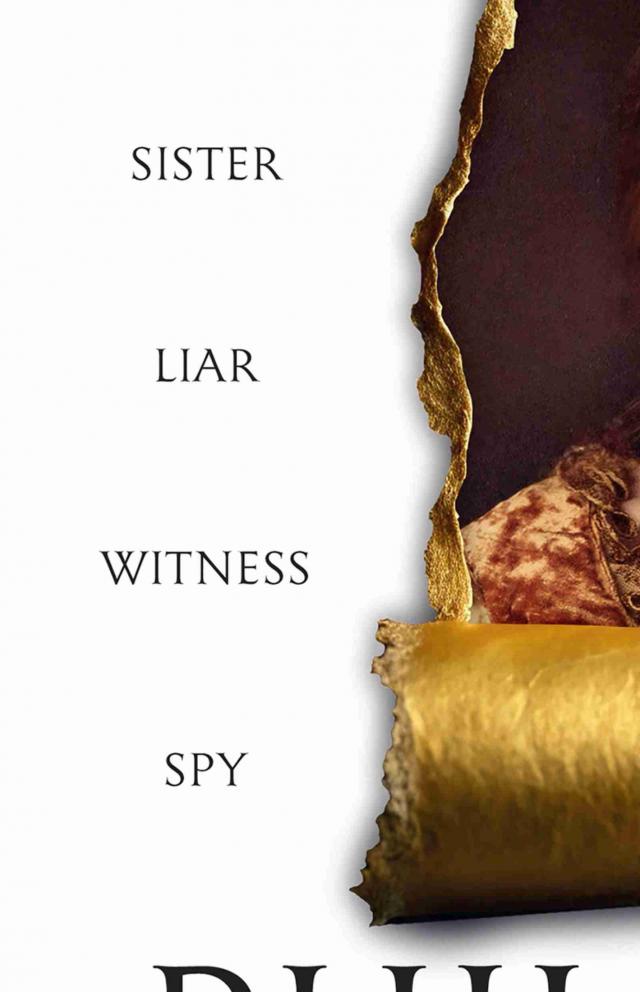


Lady Elizabeth is presented to her father and has a poem to recite which she has translated from Latin. The king shows little interest in her, though she tries hard to gain his attention. I watch her dark eyes flick from him to Kitty, as she takes the measure of this new stepmother.
‘My little kinswoman!’ Kitty coos, stretching out her arms, and the seven-year-old girl curtseys and steps forward for a kiss, as if she does not much value the Howard connection or put much faith in a third stepmother.
Lady Mary is also visiting the royal nursery, and although Kitty makes a gallant attempt to be charming – the young woman is too experienced a courtier to show anything but false respectful affection. We meet in what were once Lady Mary’s own rooms in a wealthy devout abbey, ruled by the king and queen, her mother and father. Not by a flicker of expression does she indicate that this rich centre of holiness is now an echoing shell, shrill with worldly ambition, where she visits occasionally, as an unwelcome guest.
‘And where is Master Culpeper?’ Kitty asks me, with an air of complete indifference. ‘He wasn’t at dinner last night?’
One of the pages of the king’s chamber tells me that Master Culpeper is in bed.
‘Ill?’ Kitty asks the young man. ‘Seriously ill?’
‘Ill or injured, Your Grace. I just know he’s taken to his bed.’
‘Oh, send to his rooms and find out, Jane. Has he had a fall from his horse, or – God save him – an illness? Do find out if he has a fever – or – Jane, ask them if it is the Sweat?’
‘I can’t. It looks odd.’
‘It looks like nothing,’ she says impatiently. ‘Send one of your maids to ask. There’s no reason that you should not ask how he is? Or I’ll send Catherine Tilney.’
‘Don’t send her!’ I exclaim. It’s better that I’m seen chasing after Master Culpeper than Catherine Tilney.
My maid comes back with the news that Master Culpeper is hot with a fever but expects to be well within the week.
Kitty sends one of the good dishes from her dinner table to the king’s favourite. It’s a gracious gesture, and nobody notices. Only I know that Master Culpeper – however ill – will laugh and take the dish as proof that I told Kitty that he was in love with her on the very day that he told me.
He sends a note to thank for the dish, and she replies to him. They make me their go-between, forgetting that in courtly love stories, there are two messengers – of two different natures: Honte, the prude who will prevent love and betray the lovers, and Venus, who helps them. But I am neither of these: I have no interest in helping a flirtation, and I would never betray Kitty. She trusts me as she trusts no one else. Every secret she tells is an extra thread to bind us. Like Francis Dereham, lounging around at Norfolk House, because of her girlhood indiscretions, I will be at her side, on her pay, and eating her bouche at her dining table, as long as I want. My future depends upon her being the greatest woman in the next reign: dowager queen, on the council of regency.
Far more powerful than Honte, far more than Venus, I am the watchman, the nightwatchman. I use the spy skills I learned from Thomas Cromwell to open, read, and reseal every note that passes between Kitty and Culpeper – banalities about the weather and the dances that Kitty would prefer. I know everything that happens, and I work in darkness. It’s not hard for me to be completely discreet, to tell no one. Now that my spymaster is dead, I have no one to tell.
I THINK OF HIM – my friend, my only friend, Thomas Cromwell – at the end of May when his old enemy Lady Margaret Pole, the matriarch of the Spanish party and of the Papist family Pole, is finally released from her long, unjust imprisonment – not to freedom – which God knows she deserves; but to her death. The king, nagged by his conscience for keeping an innocent kinswoman in prison, relieves himself by having her beheaded. She goes to her death for no reason but the king’s peace of mind.
It is a shock for me to realise that this is truly what has happened. This is the act of the king, the king himself: his free choice and his independent act. This is not a decision made by one of the many advisors that have guided him through his life: his grandmother, Queen Katherine, Cardinal Wolsey, Queen Anne, my uncle, or Thomas Cromwell. His advisors have always been blamed for past cruelties. I have blamed them myself. But this is his decision, his own: taken freely at a time of peace. Margaret Pole never raised a finger against her cousin the king. She never admitted guilt: not under torture, not even on the scaffold. She fought for her good name and her life until the last moment of it, demanding why should she walk to Tower Green, resisting the guards, even running away from the headsman’s raised axe. She was a woman of nearly seventy, the king’s mother’s dearest friend, and he killed her without cause, without pity.
This is a revelation to me. As a courtier, I have thought of the king as a creature to be steered and managed and controlled – a creature that can be petted into docility or tempted into a new direction. All courtiers think like this. But now, for the first time I know different.
Nobody put the idea of killing Lady Margaret into the king’s head; nobody persuaded him against his conscience. It was in no one’s interest that she die; no one gained a position or earned a fortune at her death. It was a redundant death, a pointless death. This is not how a courtier thinks; this is not what an advisor plans; this is not what a good king orders. No person of any sense would have ordered the death of Margaret Pole. No one of any honour would have imagined it. It is madness, it is madman-thinking. Death on a madman’s say-so, death as his mad choice, death only to show that he can cause death. Death as a comfort to him, to ease his mad mind.
The madman who decided this is the madman who rules us now without warders. All his advisors are dead, and they were all killed by him: men who he loved deeply, like Thomas More; men who were indispensable, like Thomas Cromwell; his spiritual father Bishop Fisher; the woman he adored, my sister-in-law Anne; my husband; their friends. The king kills those closest to him, because he cannot bear to need them. He cannot bear that they are wiser or better or even more beautiful than him. He loves them at first, calling them to his side to make himself shine, and then he cannot tolerate that they eclipse him. That, he cannot bear. The headsman is so overworked that he had to send out an apprentice who had not learned his trade to behead Margaret Pole. He hacks her to death in clumsy swipes as she screams defiance.
We dine in the great hall that evening, and after dinner, there is music and dancing. My smile is falser than ever before; there is a new joyless lightness in my voice. I have been afraid at court, constantly spying on the way that power moves from one lord or another, the rise and fall of one man or another, the favouring of one woman over another. I have been alert to the comings and goings of dozens of people. But now, I realise that it was all a waste of study. The court is an illusion of power, just as it is an illusion of happiness. There is no happiness at court, and there is no power here either. It is all the king’s. Power has always been in the hands of the king, and those of us who thought we were steering him or controlling him are victims in waiting. Only the king is in power: only he is happy; only he is unhappy. The rest of us are all pretending, and it does not matter what we feel.
There is no one left who dares to quarrel with him. There is no one who dares to contradict him. No one would ever suggest that he is wrong. We have guided his steps with our eyes on the path for so long that we have lost our way; only he is looking up and around. Only he has a destination in view. We have agreed to insane laws and now we find ourselves in a legal tyranny. We have winked at manic cruelty, and now we close our eyes in fear. We thought that we were steering a galloping horse, but we are tangled in the reins and being dragged to our deaths. We have birthed and dandled and fed a tyrant, and now we do not even mourn when our monstrous baby kills a woman that he once called the ‘finest in England’.
She was a princess of the House of Plantagenet, the daughter of the Duke of Clarence, the greatest friend to the king’s mother, advisor to his wife. She taught Lady Mary, Lady Margaret Douglas and me in the royal schoolroom, with the care that she lavished on her sons and daughter. We hear the news that she is dead without a break in our laughter, and the three of us, her beloved pupils, dance after dinner.
On Progress, Summer
1541
WE DON’T LEAVE on progress until the end of June, and there are times when it seems impossible that we can ever start. Thousands of horses, an army with all the equipment ready for warfare, will march north with us. All the household furniture and goods – carpets, tapestries and furniture – will lumber behind us in a baggage train which will clog the roads for miles arriving hours after we get to our destination.
Lady Mary joins us with her household, servants, guards, and ladies-in-waiting. The surveyor of the king’s buildings goes ahead of us to inspect and repair royal palaces at every stop, but he finds so much neglect and damage that he has no time to make good. We are bogged down in the muddy roads half an hour after leaving and have to give up on the journey for another week.
Kitty cries and says she is too ill to ride. She will not get up in the morning; her childish energy as a maid-of-honour has drained from her now she is the wife of the king. She has a pain in her belly, in her groin. She says she cannot sit on a horse nor lie in the mule litter. She swears she cannot go. The rain falls constantly, and they say on the North Road that there are puddles of standing water deeper than a man, and travellers drown when night falls.
We are staging a moving spectacle of power and authority, but when the wagons are stuck in the mud and the horses cannot get past, we betray ourselves. The people see we cannot even manage a simple journey. Our court is supposed to be a masque of infallible power and beauty, triumphing over distance and weather, weakness and old age. But here we are: stuck on a muddy road, trying to move an old angry man from one shabby palace to another.
Enraged at the delay, the king blames every parish for failing to maintain their roads, which are flooded by the early summer storms. He says – again and again – that nobody looks after details since Cromwell was taken from him and that people who don’t help themselves can drown in their own puddles. The common people reply – in whispered songs and hidden poems – that God has cursed England with a king who has become a mouldwarp: an underground, underworld king, bringing death to his people under a sky that rains down tears of grief while he is dry-eyed.
We travel no more than eight miles that first day, and lodge in Dunstable priory, speedily adapted from a great house of religion into a royal palace with adjoining king’s and queen’s rooms. We pray every morning in the chapel where the king’s first marriage was annulled, but nobody remembers this; except the daughter who was bastardised on that day. Lady Mary exchanges a brief look with me as I walk into the church behind her, and I think: no wonder they say you are in constant pain – every time you visit a chapel or a palace, it must be an anniversary of loss. In a court that prides itself on forgetfulness, it feels as if only Lady Mary and I have survived five queens and remember every one of them.
Finally, the weather clears, and we can ride with our hoods down and look about us. Kitty has a new riding gown and matching jacket and her aches disappear. We go hunting and rein our horses in so that the king can get in front with the hounds and claim it is his arrow that brings down a great stag and two bucks. We cannot store or carry meat, so that evening, we dine well on venison at the long tables where the monks used to fast, and the king orders the spare joints taken to the Lord Mayor of London with the compliments of his sovereign.
After dinner, the great hall is cleared, the musicians play for dancing. The king orders Kitty to dance with her ladies, and she takes the centre of the floor. She is eating well again; I think she can tolerate the king’s visits to her bedroom if he is not raging or coldly furious. When he has a good day – like today – she does not dread his company; when she has the court around her, she can face him.
She takes me by the hand, and I feel a folded note. ‘Get it to him,’ she whispers as the king waves the men forward to dance with the ladies, and Thomas Culpeper bows before me and takes me to lead the forming columns of dancers.
‘Her Grace is happy tonight,’ Thomas Culpeper observes, with a smile at me. ‘Are you happy, dear Lady Rochford?’
‘The queen’s happiness is my own,’ I observe primly.
‘And do you love where she loves?’ he teases me.
‘Of course – we all love the king,’ I say repressively, and I slide the note into his hand as the dance takes me away from him to another partner.
SLOWLY, THE LUMBERING baggage train and army of guards wind their way northwards. We rest for a few days at the home of the king’s grandmother, Margaret Beaufort, where the king becomes maudlin with grief and speaks of her devotion, without observing that he has destroyed her church. I think that he can only love people who have died. Only then is he released from envious comparing.
From Collyweston Palace, we go to stay with Catherine Brandon in her castle of Grimsthorpe. Of course, it is her husband the duke’s castle now. The duke is excited to show off the prize he has won; but he is careful how much he boasts: this is a king capable of taking his host’s property as a forced gift. Brandon has learned the courtier’s trick of boasting with humility.
Catherine Brandon welcomes us into her castle. Everything is very fine and rebuilt with her money. As the maids make the rooms ready for the queen, I go to my own bedchamber. At once, Catherine Tilney taps on the door and says the queen wants to know if I have got the thing, a special thing that she wants. Tilney is bubbling with laughter, and I guess that Kitty has told her she is passing notes to Culpeper. The girl is bound in loyalty to the queen as a kinswoman and a fellow boarder at the dowager duchess’ house at Lambeth; but Kitty is foolish to be indiscreet, especially with our uncle the Duke of Norfolk expected at any moment.
‘Oh God, spare me my uncle!’ Kitty says, although there are several courtiers in earshot.
‘Amen,’ Catherine Brandon whispers.
Thomas Howard arrives in a sour mood, to a scant welcome from the king, who is distracted by Charles Brandon and flirting with the young duchess.
‘You all seem very merry,’ my uncle says irritably when we meet in the queen’s rooms before dinner.
‘Yes, my lord,’ I say pleasantly. ‘Their Majesties are enjoying the progress.’
‘And is he …’ He need say no more. It is the only thing he ever asks me.
‘Yes, my lord, as I say. We are enjoying the progress.’
He wants to know more; he wants guarantees that a man who everyone thought would die in Lent will have a son by next May.
‘It is God’s will,’ I say repressively.
He puts a hand upon my arm, but he does not painfully grip as he sometimes does. I could almost think he was asking for help. ‘Jane, if God does not favour us, then no one else will,’ he says softly. The tip of his head towards the king makes it clear who he means. ‘The king says he’ll name Lady Mary as heir after Prince Edward. Our Lady Elizabeth is dropped.’
He lowers his voice. ‘He’s brought Lady Mary on progress to show that they are reconciled. He could give her the north – her own council in the north. What if he acknowledges it’s a divided kingdom: north and south, Papist and Protestant? What will become of us if she has a council of the north and the Seymours a regency in the south?’
I shift, but he does not release me.
‘D’you think he’s standing up to the travel? If I can get my daughter Mary married to Thomas Seymour within a year – will that be soon enough? Or d’you think he might—’ he does not dare say the word ‘die’.
‘He seems better,’ I say carefully. ‘Praise God.’
‘Amen. But our future depends on Kitty getting with child and being crowned before he … before then! Does she use no potions or spells or witchcraft?’ he asks, as if he hopes the answer is ‘yes’. ‘Can you do nothing more?’
I shake my head.
‘Well, do what you can,’ he says. ‘Do whatever you can, Jane. You only have to look at him to see we don’t have long.’
THE GREAT NORTH Road is in a terrible state and cannot bear the weight of our progress. If the king ever again needs an army in the north of England, they will never get there in time. I ride beside Kitty, following the mounted guards, avoiding the impassable road, going cross-country across fields and common land, planning our grand entry to Lincoln.
‘And what am I to wear?’ she asks.
‘Cloth of silver, and the king is in cloth of gold.’
She giggles. ‘We’ll look like fairings,’ she says.
‘You’ll look royal,’ I say severely.
But she has already forgotten her costume. ‘He says that if he can get away, he will come and see me at night,’ she whispers.
‘He can’t,’ I say flatly. I have already opened this twist of paper and read this promise, and I will insist it is refused. ‘You said your notes would be safe to deliver – that you would just say how you were. You can’t make secret meetings.’
‘Just one,’ she pleads. ‘Just once, Jane. I have to see him alone, just once.’
I shake my head. ‘No.’
‘If you could find a little private gallery like we met before?’ Kitty whispers. ‘Please, Jane. I can’t bear that every day he is one side of the king and I am the other, and some days I never even say one word to him.’
‘I can’t go wandering around the Bishop of Lincoln’s palace, looking for a quiet corner! What explanation could I give?’