The Facts, page 1


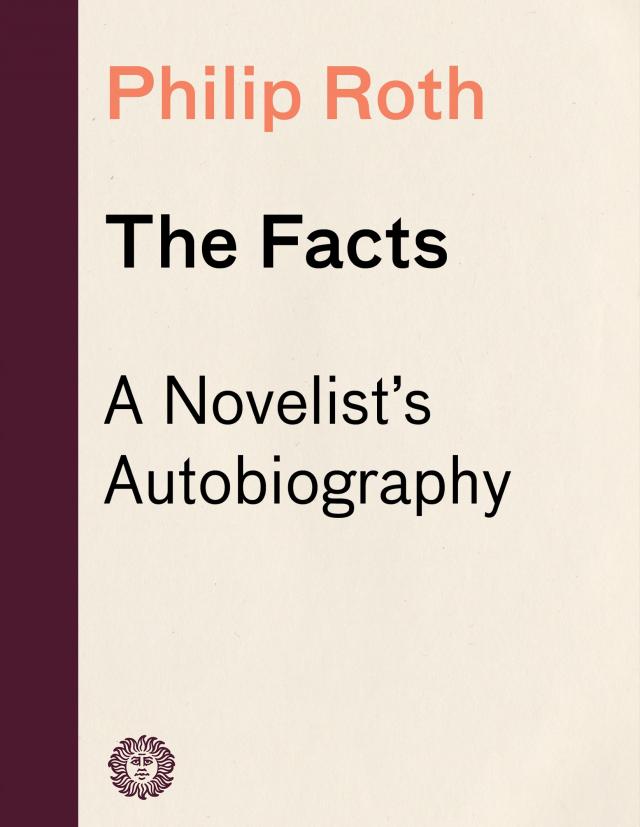
Philip Roth
The Facts
In the 1990s Philip Roth won America’s four major literary awards in succession: the National Book Critics Circle Award for Patrimony (1991), the PEN/Faulkner Award for Operation Shylock (1993), the National Book Award for Sabbath’s Theater (1995), and the Pulitzer Prize in fiction for American Pastoral (1997). He won the Ambassador Book Award of the English-Speaking Union for I Married a Communist (1998); in the same year he received the National Medal of Arts at the White House. Previously he won the National Book Critics Circle Award for The Counterlife (1986) and the National Book Award for his first book, Goodbye, Columbus (1959). In 2000 he published The Human Stain, concluding a trilogy that depicts the ideological ethos of postwar America. For The Human Stain Roth received his second PEN/Faulkner Award as well as Britain’s W. H. Smith Award for the Best Book of the Year. In 2001 he received the highest award of the American Academy of Arts and Letters, the Gold Medal in Fiction, given every six years “for the entire work of the recipient.”
BOOKS BY Philip Roth
zuckerman books
The Ghost Writer
Zuckerman Unbound
The Anatomy Lesson
The Prague Orgy
The Counterlife
American Pastoral
I Married a Communist
The Human Stain
roth books
The Facts Deception Patrimony
Operation Shylock
kepesh books
The Breast
The Professor of Desire
The Dying Animal
other books
Goodbye, Columbus
Letting Go
When She Was Good
Portnoy’s Complaint
Our Gang
The Great American Novel
My Life as a Man
Reading Myself and Others Sabbath’s Theater
Shop Talk
FIRST VINTAGE INTERNATIONAL EDITION, FEBRUARY 1997
Copyright © 1988 by Philip Roth
All rights reserved under International and Pan-American Copyright Conventions. Published in the United States by Vintage Books, a division of Random House, Inc., New York, and simultaneously in Canada by Random House of Canada Limited, Toronto. Originally published in the United States in hardcover by Farrar, Straus & Giroux, Inc., New York, in 1988, and published here by arrangement with Farrar, Straus & Giroux, Inc.
Sections of this book first appeared, in slightly different form, in the Atlantic, The New York Times Book Review, and Vanity Fair.
Library of Congress Cataloging-in-Publication Data
Roth, Philip.
The facts: a novelist’s autobiography / by Philip Roth.—1st Vintage International ed.
p. cm.
ISBN 0-679-74905-5
1. Roth, Philip—Biography. 2. Novelists, American—20th century—Biography.
I. Title.
PS3568.0855Z467 1997
813′.54 96-28807
[B]—DC20
CIP
Random House Web address: http://www.randomhouse.com/
Ebook ISBN 9780593684993
a_prh_6.0_140999378_c1_r0
To my brother at sixty
Contents
Cover
About the Author
Books by Philip Roth
Title Page
Copyright
Dedication
Epigraph
[Dear Zuckerman…]
Prologue
Safe at Home
Joe College
Girl of My Dreams
All in the Family
Now Vee May Perhaps to Begin
And as he spoke I was thinking, the kind of stories that people turn life into, the kind of lives that people turn stories into.
Nathan Zuckerman, in The Counterlife
Dear Zuckerman,
In the past, as you know, the facts have always been notebook jottings, my way of springing into fiction. For me, as for most novelists, every genuine imaginative event begins down there, with the facts, with the specific, and not with the philosophical, the ideological, or the abstract. Yet, to my surprise, I now appear to have gone about writing a book absolutely backward, taking what I have already imagined and, as it were, desiccating it, so as to restore my experience to the original, prefictionalized factuality. Why? To prove that there is a significant gap between the autobiographical writer that I am thought to be and the autobiographical writer that I am? To prove that the information that I drew from my life was, in the fiction, incomplete? If that was all, I don’t think I would have gone to the trouble, since thoughtful readers, if they were interested enough to care, could have figured as much for themselves. Nor was there any call for this book; no one ordered it, no one sent down for an autobiography from Roth. The order, if it was ever even placed, went out thirty years ago, when certain of my Jewish elders demanded to know just who this kid was who was writing this stuff.
No, the thing seems to have been born out of other necessities, and sending this manuscript to you—and asking you, as I do, to tell me whether you think I should publish it—prompts me to explain what may have led to my presenting myself in prose like this, undisguised. Until now I have always used the past as the basis for transformation, for, among other things, a kind of intricate explanation to myself of my world. Why appear untransformed in front of people when, by and large, in the unimagined world, I’ve refrained from nakedly divulging my personal life to (and pressing a TV personality on) a serious audience? On the pendulum of self-exposure that oscillates between aggressively exhibitionistic Mailerism and sequestered Salingerism, I’d say that I occupy a midway position, trying in the public arena to resist gratuitous prying or preening without making too holy a fetish of secrecy and seclusion. So why claim biographical visibility now, especially as I was educated to believe that the independent reality of the fiction is all there is of importance and that writers should remain in the shadows?
Well, to begin to answer—the person I’ve intended to make myself visible to here has been myself, primarily. Over fifty you need ways of making yourself visible to yourself. A moment comes, as it did for me some months back, when I was all at once in a state of helpless confusion and could not understand any longer what once was obvious to me: why I do what I do, why I live where I live, why I share my life with the one I do. My desk had become a frightening, foreign place and, unlike similar moments earlier in life when the old strategies didn’t work anymore—either for the pragmatic business of daily living, those problems that everybody faces, or for the specialized problems of writing—and I had energetically resolved on a course of renewal, I came to believe that I just could not make myself over yet again. Far from feeling capable of remaking myself, I felt myself coming undone.
I’m talking about a breakdown. Although there’s no need to delve into particulars here, I will tell you that in the spring of 1987, at the height of a ten-year period of creativity, what was to have been minor surgery turned into a prolonged physical ordeal that led to an extreme depression that carried me right to the edge of emotional and mental dissolution. It was in the period of post-crack-up meditation, with the clarity attending the remission of an illness, that I began, quite involuntarily, to focus virtually all my waking attention on worlds from which I had lived at a distance for decades—remembering where I had started out from and how it had all begun. If you lose something, you say, “Okay, let’s retrace the steps. I came in the house, took off my coat, went into the kitchen,” etc., etc. In order to recover what I had lost I had to go back to the moment of origin. I found no one moment of origin but a series of moments, a history of multiple origins, and that’s what I have written here in the effort to repossess life. I hadn’t ever mapped out my life like this but rather, as I’ve said, had looked only for what could be transformed. Here, so as to fall back into my former life, to retrieve my vitality, to transform myself into myself, I began rendering experience untransformed.
Perhaps it wasn’t even myself I wanted to be turned into but the boy I had been when I went off to college, the boy surrounded on the playground by his neighborhood compatriots—back down to ground zero. After the crack-up comes the grateful rush into ordinary life, and that was my life at its most ordinary. I suppose I wanted to return to the point when the launch was the launch of a more ordinary Roth and, at the same time, to reengage those formative encounters, to reclaim the earliest struggles, to get back to that high-spirited moment when the manic side of my imagination took off and I became my own writer; back to the original well, not for material but for the launch, the relaunch—out of fuel, back to tank up on the magic blood. Like you, Zuckerman, who are reborn in The Counterlife through your English wife, like your brother, Henry, who seeks rebirth in Israel with his West Bank fundamentalists, just as both of you in the same book miraculously manage to be revived from death, I too was ripe for another chance. If while writing I couldn’t see exactly what I was up to, I do now: this manuscript embodies my counterlife, the antidote and answer to all those fictions that culminated in the fiction of you. If in one way The Counterlife can be read as fiction about structure, then this is the bare bones, the structure of a life without the fiction.
As a matter of fact, the two longish works of fiction about you, written over a decade, were probably what ma de me sick of fictionalizing myself further, worn out with coaxing into existence a being whose experience was comparable to my own and yet registered a more powerful valence, a life more highly charged and energized, more entertaining than my own…which happens to have been largely spent, quite unentertainingly, alone in a room with a typewriter. I was depleted by the rules I’d set myself—by having to imagine things not quite as they had happened to me or things that never happened to me or things that couldn’t possibly have happened to me happening to an agent, a projection of mine, to a kind of me. If this manuscript conveys anything, it’s my exhaustion with masks, disguises, distortions, and lies.
Of course, even without the crack-up and the need for selfinvestigation it generated, I might have found myself, at this moment, unable to wield the whip over the facts sufficiently to make real life amazing. Undermining experience, embellishing experience, rearranging and enlarging experience into a species of mythology—after thirty years at that, it could have seemed like I’d had enough even under the best of circumstances. To demythologize myself and play it straight, to pair the facts as lived with the facts as presented might well have seemed the next thing to do—if not the only thing I could do—so long as the capacity for self-transformation and, with it, the imagination were at the point of collapse. Insofar as the rest of me, which had collapsed as well, intuited that stripping the writing down to unvarnished specificity was a part of getting back what I’d lost, a means of recovery and a way to strength, there wasn’t even a choice. I needed clarification, as much of it as I could get—demythologizing to induce depathologizing.
This isn’t to say that I didn’t have to resist the impulse to dramatize untruthfully the insufficiently dramatic, to complicate the essentially simple, to charge with implication what implied very little—the temptation to abandon the facts when those facts were not so compelling as others I might imagine if I could somehow steel myself to overcome fiction-fatigue. But on the whole it was easier than I thought it would be to escape from what I’d felt constrained to do nearly every day of the pre-crack-up existence. Perhaps that’s because in its uncompelling, unferocious way, the nonfictional approach has brought me closer to how experience actually felt than has turning the flame up under my life and smelting stories out of all I’ve known. I’m not arguing that there’s a kind of existence that exists in fiction that doesn’t exist in life or vice versa but simply saying that a book that faithfully conforms to the facts, a distillation of the facts that leaves off with the imaginative fury, can unlock meanings that fictionalizing has obscured, distended, or even inverted and can drive home some sharp emotional nails.
I recognize that I’m using the word “facts” here, in this letter, in its idealized form and in a much more simpleminded way than it’s meant in the title. Obviously the facts are never just coming at you but are incorporated by an imagination that is formed by your previous experience. Memories of the past are not memories of facts but memories of your imaginings of the facts. There is something naïve about a novelist like myself talking about presenting himself “undisguised” and depicting “a life without the fiction.” I also invite oversimplification of a kind I don’t at all like by announcing that searching out the facts may have been a kind of therapy for me. You search your past with certain questions on your mind—indeed, you search out your past to discover which events have led you to asking those specific questions. It isn’t that you subordinate your ideas to the force of the facts in autobiography but that you construct a sequence of stories to bind up the facts with a persuasive hypothesis that unravels your history’s meaning. I suppose that calling this book The Facts begs so many questions that I could manage to be both less ironic and more ironic by calling it Begging the Question.
A final observation about the predicament that engendered The Facts, and then you may read on undisturbed. Though I can’t be entirely sure, I wonder if this book was written not only out of exhaustion with making fictional self-legends and not only as a spontaneous therapeutic response to my crack-up but also as a palliative for the loss of a mother who still, in my mind, seems to have died inexplicably—at seventy-seven in 1981—as well as to hearten me as I come closer and closer and closer to an eighty-six-year-old father viewing the end of life as a thing as near to his face as the mirror he shaves in (except that this mirror is there day and night, directly in front of him all the time). Even though it might not be apparent to others, I think that subterraneanly my mother’s death is very strong in all this, as is observing my provident father preparing for no future, a healthy but very old man dealing with the kind of feelings aroused by an incurable illness, because just like those who are incurably ill, the aged know everything about their dying except exactly when.
I wonder if a breakdown-induced eruption of parental longing in a fifty-five-year-old man isn’t, in fact, the Rosetta stone to this manuscript. I wonder if there hasn’t been some consolation, particularly while recovering my equilibrium, in remembering that when the events narrated here were happening we all were there, nobody having gone away or been on the brink of going away, never to be seen again for hundreds of thousands of billions of years. I wonder if I haven’t drawn considerable consolation from reassigning myself as myself to a point in life when the grief that may issue from the death of parents needn’t be contended with, when it is unperceivable and unsuspected, and one’s own departure is unconceivable because they are there like a blockade.
I think that’s everything that might lie behind this book. The question now is, why should anybody other than me be reading it, especially as I acknowledge that they’ve gotten a good bit of it elsewhere, under other auspices? Especially as I consider myself, partly through this effort, united again with my purposes and reengaged with life. Especially as this feels like the first thing that I have ever written unconsciously and sounds to me more like the voice of a twenty-five-year-old than that of the author of my books about you. Especially as publication would leave me feeling exposed in a way I don’t particularly wish to be exposed.
There’s also the problem of exposing others. While writing, when I began to feel increasingly squeamish about confessing intimate affairs of mine to everybody, I went back and changed the real names of some of those with whom I’d been involved, as well as a few identifying details. This was not because I believed that the rerendering would furnish complete anonymity (it couldn’t make those people anonymous to their friends and mine) but because it might afford at least a little protection from their being pawed over by perfect strangers.
Beyond these considerations that make publication problematic for me stands the question: Is the book any good? Because The Facts has meant more to me than may be obvious and because I’ve never worked before without my imagination having been fired by someone like you or Portnoy or Tarnopol or Kepesh, I’m in no real position to tell.
Be candid.
Sincerely,
Roth
Prologue
One day in late October 1944, I was astonished to find my father, whose workday ordinarily began at seven and many nights didn’t end until ten, sitting alone at the kitchen table in the middle of the afternoon. He was going into the hospital unexpectedly to have his appendix removed. Though he had already packed a bag to take with him, he had waited for my brother, Sandy, and me to get home from school to tell us not to be alarmed. “Nothing to it,” he assured us, though we all knew that two of his brothers had died back in the 1920s from complications following difficult appendectomies. My mother, the president that year of our school’s parent-teacher association, happened, quite unusually, to be away overnight in Atlantic City at a statewide PTA convention. My father had phoned her hotel, however, to tell her the news, and she had immediately begun preparations to return home. That would do it, I was sure: my mother’s domestic ingenuity was on a par with Robinson Crusoe’s, and as for nursing us all through our illnesses, we couldn’t have received much better care from Florence Nightingale. As was usual in our household, everything was now under control.