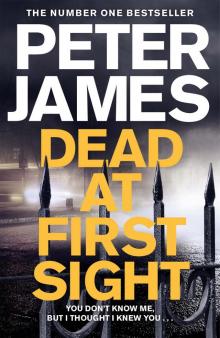
Dead at First Sight, page 12


‘Good, Bill, you? How’s your back?’
Warner, a former professional boxer, taxi driver then international water polo player, was suffering from a disintegrating spine condition, which he was not letting interfere with his work. He was today’s on-call detective inspector for Brighton and Hove.
‘Crap, if you want the truth, mate! But I’m fine otherwise. I’ve just attended a suicide, but I’m not happy with it. I think someone from Major Crime should go and take a look.’
‘OK,’ Grace said to him, ‘What are your thoughts, Bill?’
‘Lady by the name of Susan Driver, age fifty-five. Widowed four years ago. Her husband, Raymond Driver, was a big name in the Brighton antiques world – started life as a knocker boy, then became a player in brown furniture until that market collapsed and he moved into antique jewellery. Left his old lady properly loaded. Her daughter in Australia was worried because she hasn’t been able to contact her for several days. There’s a number of reasons why this looks suspicious to me. CSM Alex Call’s at the scene and he can fill in your officers.’
Bill then went on to describe the scene and what he had found there.
‘I’ll go myself,’ Grace said.
Warner thanked him.
‘Fancy a peep at a swinger?’ he asked Branson after he ended the call.
‘Not really my thing, but I’ll come and hold your hand, boss.’
Apologizing to Emily Denyer, telling her they would be back as soon as they could, the two detectives left, both trying not to look too happy about the welcome, if grim, distraction.
32
Tuesday 2 October
To dream of death is good for those in fear, for the dead have no more fears.
Johnny Fordwater kept returning to that quote he’d heard, years back, trying to recall the source.
Death, as it had for the past week, felt like the best solution. Suicide.
Any other option meant complete loss of face.
In front of him lay his neat and elaborately written notes to his three children and eight grandchildren. In them, he apologized for being unable to leave them the bequests he had always planned for them. He told them the reason, perhaps too much information, but so what? Maybe it would serve as a warning to them to never do what he had done. However desperate their lives might have become.
He walked over to the safe in his study, entered the six-digit code and swung open the heavy door. Inside lay his old service revolver, which he should have handed in years ago, when he’d left the army. But no one had actually requested it so he’d just thought ‘sod it’ and kept the weapon. Next to it lay several rounds of ammunition. With a steady hand he filled each of the six chambers, in turn, with a live round. An old army chum who suffered from depression had told him that he occasionally toyed with shooting himself with his service revolver, and each time he changed his mind at the last minute it felt better.
It felt to Johnny that the only way out of his financial ruin was to do the honourable thing. When he pulled the trigger it wouldn’t matter which chamber ended up in front of the firing pin. The relief of death was a certainty. He completed the task, then put the gun in his mouth, pointing upwards, and with his right index finger found first the trigger guard, then the trigger itself.
Staring out through the window at the afternoon sun low over the calm water of the English Channel, he saw a container ship sitting up high on the horizon and, closer to shore, a paddleboarder. He squeezed the trigger, gently at first, then steadily increased the pressure.
33
Tuesday 2 October
‘It’s not pretty, sir,’ Crime Scene Manager Alex Call said. Roy Grace, accompanied by DI Glenn Branson, both gowned up in protective suits, overshoes and gloves, signed the scene guard’s log outside the substantial, detached Victorian house.
A row of police vehicles, including a Crime Scene Investigation van, were parked along the residential street.
‘What do we have, Alex?’
The CSM was a slightly built, intensely serious man, with a sharp eye for detail that had earned him rapid promotion. ‘The home owner – who we believe is the victim – is Susan – Suzy – Adele Driver, widowed four years ago, sir,’ Call said. ‘Her late husband was an antiques dealer who moved into jewellery after the market in brown furniture collapsed. Apparent suicide by hanging, but the Coroner’s Officer who attended agrees with DI Warner.’
‘Who was that?’
‘Michelle Websdale. She’s gone to attend a fatal – RTC – but she’s coming back.’
Michelle Websdale was someone Grace trusted. As he did DI Bill Warner. ‘Where’s Bill now?’
‘He’s just left on a shout – a woman holding a baby threatening to jump from a fourth-floor balcony.’
‘So, what are your initial findings?’
‘The height of the noose is one thing – which I agree with. Her feet are a good six inches above the chair she stood on. There’s a bruise on the back of her head. My CSIs have already found hairs on the floor a short distance away, which could be evidence she’d fallen or been pushed backwards, prior to hanging.’
‘Are you aware of anything missing in the house? Any sign of it being burgled or ransacked?’
‘No, sir, everything looks orderly. Nothing immediately obvious missing – there’s what seems like some quality art on the walls and a lot of antiques, statuettes and stuff. Difficult to know if anything has been taken at this stage, but my impression is this is not a burglary.’
‘She’s still in situ?’
‘Yes, I spoke to the Home Office pathologist, who should be here in an hour or so.’
‘Who is it?’
‘Your good mate, Dr Frazer Theobald.’
Grace rolled his eyes and said, ‘Great, that’s my evening gone.’ He thanked Call, then both detectives ducked under the taped barrier.
As they entered the front door into a large, handsomely furnished hall, they wrinkled their noses at the reek of human decay. They walked up the stairs, the smell becoming more distinct, and the heat rising; the central heating had been left on full blast. On the first-floor landing a gowned-up Crime Scene Investigator stood outside a closed door. Recognizing Roy Grace, she said, ‘You’ll have to push hard, sir, it’s a heavy fire door.’
Entering the stiflingly warm room, pushing hard as he was told, Grace saw two Crime Scene Investigators on the floor, with gloved hands, doing a fingertip search, one of whom, Chris Gee, he recognized, and CSI photographer James Gartrell, videoing the scene. Above them was a woman in her mid-fifties, with dark hair, dressed in a loose sweater and jeans, hanging from what looked like a bathrobe cord looped round a massive, gilded chandelier. All around the fixing the ceiling was badly cracked, with some chunks of plaster fallen away. Among the debris on the floor was a black velvet slipper embossed with a gold crest. The other was still on her foot.
Her neck looked elongated. Her contorted tongue, dark blue and pink, protruded from her mouth. Her eyes were bloodshot and flat. Her face was blotchy, mottled with green, and there were several early bluebottles gathered around her eyes. Her hands were purple and there was dried foam around her mouth.
Grace held the door, to stop it swinging back, as his colleague entered.
Glenn Branson looked up. Despite recoiling with the shock and horror of what he saw, and the smell, he felt a twist of sadness inside his heart. The same he’d felt each time in his career when he’d attended a suicide. Wondering about the victim’s life, what had led to them taking this terrible step – and who might have been able to talk to them and convince them there were other choices.
Grace was feeling many of the same emotions. He looked at the woman’s eyes, wide open as most hanging victims he’d ever encountered were. Staring. Windows of the soul, he thought.
Unless you fell through a hangman’s trap, breaking your neck, death by hanging was not an instant process. He’d learned this from numerous pathologists’ reports. You would still have some air coming through and could dangle there for a long while, struggling for breath.
Thinking about what you had done? Maybe regretting it?
Where is your soul now, Suzy Driver? he wondered, deeply saddened.
He looked down at the gap between her feet and the chair beneath. Then looked back at her. Thinking. This scene was telling him one thing, but in his mind he was seeing something else. Something not quite right. As if in some meagre form of compensation, he pulled out his phone and took several photographs of her. He knew that Gartrell would cover everything thoroughly, but he still liked to have some photographs of his own to study before the CSI ones were distributed.
Looking up at her again, he thought, This wasn’t your choice, was it? I’m sorry. I know it’s not much comfort, but I promise you one thing: I will do everything I can to find out who did this to you and make sure they never do this to anyone again, ever. Probably not what you want to hear. He shrugged his shoulders and looked, apologetically, into her eyes. They stared, accusingly, back at him. Like they were saying: Do something!
34
Tuesday 2 October
Johnny Fordwater continued standing, holding the cold muzzle of the revolver against the roof of his mouth, his finger curled securely around the trigger, squeezing it. His hand was shaking. This was not easy. He squeezed a little more. His gaze lingered on the container ship on the horizon, then on the paddleboarder gracefully gliding across the almost preternaturally calm sea. A seagull swooped down to the promenade and seized something from the pavement in its beak. The last things he would ever see.
Any moment the gun would discharge. Any moment.
This really was not as simple to do as he had thought. Was he holding back from giving that trigger the one final bit of pressure it needed because he was petrified, he wondered? When all the chips were down, was he really a coward at heart? Scared of what lay beyond? Frightened of not doing the job thoroughly enough and waking up in hospital with his eyes and half his face blown away, as had happened to one of the squaddies out in Iraq, suffering from post-traumatic stress disorder? The poor bastard was still alive, in the nearby Blind Veterans’ home.
His hand was shaking, tiring. He couldn’t hold the gun up there much longer.
Get on with it, do it, be a man.
He closed his eyes, tried to think of Elaine’s face, to take her memory with him, but the image wouldn’t come. His brain refused to print it out for him. Just a blank.
Too bad. He jerked his finger hard, decisively, straight back against the guard. THONK.
A sharp, metallic sound. Silence.
Somewhere below him a car horn hooted in anger. He opened his eyes. The paddleboarder was still there, moving serenely. The container ship was still out on the horizon. He was still alive.
Or was he imagining it?
He lowered the gun and stared in disbelief at it.
He felt the paddleboarder laughing at him. The ship’s crew mocking him.
The whole world enjoying his embarrassment.
Johnny Fordwater’s so useless he can’t even kill himself!
He spun the cylinder, but it barely moved. ‘Useless as a chocolate teapot,’ he muttered. He hadn’t oiled the damned thing in years, he realized, maybe that was the problem.
He laid it down on the table behind him and went through into the utility room behind the kitchen to see what he had. There on a shelf above him, nestling between the Mr Muscle and a canister of Brasso, was a small can of 3-in-One Oil. As he reached up, his phone rang.
Ignore it.
It rang several times then stopped.
He returned to the living room with the oil and a rag and began lubricating his weapon until the cylinder spun freely.
The phone rang again. He looked at the display:
International. In a sudden moment of black humour he was reminded of an old favourite film of Elaine’s, with Peter Sellers and Peter O’Toole – and the actress Ursula Andress. What’s New Pussycat? There was a scene beneath a bridge across the Seine in Paris, when one of them had said to the other – he couldn’t remember which – ‘How can I eat my dinner while you are trying to commit suicide here?’
He picked up the phone and answered with a quiet, ‘Hello?’
A man with a foreign accent he couldn’t place, possibly German, said, ‘Major Fordwater?’
‘Speaking.’
‘I am Mr Jules de Copeland, I am Ingrid’s brother.’
‘Pardon?’
‘Ingrid – Ingrid Ostermann – I am her brother, you see.’
Johnny wasn’t sure what he was seeing – or rather, hearing. The man’s accent was strange, now sounding more African – Nigerian, perhaps – than German.
‘Jules?’
‘Yes, Jules.’ He gave a strange little laugh, all good-natured.
‘Nice to speak to you, Jules.’
‘Well, yes, you see I have some news about Ingrid. She should have come to England – she was looking forward so much, she was so excited for her new life with you! But very misfortunately, her taxi on the way from Munich to the airport was in a bad accident on the highway. The driver was killed. She was in a coma, you see. It has taken me a while to track you down and tell you this very bad news, sir.’
‘I see. She is still in a coma?’
‘Yes, but they say she will wake soon. We are praying for her. But there is another problem – she has no medical insurance. The hospital needs to transfer her to a private clinic to continue her recovery, but without funds they will not accept her. I am thinking you would want to help her.’
‘There’s no one else in the family who could help her financially, Jules?’
‘No, unfortunately, there is just me.’
‘So none of the money I sent over previously for you is left?’
There was a moment of hesitation, then the man laughed again. ‘No, there’s not unfortunately, no.’
‘And how are the boys doing at school? You did use that money I sent to pay their fees, I trust?’
A brief hesitation then he replied, ‘Oh yes, indeed.’
‘I’m glad to hear it.’
‘So perhaps, Mr Fordwater, you could arrange a bank transfer of £30,000 to cover the initial medical bills?’
‘Thirty thousand – will that be enough?’
‘Well, perhaps not really, sir. Maybe £50,000 might be better.’
‘Fifty thousand, yes?’
‘Yes, I will give you new account details.’
Inside, Johnny was bristling, but he kept his calm. ‘That’s very good of you. I have just a few problems, Jules.’ He deliberately fell silent, waiting for a reaction.
After several seconds the man prompted him. ‘Problems?’
‘Well yes, you see, firstly you say you are Ingrid’s brother. But her brother’s name is Rudy, not Jules. Secondly, in Germany they don’t have highways, they have autobahns. And thirdly, I believe Ingrid Ostermann, whoever she is, has been suckering money out of umpteen other mugs like me. I suggest you try your luck elsewhere. Now if you’ll excuse me, I’m right in the middle of something important.’ He ended the call with a grim satisfaction, then looked back at the gun. The phone rang. Again, International showed on the display.
He nearly didn’t answer it.
35
Tuesday 2 October
Roy Grace stared warily up at the fixings of the large chandelier the woman was hanging from. Decorated with carved, gilded birds and dripping with teardrop pendants, it looked like it belonged in a stately home, as did the stucco work on the ceiling. He was trying to assess the danger from the evident strain on the ceiling, which had caused the cracks and fallen chunks of plaster. Was it going to hold, he wondered, or was the ceiling about to come crashing down under her added weight? From a safety standpoint, the sooner her body was cut down, the better. Another flake of plaster fell as he watched.
‘What do you think, Glenn? Cut her down?’
Branson, several inches taller and closer to the ceiling than him, was looking equally concerned. ‘I reckon the whole chandelier’s going to come down soon if we don’t,’ he said. ‘Like that massive one in the Royal Pavilion, when we were on Operation Icon – the one that came down during our investigation, killing Gaia’s stalker, Drayton Wheeler.’
‘That didn’t have the help of a dead body.’
‘Right, boss.’ He looked up again, nervously. ‘Didn’t one come down in the Phantom of the Opera as well?’
‘I wouldn’t know – I’m not a lover of musicals.’
‘You’re such a cultural philistine, you know?’
‘A philistine? Me? What’s cultural about a bunch of luvvies in ridiculous costumes bursting into song? Cleo took me to the opera once. I spent the whole time praying for a fat lady to come on stage and start singing. Or a heart attack – whichever came sooner.’
‘I rest my case,’ Branson said. ‘There’s no hope for you.’
‘There’s no hope for either of us if the ceiling comes down while we’re arguing. Shall we focus?’ He instructed Alex Call to have someone cut down the dead woman immediately, but to preserve the knot. Knots often yielded fingerprints or DNA, and in the case of serial offenders, the style of knot could be a vital clue.
He scanned the bedroom, not wanting to stay in there too long. Evidence that he was in the home of someone in the antiques world was all around. The grand two-poster bed, the beautiful inlaid dressing table adorned by silver and porcelain ornaments, the chaise longue scattered with cushions. Through the window he could see white marble statues dotted around the lawn of the well-kept garden. They looked vulgar, as if trying to give the place the airs and graces of a stately home. Not his taste. There were framed oil miniatures on the walls, fine curtains and antique rugs, and an exquisitely upholstered bow-backed chair directly beneath the dead woman.
His focus was on the elements that might make it a crime scene, as Bill Warner had suspected. The DI had good reason to be suspicious. The top of the seat cushion was a good six inches below Suzy Driver’s feet. Roy assessed the cushion. If she’d been standing on it, attempting to hang herself, it would have squashed down even more. There was no obvious way she could have hauled herself up the extra distance.