

Metamorphosis, page 1


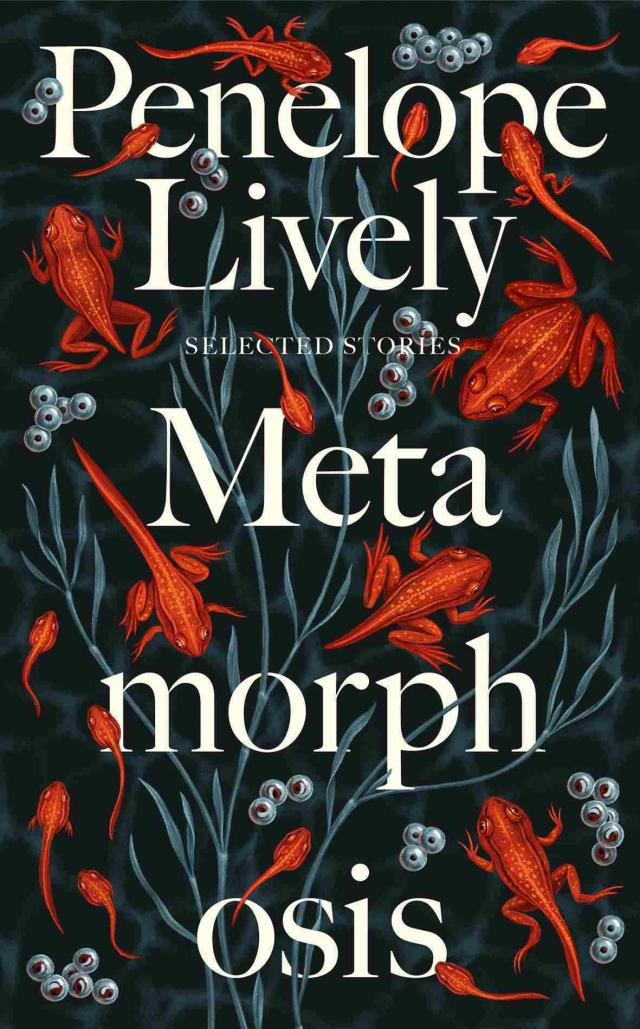
Penelope Lively
* * *
METAMORPHOSIS
Selected Stories
Contents
Introduction
METAMORPHOSIS, OR THE ELEPHANT’S FOOT (2021) Metamorphosis, or the Elephant’s Foot
PACK OF CARDS (1978–1986) The Emasculation of Ted Roper
A Clean Death
A Long Night at Abu Simbel
A World of Her Own
Bus-Stop
The Crimean Hotel
Corruption
BEYOND THE BLUE MOUNTAINS (1997) The Slovenian Giantess
In Olden Times
The Clarinettist and the Bride’s Aunt
Marriage Lines
The Cats’ Meat Man
The First Wife
The Butterfly and the Tin of Paint
THE PURPLE SWAMP HEN (2016) The Purple Swamp Hen
Abroad
Who Do You Think You Were?
Old as the Hills
The Weekend
Point of View
Licence to Kill
Mrs Bennet
Theory of Mind
The Third Wife
SONGS OF PRAISE (2021) Songs of Praise
About the Author
Penelope Lively is the author of many prize-winning novels and short-story collections for both adults and children. She has twice been shortlisted for the Booker Prize: once in 1977 for her first novel, The Road to Lichfield, and again in 1984 for According to Mark. She later won the 1987 Booker Prize for her highly acclaimed novel Moon Tiger. She is a popular writer for children and has won both the Carnegie Medal and the Whitbread Award. She was appointed CBE in the 2001 New Year’s Honours List, and DBE in 2012. She lives in London.
By the same author
FICTION
Going Back
The Road to Lichfield
Nothing Missing But the Samovar and Other Stories
Treasures of Time
Judgement Day
Next to Nature, Art
Perfect Happiness
Corruption and Other Stories
According to Mark
Pack of Cards: Stories 1978–1986
Moon Tiger
Passing On
City of the Mind
Cleopatra’s Sister
Heat Wave
Beyond the Blue Mountains
Spiderweb
The Photograph
Making It Up
Consequences
Family Album
How It All Began
The Purple Swamp Hen and Other Stories
NON-FICTION
The Presence of the Past: An Introduction to Landscape History
Oleander, Jacaranda: A Childhood Perceived
A House Unlocked
Ammonites and Leaping Fish
Life in the Garden
Introduction
This selection ranges from two extra-long stories written in 2019, at the end of my writing life, to several written back in the nineteen seventies, when I was first trying to write fiction. A span of forty writing years, and, making this selection, I have found that the stories themselves tell a story – one about writing development, about my own preoccupations, about the issues of the times.
The two long, late stories bookend the rest, all of which appeared in three earlier story collections. There were sixty-three stories in all; this selection could only find room for twenty-six. So … much to be discarded, some to be favoured and all with the dispassionate eye of an editor, as though someone else wrote them. Definitely not this, no way include that … Here’s a possibility, this may be worth having.
I remember being asked, many years ago, to lead a creative writing group on short-story writing. The group comprised fifteen or so, and I suggested that we start by talking a bit about the short story, about what it can do, about stories that we had enjoyed and admired. There was a silence. Then a spokesperson said crisply that no, they didn’t want that sort of thing – they knew all they needed to know about the short story, what they wanted from me was advice on presentation and marketing. Startled, I asked what it was that they knew about the short story. ‘The short story,’ said the spokesperson irritably ‘is three thousand words long. Possibly three thousand five hundred.’
The short story is of course as long as a piece of string. It is as long as it takes. Alice Munro writes stories the length of novellas; Raymond Carver could produce a masterpiece in a few pages. The long story invites you into a climate, a setting, the unfurling of a situation. The short short story achieves its effect with concision, accuracy, saying most by saying least. Two different styles, two different effects – equally to be relished, in the right hands. I have relished both, from hands like William Trevor, Jane Gardam, Muriel Spark, Elizabeth Bowen, Katherine Mansfield, many others. I have enjoyed, and learned, starting to wonder, way back in about 1975, if maybe I could have a go myself.
Looking at this selection, with detachment and with the wisdoms of forty years and more, I can see a progression, a move from one approach to another. Earlier stories are longer, roomier, more expansive – A Clean Death, The Crimean Hotel. Later, there is brevity, concision – Old as the Hills, Licence to Kill. But then at the very end, in 2019, there come these two bookends, Metamorphosis and Songs of Praise, the longest stories I have ever written, teetering towards novella length. What is going on? And I have to say that I have no idea. These two pieces of fiction somehow arrived, as they do, and they required to be written like this – they took as long as it takes. All of which sounds unconsidered, unprofessional, but that is how story writing works, for me. There is the idea, the lightning strike, the glimpse of what can be made, and then comes the realization, the translation, the expansion of a thought into characters, setting, narrative.
And where do these ideas come from, these glimpses? Well, very much from life as lived, for me. I am a novelist quite as much as a story writer, and for me the novel is a matter of hacking at the rock face, for months, for years. There is a concept, some notion of what this novel is going to be about, and then there is the process of hacking away to find the people and what is going to happen to them.
The short story is a different matter entirely. It arrives from something seen, something overheard, something that happens, and then the task is to turn that into a story that has nothing to do with me, or how I have lived. Two women talking at a bus stop; one says ‘And there were kittens from one end of the village to the other.’ From that arose the story The Emasculation of Ted Roper.
In 1984 I was one of a party of six British writers who went to the Soviet Union, as it then was, to have talks with members of the Soviet Writers Union. When, after the talks, we were despatched to a Crimean resort for rest and recreation, we were approached, when on a walk along the promenade, by an agreeable but somewhat mysterious English-speaking Russian seaman who had served on a container vessel plying the Baltic to Hull. Some time later, I wrote the story The Crimean Hotel, prompted by that encounter but about much else.
There is only one story here that is unashamedly autobiographical, and in this case it was a matter of recognizing, decades later, the significance of an event in my own life. When I was fourteen, mired in adolescence, not long arrived in this country from Egypt, where I was born and spent my childhood, and bleakly unfamiliar with England and its ways, I spent Christmas with an aunt and her family at their country home. There were small children, there were animals that were doted on – cats, dogs, a pony, chickens. I struck up an acquaintance with a boy my own age from a neighbouring cottage – a farm labourer’s son. He invited me to go rabbit shooting with him early one morning. When I arrived back in time for breakfast and confessed where I had been, I was met with displeasure, frosty looks. I was consumed with guilt for the rest of my stay. The issue, I assumed, was cruelty to animals – shooting rabbits. It took thirty years to understand that my transgression had been the boy, not the rabbits – not a fit associate, according to the rigid class structures of the day. Out of that came A Clean Death, a story about social assumptions, and the definitive social changes of the late twentieth century, along with other stories set in that period.
So that is how they arrive, for me, stories. They are served up by life as lived, but in disguise – something happens, and there is the sudden recognition that this is a potential story, that I can consider this and recreate it as something entirely different that is in no way concerned with me, but is owed to something in my life. A decorator knocks over a tin of paint on our bedroom carpet, and this becomes a story about chaos theory – The Butterfly and the Tin of Paint.
Novels too can have an autobiographical element. My own don’t, on the whole, but you do, of course, write out of your own experience, your observation, your perception. The novel owes its truth, if it has any, its accuracy, to your understanding of how people behave, how they are likely to behave. But this is very different from the lightning strike of the short story prompt; it is back to hacking at the rock face, the slow extraction of shape and form.
And that is what has made stories a special, and specially valued, form of fiction for me. A story often arises from personal experience, but you then work to transcend that experience. And it is this wonderfully flexible form – long or short, diffuse or terse, you can make what you will of it.
July 2020
METAMORPHOSIS, OR THE ELEPHANT’S FOOT (2021)
* * *
Metamorphosis, or the Elephant’s Foot
The Elephant’s Foot
The story begins with the elephant’s foot. Except that it is no longer a viable foot but an umbrella stand in a house in London’s Harley Street in 1915. The elephant in question perished many years before, but this is still an unappealing metamorphosis, which is what Connie Mayfield thought for a moment as she snatched up her parasol, in a state of irritation because this visit has not gone well.
‘Hurry up,’ she snaps. ‘Put your hat on, Harriet.’
The long-dead elephant had its foot – all four feet – in the nineteenth century and in the heart of Africa. It is – was – a long way away in every sense, but also relentlessly here, in early-twentieth-century London, doing duty as a receptacle for umbrellas. The elephant had been brought down by a white hunter. This is a euphemism; brought down means shot. Shot and then dismembered. The white hunter had posed for a photo, leaning nonchalantly against the carcass, rifle in hand, and had then left, leaving the dismembering and disposal of useful bits to be done by an African entourage. The tusks are of course the prime resource. Ivory. Essential material for billiard balls, piano keys, false teeth, chess pieces, dominoes and much else. Thank goodness for elephants. And there is more. Hair from the tail is twisted up by African craftsmen into bracelets, considered attractively exotic things. Some entrepreneurs are also finding that the skin can be made into jewellery pieces. And the feet – well, we know how useful the feet can be.
Connie Mayfield and her seven-year-old daughter are now out in the street, the elephant’s foot forgotten. Harriet had not even noticed it.
‘And you weren’t at all nice to Great Granny,’ says Connie. ‘You didn’t answer when she asked about your dancing class. You never even looked at her when she was talking to you,’
‘I don’t really like Great Granny,’ says Harriet. Casual.
‘Why ever not, for goodness’ sake?’
‘She’s old,’ says Harriet. ‘I don’t like old.’
Connie stops. She pulls Harriet to a halt. She looks down at her. ‘Harriet,’ she says ‘one day you will be old, like Great Granny.’
Harriet laughs. ‘No, I won’t.’
Connie is exasperated, as she is rather often, with Harriet. ‘And how would you feel, if a little girl was rude to you and didn’t like you?’
‘You’re just being silly,’ says Harriet ‘how can I be old? I’m me.’
‘And you don’t call me silly. That’s enough, Harriet.’ Connie now whisks her daughter ahead. She can’t wait to get home and hand her over to Nanny. Tonight, she and her husband are dining with the Laycocks. She will wear her new purple silk with the matching pumps.
A hundred years later, a child like Harriet would be described as feisty. Upfront. A child with attitude. In her own time, she is perceived as pert, cheeky, too big for her boots. She asks too many questions and is uncompliant. She trots along now beside her mother, not particularly dismayed and keen also to get home and out of her best frilled muslin dress which is itchy around the neck, while her waist is uncomfortably clamped within a wide satin sash. She has been made to wear a straw boater on top of her long hair, which is styled in ringlets. The ringlets are achieved by way of a fiendish procedure involving long strips of rag which drives both Nanny and Harriet mad, but Mrs Mayfield insists. So pretty, ringlets. A bit old-fashioned now, but all the more charming for that. Harriet is an only child and Connie means to make the most of a little girl while she has one.
Harriet is dimly aware that she will one day be a grown-up but that day is so unlikely, so unimaginable, that the thought does not bother her. Her mother sometimes reads to her from Alice In Wonderland; Harriet is disturbed by the accounts of Alice changing size, getting larger, and averts her eyes from the illustrations of a distorted Alice. Could that happen? Well, no – this is just a story book. But she herself has just grown out of the boots she wore last year, which is worrying. She does not like Nanny to measure her height against the nursery door.
The Mayfields live in a large house in Wimbledon. John Mayfield is a solicitor; Connie Mayfield is a mother. John is a father, of course, but in his case that is the secondary role. If things proceed in the normal and expected way, Harriet will in time also become a mother, having married sensibly, or expediently. There will be a problem with that, though, because the intervention of a world war will mean that the best part of a generation of young men of around Harriet’s age have been killed off, which leads to an unseemly scramble to secure one of the survivors. Or be condemned to spinsterhood, which means that a woman has failed in both the essential ways: she has failed to attract, she will not become a mother. The Mayfields have in a sense been spared the war; at forty-one when it began, John was too old for conscription.
All this lies ahead for Harriet, as she grows up in the Wimbledon house, goes to school at the Academy for Young Ladies nearby, where she learns some history, some geography, reads the occasional Shakespeare play. Attention is paid to her handwriting, and also to her sewing skills. There is instruction on how to manage servants, and on household economy – how to spend your husband’s money adroitly. She has piano lessons. Harriet should emerge from this nicely equipped for marriage and motherhood.
In fact, Harriet quite enjoys school. She is exceptionally good at everything except sewing, and has the teachers running for cover because she never stops asking questions. When she is nine she wants to know why it gets dark at night, which is not relevant to the principal rivers of Europe – that is Science, and the Academy does not do Science. When she is twelve she wants to know how babies are made, which has nothing to do with the six wives of Henry the Eighth. At least not on the face of it, and her intervention means that she must write out the names of the six wives thirty times, in best writing. Despite these frustrations, Harriet manages to keep herself quite agreeably occupied, reading everything she can lay hands on and relishing the panic-stricken look in a teacher’s eye when she puts her hand up in class. One way and another, she is so immersed over these years, and the shape-shifting process so gradual, that she hardly notices that she has left child Harriet behind and emerged as a fully fledged adult of eighteen, with her hair up and her skirts down.
The society in which she lives has mutated also. The war has come and gone, with all that that implies. Connie Mayfield is finding it fearfully difficult to get a good cook these days. She has the vote now, though of course she will always consult her husband on what to do with it. In earlier years, in the Mayfield household, John Mayfield had forbidden the name of that Pankhurst woman to be mentioned again. It was Harriet, of course, who had done the mentioning after she had picked up newspapers and seen intriguing pictures of ladies being hauled off by policemen, had read the accompanying text and cottoned on to what all this was about. How interesting. The more so since it apparently annoyed her father.
So, the world has moved on, and in the clear blue air of 1926 – the somewhat clearer blue air – Harriet told her parents that she thought she would like to go to university. That she was going to go to university.
Connie was aghast. ‘Darling, I don’t really think … We’ve been wondering about a nice finishing school.’
Harriet said she thought she would be finished better at a university.
John Mayfield said he was aware that some girls went to university nowadays. A certain type of girl.
‘Exactly,’ said Connie. ‘And that’s why it really wouldn’t be the thing for you.’ Harriet was so pretty, she was thinking – she was bound to get married quite quickly, despite – well, despite the wretched war and everything. There were still some men, the ones who had been too young.
There was an argument. Connie dropped out early on, sensing defeat. Harriet and her father were at it for about a week, after which Harriet was enrolled at Royal Holloway College and, shortly after, became seriously grown up. The status of an early-twentieth-century student was very different from that of one a hundred, or even fifty years later. The pioneering woman student was applied, and purposeful. She did not get drunk. She did not have sex (well, there may have been the few who lapsed). Harriet had chosen to study history because even the abundantly deficient syllabus of the Academy for Young Ladies (wives of Henry the Eighth, Queen Boadicea, the Battle of Trafalgar) had made her aware that history seems to be about change, and she thought that she would like to have a look at this.


