

In His Eyes: Blemished Brides Book 1, page 17


Dear Reader
When I’m not writing about mountain men in the Tetons and time travels to Yellowstone National Park, I write about time traveling cowboys. My books are almost always set primarily in Montana, (unless the story takes my characters along the Oregon Trail), and my “cowboys” aren’t really cowboys, but horsemen. I know a little about raising cattle from my years in pre-vet school, but my love and interest lies with equines, not bovines. So, I usually apply the old “write what you know” adage to my books, and my heroes and heroines end up being superb horsemen and horsewomen.
In my teenage years, I fell in love with thoroughbred horse racing, also called “The Sport of Kings”, from its European origins. I spent my early teen years memorizing the names of every Kentucky Derby winner, researching pedigrees of famous horses past and present, and even writing stories about race horses (which will never see the light of day).
For my latest book, the first in a series of historical western romances (no time travel in these), I once again went with my love of horses to weave a story. My intent was to rewrite an unfinished old manuscript that I had written as a contemporary romance set in Kentucky, and turn it into a historical western romance set in Montana.
My first dilemma was that a main part of the story was about the business of breeding thoroughbred racehorses. I had a vague idea that, yes, people undoubtedly raced horses in Montana in the old west, but did they breed blue-blooded thoroughbreds during a time when prospectors were digging for gold, and Montana wasn’t yet a state?
I did what every good writer will do – research. And to my surprise and delight, I found out that Montana has a rich history in horse racing.
The Native Americans who lived in the area that is now Montana first acquired horses in the 1700’s, and racing them was a common sport. The first thoroughbred thought to have been brought to Montana was a Kentucky-bred stallion named Billy Bay. He was supposedly brought to the territory by Blackfeet Indians. A trader by the name of Malcolm Clarke owned the horse for a time, racing him in inter-tribal races. Clarke had been married to a Piegan Blackfoot woman, and most likely acquired the horse through his in-laws.
When gold was discovered in Montana in the 1860’s, horse racing quickly became a popular sport among the miners. Races in the streets of the mining camps were common. If someone owned a fast horse, he’d travel around to different mining camps, looking to race his animal and make bets.
The area around Deer Lodge, Montana, became a popular area for breeding horses intent for racing. Several large stables and ranches sprung up, owned by rich investors and bankers.
When racetracks were built in the larger cities of Helena and Anaconda, it put Montana on the racing map. The construction of the Lewis and Clark County Fairgrounds and the territorial fairs in Helena brought sizable purses and the first organized races.
The Kentucky Derby is the premiere horse race in America, run on the first Saturday in May each year at Churchill Downs in Louisville, Kentucky. It is a race for three-year-old thoroughbreds. When it was first run in 1875, the Derby was 1 ½ miles long (it has been shortened to 1 ¼ miles). In 1889, a Montana-bred colt by the name of Spokane won the Kentucky Derby, by a “flaming nostril,” setting a new race record for the 1 ½ miles. 1889 is also the year that Montana became a state. It was said that the chestnut colt received more attention for his victory in the Derby than news that Montana had been granted statehood.
Braille was taught in American schools for the blind by the 1860’s.
As always, a huge thanks to my editor, Barbara Ouradnik, and my superb beta readers – Heather Belleguelle, Lisa Bynum, Sonja Carroll, Becky Fetzer, Kathie Hamilton, Renee York, and Hilarie Kearns Smith.
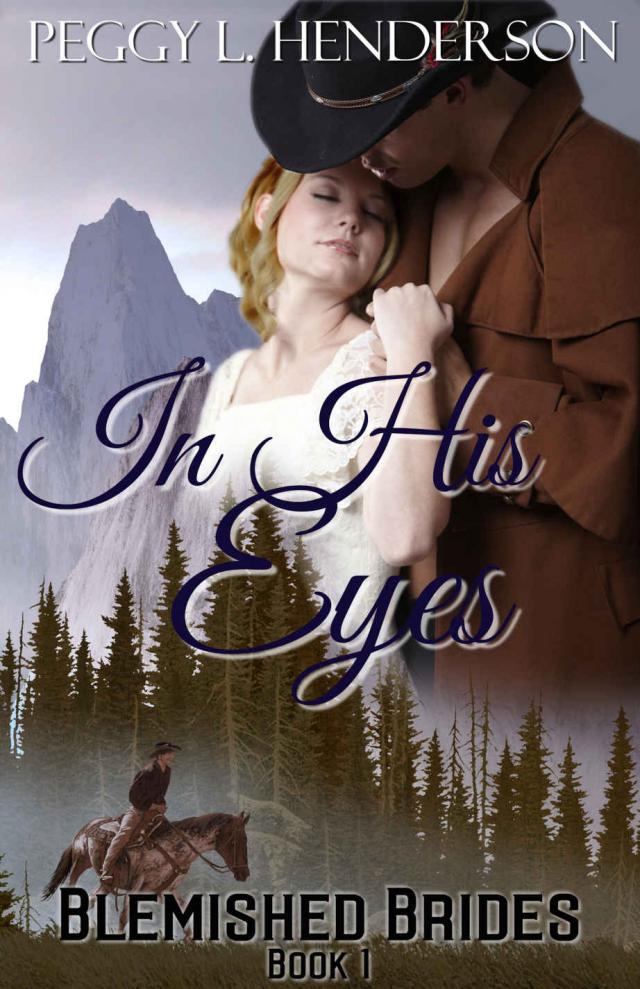
And to my son, Collin, for his graphic arts skills to create the cover for this book.
Find out more about me and my stories here:
http://peggylhenderson.blogspot.com
Join me on Facebook. I love interacting with my readers, and you can stay current on my book projects and happenings.
For even more behind-the scenes news, interaction and discussions with other readers about my books, and just general fun, consider joining my closed Facebook Group.
I’m always happy to hear from my readers. Tell me what you liked, or didn’t like in the story. I can be reached via email here: ynpdreamer@gmail.com
Peggy L Henderson, In His Eyes: Blemished Brides Book 1
Thank you for reading books on ReadFrom.Net
Share this book with friends
When I’m not writing about mountain men in the Tetons and time travels to Yellowstone National Park, I write about time traveling cowboys. My books are almost always set primarily in Montana, (unless the story takes my characters along the Oregon Trail), and my “cowboys” aren’t really cowboys, but horsemen. I know a little about raising cattle from my years in pre-vet school, but my love and interest lies with equines, not bovines. So, I usually apply the old “write what you know” adage to my books, and my heroes and heroines end up being superb horsemen and horsewomen.
In my teenage years, I fell in love with thoroughbred horse racing, also called “The Sport of Kings”, from its European origins. I spent my early teen years memorizing the names of every Kentucky Derby winner, researching pedigrees of famous horses past and present, and even writing stories about race horses (which will never see the light of day).
For my latest book, the first in a series of historical western romances (no time travel in these), I once again went with my love of horses to weave a story. My intent was to rewrite an unfinished old manuscript that I had written as a contemporary romance set in Kentucky, and turn it into a historical western romance set in Montana.
My first dilemma was that a main part of the story was about the business of breeding thoroughbred racehorses. I had a vague idea that, yes, people undoubtedly raced horses in Montana in the old west, but did they breed blue-blooded thoroughbreds during a time when prospectors were digging for gold, and Montana wasn’t yet a state?
I did what every good writer will do – research. And to my surprise and delight, I found out that Montana has a rich history in horse racing.
The Native Americans who lived in the area that is now Montana first acquired horses in the 1700’s, and racing them was a common sport. The first thoroughbred thought to have been brought to Montana was a Kentucky-bred stallion named Billy Bay. He was supposedly brought to the territory by Blackfeet Indians. A trader by the name of Malcolm Clarke owned the horse for a time, racing him in inter-tribal races. Clarke had been married to a Piegan Blackfoot woman, and most likely acquired the horse through his in-laws.
When gold was discovered in Montana in the 1860’s, horse racing quickly became a popular sport among the miners. Races in the streets of the mining camps were common. If someone owned a fast horse, he’d travel around to different mining camps, looking to race his animal and make bets.
The area around Deer Lodge, Montana, became a popular area for breeding horses intent for racing. Several large stables and ranches sprung up, owned by rich investors and bankers.
When racetracks were built in the larger cities of Helena and Anaconda, it put Montana on the racing map. The construction of the Lewis and Clark County Fairgrounds and the territorial fairs in Helena brought sizable purses and the first organized races.
The Kentucky Derby is the premiere horse race in America, run on the first Saturday in May each year at Churchill Downs in Louisville, Kentucky. It is a race for three-year-old thoroughbreds. When it was first run in 1875, the Derby was 1 ½ miles long (it has been shortened to 1 ¼ miles). In 1889, a Montana-bred colt by the name of Spokane won the Kentucky Derby, by a “flaming nostril,” setting a new race record for the 1 ½ miles. 1889 is also the year that Montana became a state. It was said that the chestnut colt received more attention for his victory in the Derby than news that Montana had been granted statehood.
Braille was taught in American schools for the blind by the 1860’s.
As always, a huge thanks to my editor, Barbara Ouradnik, and my superb beta readers – Heather Belleguelle, Lisa Bynum, Sonja Carroll, Becky Fetzer, Kathie Hamilton, Renee York, and Hilarie Kearns Smith.
And to my son, Collin, for his graphic arts skills to create the cover for this book.
Find out more about me and my stories here:
http://peggylhenderson.blogspot.com
Join me on Facebook. I love interacting with my readers, and you can stay current on my book projects and happenings.
For even more behind-the scenes news, interaction and discussions with other readers about my books, and just general fun, consider joining my closed Facebook Group.
I’m always happy to hear from my readers. Tell me what you liked, or didn’t like in the story. I can be reached via email here: ynpdreamer@gmail.com
Peggy L Henderson, In His Eyes: Blemished Brides Book 1


