

Hiwa, page 1


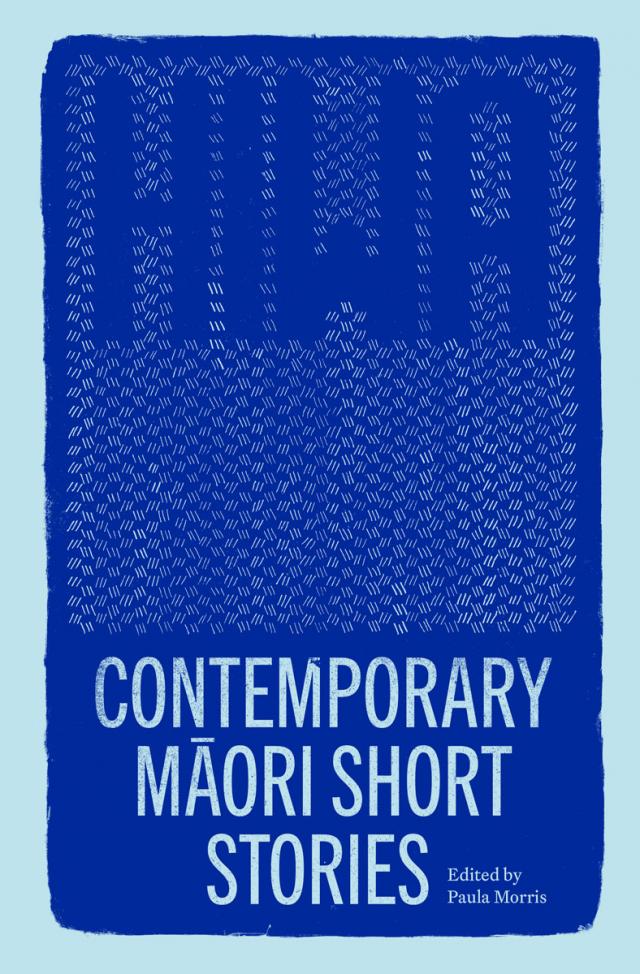
First published 2023
Auckland University Press
University of Auckland
Private Bag 92019
Auckland 1142
New Zealand
www.aucklanduniversitypress.co.nz
© Paula Morris with Darryn Joseph
and individual authors as credited, 2023
ISBN 9781776711147
Published with the assistance of Creative New Zealand
A catalogue record for this book is available from the National Library of New Zealand.
This book is copyright. Apart from fair dealing for the purpose of private study, research, criticism or review, as permitted under the Copyright Act, no part may be reproduced by any process without prior permission of the publisher. The moral rights of the authors have been asserted.
Book design by Haumi
HE MAIMAI AROHA KI A J. C. STURM ME AUA TAUTŌHITO I WHAKATAKOTO I TE ARA.
Contents
KUPU WHAKAMIHI
INTRODUCTION
SHELLEY BURNE-FIELD /// The Bargain and the Pūtōrino
JACK REMIEL COTTRELL /// Reasons why I called in sick rather than go to the mihi whakatau for new employees last Friday; Bricked; Work and Income Gothic
DAVID GEARY /// Hareruia (Saved Ya!) a Tara-noir
PATRICIA GRACE /// The Kiss
K. T. HARRISON /// Colours
ARAMIHA HARWOOD /// a.k.a.
WHITI HEREAKA /// Cicada
EMMA HISLOP /// Scarce Objects
WITI IHIMAERA /// Der Traum
J. WIREMU KANE /// Polypharmacy
EARLE KARINI /// Te Whakamaatautau Poutahi
ANTHONY LAPWOOD /// The Ether of 1939
COLLEEN MARIA LENIHAN /// Paradise
NIC LOW /// Slick
TINA MAKERETI /// Gravity
BECKY MANAWATU /// Silly Buggers
ATAKOHU MIDDLETON /// Wairua
KELLY ANA MOREY /// Faithful and True
PAULA MORRIS /// Isn’t It
PAMELA MORROW /// Alternate Realities
AIRANA NGAREWA /// Pātea Warriors
ZEB NICKLIN /// Te Whāriki Rere
KŌTUKU TITIHUIA NUTTALL /// Moko
RAWINIA PARATA /// Pai
NGAWIKI-AROHA REWITA /// Tiriti Mōiriiri
ALICE TAWHAI /// Charlie-Horse
NICK TWEMLOW /// Way Beyond
NOTES ON AUTHOR INTRODUCTIONS
PREVIOUSLY PUBLISHED
SHORT STORY COLLECTIONS BY ANTHOLOGY AUTHORS
ANTHOLOGIES CITED
ACKNOWLEDGEMENTS
Kupu Whakamihi
Kia hiwa rā ki tēnei tuku,
kia hiwa rā ki tēnā tuku!
E, ko te paenga pakipoto
ka rewa i te pae pukapuka
nekeneke mai, nukunuku mai
ki tēnei huihuinga kaituhi Māori,
ki tēnei pukenga whakaaro tuatini, hī!
E, ki te uia ahau i haere mai ēnei pakipoto i hea?
I ekea atu te toi maunga kawea iho mai ai.
I pupū ake i ngā puna waihanga rere iho ai.
I hīia mai i ngā ngākau kanorau kotahi atu ai
ki a koe, e te kaipānui e. Inā ngā manawakura,
ngā manawareka a tēnā, a tēnā hei kai mā ō karu!
Tūturu, nei te reo o Mihi e rere nei
ki ngā kaituhi tautōhito, ki ngā kaituhi tautata
o te motu, o te ao i oho ki te karanga
kia tuhia, kia tāia, kia pānuitia ā rātou tuhinga poto
kia tau mai ai ki ēnei whārangi rua rau
hei whakaihiihi, hei whakaohooho, hei whakangahau
i a koe, i a koutou, e ngā kaipānui
kia kawea rā koe e te paki o Hewa,
kia tohea rānei koe e te tohe o Pōtoru,
kia ekea rānei e koe ngā taero a Kupe.
Ahakoa kaupapa, ahakoa kai o roto,
nei noa ngā hua hei whakamīharotanga māu.
He manako nui nō māua ko Paula i tuku atu rā
ki a Hiwaiterangi kia whitingia ēnei kaituhi
e te rā i tēnei tau tonu, ā tōna wā heke.
E ko Hiwa ē, e ko Hiwa ē!
Kua ea, kua tutuki, ā, kua puāwai.
Kei ō ringaringa ngā awhero nui o ngā kaituhi nei.
Tuhia mai tō ingoa, purutia kia mau.
Huakina!
Nāku iti nei me ngā mihi ki ngā rau ringa i oti pai ai,
Paula, e te tuahine, nāu i whatu, he tāniko tāku.
nā Darryn Joseph
Papaioea, 2023
Introduction
All over the world, storytelling began, and continues to exist, as an oral medium. As contemporary writers with Māori whakapapa, our inheritance is a tradition of shared stories and expert oratory. We also inherit a history of imaginative engagement with the physical and spiritual dimensions of lived experience.
The written story, with its varying forms and conventions, grows from this inheritance. As the written word spreads – through books, newspapers, journals, the internet – our stories reach more readers. They influence, inform and spark other writers.
After all, readers and writers connect with each other across oceans, cultures, languages and time. In the 1940s, when Gabriel García Márquez was a university student in Bogotá, a friend lent him a book of short stories by Franz Kafka, translated into Spanish from the German original. García Márquez read the opening line of the story ‘The Metamorphosis’, originally published in 1915, and thought ‘I didn’t know anyone was allowed to write things like that. If I had known, I would have started writing a long time ago. So I immediately started writing short stories.’1
Sometimes the journey is shorter in space and time, but no less vital. In 1955, J. C. (Jacquie) Sturm published an English-language story, ‘For All the Saints’, in Te Ao Hou, the journal published by the Department of Māori Affairs between 1952 and 1975. Sturm’s was the first story in the journal’s ‘Series of Short Stories by Māori Authors’.2 A decade later, when C. K. Stead included ‘For All the Saints’ in New Zealand Short Stories, she became the first Māori writer to appear in a New Zealand literary anthology. Witi Ihimaera remembers reading the story as a teenager; its publication meant something seemed more possible, more real: a literary career for a Māori fiction writer.
Over time, literary descendants multiply: Gogol, writing ‘The Nose’ and ‘The Overcoat’ in Russia in the 1830s and 1840s, has an influence that travels via Kafka to South America – Borges as well as García Márquez – and to Japan, and onwards to some of the writers in this anthology. Gogol’s influence shimmers via Ernest Hemingway to Acoma Pueblo writer Simon Ortiz – an ardent teenage fan – and then to Sherman Alexie (Spokane-Coeur d’Alene), who first read the work of Ortiz as a university student. There’s a fluid line, too, from Gogol to Chekhov to Katherine Mansfield and, again, to this anthology. Short stories are the wily messengers of fiction, shooting potent darts around the universe and through the centuries.
Short stories are also works of art, each one an experiment and an adventure in language. In his introduction to The Anchor Book of New American Short Stories (2004), Ben Marcus describes stories as ‘language-made hallucinations, fabrications that persuade us to believe in them for their duration’.3 The fabrication demands a great deal of its writer. ‘The task for me,’ Patricia Grace said in a 1998 speech given in Hawai’i,
is to put what is known, the body of knowledge that informs fiction, through a process – bending it, twisting it, bringing language to bear, bringing imagination to bear, bringing individuality to bear, bringing imagery and creativity to bear, bringing research to bear on it. During this process we attempt to push out the edges of understanding of what we know … 4
All the stories in this anthology express the peculiar vision – and talents – of each writer, including their facility with language. Each story expresses its writer’s individuality, as well as a heritage of sources, traditions and influences. And each story is part of a larger story: of what Grace describes as pushing out the edges of understanding. ‘Stories keep mattering,’ says Marcus, ‘by reimagining their own methods, manners and techniques. A writer has to believe, and prove, that there are, if not new stories, then new ways of telling the old ones.’5
///
This anthology, Hiwa, is a celebration of contemporary Māori short fiction and its writers. It’s unusual among collections of Māori writing, because it is devoted to short fiction alone, by writers at all stages of life and career – from famous names to new voices, from award-winners to outliers – and included an open call for submissions as part of its editorial process. It is not confined to one theme, gender or style. Unlike the 2019 story anthology Pūrākau: Māori Myths Retold by Māori Writers, edited by Witi Ihimaera and Whiti Hereaka, it has no single subject. And unlike the biennial Huia Short Stories anthology, it includes more than emerging writers who were finalists in a competition.
Early anthologies of Māori creative work, all landmarks in their time, combined fiction and poetry, sometimes adding nonfiction, theatre and film scripts: Contemporary Māori Writing (1970), edited by Margaret Orbell; Into the World of Light (1982), edited by Witi Ihimaera and D. S. Long; and the ambitious five-volume set of Te Ao Mārama (1992–96), also edited by Ihimaera.
More recently, in 2007, Ihimaera published the anthology Get on the Waka: Best Recent Māori Fiction: this included extracts from published novels – for example, part of Alan Duff’s Jake’s Long Shadow (2002) and Renée’s Kissing Shadows (2005) – as well as short stories. Huia’s 2016 anthology Stories on t he Four Winds: Ngā Hau e Whā, edited by founders Robyn and Brian Bargh, commemorated Huia’s twenty-five years in business: all of its eighteen writers, including Pasifika powerhouse Albert Wendt, had published books with Huia or appeared in one of its story anthologies.
Hiwa is a showcase of contemporary talent, so each person’s work is prefaced with a biographical introduction: my model for this is The Story and Its Writer, an American series, edited by Ann Charters. Each author was consulted for the introductions in Hiwa, and many provided insights into their work and the seeds of a particular story.
In Margaret Orbell’s 1970 introduction to Contemporary Māori Writing, she contended that the assembled authors had ‘much in common in their experience of life and in their writing’ and a ‘similarity of approach to their subject-matter’.6 This could not be said a decade later, when Ihimaera and Long published Into the World of Light. ‘If one thing is certain from this survey,’ they wrote, ‘it is that this range in subject matter and style … reveals a richness of experience and identity which has taken too long to come to the world of light’.7
Orbell’s statement is certainly not true of this anthology, either. Hiwa represents a gathering of Māori writers, of different styles and points of view, born and based in different places, with wildly varying relationships to – and knowledge of – their whakapapa. Like Into the World of Light, this is an anthology of ‘contemporary Māori writing which is also contemporary New Zealand writing’.8 The churning spirals of writers’ lives in the twenty-first century mean that some of the stories also form part of contemporary Australian writing, and American writing. Scholars will find other sets and subsets – Indigenous, Postcolonial, Oceanic, Pacific – and identify genres like realism, crime, mystery, fantasy, science fiction, historical fiction, and so on. No writer, and no story, is just one thing.
Although I demanded no theme and set no topical or stylistic parameters for this anthology, some writers sent me the most explicitly ‘Māori’ of their stories – anxious, perhaps, that the subject would determine their inclusion. In our collective unconscious, that anxiety about knowing or being enough is a dark seam. I requested a different story from several writers. But in an email, one noted: ‘As a Māori writer, I consider the story an example of contemporary Māori writing. However, it doesn’t otherwise have a predominant Māori theme.’ I replied that, to me, Māori literature is something written by a Māori writer, and that I have no time for the identity border guards insisting that we must pass through the Mātauranga Māori X-ray machines.
Ihimaera has discussed the complex tensions of writers who feel themselves to be ‘other’ in some way, outside the majority. We have to deal with:
the identity games we play with ourselves, the insider-outsider positions we embrace or force ourselves to take. Second, there’s the belonging-not belonging existential dilemmas between the writer and his ‘country’ deployed by him/her/they in the writing and against him/ her/they by his country. For instance, I’m claimed as a New Zealand writer but I am actually a minority writer writing explicitly against New Zealand – and I am rewarded for it. Again, I am (thankfully) claimed by my iwi, but I am not operating within the known parameters of Māori culture or politics – consequently, for some, I am not Māori enough.9
That some of us on the great marae of Māori writing advocate narrowing definitions and tighter circles is unfortunate. In the 2007 documentary Broken Journey, J. C. Sturm complained that the prescribed subject matter when she began writing in the 1950s – like kuia taking their mokopuna ‘down to the rocks to collect some kind of kai moana’ – was simply a reinforcement of Pākehā stereotypes about Māori. Writers, she said, ‘should be allowed to do what they want to do, what their emotional memory tells them to do, and they should be allowed to do it with all the passion in the world.’10
It’s essential to the kaupapa of this anthology that ‘Māori’ means the writer, not the subject of a story, and that writers should not be excluded because their work does not enact a set of fixed expectations about Māori experience and culture. Māori writers should not be assigned particular perspectives and subjects; we should not be denied imaginative or intellectual freedom; we should not be made to feel whakamā because we grew up in a colonised country; because the bonds with our marae and iwi may have loosened with time and dislocation; because for generations we have lived urban lives, or lives in other countries; because we were adopted as children or raised by families where Māori heritage was rejected or invisible or unknown; or because we are not yet fluent in te reo Māori. Māoridom is our mighty, multifaceted inheritance, not a club with a secret password – or a different sort of club, with which we can be beaten for not being Māori enough.
///
The short story is often an entry point for fiction writers and the preferred medium of the writing contest and writing workshops. Since the 1970s, media like the New Zealand Listener and Radio New Zealand have published or broadcast stories by Māori writers. Many Māori writers have received their first recognition as writers through the Pikihuia Awards, a biennial competition that began life as the Huia Short Story Awards in 1995. Over the years the awards have expanded and contracted at various points, embracing and discarding different genres; there is currently a category for poetry as well as short fiction. A number of the writers here have been Pikihuia finalists, with stories subsequently published in one of the Huia Short Stories anthologies: for many, it’s their first print publication.
In New Zealand today, there are many other opportunities to publish short fiction, from established literary journals like Landfall to the ReadingRoom section of the Newsroom site: in the past two years alone, its editor, Steve Braunias, has published work by thirteen Māori writers. Two of the writers in Hiwa, Shelley Burne-Field and Tina Makereti, have both been finalists for the Asia/Pacific region in the Commonwealth Short Story Prize, organised from the Commonwealth Foundation (an intergovernmental organisation based in London); when the competition was for books, my own story collection Forbidden Cities was a regional finalist. The annual Sunday Star Times Short Story Awards – forty years old in 2023 and a coveted prize – now also has an Emerging Māori Writer category.
Although it is received wisdom throughout the English-language publishing world that books of short stories have lower sales than novels, several of the emerging writers in this anthology – Jack Remiel Cottrell, Emma Hislop, Anthony Lapwood, Colleen Maria Lenihan and Kōtuku Titihuia Nuttall – have recently published debut collections, albeit with independent or university presses. Pūrākau: Māori Myths Retold by Māori Writers has defied the odds, in that it is an ongoing sales success: it has had twelve reprints in three years.
One obvious change from an anthology like Into the World of Light, published forty years ago: New Zealand is now awash in creative writing programmes that offer opportunities to study the art and craft of writing. Twelve of the writers here are graduates of postgraduate degrees in creative writing from the University of Auckland, AUT, Massey University, the University of Waikato and, at Te Herenga Waka – Victoria University of Wellington, the International Institute of Modern Letters. Three of us have similar credentials from universities in the USA and Australia. Five of us teach or have taught at one of these institutions. In addition, five writers have gone through the Te Papa Tupu mentoring programme run by Te Waka Taki Kōrero (the Māori Literature Trust); three of us have served as mentors on that programme.
The Covid era has disrupted many community writing programmes, and caused the long-term postponement of the biennial National Māori Writers’ Hui. But more craft teaching and discussion is now being made available online: for example, through the New Zealand Society of Authors’ webinar series. Writers no longer have to make their way to urban centres, or pay high fees, to study story-writing.
Wharerangi, the online Māori literature hub I launched in 2021, was created to help Māori writers access information about opportunities, including Māori-specific residencies at the Michael King Writers’ Centre in Auckland and the International Institute of Modern Letters in Wellington. In the past four years, two Māori writers – Becky Manawatu and Whiti Hereaka – have won the prestigious Jann Medlicott Acorn Prize for Fiction at the Ockham New Zealand Book Awards. Three Māori writers – Manawatu, Rebecca K Reilly and Anthony Lapwood – have won the Hubert Church Prize for Best First Book of Fiction. Another two Māori writers, Michael Bennett and Monty Soutar, were fiction finalists in the 2023 awards for their novels Better the Blood and Kāwai.


