Lean Supply Chain and Logistics Management, page 19
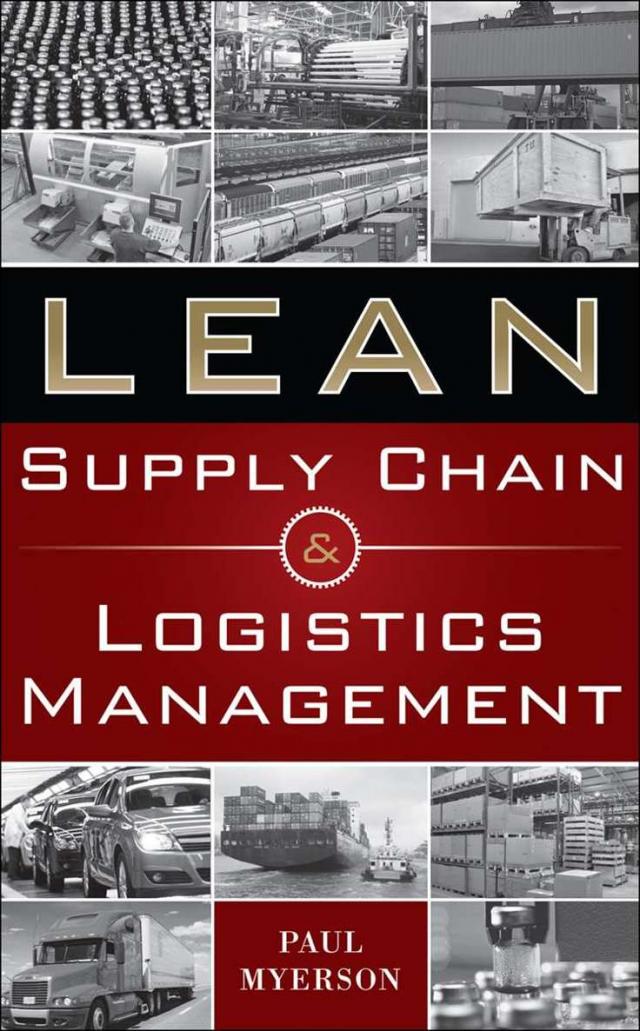


Three people worked on the same task at a cluster of desks sharing a printer. Every computer transaction generated a print and after about 10 transactions, one of them would stand up, go to the printer, sort out their own work from the printer output tray and return to their desk.
When the staff reviewed the layout, they recognized that time was spent walking to and from the printer and sorting through all the print-outs to find their own, so they came up with this revised layout.
Simply by turning the printer 90 degrees means that one person can now sort through the printer output without moving from their chair. As that person sorts through the print-outs, they hand on the work belonging to their two colleagues. And the end result? No more walking to the printer at all, and only one person rather than three people sorting through the work.
This simple measure—moving a printer—created an increase in throughput of more than 5 percent.
PLAN
Lean Case Study: A Lean-Six Sigma Duo for the Office*
The experience of a European life insurance provider highlights the lessons learned from transferring Lean from the shop floor to the office, as well as providing a deployment model that integrates Lean, Six Sigma, and process management.
Combining Lean tools and the Six Sigma methodology has become popular during the last 5 years. However, most of these efforts were focused on manufacturing operations. The experience of a European life insurance provider highlights the lessons learned from transferring Lean from the shop floor to the office, as well as providing a deployment model that integrates Lean, Six Sigma, and process management.
A First Attempt at Integrating Lean and Six Sigma
A leading life insurance company decided to implement a comprehensive process excellence program, using Lean and Six Sigma to achieve substantial cost savings. With aggressive cost reduction goals, the Lean aspect of the program was considered the more critical to demonstrate credibility. As the first Six Sigma project can take between 6 and 9 months to complete, Lean efforts (through 1-week bursts of activity called kaizen) often take only weeks to deliver substantial improvements.
Having conducted some initial analysis, the team in charge of the overall effort decided to conduct a Lean pilot project to test the assumption of early wins. Using an experienced instructor who had used Lean extensively in manufacturing settings, a group of candidates was pulled together for 1 week of Lean training using traditional training modules.
While the training was well received, the Kaizen workshop revealed a number of issues:
Many of the tools could not be applied.
Changes could not be implemented within 5 days.
Ideas generated by the team had to be vetted by the managers in charge of the process.
Estimates of the potential cost savings were too high, causing management to lose interest.
To achieve the targeted savings, the scope would have to be increased from a single process to the entire value stream.
The Lean pilot area was not strategic and not aligned with the Six Sigma project selection effort.
Refining the Approach
The lessons of the early pilot program helped to refine the approach to deploying Lean in the office. The first intuitive step was to eliminate tools that could not be applied from the training program. Even more significant, a process management framework was added to the program as the organizing framework to identify potential projects and to sustain the improvements achieved. Finally, the Lean curriculum was integrated into the DMAIC framework to emphasize the message that the company was using a common problem-solving approach, with Lean tools focused on reducing cycle time and Six Sigma tools aimed at reducing defects.
The new approach to deployment was focused on process ownership: An initial two-day workshop with the leadership team responsible for a business process focused on mapping the entire value stream and identifying a set of key metrics. This workshop was followed by a period where a team of Black Belts validated the process map and collected data. Then, a second management team workshop reviewed the initial dashboard, developed a future state map and identified a list of high-impact projects that would be necessary to accomplish the future state. This approach ensured that all process improvement projects had a strategic focus and were based on a real business needs. Finally, the leadership team reviewed the list of projects and identified which methodology (Six Sigma or Lean) should be used to address each.
Once the Lean projects had been identified, internal facilitators went through a 5-day training program to become Lean experts. In this role, they helped select the team for the kaizen event and worked with the leadership team to ensure that the team charter was narrowly focused on one specific measurable goal.
The kaizen event itself was split into three parts:
First Kaizen Workshop: A 2-day workshop was used to define the problem, collect data, analyze the issues and generate ideas on how to tackle these issues.
Validation: The initial workshop was followed by a 2-week period during which the Lean specialist with the team validated the assumptions behind its ideas, collected additional data and ensured buy-in from the management team.
Second Kaizen Workshop: During a 3-day period, the team reviewed the additional data, developed an implementation plan and completed the new process design.
Moving away from the typical kaizen approach was critical to ensure that management and colleagues were committed to the project, as well as to avoid overestimating the impact or underestimating the effort required to implement.
Lessons Learned
The initial projects generated valuable insights into what is different about applying Lean in an office environment.
1. Quality of the Inputs Is Critical: While quality of the inputs is obviously a concern in manufacturing processes, in service businesses the importance of getting customers to provide correct and complete information is crucial. In a manufacturing environment, one can typically assume near defect-free inputs. For a service business where the customer is the supplier, substantial error rates are typical. In one case, only a third of all incoming applications were accurate and complete. This results not only in substantial rework but also causes enormous delays and increases the number of items in the workflow, which in turn results in backlogs, expediting and numerous other wastes. Linking a Lean effort to streamline the process flow with a Six Sigma effort to improve input quality can be very powerful. Even without trying to improve the quality of the inputs, simply by separating those items that are ready for processing from those that require investigations and rework early on, significant results can be obtained: Incomplete applications no longer clutter the downstream processes.
2. The First Process Step Is the Pacemaker: One of the fundamental ideas of Lean is the concept of takt. Takt time is the rate of customer demand, and in a manufacturing environment this concept is typically used to smooth production. Manufacturers have significant control over their inputs and can instruct suppliers as to when to ship how many parts. In services, this concept is more difficult to apply, since in most cases the customer also is the supplier and the company has little or no control over the volume and sequence of inputs. With uncertain demand and a steady capacity, this often results in significant wait times for customers. Applying the Lean principles to a service process requires either stabilizing the flow of inputs or creating flexible capacity. Either way, where a Lean implementation typically starts with the process closest to the customer, for service businesses it typically means starting with the processes closest to the supplier.
Streamlining the work flow of all subsequent processes and stabilizing the process requires the first process to act as the pacemaker and to release new work in fixed quantities. For example, by releasing 60 applications an hour every subsequent operation now has a predictable volume to work with at any given point in time.
3. Cross-Train and Establish Teams: Few service businesses have a rigorous training program for the rank and file. In industries such as banking and insurance, few employees are able to handle a variety of tasks. Learning happens mostly on the job, and the turnover rate makes training a poor investment. Typically, jobs in a service business are defined rather narrowly to allow rapid training and easy replacement. As a result, flexibility suffers: employees cannot easily shift from one job to the next. That creates complex staffing problems and makes it extremely difficult to adjust to changes in the mix of business.
4. Design for Flexibility Is Key: Service businesses do not have the luxury of finished goods inventories as a buffer for the inherent variability of demand. And although they can stockpile work in process (backlog) and use it as a buffer to keep everybody busy, this inventory is extremely expensive:
Customer satisfaction suffers due to long response times.
Customer contact centers receive multiple inquiries from customers who want to know when their application will be processed.
Systems are needlessly complex as they must be designed to hold and store backlogs.
Management systems are needed to track the status of individual tasks.
Overall, local efficiency soars while global effectiveness suffers. An effective Lean deployment needs to consider the entire process from beginning to end.
5. Dependency on IT: Lean earned its reputation for speedy results on the shop floor, where it was possible to have Lean teams rearrange machines to achieve flow and limit inventory to a minimum. Kaizen events are designed to generate enthusiasm and momentum by encouraging teams to make changes as they go through the event, keeping a daily scorecard that tracks progress toward goals such as cycle times, inventories, etc. Using the same techniques in a modern service business, where workflows are driven by IT systems and the majority of work happens in the system can lead to disappointments: improvements take longer to implement, because they require changes in the wiring of the workflow. In these situations, a standard Lean approach will simply not yield the desired results.
Teams must have access to IT resources to ensure that necessary system changes do not end up in the long list of IT backlog but can be addressed outside the normal process.
Conclusion: Integrate into Process Management Framework
While application of the Lean tools and concepts can have a significant positive impact on service businesses, the tools need to be adjusted to reflect the differences that exist between manufacturing and services. Even more important, the effort should be integrated into a process management framework to ensure that the Lean projects tackle the key issues.
PLAN
Lean Case Study: Heinz Gets to One Number Forecasting*
Food Giant Makes Major Supply Chain and Financial Improvements as It Professionalizes the Forecasting Discipline
While many companies have used Sales & Operations Planning and related strategies to develop a consensus or “one number” forecast, many others are still trying to reach this goal.
Food giant Heinz is one company that has moved well down the path of forecasting excellence, according to Sara Park, Sr. Manager of Forecasting and Demand Planning at Heinz.
Writing in the most recent issue of The Journal of Business Forecasting, Park says that in the early 2000s, forecasting was formally the responsibility of brand management but, in practice, many functional groups (finance, manufacturing) each maintained their own separate forecasts.
As a result, Park says, “Everyone, especially Brand Management and Sales, ended up spending too much time debating “true demand.” Different groups were developing different forecasts based on use of different assumptions.”
However, the company was moving to professionalize its forecasting process and team. A group was developed, first under marketing, to improve the process. A key first principle: fact-based management. “We insisted that forecasting volumes (were) based on solid facts and data with a 100 percent dedication to accuracy,” Park said.
Until 2004, that small forecasting team was using basic tools: spreadsheets, AC Nielsen data, and shipment data from internal systems. Heinz then implemented a new demand planning system (from JDA Software), at which time the forecast team moved under the VP of Supply Chain.
From Top Down to Bottom Up
Perhaps the key process change in the Heinz journey was the switch to a “bottom up” forecasting approach. Previously, the forecasts started with a top down approach based on brand targets. It also relied heavily on static allocation of forecast volumes within business segments. Item level forecasting was “something of an afterthought.” For example, in the pasta sauce category, the critical SKU level forecasts were divided among different flavors based on historical percentages—which overlooked multiple factors and different growth trajectories among the different SKUs.
Park says Heinz made two critical changes:
Forecasting consumption first, then shipments; and,
Forecasting at more granular level, so that each SKU was handled properly for growth, promotions, etc.
Heinz also began to do a better job of forecasting by channel. This was critical because some channels, such as warehouse clubs, were growing faster than traditional channels, and had opportunities for additional growth. In the end, Heinz wound up with a brand-channel-fiscal month/quarter/year rolling forecast, providing significant insight to marketing, sales, finance and the supply chain.
The single forecast put the entire company on the same page. Planning and budgeting became more efficient and less contentious, as the same “volume call” drove every department’s own plans. When spending increased or decreased (for example, in the promotions area), “appropriate volume was either added or subtracted from the forecast.” When large customer events were added or moved, volume was correspondingly shifted.
The effort also had big supply chain benefits. Planners and managers were able to see potential supply issues or volume spikes much earlier, and work with vendors proactively to resolve them.
Accuracy Takes Center Stage
An important change came when Heinz’s CEO stated that forecast accuracy was now of paramount importance. In the past, “under promising and over delivering” was often considered a commendable approach. This type of CEO endorsement often also makes it clear that “hiding” bad news is not acceptable.
The one number change is not without challenges, of course. It puts a lot of pressure on the demand planning function to acquire and process data from many sources, and to hold the whole process together for the entire company. Forecasts are, as always, subject to error, and often major, long-term strategic decisions and investments are made on those forecast numbers. Ironically, demand planners have to sometimes really struggle to meet the needs of the supply and demand sides of the house—issues never really created in a world of multiple forecasts. Still, Park notes, “One-number forecasting has to be a principle that we want to live by.”
SOURCE
Lean Case Study: Automotive Lean (Outsourced) Supply Chain*
Background
An automotive company wanted to investigate the opportunities for cost savings by outsourcing the production of a module of a vehicle. Outsourcing manufacturing work can significantly reduce direct labor cost. However, if the supply chain is improperly designed, it could increase costs in shipping, handling and inventory, which can outweigh any potential savings.
Based on the client’s own preliminary analysis, they believed that outsourcing the production would probably be cost advantageous. In the detailed analysis, the client would like to examine several proposed options for outsourcing to determine which option would be the best to minimize inventory and transportation costs and while maximizing responsiveness and flexibility.
Methodology
The key investigation items are:
Which supplier(s) should produce the modules?
What is the optimal production/shipping process?
What operating patterns should be followed by each supplier?
How much inventory does each supplier need to hold?
How many dedicated shipping docks at the assembly plant and at each supplier will be required?
How many trucks will be needed to ship the finished modules?
The steps in the study are:
Calculation of cost savings from material handling, floor space requirement, tooling and storage
Calculation of manpower cost savings from direct labor such as material handling operators
Analysis of the impact of operating pattern, transportation, and inventory on costs
Results
After the best supplier and optimal logistics configurations have been identified, the key findings were:
By outsourcing, the client would save U.S. $2.15 million annually in direct employment costs.
Another $1.5 million can be saved in areas such as fuel and vehicle maintenance.
However, an extra $1.4 million (annualized) would have to be incurred to install new equipment on the supplier’s premises.
Changes to other cost components would be negligible.
The client can therefore expect approximately $2.25 million in net annual savings by outsourcing the production of the module.
SOURCE
Lean Case Study: Cessna E-Procurement Project*