The Secret Book of Flora Lea: a Novel, page 10


She found herself at the end of the hallway, where she opened the linen closet door and pulled out a wooden trunk with tarnished brass latches. She tossed aside the pile of coats, hats, and scarves that had been resting on top; they plopped to the ground in a poof of dust. She unlatched the lock with a key she kept taped to the inside of the frame of the closet.
Hazel opened the trunk. On top lay Flora’s tattered bear. Below, neatly folded in separate piles, were Harry’s sketches, newspaper articles, and photos. And at the very bottom, buried beneath all of it, rested a pile of letters from Harry that had been gathered together in twine. Even now, she didn’t bring them out, leaving the letters in the musty corner of the trunk.
Hazel had never told her mother she still had Berry. In fact, Mum had never even asked about it. This seemed as damning to Hazel as the fact that her mum had remarried and had another child: now a teenage son named the ridiculous faux-royal name of Barclay—nicknamed Tenny, for his last name, Tennyson. Hazel’s eyes rolled each time Mum said it, and Mum had asked her to stop. “It’s a family name, Hazel. Don’t be disrespectful. He’s your brother.”
Under the bear’s left arm, the seams were coming undone. She carried the battered stuffed animal to the kitchen. Sifting through the junk drawer, she found a needle and thread and sewed the torn area. She pulled the final stitch, tied it, and bit off the end. She rested Berry on the kitchen table next to the parcel. He looked at Hazel with a certain expectancy.
Hazel thought about the shimmering door to Whisperwood and the birds and lions and fish she and Flora had become all those years ago. She thought of the river, and Berry found on its muddy banks. She thought of tiny Flora, floundering in the Thames.
Stop!
This is when the panic always arrived: a flood of adrenaline mixed with the aroma of grass and mud. Then came memories of Harry, along with the guilt about how she’d forgotten to watch over her sister because she’d been alone with him, because the thrill of early desire made her forget what was truly important: her sister.
Hazel shook off the feeling and picked up the phone to dial numbers she knew by heart.
“Hallo,” Kelty’s singsong voice answered.
“Can you come over? I have something to tell you.”
Thirty minutes later, Kelty burst through the door without knocking. She wore a new minidress covered in geometric patterns of yellow and blue. How she managed to look chic all the bloody time would usually annoy Hazel, but she had other things on her mind just now.
Hazel looked behind Kelty. “Where’s Midge?”
“The museum is closed today. Fergus is home watching her.” Kelty dropped her bag on the bench by the door. “As it is, she prefers him.”
“I doubt that.” Hazel loved Kelty’s husband, the director of the Victoria and Albert Museum, but everyone, no matter who they were, preferred Kelty. Leading her friend down the dim hallway, Hazel flicked on the overhead light as they neared the closet, its door propped open by the trunk.
“Did you find treasure?” Kelty asked, and plopped down on the floor, daintily folding her legs into a V to her left, as if posing for a photo.
“Not hardly,” Hazel said, taking a seat beside her.
Kelty peeked inside the trunk and looked up, eyes wide. “Those are the newspaper articles from when Flora disappeared.” She looked again. “And Harry’s sketches!”
“Yes.”
“What’s happening?”
Hazel settled back on her bottom, already feeling better with Kelty near. The open trunk looked accusatory, its contents huddled for so long in its dark cave. Hazel lifted a yellowing Oxford Times newspaper. “They never put Flora on the front page. They treated her disappearance like it was just a bother.”
“Can we take it all out? To the kitchen table?” Kelty asked softly.
They made a few trips back and forth with piles until Harry’s sketches were spread across the table along with Oxford Times articles, yellowed and curled at their edges. A photo of Flora at her sixth birthday in July of 1940 was the size of a postage stamp in the upper left corner of page four, the story of her disappearance summarized in a few sentences below.
“The Blitz took up all the news in the nation,” Hazel said.
Kelty sifted through the pages. “Yes. Children dead on the streets of London, and Flora lost in the mayhem.”
GERMAN BOMB KILLS 64 AT BALHAM STATION IN THE LONDON UNDERGROUND.
CHURCHILL SUCCEEDS CHAMBERLAIN AS LEADER OF THE CONSERVATIVE PARTY.
PRINCESS ELIZABETH DELIVERS HER FIRST PUBLIC SPEECH ON THE BBC: SHE IS FOURTEEN YEARS OLD.
Flora was a footnote among great historical events.
Hazel picked up Harry’s sketches, some as small as the palm of a child’s hand, and others filling sheets of paper torn from the back of schoolbooks. Occasionally, when Bridie could afford it, she bought Harry a real sketch pad.
Hazel’s eyes watered a bit as she gazed at young Harry’s intricately drawn sketch of a three-mast ship on a sea of stars and clouds. “He drew this the day after we read Peter Pan to Flora. He left it for us the next morning.” Another of his sketches was of a shattered tree lying on limp grass. “This was the day lightning felled an oak in the field.”
There was a drawing of Hazel running across the woodlands. “He drew this on the summer solstice.”
“Why have you kept all of these?” Kelty asked quietly.
“I’ve kept everything,” Hazel admitted, “thinking someday I’d spot an overlooked clue.”
“I think of Flora all the time. Still—” Kelty said.
“How could we not?” Hazel glanced down, then back up at her friend. “She’s everywhere and nowhere all at once. When the police saw Harry’s sketches, they were just awful, accusing him of being obsessed with both of us and having done something horrible to Flora. They questioned him to no end.”
“Oh no. I never knew that.”
Hazel looked to Kelty. An aura surrounded her friend, as it had that long-ago afternoon they’d met. A vivid intensity drew others to her flame. Kelty’s beauty wasn’t false like some women with perfect makeup and tailored clothes and pearl strands. Her beauty was wilder. She always looked, as she did now, as if she’d just come in from a hike or swim.
“Kelty,” she said. “I want to tell you about Whisperwood.”
“Whisperwood?” Kelty sat at the table and tapped her fingers on the wood in a staccato rhythm. “Wait, I know this… Whisperwood.”
“What do you mean?” Hazel asked.
“I forgot. I did forget until right now. Do you remember the first day I came over to the Aberdeens’? I was scared out of my mind and that woman—”
“Mrs. Marchman,” Hazel said. “The hag.”
“Yes, God, I had blocked out her name.” Kelty shuddered in exaggeration. “Anyway, when we went back to the bedroom, for a few minutes it was just me and Flora. I was crying like a two-year-old, and she was calm as a bird in a nest. She told me not to worry because you would take us to Whisperwood.”
“You remember this?” Hazel leaned forward.
“Yes. Then you came in and told me the story of Frideswide. And I thought that’s what she’d been talking about.”
“That’s all she told you?”
“She was what? Five years old? Yes, that’s all she said. But I remember it because it was such a pretty name. I wondered about it for a while but forgot until right now.”
“So if Flora said something to you, she might have said something to Harry or Bridie or Mum or—”
“The nurses. Or Father Fenelly.”
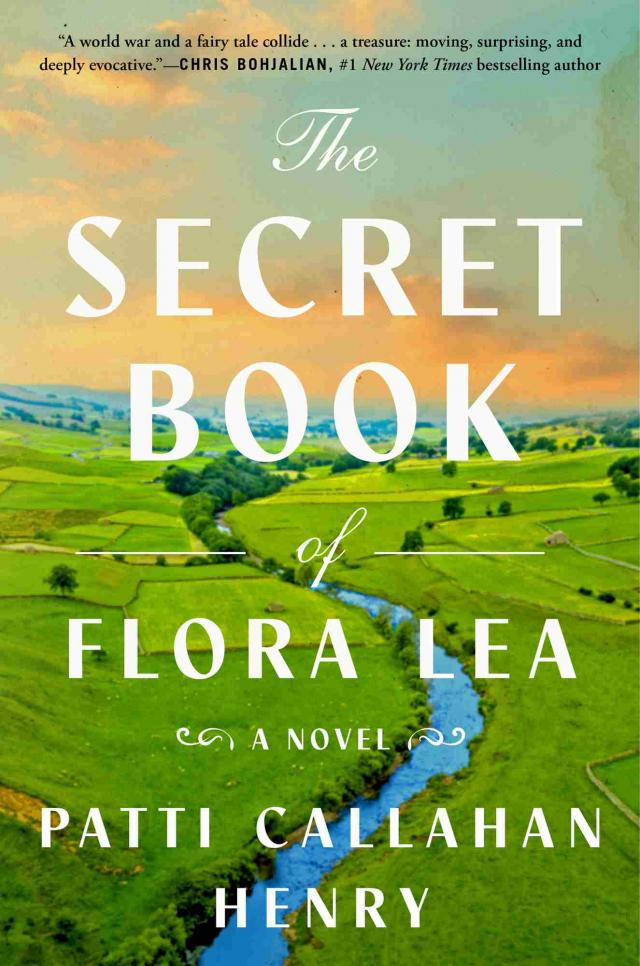
Kelty picked up the book, with its whimsical blue-and-green cover brightly displaying two girls with their hair streaming behind them. “But why didn’t you tell me about Whisperwood?”
“This was the land I created for me and for Flora when we needed something of our own. As lovely and kind as Bridie was, she was Harry’s mum, not ours. The house, too—we were guests. But this, Whisperwood, was all ours. The day Flora disappeared, she went looking for it, I’m sure of it.”
“You don’t know that.” Kelty held up the book. “So, you made up this exact place?”
“Not exact. Mine was more of an imaginary land. In the book, it’s more a full-on fairy tale, and she’s added other fairy-tale characters.”
Hazel went to the kitchen window, cracked it a bit to let in the spring air. “In this book, there are other differences. The American author took our safe Whisperwood and made it a place where battles are fought and a queen must be saved. Peggy Andrews made Whisperwood a scary place of adventure for two girls. It’s still our place, yet the woodlands have been invaded by dark forces and the girls—they’re the ones to save the land. None of that was my idea. I never meant for our story to be any sort of morality tale—Whisperwood was a wonderful place where magical things happened, a refuge for us while the world was burning around us.”
Kelty patted the top of the book and then flipped it over. “Who is this Peggy Andrews?”
“I intend to find out. What if she is…”
“Flora.” Kelty sat back and crossed her arms. “Adventure lies ahead.” Her freckled cheeks rose with her smile. “So this book is our first clue in twenty years. Where do we go first? America to track down this author? We can, you know, Fergus would buy us passage.”
“Of course he would.” Hazel gazed up at the phone. “Well, I did phone her.”
“What?” Kelty said. “Did you fall into a money pit?”
“Just burying myself in debt, but it’s for Flora.”
Kelty nodded. “A damn fine reason. What did she say?”
“Not much, and she hung up on me, so for now, I have to talk to Bridie Aberdeen. I can think of better things to do than facing her. You know I haven’t spoken to her or Harry since I left. I have to find out if Bridie ever knew about Whisperwood or told anyone else about it.”
“And Harry.”
“Not yet.”
“Hazel, you cannot ignore him forever.”
“I can for as long as possible.” She thought of the childhood vow she’d made in that damp church. She thought of her last moments with Harry. She thought of their kiss in the woodlands. She remembered screaming at Bridie and Harry that she never, not ever, wanted to see them again.
“Have you ever been back to Binsey?” Kelty asked.
“No, not once.” Hazel shivered although her kitchen was warm. “What a cruel thing I did—abandoning a family who’d loved me. But, Kelty, it was all too awful, and then time passed and then more time, and what was I to say? Or do? I was frozen with grief, and when I finally thawed, years later, I didn’t know how to approach them, or what to say. And it’s not like they ever came looking to find me, either.” A defensive bristle of anger filled her next words. “It seemed best to let it stay in the past. Too much hurt to bring it all back for any of us. There was and is nothing I can do to fix it.”
Kelty placed her arm on Hazel’s shoulder, and they stared at the blue-and-green book with the countryside and the sisters and the castle in the background, a trail winding through trees to the river of stars. Hazel wondered if it was too late, if the path to Flora was long overgrown.
CHAPTER 15
September 1939
Hazel and Flora took turns in the washroom before their first dinner in Binsey. Hazel scrubbed her sister’s face and hands, washing off grime from the trip, and the smoke and the dust of the station. Staring into the wavy mirror at herself looking back at her, the one with tangled hair and a flushed face, Hazel told herself to be brave.
In the bedroom, they changed into their matching favorite cornflower blue dresses with the white Peter Pan collars and took out a pair of neatly folded-by-Mum socks. Hazel plaited Flora’s hair like Mum had taught her and asked, “You ready?”
“Not yet,” Flora said.
“What is it?” Hazel leaned down and tapped Flora’s nose.
Her sister looked up at her shyly. “This isn’t Whisperwood, is it? We’re still in the real world, aren’t we?”
Hazel thought of all the times they’d visited Whisperwood in the past days and smiled. “Of course this is real. We’re at a house in Binsey, where we’ll stay until the bombs stop dropping. It isn’t home, but it isn’t our land, either, Flora.”
“Right now, it feels like I can turn into anything I want.”
Did she need to explain everything? Well, perhaps she did. Just like Mum would do. The sisters spoke in hushed voices, their foreheads nearly touching as they bent their heads together. From outside the door came the cling-clang of pots and pans and the muffled voices of Harry and Mrs. Aberdeen.
“Right now, we can only be us,” said Hazel. “And you can’t disappear. We are to go out there and have dinner with Mrs. Aberdeen and her son. Then we wait.”
“Wait for what?”
“For Mum to come get us.”
The sisters took each other’s hands and walked into the kitchen.
Mrs. Aberdeen stood at the stove, wooden spoon in hand, stirring a pot bubbling with what smelled like lamb stew. “Girls! Have a seat.”
Four mismatched wooden chairs crowded a table that had been set with cream-colored china plates with green and yellow flowers about their edges. The green linen napkins with crisp edges had obviously been ironed. Four milk-colored glasses circled the table, and Harry was placing the silverware.
The past few months had been so chaotic in their own home in Bloomsbury that Hazel couldn’t remember the last time Mum had set the table with the fine Arthur Price silverware that she kept in their pine hutch. Sometimes they even ate from their laps while the evening news droned on from the staticky wireless, with Chamberlain giving them the latest grim updates from the war. Mum sat mute, listening while the girls silently ate.
Harry set the last fork down, then looked up. He waited for them to sit before taking his seat. His curls looked as if he’d just come in from a wild windstorm and his grin made it appear he’d just won something. He echoed his mum: “Sit!”
He set the bowl of steaming stew in front of Hazel. Carrots and potatoes, sprigs of thyme floating in gravy. Mrs. Aberdeen opened the oven and pulled out a tray of puffy biscuits, tossed them into a ceramic bowl, and set them on the table. After she and Harry sat, Mrs. Aberdeen closed her hands in prayer, and they all did the same.
“Lord God, Heavenly Father, bless us and these, thy gifts that we receive from the bountiful goodness—”
Hazel opened her left eye, glancing around the table as Mrs. Aberdeen blessed the food. Sure enough, Harry was staring back at her when both of them were to have their eyes shut. He smiled at her and closed his eyes. Her secret was safe with him.
“—through Jesus Christ, our Lord, amen.”
Mrs. Aberdeen sat up straighter and looked at the girls. “I think you’ll love our hamlet. It’s as lovely as any can be. I have lived here for all my life. It’s not really a town and not a city at all. There’s only one road in and one road out.”
“Where’s your papa?” Flora asked, looking at Harry with adoration.
“He’s… gone.” Harry looked at his mum, who nodded.
Hazel sat quietly thinking that the word gone hid a story she wanted to know. If someone left, if they disappeared or drove off or were simply called away, there was usually a reason. She loved knowing why things happened, because if she did, it was quite possible she could keep them from happening again.
Mrs. Aberdeen turned her attention to Hazel. “My first name is Bridgette, and you can’t go calling me Mrs. Aberdeen; it is too many syllables. And my name is a tongue twister, so you must call me Mum Bridie—Bridie was my nickname as a child.”
“But we have a mum,” Hazel said.
Instead of tossing her the derisive look that Hazel was accustomed to from adults, Mrs. Aberdeen nodded. “Quite right, Hazel Linden. Then how about… Aunt Bridie?”
“You aren’t our aunt.” Hazel’s voice sounded harsher than she’d meant it to be.
“Then you will call me…”
Mrs. Aberdeen paused long enough in her uncertainty that Flora proclaimed, “Just Bridie!”
Mrs. Aberdeen lifted her arm like a queen holding a scepter. “It is proclaimed: I am just Bridie.” She smiled. “Tomorrow we’ll go into Oxford and mail the card to let your mum know you are well. And we’ll invite her to come visit us out here.” Bridie dipped her biscuit into the stew. “I must go into the market as it is, so I will take the mail. The autumn equinox is in two weeks, and we need supplies.”
“What’s an equinox?” Flora drew out the long, melodic word, stumbling over its end sounds.
Mrs. Aberdeen cleared her throat and spoke in the most beautiful singsong voice. “Once, long ago—”
“Just like our story!” Flora exclaimed.
Hazel reached under the table and squeezed her sister’s knee to be quiet.
Bridie continued as if she’d never been interrupted. “There was a goddess named Persephone, and during the summer she lived above the earth with her mother, but every year when the day of the equinox arrives, she must return to the underworld, to her husband, Hades.”
“Mum!” Harry exclaimed. “Don’t go scaring them. They’ve been here for but a minute.”
“That’s not scary,” Flora said.
Hazel observed Bridie with curiosity. Who was this woman who told stories about goddesses? Their mum had never told a story that wasn’t in a book, something she read to them. Hazel couldn’t help it. Curiosity bubbled to the surface. “Why live in the underworld? Why can’t Hades just come up to summertime with her?”
“Good question, Hazel. You see, as ruler of the underworld, Hades must stay there.”
Hazel thought about this. “So he can’t leave, but she can?”
“She can leave for six months of the year where she joins her mum on the spring equinox and then…” Mrs. Aberdeen trailed off as if the words on a page had run out. “That’s a story for another day.”
Harry twirled the stew with his spoon. “Mum likes stories,” he said.
“So do we!” Flora pronounced, and because she lisped so sounded like a though, and she came across as formal and sweet.