Newton, page 30


Less ideologically committed academics also paid tribute to Hessen’s analysis. For instance, although stopping a long way short of Bernal’s position, the American sociologist Robert Merton painted a very different picture of the seventeenth century from the traditional one. In a book that became a seminal text for historians of science, Merton substantially downplayed Newton’s status as a singular man operating solely on an intellectual plane. His Newton was just one particularly outstanding member of a large group of talented men who turned their attention towards scientific matters to meet the contemporary demands for technological improvement.17
The focus of these authors on ballistics, gunpowder and other military inventions stemmed from their interest in the relationships between science and warfare. Writing in the late 1930s, Bernal urged scientists to recognize that the Great War and the economic depression should oblige them to appraise the social function of science. Committed to organizing scientific research for society’s benefit, Bernal especially deplored Hitler’s regime for harnessing science to Germany’s military requirements. He quoted with repugnance the anti-Semitic article written for Nature by Johannes Stark, the Nazi scientist who denounced relativity and quantum mechanics as Jewish physics. For Stark, Newton was a prime example of a Nordic pragmatic thinker, so evidently different from Jewish dogmatists. Ironically, arguing from the opposite side, Bernal drew much the same contrast, stressing that Newton was an experimenter who displayed a characteristically English practical and common-sense approach to science. Since Englishmen are incapable of thinking systematically, claimed Bernal, the only hope for the country’s scientific future lay in receiving greater financial support from the state, and in assimilating Jewish immigrants with their powerful theoretical skills.18
Despite these radical reappraisals of Newton’s contributions, his ideological role as a detached genius survived. Bernal’s dream of government-funded science was unfortunately realized: because of the Second World War, money was channelled into military development, precisely the application he had tried to eliminate. In the 1950s, horrified by the atomic bomb, scientists were forced to confront the consequences of their research. One solution was to make science a purely theoretical endeavour. Einstein, who had been one of Stark’s targets, recommended turning to Newton for solace. Perhaps thinking of how he had himself been accused of encouraging the American bomb programme, Einstein used a military metaphor to portray Newton ‘as a scene on which the struggle for eternal truth took place’, one of those creative intellects automatically absolved from responsibility for misusing scientific knowledge.19
During the Cold War, when people were trying to make sense of recent upheavals by placing them within a longer historical context, history of science gained strength as a specialized topic within the natural sciences. Determinedly anti-Marxist scientific historians stressed that ‘history is made by men, not by causes or forces’. Like Einstein, they emphasized Newton’s innocent genius, sneering at the notion that his ‘sublime, impersonal science’ might have any connection with political or social thought. ‘Science . . . has the independence of any work of art,’ they protested, and ‘tells what we can do, never what we should’.20
In 1952, A. Rupert Hall, one of England’s earliest professional historians of science, directly contradicted Hessen’s claims that military requirements had directed scientific research. Hall restored the priority of abstract knowledge over technology. According to him, men like Newton had ‘used the problems of ballistics as a gymnasium in which to develop their powers for larger and more important researches’. Only in the nineteenth century, he insisted, had manufacturers turned for help to this independent science that had been created 200 years earlier.21
Hall’s mentor at Cambridge had been Herbert Butterfield, a history professor whose radio broadcasts had comforted huge post-war audiences by locating the true meaning of history in Christianity. Uniquely among religions, argued Butterfield, Christianity’s ethic of tolerance enabled people to accept new ideas while still retaining their spiritual outlook. For him, there had been only two outstanding events in human history. The first was the rise of Christianity, and the second was the Scientific Revolution of the seventeenth century, when the publication of Newton’s Principia provided an internationally recognized landmark that held deep significance for societies throughout the world. Whereas civilized ideals had formerly been transmitted by Christianity, now it was science that carried Western styles of thought to every corner of the globe. The Christian religion had evolved into a new secular faith of science, with the Principia as its biblical text.22
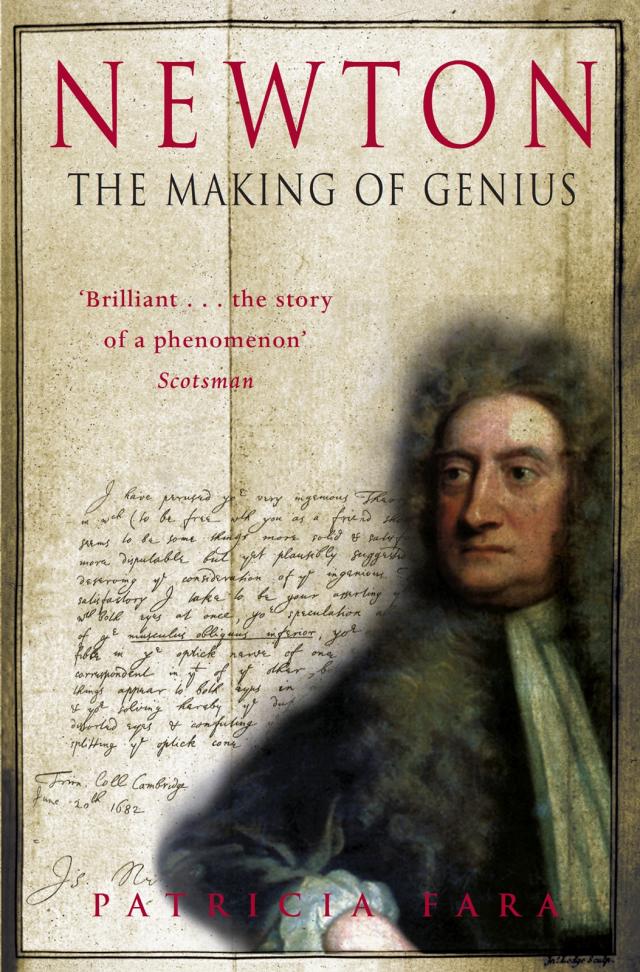
Butterfield’s profoundly Christian interpretation continues to dominate modern narratives of science’s history. Forty years later, Hall had become world famous as a Newton expert, and he published his own biography of Newton as an ‘adventurer in thought’, a being who was almost pure mind, and to whom ‘sensual and aesthetic experiences were denied’. Pronouncing that ‘thinking man is as much the hero of the Principia as sinful man is of Paradise Lost’, Hall made Newton an intellectual Adam in a scientific Bible.23 If the Scientific Revolution represents the mythical birth of a new stage in human progress, then Newton must be its scientific saviour. Perhaps that why so many people remark that Newton’s 1689 portrait, painted only two years after he completed the Principia, resembles an image of Christ Himself (Figure 2.1).
Modern icons
Newton was born on Christmas Day, 1642. This date now seems extraordinarily appropriate for a secular saint, but its significance was scarcely commented on by eighteenth-century writers. The Puritans had abolished Christmas observance in the mid-seventeenth century, and it was only during Victorian times that Christmas started to take precedence over Easter and become commercialized. England’s belated conversion to the Gregorian calendar added further confusion, since in France and some other European countries, Newton’s date of birth was 4 January 1643. Even in the twentieth century, some critics found it sacrilegious to conflate Newton’s birthday with a religious festival. But by the tercentenary of his birth, this fortuitous date provided a powerful image for Maynard Keynes, who portrayed Newton as a Christlike figure, ‘a posthumous child born with no father on Christmas Day, 1642 . . . the last wonder-child to whom the Magi could do sincere and appropriate homage’.24
The year 1642 also saw Galileo’s death, but because of the complicated calendar changes, this only became significant in the middle of the nineteenth century. Victorians used this happy correspondence of Newton’s birth and Galileo’s death to corroborate the heritability of genius. One popular poet flamboyantly exclaimed, ‘On thee his robe the parting prophet flung.’ Even in sober journals, writers used this same image of exchanging garments to invest genius with religious, transcendent characteristics: ‘The mantle of the Tuscan sage seems scarcely to have dropped from his shoulders, when a mightier spirit arose to receive the garment, and to take office as the Interpreter of the Heavens.’25 Hawking exploits his own birth in 1942, 300 years later, to reinforce his image of being Galileo’s natural successor as well as the inheritor of Newton’s Lucasian Chair.
This emphasis on precise personal milestones is surprisingly recent. For example, that enterprising promoter David Garrick let Shakespeare’s bicentenary pass by unmarked. It was only in the second half of the nineteenth century that, fuelled by an increasing interest in the past, the cult of the centenary gathered strength. The British tourist industry benefited from the huge popularity of pageants and concerts, but academic historians grumbled about the frequent disruptions of their normal life, complaining that ‘We shall soon have as many centenarized heroes . . . as canonized saints.’ During the Newtonian ceremonies of 1927, journalists moaned that ‘celebrations are now of almost monthly occurrence, and some people may think there are too many of them.’ They were unaware how rapidly the frequency of centenary festivities would accelerate and become commercialized, so that now it is hard to recognize that they are a relatively new innovation.26
The term ‘celebration’ was originally reserved for religious occasions. Slowly its meaning expanded first to embrace royal ceremonies, and then to describe more mundane occasions such as birthday parties. In Hanoverian England, secular heroes like Newton assumed some of the cultural attributes of kings, earlier believed to be appointed by God as His representatives on earth and the possessors of special therapeutic powers. Voltaire remarked with amazement that Newton was buried like royalty, because in France it was still unthinkable to honour a commoner, however distinguished, with such splendid funeral rites. It was only during the nineteenth century that death became democratized, and ordinary people adopted ceremonial practices that had previously been the preserve of the privileged classes.27
Rituals are traditionally associated with religious observance, but members of secular communities are also bonded together by sharing in activities that symbolize their beliefs about how the world is ordered. Repeatedly performed, such rituals establish a continuity with the past, but they also constantly evolve over time as participants invest them with new significance. Scientific anniversary celebrations have become increasingly secular, money-making events, which emphasize a heroic ancestor’s importance but also reinforce the significance of modern science. They are uneasily riven by the tension between reiterating the scientific myth of progress towards absolute truth, and the inherent necessity of acknowledging that earlier convictions have been discarded. These shifts reflect the changing status of science as well as wider transformations in our attitudes towards remembering the past.28
In the modern Newtonian calendar, major festivals are associated with his birth (1642), death (1727), and the publication of the Principia (1687). Before the twentieth century, all these significant dates seem to have passed unnoticed. Although the French émigré Pahin-Champlain de la Blancherie did campaign to restart the historical clock from 1642, little attention was paid to his manifesto of 154 (more conventionally known as 1796).29 Proving a historical absence is, of course, impossible. How should we interpret the 1787 publication of Principia Botanica by the doctor Erasmus Darwin, Charles’s grandfather? Did he simply select a title with strong Newtonian resonances, or did he deliberately choose this significant date, exactly 100 years after the appearance of Newton’s own Principia? Although it seems strange to us, the lack of any contemporary references to a Newtonian anniversary suggests that his apparently neat timing was, in fact, coincidental. A century later, the Fellows of the Royal Society commemorated the fiftieth anniversary of Queen Victoria’s coronation, but passed over the 200th anniversary of the Principia.
Although 1787 and 1887 seem to have passed unnoticed, in 1987 numerous celebrations throughout the world marked the tercentenary of Newton’s Principia. Professional historians and scientists assembled for international conferences, those ritual occasions when participants adopt formal clothes for an official dinner, and an elder of the clan gives a keynote address valued for its symbolic value rather than its keen insights. At Grantham, in a bizarre re-enactment of a mythical event, Hawking promoted himself as Newton’s natural successor by ensuring that he was photographed in the Woolsthorpe garden, sitting beneath a supposed descendant of the original apple tree. For academic audiences, he tackled the conflict between triumphal pictures of progressive science and the need to reject older beliefs. Presenting himself in relation to Newton and Einstein, he portrayed modern cosmology as a comprehensive system that did not replace his predecessors’ models, but instead accommodated them as special cases.30
The 1987 anniversary celebrations of the Principia far outshone those commemorating Newton’s birth and death. An increasingly high premium has come to be placed on individual creativity, as illustrated by the virulence with which Shakespeare experts argue over their hero’s authorship. Newton’s own book has acquired the status of a scriptural text. In 1942, one enthusiast suggested that ‘the tercentenary of his birth might be celebrated by a re-reading of Principia’, conceding only that a translation might be substituted for the original Latin. By 1998, a first edition of the Principia fetched nearly £2 million in a New York auction house. Singling out the Principia as a unique text distorts the past by consigning all its predecessors to oblivion and also obliterating the individuals who contributed to its production and dissemination. Similarly, Newton’s apple paradoxically condenses the birth of physics, which relies so heavily on mathematical reasoning, collective observation and institutional research, into a flash of inspired theoretical insight in a secluded country garden.31
Intellectual capital is now invested in publications, the quantified measure of academic achievement for individuals as well as for institutions. Compared with Newton’s contemporaries, we invest relatively little significance in the place where an idea originated. The most recent monument to Newton, Paolozzi’s statue (Figure 1.2), is located not in a site imbued with the spirit of Newton’s personal genius, but in the forecourt of the British Library. Like the Library itself, this statue raised academic hackles and was the victim of governmental cutbacks. Originally intended to be accompanied by other British intellectual heroes, Newton now sits in solitary splendour, a national scientific figurehead who owes his bronze existence to commercial sponsorship by a football pools consortium.
Horrified by Paolozzi’s deliberate references to Blake’s image of Newton (Figure 6.1), critics wrote angry letters to the press accusing the Library of indulging in ridicule. In private, lavatorial comparisons flourished, compounded by rumours that the Library had taken revenge on authoritarian planning officials by orienting Newton so that his back pointed towards Camden Town Hall. Paolozzi and the architects hotly defended his reinterpretation of Newton, comparing it with Auguste Rodin’s Thinker and insisting that it presented a subtle yet Michelangelesque vision of science’s ambiguous role. Blake contrasted a mechanical Newton, perched on a rock, with his organic aqueous surroundings, but this robotic bronze statue is seated on a hard geometric pedestal amidst a sea of square paving slabs. Paolozzi’s Newton may be less enigmatic than Blake’s, yet it evokes modern techno-science by radiating power through its design as well as its massive size.32
Newton’s prominent position in one of London’s new cultural showpieces indicates his significance as a national hero, and also the centrality of science to modern notions of scholarship. Yet while the Principia may have earned him this prestigious spot in an academic temple, it is his falling apple that endears him to the world. The British heritage industry has helped to convert Newton and his apple into commercial products. Grantham tourist literature invites visitors to drive out to the Sir Isaac Newton pub, which disappointingly turns out to be not an idyllic thatched cottage, but a characterless modern building whose sign shows a bemused Newton about to be hit on the head by an apple. Wooden apples and apple pies entice tourists at Woolsthorpe, Cambridge’s Newton Institute displays his ‘favourite pudding’ recipe, and Web browsers can choose between an expensive apple made of cherry wood ($129 in 2000), a replica of Newton’s ‘very unique’ walking stick, and an oddly labelled Newtonian fountain pen (the first fountain pen patent was not granted until 1884).33
Like the wood of the Cross, offspring purporting to be from the original tree flourish in biological research stations and university gardens all over the world. Their authenticity is now being tested by radiocarbon dating and genetic fingerprinting, expensive procedures that are presumably being paid for from national science budgets. The prominence of Newton’s apple in his mythology can only have been helped by chauvinistic campaigns to defend British varieties against European imports. Ironically, as environmental concerns become more pressing and also more fashionable, this former emblem of nature has become central to high technology. When Apple computers ceased producing their Newton range, newspapers punned liberally on the falling apple image: the headline above a cartoon very similar to Leech’s (Figure 7.1) ran: ‘Users get the pip as Apple knocks Newton on the head’.34
It was not until 1970 that the Bank of England started to make the currency an agency of nationalism by illustrating great heroes. Although the Post Office chose a large apple as its Newtonian symbol for its 1987 commemorative stamps, the Mint opted for the more subtle reference of a flowering tree on its pound note. This is no longer in circulation, but when the new £2 coin appeared near the end of the century, the phrase ‘standing on the shoulders of giants’ was inscribed around the rim. This unique style of tribute seems particularly suitable, since Newton’s major innovation was to insist that coins are milled to prevent clipping.35
The humble researcher who claimed to have stood on the shoulders of giants remains a potent image, even though Newton the dog-lover and pipe-smoker have disappeared. This version of Newton advertises science as a progressive, continuous project, whose participants belong to a community that transcends barriers of time and is rapidly expanding. As one physicist quipped, since the vast majority of all the world’s scientists are alive today, they ‘are uniquely privileged to sit side-by-side with the giants on whose shoulders we stand’. The expression has entered public awareness so deeply that it became the title of an Oasis CD -well, almost. Because of an unfortunate error after a few drinks in a pub, it is rather strangely called Standing on the Shoulder of Giants.36
The alchemy of genius
Newton’s scientific reputation may now be secure, but his character is constantly being reappraised. Many biographers are still haunted by the same allegations of corruption that troubled the elderly Voltaire, who confessed that he had become disillusioned with his idol:
I thought in my youth that Newton made his fortune by his merit. I supposed that the Court and the city of London named him Master of the Mint by acclamation. No such thing. Isaac Newton had a very charming niece, Madame Conduitt, who made a conquest of the minister Halifax. Fluxions and gravitation would have been of no use without a pretty niece.37