

Stepping From the Shadows, page 1


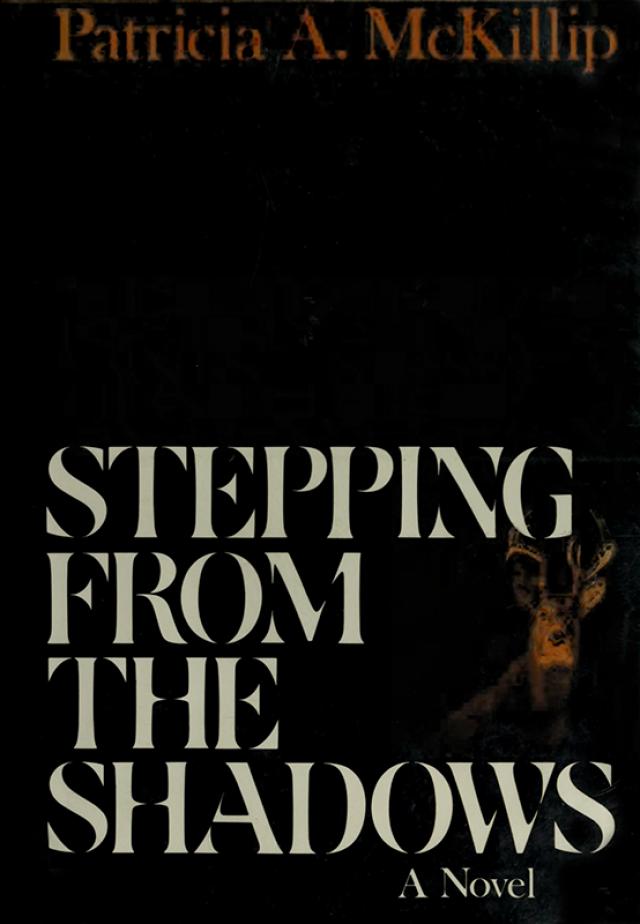
Stepping from the Shadows depicts the subtle and elusive transformation of a child into a woman—a woman, in this instance, gifted as a writer.
Frances Stuart is first encountered as a shy and remote young girl, wrestling with the emergence of her own identity and the power of her vivid and unruly imagination. At once to protect herself and to deal, in some way, with the creative forces within her, Frances has invented a shadow person, a storyteller who accompanies her through adolescence and beyond. As Frances’s life unfolds—against the Arizona desert, in small towns in England and Germany, on a campus in California—so her shadow copes with her experiences—particularly the awakening of her sexual feeling—weaving them into a compelling and symbolic tale, drawing Frances away from the real world she has only begun to taste.
Just how Frances resolves her deepening conflict is revealed in this sharply observed story, in which the way is paved for the woman who finally steps from her shadow, accepting the inner voice she has not dared to own.
In Stepping from the Shadows, her first novel written specifically for adults, Patricia McKillip draws on the rich, poetic style that has won her previous books such popularity with younger readers. She presents, with insight and compassion, a complex and vulnerable heroine whose doubts many readers will recognize and whose hard-won self-knowledge they will want to share.
Library of Congress Cataloging in Publication Data
McKillip, Patricia A.
Stepping from the shadows.
I. Title.
PS3563.C38S8 1982 813'.54 81-69151
ISBN 0-689-11211-4 AACR2
Copyright © 1982 by Patricia A. McKillip
All rights reserved
Published simultaneously in Canada by McClelland and Stewart Ltd.
Composed by American-Stratford Graphic Services, Inc., Brattleboro, Vermont
Manufactured by R. R. Donnelley & Sons Co., Harrisonburg, Virginia
Designed by Mary Cregan
First Edition
– for Peter
Stepping from the shadows
you started the hounds haying.
I sat in the field listening to a flute.
You brought a handful of buttercups,
too much color against your dark skin.
You ate one, and
the flute stopped.
So there was only the distant baying of hounds,
hoarse, urgent.
I wanted you to keep coming out of the tree-shadows,
to keep coming always,
bringing with you the distant warnings of hounds.
CONTENTS
1 – HELL-GIANTS
2 – WILD BOARS
3 – THE STRAW MAN
4 – TWILIGHT PEOPLE
5 – WASTELAND
6 – LAND’S END
7 – STAGMAN
8 – TWO SISTERS
1 – HELL-GIANTS
The morning air was green. Little speckles of sunlight floated in front of my eyes. Frances, who was going to get into trouble, was in the bathroom, telling herself a story. “Once upon a time,” she said to her toes, “there were two sisters living in a deep dark forest full of alligators…” I heard my mother from a distance: “Frances, get out of the bathroom, you’ll be late for school!” I banged on the wall for Frances to stop dreaming. Then I settled back to watch the motes in the sunlight dance like words in front of my eyes. Arizona, the sun said. Pizza pie, St. Thomas Aquinas, beer, Eisenhower, third grade, cactus, God, World War III, all-together-now:
All around the mulberry bush,
The monkey chased the weasel.
That’s the way the money goes,
POP—
“Frances!”
The song came bellowing out of the bathroom at the same time as the shout from the kitchen. Frances opened the door. She was barefoot, in her cotton underpants, and I moaned. She was always slow, always dreaming, and I had to nag her just to do things the way ordinary people did.
“You’ll make me late for school! Will you hurry up?”
She turned, stood on tiptoe, and leaned over the sink a moment, staring at her plump, quiet face full of freckles, and her two front teeth missing. She whispered, “Pop,” and disappeared, so the mirror went blank.
I said, “Hurry up! Get your uniform on! Get your shoes on! Brush your teeth, eat your breakfast—”
“Okay, okay,” she said mildly, padding into our bedroom.
“Did you do your arithmetic? Did you learn your catechism questions? Did you say your prayers this morning?”
“Yes, yes, yes,” she said. “Shut up.” She buttoned her white blouse, then plopped down on the bed with her face in the light. Her eyes closed; she slid one hand under her blouse, touching her nipples. Then she sighed, and her eyes flickered open again to the light.
“Frances!”
“Okay!” she shouted. “Okay, okay, okay, okay…” Her voice dwindled; she bent over slowly to pull on her socks.
“You’ll get into trouble,” I warned her. “You’ll get a demerit, and people will laugh.”
But she only shook her head a little, sniffing at the smell of oatmeal. “Are there raisins in it?” Then she sang very softly, “All around the mulberry bush…”
Finally, she was ready to go. She was still singing as she walked down the sidewalk. The morning was cheerful, and no one was around, so I let her. The blue desert sky was sitting on top of the saguaro cactuses; they were holding it up in their arms. The pleats in Frances’s gray uniform jumper were already wrinkling, and her skirt was pinned together since the button had popped off just at the last moment. She was hugging notebooks and schoolbooks—religion, history, spelling, reading—all covered with brown paper from grocery bags. She was squinting a little as she sang; her eyes were going blurry, but no one had discovered it yet. I could see to my own satisfaction: bits of sandstone, quartz, shiny stars of mica scattering the walk from someone’s driveway. A lizard panting under a prickly pear. Tar on the telephone pole. In summer, tar on the street got so hot it bubbled and blistered our bare feet. It was spring now. The warm spring rains fell so hard the streets turned into rivers within minutes, and we would stop wading in the gutters to watch the sheet lightning sizzle above the blue mountains. In summer, there were red ants and scorpions. In winter, people’s breaths froze in the air, and there were tales of things that happened before we existed, mysteries…
She changed songs, passing Dennis Fish’s house.
Three blind mice
See how they run.
They all ran after the farmer’s wife,
She cut off their tails with a carving knife,
Did you ever see such a sight in your life?
Three blind mice.
“Who was the farmer’s wife?” Frances asked. “Why were the mice blind? Why did they chase the farmer’s wife, and what’s a carving knife?”
“I don’t know,” I said. It was a mysterious song, out of the past. She changed songs again to a different language.
Tantum ergo sacramentum,
Veneremur cernui…
It had to do with God, incense, and fish. The world was jumbled with language, though it looked very simple: blue sky, houses in a desert, cactus, prairie dog holes, hummingbirds. But against my chest was long division, and beyond the sky were a thousand saints, praying for our souls.
Lupe Ramirez waved as she crossed the street at the corner. The sun paused like a halo behind a great, weather-beaten saguaro with one green arm pointing heavenward and a hole like an eye in its face where a small bird lived. Lupe Ramirez had tiny gold rings in her ears. They flashed as she stepped off the sidewalk onto the dirt, reminding me of a dream I had when the front wheel of the old tricycle I used to ride went bump and woke me.
“Don’t be late!” Lupe shouted. She reached the end of the vacant lot and crossed the road to the dirt hillock ringing the schoolyard, keeping kickballs from rolling out of it, rolling across the small wilderness of jumping cactus, yucca trees, and rattlesnakes, and across the gas station lot at the other end of the world where we bought Necco wafers and Tootsie Rolls, and across the city, and up to the blue secret mountains where the lightning began. Lupe’s body ascended the dirt hillock and disappeared.
The eight o’clock bell rang from the church. The bird hid in the cactus; the sun moved to attention above the cross on the school. A door slammed at the end of the block. Kelly Teague ran out, dropped her books all over the lawn, and kicked the garbage can at the end of the drive. It bonged, but it was full of garbage, so it didn’t move very much. She was still kicking it when we came.
“My brother makes me so mad.” The can bonged again. Her fists were clenched, and her face, which reminded me of an acorn with pale hair, was pinched. “He ate all the Sugar Smacks, so I had to eat cornflakes. He copied my homework; then he drew a face on it—I’m going to punch his eye out.”
“Then you won’t be twins anymore,” Frances said.
“We’re not twins.”
“Yes, you are.”
“No, we’re not. I hate him. It’s not fair having to be twins with someone you hate.” There was a shout from inside the house; her foot froze in midair, dropped reluctantly. She whirled, stamped back toward the house. “At least you get to eat all the Sugar Smacks by yourself,” she yelled back before the screen door slammed behind her again. I stood still a moment, looking at Kelly’s spilled books. Frances began to sing again, very softly, reminding me she was there, and we started walki ng again.
The jackrabbits had come out at night in the vacant lot, leaving their droppings like a dot-to-dot game all over the dirt. Frances veered suddenly. It seemed impossible to keep her moving in a straight line, out of trouble. She followed a trail of droppings over to a clump of tumbleweeds and thistles that shouldn’t have been rustling. She peeked behind it and found Dennis Fish. I thought he was eating his lunch, but he was eating from a little pile of sand. He gulped when he saw Frances. He had a milky face with freckles all over it and bright red hair in a butch. Frances squatted down, gazing at him.
“What are you doing? Why don’t you eat breakfast?”
He shrugged a little, listlessly. He was thin, but he always moved as if he had no bones under his pale skin. His face looked upset. “That’s weird,” I said. “Hating sand. You’re weird.”
“I like it.” His voice was a cross between a whine and a croak. He handed Frances a little plastic ice-cream spoon. “Try it.” He brushed a little at the hole he had dug. “Down there where it’s damp.”
Frances scraped at the bottom of the hole. She took a spoonful of sand, held it a moment in her mouth, then swallowed. Dennis watched her hopefully.
“Do you like it?”
“Crunchy.” She coughed a grain up, then swallowed it. “It’s kind of cool and dark. I thought it would taste like worms.”
“You’re going to get worms or something, eating from Dennis’s spoon. You’ll get weird, too,” I said, but she ignored me. She gave Dennis back the spoon and glanced at the alcove of tumbleweeds.
“Is this your secret place?”
“Only this morning. The tumbleweeds’ll blow away.” He added, poking at the sand, “I have lots of secret places.”
“Why?”
His face was growing closed, but he answered anyway. “Everyone laughs at me. So I find places to go. And my mom doesn’t like me.”
“She’s got to like you.”
“No, she doesn’t.”
“Yes, she does.”
“She doesn’t. She says I must have fallen off the moon because she’s never seen anyone like me.”
“The moon.” Frances’s chin descended to her bent knees as she studied him; her hands played with her shoelaces. I thought of Dennis Fish on the moon. It would be a secret place: silent, shadowless, colorless like his skin.
“What was it like?”
“I didn’t fall off the damn moon!” he shouted aggrievedly.
“Your mother said you did. She would know.”
“I didn’t,” he said, but without conviction. He dug out another spoonful of sand. Frances stood up, and his face lifted quickly, pleading. “Frances. Don’t tell anyone I fell off the moon. They’ll laugh.”
“I won’t,” she promised. The warning bell rang then, and Dennis grabbed at his books. We ran, books joggling in our arms, broke through the first graders, and slid home in the third-grade line just as Dan and Kelly Teague came panting behind us.
We sang “The Star-Spangled Banner” to Father Malachi. Then we filed inside and saluted God, His kingdom come, His will be done, and the flag, under God, indivisible, with liberty and daily bread for all. Sister Thomas Augustine had taught us many things: how there were forty-nine states and nine choirs of angels, how the decimals could be moved in long division, and how a soul could be moved through our prayers from the loneliness of purgatory to the bliss of heaven. How Nathan Hale had died for our country and Christ had died for our sins. Seven rows of bodies dusted their knees off after praying and sat down in seven rows of desks. All the shoulders were white; all the feet sticking out were white. Only Keith MacIntyre’s desk was empty. I watched it awhile; then something Sister Thomas Augustine was saying began to creep into my mind.
“…He lives in the shadow of darkness upon the earth and in the terrible fires of hell. He takes many forms of evil, and you must always guard against him. If you get angry or don’t want to obey your parents, that’s Satan, whispering in your ear. trying to pull you away from God’s grace into sin.” Sister Thomas Augustine was small, with crooked teeth and a cheerful smile, though she wasn’t smiling then. Only her hands and face showed. The rest of her was hidden behind black skirts, black veils, and shoes, a stiff white bib and white band over her forehead to keep her heart and mind pure. “Your purpose on earth is to serve God and live in perfect happiness with Him when you die. But God permits Satan to test us. and because of that, we have great evils in the world—murders, faithlessness, wars—when men listen to Satan rather than God.” The whole class was still in front of her. My arms were prickling, and I began to listen for a whispering beneath the air. Dan Teague stuck his hand up.
“What does he look like, Ster?”
“He is a fallen angel, once the most beautiful of angels, and his name meant ‘light.’ But he sinned against God, and lost his beauty, and fell from heaven. In earlier times, men drew him as a snake or as a winged man with horns and cloven hooves, like a goat. But no one really knows. So be good, children. Be very, very good.”
She paused, allowing us time to think about our sins. George Barnes, who was fat and breathed funny, wanted to know how hot hell was. “Very hot.” Was it hot as a stove burner? Hot as a barbecue fire? Hot as the desert in summer, when the air was an oven and the ground burned your feet? My thoughts drifted away. Hot was hot. Another question puzzled me. I watched a horned angel in my mind fall from light into fire. Satan had fallen from heaven. Dennis Fish had fallen off the moon. Where had I come from?
Sister Thomas Augustine’s voice faded. There was an open door beside her. It was a square of wood, and within the wood was a living world of dust and green cactus and blue sky. The gold striking out of the sky made me want to remember something I had forgotten…something older than my first pair of patent-leather shoes, older than my great-grandmother feeding the pigs in Oregon, older than the door shutting softly in the night and waking me…Where was I before that? Before there were words and numbers and saints. When there was only the hot earth and the sky, and I had no name. Where was I? I wanted to know suddenly. I needed to know. Where was I when the sun existed before I did? The desert outside was old, old; even heaven and hell were old. I was something new in an old world, and I did not know why.
I heard voices again, slowly; Sister Thomas Augustine was asking catechism questions. I knew them so well I could have stood and answered them one after another without being asked. Who made you? God made me. Why did God make you? God made me to know, love, and serve Him, and be happy with Him forever in heaven. Who is God? God is the Supreme Being who made all things. He dwelt among the cactus and the rattlesnakes; He gave His only begotten son unto the world, who hung crucified between the clock and the map of Arizona. Sister Thomas Augustine’s voice interrupted me, asking a question. Frances stood up, answered, and sat down again. Sister Thomas Augustine’s voice dragged her back up.
“Do you know, Frances,” she asked, “that you gave exactly the right answer to a question I haven’t asked yet?”
Frances sat down again, staring at her desk top. Her face was fiery behind her freckles. The class was laughing at her, and I was angry because she did such a stupid thing. Then I forgot about the laughter. I kept watching myself grow smaller and smaller in my mind, as far back as I could remember. I knew we all were part of God’s eternal plan, but it bothered me that I could find nothing beyond my memories except nothing.
“Frances Stuart!”
I jumped. Somehow numbers had appeared on the blackboard. Frances was blinking at them fuzzily, and I sighed. She couldn’t see. She couldn’t do even that right.
“Yes, Ster?”
“Well, don’t just sit there daydreaming. Go up and solve the problem.”
It was long division. Frances went up the aisle slowly, one hand over the pin in her skirt. Somehow, while the class waited for her, she got chalk dust all over her face and hands. She found one answer, but when she tried to check it with multiplication, it wasn’t the same answer. She stood there staring at the blackboard, blinking at the different answers. I put my fingers over my eyes. A bird sang outside. And suddenly I was outside with the bird in the blue sky, flying to my home high inside a saguaro and making the only sound in the world.


