

El Niño, page 1


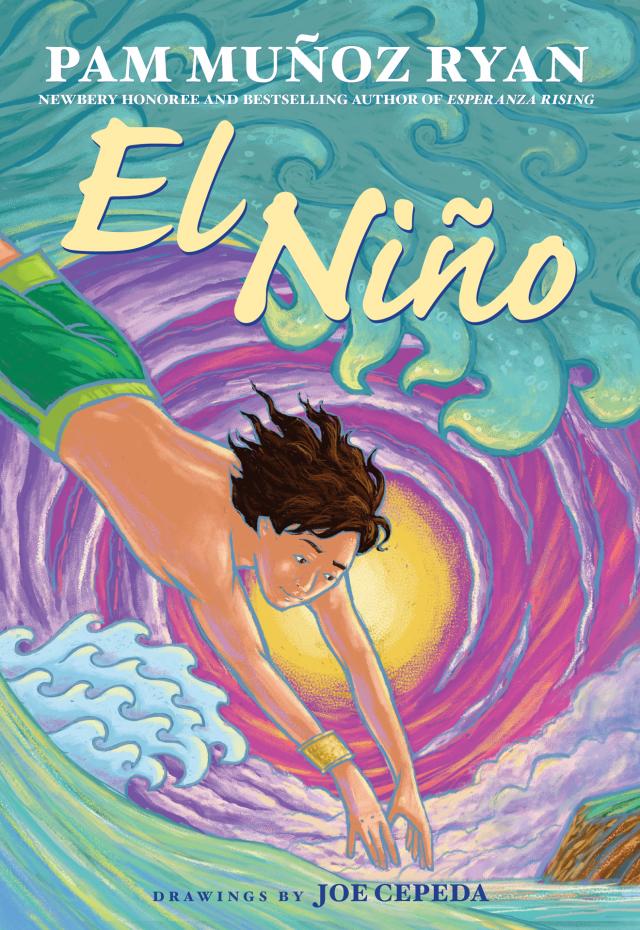
Title Page
Dedication
The Island
Above
Chapter 1
Chapter 2
Chapter 3
Chapter 4
Chapter 5
Chapter 6
The Inevitability of Sinking
Chapter 7
Chapter 8
The Seeds of Greed
Chapter 9
Chapter 10
Chapter 11
A Warm Red Bath
Chapter 12
Chapter 13
Below
Chapter 14
Chapter 15
Chapter 16
Between
Chapter 17
Chapter 18
Chapter 19
Chapter 20
Chapter 21
Chapter 22
Beyond
Chapter 23
Author’s Note
Acknowledgments
About the Author
Colophon
Copyright
ONCE, IN THE MINDS OF writers, explorers, and conquistadors, there was an island called California.
This stronghold in the sea existed long before the earth knew the wrath of unforgiving weather, at a time when the climate was a temperate harmony of luxurious sunshine, gentle rain, and only the most adoring breezes.
The island was ruled by an Amazonian queen, Califia, a descendant of the great myths from Greece, East Asia, and Spain. Magnificent in stature, keen of mind, and valiant in battle, she commanded an army of fierce and devoted women warriors. Her Realm, a labyrinth of cobbled streets bordered by rock houses trimmed in mother-of-pearl, was most famous for its towering mountains encrusted with gold—shining beacons even in the darkest sky.
In the surrounding waters, enormous pods of dolphins made their home, patrolling and protecting the land from intruders. A few times a year, at the queen’s order, the dolphins escorted a ship through the only safe passage—a winding channel above a dangerous reef. Sailors invited ashore were rarely allowed to stay. Nor did they dare pillage the gold. Those who tried were often never seen or heard from again. The ones who lived to tell were scarred for life. Only the loyal-hearted, who proclaimed allegiance to the queen and the island’s great purpose, joined the Realm. Even so, rumors about the unattainable riches traveled ear to mouth and mouth to ear, tantalizing those in every corner of the world.
Unbeknown to most, the island’s greatest treasure was a closely held secret, far more valuable than gold: priceless offerings from humankind—pearls of emotion relinquished to the islanders’ care during the most heartrending circumstances. These feelings were stored in countless tiny shells, each one closed tight like hands cupped in prayer. Every cockle was swaddled, cradled, and tenderly archived within a mysterious edifice—the Library of Despair and Sorrow.
The library—a safe harbor for sadness—could never be left unattended. For if the library was ever threatened or breached, and the contents released en masse, an avalanche of anguish would descend upon the earth.
Imagine the torment.
At the hour when most people opened a chapter on their dreams, an uncommon wind swept across the cliffs above Grandview Beach.
Oddly, the gusts descended upon only one house, a two-story white stucco with arched windows, a red tile roof, and balconies with wrought iron railings. The home was the caboose in a long row of houses built on a bluff above the Pacific Ocean. Wind chimes dangled from the eaves, and under less mysterious circumstances, the gentle tinkling and hollow tones accompanied the surf’s throttle. Now, though, the flurry whipped the chimes into a frenzy, as if they were church bells, heralding the arrival of nobility.
The windows on the house shuddered. The tile roof whistled. Upstairs, Kai stirred in his bed, clinging to the corners of sleep. The wind howled, the chimes flailed, and it sounded as if someone was pounding on a door. He pulled a pillow over his head and groaned, needing to sleep. To be rested for tomorrow.
Yet the chimes were insistent. He tossed the pillow to the floor, stumbled across the room, and opened the slider to the balcony. The wind plastered his pajama pants against his legs. He groped for the hanger above the dangling tubes and slipped it from the eye screw. He laid the chimes on the deck and did the same to two others.
Another loud thud startled him. He stepped to the edge of the balcony and peered into the yard.
Light spilled from the downstairs windows, and the gate to the landing above the beach stairs swung back and forth in the wind, slamming into the latch post. His parents never went to bed without turning out the lights, and they always secured the gate to the steep stairs. Had they gone out in this weather?
He checked their room. Both asleep, one of them softly snoring. He shut their door and opened Abby’s. Bathed in the soft glow of a night-light, his eight-year-old sister slept peacefully, clutching Mittens, a well-loved stuffed cat.
As Kai headed down to the first floor, the back door flew open and pictures in the stairwell rattled from the incoming draft. He stepped into the shadowy yard, now strewn with beach towels that had been draped over the clothesline. He hurried to the landing, where even in the dim light, he could see whitecaps on the tossed ocean.
With an abrupt switch, the wind stopped. The ocean settled, flat and calm. Clouds separated and the moon appeared.
Slowly, Kai scanned the water. Below, in a wide swath of moonlight, a figure swam toward the shore from the open sea. A large pod of dolphins circled the swimmer, their bodies and dorsal fins rising above and dipping below the surface. Dolphins had been known to protect and save humans in distress. Was someone in trouble?
He clambered down the six flights of wooden steps that zigzagged the bluff, and rushed across the sand. At the water’s edge, he cupped his hands around his mouth and called out, “Do you need help?”
“Kai-boy!” the figure answered, his name ringing over the silent beach. The sound was clear and present, the lilt achingly familiar.
He’d forgotten how much he missed her voice!
Kai staggered backward, dropped onto a mound of seaweed, and hugged his knees. Even though the air was cool, his skin felt warm and clammy. His heart quickened. Was it a dream?
In recent months, the night terrors and the sleepwalking that had plagued him the past two years had stopped. Hadn’t they? He pinched himself to make sure he was awake. Yes. He was here, on the beach. He knew the sea sometimes played tricks—green flashes at sunset, mirages of ships floating above the water, cloud islands on the horizon. But this?
The swimmer raised an arm and whisked her hand back and forth. She was signaling him!
He jumped up, ready to swim out to her. But when he took a step toward the water, she vanished. “No … don’t go,” he whimpered.
A zephyr gusted. The warm breeze embraced him. Suddenly, he felt thickheaded and weary. He turned and trudged across the sand and up the access stairs. At the top, he methodically latched the gate, walked into the house, turned off the lights, and found his way to his room.
He fell into bed and closed his eyes, holding on tightly to the vision of Cali, swimming in the ocean with a pod of dolphins.
Until the scene blurred and morphed.
Cali and the dolphins disappeared. The salt lifted from the sea like a finely speckled curtain rising from the blue, then parting to reveal an Olympic-sized pool.
Kai dove into the water. The first fifty meters of the breaststroke in the long course competition were a glide, free and fluid. He knew he was swimming well. At the end of the 200-meter race, he looked at his time and grinned as he climbed out of the pool. Even though parents weren’t allowed on the pool deck, Dad rushed toward him.
“Kai! Do you know what you did?”
“Personal best? Pool record?”
Dad shook Kai’s shoulders. “More than that! You broke the national record for your age group!”
Kai’s heart fluttered. A national record? Was that possible? His team crowded around him, clapping him on the back and cheering. His coach congratulated him, shaking his hand. Cali pushed through the mob, beaming. She threw her arms around him, then turned him toward everyone else and announced, “Meet my brother, the phenom. No one can catch him now.”
Kai couldn’t stop smiling. Cali—his North Star in the world he loved best—was proud of him, instead of the other way around.
The memory blurred at the edges. Before Cali faded from view, she reached out, as if begging Kai to come with her.
He tried to grab her hand, but it was too late.
“… and for our weather watchers, meteorologists have observed changes in air pressure over the equatorial Pacific. This could mean a powerful El Niño effect later this summer. For those of you who are cliff dwellers, or with sloping drives and walkways, now is the time to stockpile sandbags and prepare for sustained flooding. It’s inevitable, folks. All indications suggest the temperature of our seawater will continue to increase and an abundance of warm, moist air will rise into the atmosphere. That means—”
“—heavier rainfall and higher surf,” Kai mumbled at the same time as the announcer. He sat up, silenced the radio, and massaged the sleep from his eyes.
He peeled off his pajama pants and pulled on his swim trunks, then the new team clothes he’d carefully laid out on his dresser last night: gray sweatpants, long-sleeved T-shirt, and hooded sweatshirt, all with the turquoise logo of Aquarius Aquatics—three dolphins swimming in a circle. He checked inside the matching swim bag one more time for his swim caps, goggles, towels, water bottle, and a change of clothes. This would be his summer. Eat. Sleep. Swim. Try to be the athlete he once was.
As he slid into his deck sandals, he noticed the chimes splayed on the balcony deck. His mind flashed back to the frenzied wind, the beach, the dolphins, and …
Footsteps padded in the hallway, followed by a quick knock at his door.
“I’m up,” he said.
Mom poked her head into the room. Her thick black hair was tied at the nape, and she was already wearing her Pacific Aquarium lab coat.
Kai watched her eyes sweep the room, the walls covered in posters of underwater ocean scenes, mostly dolphins and manta rays, and one ominous shark. She had long ago stopped telling Kai he had too many. “Could we leave in fifteen? There’s a surgery this morning and they need another vet to scrub in. It’s pretty foggy so it’ll be slow going.”
After Cali disappeared, Mom cut back her hours and had only recently returned to work full-time. Kai knew she liked to be early, and he didn’t mind, especially today. “Um … Mom, did you and Dad go down to the beach last night and forget to latch the gate?”
Mom gave him a puzzled look. “What?”
“It was really windy and I got up to take down the chimes, then I went out to the landing to close the gate …”
Mom frowned. “I didn’t hear any wind. You weren’t sleepwalking again, were you?”
“I don’t know. I thought I went down to the beach and saw dolphins”—Kai shrugged—“and Cali.”
Mom closed her eyes for a moment. When she opened them, her lashes were wet.
“Sorry, Mom. Must have been a dream.”
“It makes sense you’d be thinking about her. I have, too. Hard to believe two years have passed.” Mom studied him.
He knew that questioning look: brows pinched with worry and lips pursed, trying to get a read on him. He always imagined her patrolling the house with a “feelings thermometer,” measuring everyone’s emotional temperature, always complaining to Kai and Dad that she couldn’t read theirs.
“Mom, I’m okay,” he assured her. “I promise.”
She nodded. “Dad and Abby already left. We should get going, too. I made us bagels and cream cheese to eat on the way, and Dad packed you a lunch. I’ll meet you in the car.” Crinkling her nose, she said, “What’s that musty smell? Check and see if you left a wet towel in here.” Then she closed the door behind her.
Kai lifted the pajama pants he’d just thrown into his laundry basket. Sand sprinkled on the floor and a shriveled strand of seaweed dropped from the folds. He had tracked seaweed into the house countless times without noticing. But this was still damp. Had he gone down to the beach?
Kai lifted a framed photo from his dresser and studied it. He stood between his sisters, one hand on Cali’s shoulder, and the other making bunny ears behind Abby’s head.
Kai and Cali had the same dimpled grins, brown eyes, olive complexions, and mops of dark hair. Abby was fairer, with green eyes, but she had the Sosa dimples, and was proudly holding a medal from her first Guppy Fun Swim. Cali mugged for the camera, pointing to her T-shirt, which read, I AM SIXTEEN GOING ON SEVENTEEN. She was like that, funny and bubbly, and kind, too, folding everyone around her, especially Kai, into her warmth and happiness. Without her, Kai felt like a castaway, washed upon a distant shore.
He set down the photo, tried to shake off the memories, and grabbed his duffel.
He didn’t want to be distracted. Not today.
Ghost fog. That’s what Cali and Kai used to call it when heavy clouds settled thick on the ground, shrouding the bottoms of houses and the trunks of eucalyptus trees, making the neighborhood look eerily suspended.
Mom gripped the steering wheel and leaned forward as the car crept down Ocean Avenue. She muttered, “Typical June gloom.”
Kai pointed to a shadowy figure riding an old rusty bike with fat tires. “Is that Ray?”
“Regular as clockwork,” said Mom.
Ray, their next-door neighbor, didn’t look like a marine anthropologist or the soft-spoken substitute grandfather he had become to Kai and Abby. Not here, in a bright orange sweatshirt, flower-print board shorts, and flip-flops. His curly gray hair poked out of a Padres baseball cap. A bag for beach trash dangled from a handlebar, and a side rack held the long-handled metal detector he used to sweep the beach for coins, donating everything he found to the Clean Ocean Fund.
Mom pulled up next to him and Kai rolled down the window.
Ray hopped off the bike. “Hey there, Kai. Usually only see your mom out this early.”
“I’m going to the swim club.”
“That’s right! You start training today. Can’t wait to hear all about it. By the way, have you seen the dolphins across from Grandview? Might be that pod you’re always looking for.”
“Really?”
“It’s worth a look. There’s a calf swimming next to its mother. It’s something to see.”
Could one of them be the dolphin Cali had named Luna? Kai was excited to search for the pod the next time he went surfing. “When’s Aaron coming home?”
“Wednesday. I can’t believe I have a grandson in college.” And then Ray looked from Kai to Mom, his eyes filled with apology. Cali and Aaron had been best friends their entire lives. She should have been finishing her freshman year of college, too.
Mom’s smile was sad and sweet. “It’s okay, Ray. We love Aaron, too. And can’t wait to see him.”
Ray patted the car and waved.
As Mom drove away, Kai called out the window, “Tell Aaron to come over as soon as he’s back.” He turned to Mom. “How did Ray know about the swim team?”
“I told him. He’s family. And I’m proud of you.”
“Mom, don’t go telling people. It’s not that big a deal,” he lied.
When Cali was thirteen, she’d been chosen to swim for Aquarius, too, the elite invitational team. By the end of her second year with them, she took a first at regionals. By the third year, with extra training from Dad—a nationally ranked swimmer in college—she was positioned to qualify for the Olympics. For as long as he could remember, Kai had dreamed of Aquarius and of having Dad’s undivided coaching attention. Cali had wanted it for him, too.
“Are you having second thoughts? Because you know how Dad feels. Once you commit to something—”
He shook his head. “I’m going to work hard.” He just didn’t want to get everyone’s hopes up, least of all his own. The past two seasons on his local swim team, his times had steadily dropped and he’d slipped to the middle of the rankings, a place he’d never settled.
He dug into the bag of bagels and tried to push away any negative thoughts. Being invited onto the team felt even more important now. It was a chance to break his slump and give himself and his family something to be proud of again.
“Remember, no matter what anyone says, the coaches chose swimmers on past performances and potential,” said Mom. “They see something in you.”
Kai groaned through a mouthful of bagel. “I know.” She was doing it again—trying to smooth over the grumblings from swimmers who hadn’t been picked for Aquarius. Some of their parents complained that Kai made the team because of the tragedy in his family, or because of Dad’s connections in the swim world. A few irate parents even wrote protest letters to the league, but nothing came of it.
“Just keep in mind what Dr. Malone told you about being in a growth spurt,” said Mom. “It’s not unusual to have a temporary setback. Everything will come together soon, you’ll see. How are you feeling about it?”
“Fine,” he said, knowing that’s what she wanted to hear. Then he added, “Excited.”
Her face relaxed. “One more thing. This club and this team, they might bring up a lot of … memories. About Cali. And sometimes anniversaries trigger—”
“Mom, stop!” How long was she going to keep talking about the grieving process? He was fine. Wasn’t he?
“All right, Kai.” Mom blew out a long breath, then tried to smile. “What could be better, right? No school, no homework except for summer reading, and swimming with Spinner almost every day. You two might as well be fish. Just promise me you won’t wait until the last minute to start summer reading. The log is due to your English teacher the first day back.”
Kai rolled his eyes. He didn’t want to think about homework today. He pointed to a patch of blue sky. “It’s clearing up. Can you hurry?”


