Bloody Mary, page 1
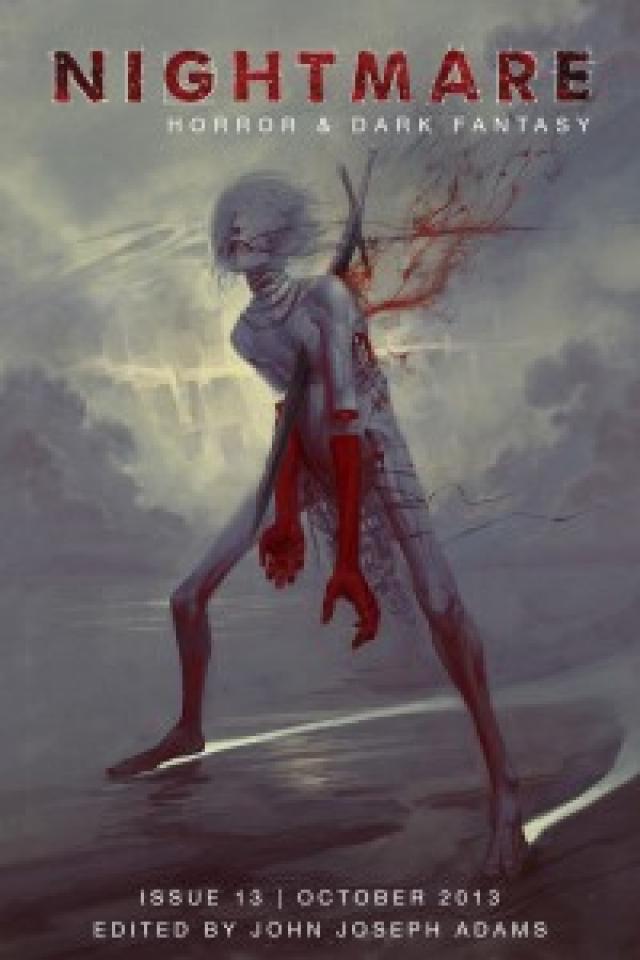


Bloody Mary
Norman Partridge
The boy isn’t very large. The way things are these days, he figures that’s a plus. He is less of a target at night, and for this reason he has come to trust the darkness. Strange to trust darkness in a world overrun with nightmares... but that’s the way it is.
Norman Partridge
Bloody Mary
The boy never goes out in daylight.
Oh, he could, and some do… but he doesn’t. Maybe that’s why he is still alive. He holes up in crawlspaces during the day. There are five houses he uses in rotation, all abandoned, none occupied by the dead or the living. As the world spins and sunlight and shadows travel the rooftops of his little town, he listens for a floorboard creak that doesn’t belong, hoping he won’t be discovered by the familiar boogeymen that have made this world their own since the dawning of 10/31—werewolves and witches, mummies and zombies, and other nameless things the boy would rather never see.
The boy isn’t very large. The way things are these days, he figures that’s a plus. He is less of a target at night, and for this reason he has come to trust the darkness. Strange to trust darkness in a world overrun with nightmares… but that’s the way it is.
It is not an exciting life. At night, the boy forages. He clings to the black spaces, shunning lightning flash and Jack o’ Lantern glow. During the day, he matches his silence with stillness. Occasionally, he dozes. Mostly, he spends his time with a flashlight and books, or sometimes a magazine. He likes the old ones with gory covers and pictorial articles about monsters, because they teach him secrets about the things he wants to avoid. On cold days he waits among wall studs and insulation, and on hot days he tucks himself next to cool concrete foundation. He lurks between sour earth and floorboards that rarely creak with tread inhuman or human, and he moves little or not at all, and he reads and learns, and he waits for night.
He waits until the pumpkins start to scream.
* * *
The pumpkins sit on porches. They sit there night and day. Some of them for years now. The ones that survived grew and thrived in ways that most pumpkins don’t, while the others rotted long ago. After the first calendar page was left unturned in the wake of 10/31, those ordinary pumpkins began the fast slide from orange to black. Within days their mouths were choked with cobwebs of mold. Within weeks their eyes collapsed into noses and their grins sagged into rotten frowns, as if with some strange withering disease. The ones that didn’t sluice away in the first rains petrified long ago. Those that remain are dry mummified memories of a world that no longer exists, as much a part of ancient history as candy, and costumes, and the idea of trick or treat itself.
But those other pumpkins, the ones that thrived—
They also sit on porches, but like sentinels. Survivors call them Jacks. They gleam, as if freshly waxed at the pumpkin patch. Razor teeth bear the dewy shine of pumpkin-sap, giving the illusion that a carving knife had touched them only seconds before. And they scream just as twilight disappears, a signal to the new masters of this bleak world as surely as a cockcrow once marked time for those who trod an older and brighter one.
But the Jacks are quiet in the daylight, unless something gives them cause not to be. Something like a cat. The Jacks like cats. And this particular Jack, waiting unnoticed on a porch, is no different.
But this particular cat is wary. It knows things have changed. This suburban block, its entire world. The family that cared for it is gone, and the place that was once its home is now a hovel for a brutish monster that (long ago) bashed out doors along with the frames which held them in order to accommodate its bulk. Just down the block, that creature sleeps (in daylight) on a pile of mattresses heaped on the sagging living room floor. Were the cat to scent those mattresses, it could still identify a faint trace of its owners. But then again, it would also scent them on a pile of gnawed bones long forgotten in one corner of the kitchen.
But the cat has survived, though there is much that has disappeared from its world and its memory. It has forgotten its own name, and other once-familiar behavioral triggers are buried so deeply they might as well be forgotten — the vacuum snap of a cat-food can opening, the heady scent of a catnip mouse, the rhythmic music of its own purr.
But some memories and some triggers — the enduring kind — have kept the cat alive, and one of those is still familiar, even in this new world.
That is the scent of a rat.
A hard fist of hunger swells in the cat’s belly as it creeps toward a fat knothole in the sagging porch. Its green eyes spy rat droppings along the railing that borders the hole, along with threads of gray-black hair around the splintered edges of the hole itself.
Close enough now, and still crouching, the cat waits for a meal to appear. It will wait a long time if it has to, but the watcher behind it will not wait. The Jack is ready for a meal, too. The cat has not even noticed it, for the huge pumpkin seems nothing more than an inanimate object. The Jack’s jaws gape silently, stretching into a spiked cavern of a maw. And it is only when that spiked cavern yawns wide that the cat becomes aware. Not of danger. For the cat is only aware of a meaty smell more enticing than a rat, a sudden scent that makes its stomach rumble in a way even the largest rat never could. Yes. This is a scent that stirs very old memories. It’s a T-bone fresh out of the butcher paper kind of scent, and it triggers a hardwired feline response.
The animal turns, just a little dizzily, ready to pounce on the prize. Already half-hypnotized as so many other animals have been by the Jacks, the cat is just about to spring directly into the mouth of the creature which has lured it when—
A young woman shouts: “Bad kitty! SCAT!”
The cat springs from the porch, not even seeing the shadowy figure sitting on a garden swing a dozen yards away. The Jack sees that figure clearly, eyes brightening to fiery red in seconds, gaping jaws ready to scream an alarm. But in this moment seconds might as well be hours, because this game is played much, much faster.
“Jack be nimble, Jack be quick,” the young woman says. “Or not.”
She fires a sawed-off shotgun.
The Jack disappears along with a fat circle of wall.
* * *
The Remington’s recoil bucks the swing backwards, and the young woman laughs as she takes a little ride. Back and forth, back and forth. Meaty orange guts drip down the ventilated wall, and the swing rocks some more as the Jack expires. And the chain creaks for a while, and the woman laughs for a while, and then both sounds are gone at the same time.
A few final splats on the porch, and all is quiet. The young woman sets the sawed-off shotgun on the swing, within easy reach. There’s room for two here on the old-fashioned glider, but she’s a solo rider. At least she has been until now. Just her and her pal Remington. That’s the way this ride goes, and every ride she’s taken for the last year, since the dawn of 10/31.
It used to be different, of course. Used to be… for a lot of people. And lately she’s been thinking. Just lately she can’t stop wondering if maybe, just maybe it would be easier if she wasn’t alone. Not the way she used to play it in that other world before this one. But different this time. Different, like—
No. The woman shakes the thought away. She doesn’t like to think. Not too much. That causes trouble, stirs things up. Old things and new things. So she looks around instead. There’s no sign of movement. The cat is gone. All that’s left is her wheelbarrow parked next to the swing. It’s heaped with her belongings, and she rises long enough to burrow into a canvas sack and dig out a can of Friskies.
The young woman figures the cat will return if she gives it a reason. Pop. Whisper. There’s a faded fluorescent green Frisbee hiding in the dead weeds of what used to be the front lawn, and she snags it without getting scratched by prickles. She fishes a clasp knife out of her pocket and opens the blade. By the time she’s emptied half the cat food onto the Frisbee, the scrawny black furball is poking its head around the weather-beaten front gate.
“Hey,” the young woman says. “C’mon. It’s chowtime.”
The cat regards her. She finishes dishing up and slides the faux bowl onto the cracked cement path that snakes from the front gate to the porch steps. Then she settles back onto the swing, raises one boot and tucks it under one knee, and knives a slab of cat food into her mouth.
“Ummm,” she says. “Salmon. You’re missing a treat, stupid.”
The cat looks at her, still considering. It seems like it takes forever, but the young woman kind of admires that.
And then the cat comes.
Not to her.
To the food.
* * *
The young woman can’t understand why the others are taking so long.
Because there are always others.
That’s why she fired the sawed-off shotgun. Oh, sure, she doesn’t like Jacks. She would have smoked that nosy little first-alert hunk of monster anyway. But she wants to know if there are others around, especially the more serious variety of shamblers from the dark. She’s dead tired and she needs to sleep somewhere safe tonight, and this gone-to-seed suburban block of sleepy little nowhere seems as good a place as any to rest her head.
Long story short: that’s why she did the dirty with her kick-in-the-door Remington. She figured it would wake up the neighbors. She doesn’t want any neighbors tonight. No. What she wants is to drop fifty milligrams of Diphenhydramine Hydrochloride and sleep like the dead. Hence: the shotgun and the rest of the armory that waits in the wheelbarrow. Hence: the waiting for neig hbors.
The young woman smiles. Fifty milligrams. Such a neat little number. She thinks of the old days, and other drugs she never measured with numbers. Ones that weren’t so neat, and the places that matched them—
No… no. Right now, this place is all that matters… this place.
And this place is quiet. Like: proverbial tomb quiet. It’s only been maybe half a minute since she smoked the Jack, but she’s already impatient, mostly with herself and the memories that chew at her from around the corners. So she closes her eyes and thinks of the fifty milligrams. That’s comforting. And ten seconds beyond the comfort zone she decides that she actually did get lucky and find herself a hunk of deserted post-apocalyptic paradise.
And: whoops. That’s when the front door creaks open at the house next door, and the young woman opens her eyes just in time to see the first neighbor.
She puts down the cat food can and grabs the shotgun.
Surprise, surprise.
It’s not a gargoyle, or a goblin, or a zombie.
It’s a boy… sixteen or seventeen, maybe.
But on the scrawny side.
* * *
If the boy hadn’t been asleep in the crawlspace when the shotgun went off, he never would have taken a chance like this. But he was asleep. Not dozing this time. Dreaming the sweetest kind of dream — a rescue operation. Marines rappelling from choppers. Shock troops on the ground. Monsters screaming and gunfire barking. Demon blood running in the gutters. All in the middle of the day.
So the boy exits the crawlspace double-quick, expecting that the cavalry (in some form) has arrived at long last. After all, he’s certain he heard the gunfire — maybe he heard some of the other stuff, too. He advances through the dark house, banging down the hallway like a drunk, yanking the front doorknob. He hasn’t yanked a doorknob that way in a long time, not since that last unwary, expectant night when he went trick or treating and left the old world behind.
But now—
No Marines in the street.
No Marines at all.
Just one person there waiting… a woman. Maybe eighteen? Maybe twenty? She’s sitting on the porch swing in front of the old Miller place next door.
At least he thinks it is a woman. It’s hard to tell. She looks a little bit like a few of the witches he’s seen. And no… she doesn’t have a broom. She has a shotgun, and it’s pointed right at him. That makes it difficult to concentrate. On the woman, especially. Because she is dressed like a witch, or someone’s idea of a witch. Big boots… the kind the boy’s dad always called Doc Martens even if they were really some other brand. Ripped black hose and a ruffled black skirt. A tight orange-and-black striped sweater and—
“Don’t move,” the woman says.
Their eyes lock. Hers are behind a mask. Not an expensive one. A little blonde princess mask, chopped off just under the pert little plastic nose so the boy can see the woman’s lips and the violet scar that slices past them and—
“You’re moving again,” the woman says. “I told you not to do that.”
This time the boy freezes. He thinks maybe he should raise his hands, but that would be moving too, wouldn’t it? Maybe he should ask her if he should do that. Maybe—
A rumble-of-thunder kind of sound, just across the street. Only bigger than thunder. Angrier. Like part of the world just caught a big left hook and is pissed off about it. The boy’s head jerks to see. Oh, no. He’s moving again, and he wasn’t supposed to do that.
But the woman is moving, too.
She rises, whirling, a sawed-off shotgun in her hands.
A cyclops bursts through the ruined doorway of the house across the street. Scaled and the color of a dead fish, the monster ducks its huge head and dips its shoulders as it clip-clops off the porch, pug-dog nose twitching as it catches human scent. Then it leers, and the bloodshot eye in its forehead blinks a single time, narrowing as it spots the young woman with the gun. A moment later the cyclops is charging, head inclined beneath a horn as thick as a rhino’s horn, hooves bucking a double-gallop beat across the cracked pavement of Maple Street.
Just that fast, the woman puts the shotgun to work. Thunder fills the street, each blast severing the previous one’s echo. The storm of sound caroms between sagging houses, and the monster roars in reply. Windows rattle. Stray shot bucks off the pavement, shattering one window and pockmarking another as the woman continues firing, hunching tight, her muscles tensed against the Remington’s recoil, her cropped red hair flying back as if blown by a heavy wind. The cyclops hunches, too — staggering backward with each blast as shot excavates a cavern in its belly — first stripping dead-fish scale, then flesh and muscle, and at last the part the killer with the shotgun thinks of as the chewy center… the sweetest secret treat of all.
The hot stink of gunpowder wraps the woman like a shroud. The sawed-off shotgun is empty now. She drops it and draws a revolver from the holster strapped around her waist. She cocks the hammer as the cyclops totters on cloven hooves, its blood spattering cracked pavement like red rain. The monster’s massive chin tilts forward, and then it avalanches.
The pavement bucks and ripples as the horned beast meets the street.
The woman’s back is already turned when that happens.
She advances on the boy.
“They call me Bloody Mary,” she says, her footfalls marking the spaces between her words. “What’s your name?”
The boy barely hears the question. The half-a-princess mask and the eyes inside it say more than words. The woman’s eyes are piercing. Burning. Below them, that violet scar runs like an arrow from the woman’s cheek to her jawline, and it points at the revolver below, at Bloody Mary’s finger on the trigger. That finger is twitching — just a little, and not enough to pull the curved bit of metal — but the finger doesn’t stop.
Twitching… twitching…
The cyclops is twitching too. And then its hooves rattle against bloody roadbed one last time and it’s dead. The boy still doesn’t speak. The woman does. “It doesn’t really matter,” she says, breaking the silence that seems very small in the wake of the shotgun roar and the roar of the cyclops. “I mean, your name. If it’s Joey or Mark or Bill. Those kind of names don’t mean anything anymore. Names should mean something more now. They need to get up and talk and tell you something. That’s all they’re good for.”
Bloody Mary turns and leaves the words hanging in the air, like the stink of gunpowder. At least, it seems that way to the boy. And the next thing he knows, the woman has yanked a chainsaw alive. She sets to work on the cyclops’ horn, whirring metal teeth spitting fragments of bone and flesh as she severs it like a dead branch.
The horn hits the street. Bloody Mary picks it up, hefts it, turns, and enters the house the boy exited. At that moment, the boy is ready to run. He glances at the front porch of the old Miller place — the shotgunned hole in the wall and the dead Jack puddled before it in a melted heap, already buzzing with flies the size of rats. He eyes the cyclops, waiting for another twitch. He stares up the street and down, listening for a werewolf’s howl, or the shuffling steps of a mummy, or the heavy tread of a stitched, dead giant charged with lightning and dark magic.
After all, another monster might have heard all that noise… and that means another monster — or more than one — might be coming.
But the boy hears not a single footfall.
The only thing waiting for him is the woman’s voice, coming from the open door.
“You get one chance,” she says, “and then this door closes.”
* * *
That night is the first one (in a long time) that the boy spends as he’d once spent so many nights — in a house, in a room filled with bright light, with another person. But not his mother, and not his father, and not a brother or sister. All those people are dead.
Bloody Mary is not like any of them. She sits at the dining room table, the disassembled shotgun spread across the wooden surface. The room smells of gun oil and propane, and the only sounds are the hiss of the camping lantern in the middle of the table and the scrape of little metal brushes she uses to clean the Remington. The black cat is sleeping on a bundle of blankets in the corner, and though Bloody Mary says nothing about it, she often glances at the animal. The cyclops tusk lays on the edge of the table, the meat around the root turning black. Though Bloody Mary stares at it, too, her thoughts are elsewhere now… and so are the boy’s.