The Coming Storm, page 1


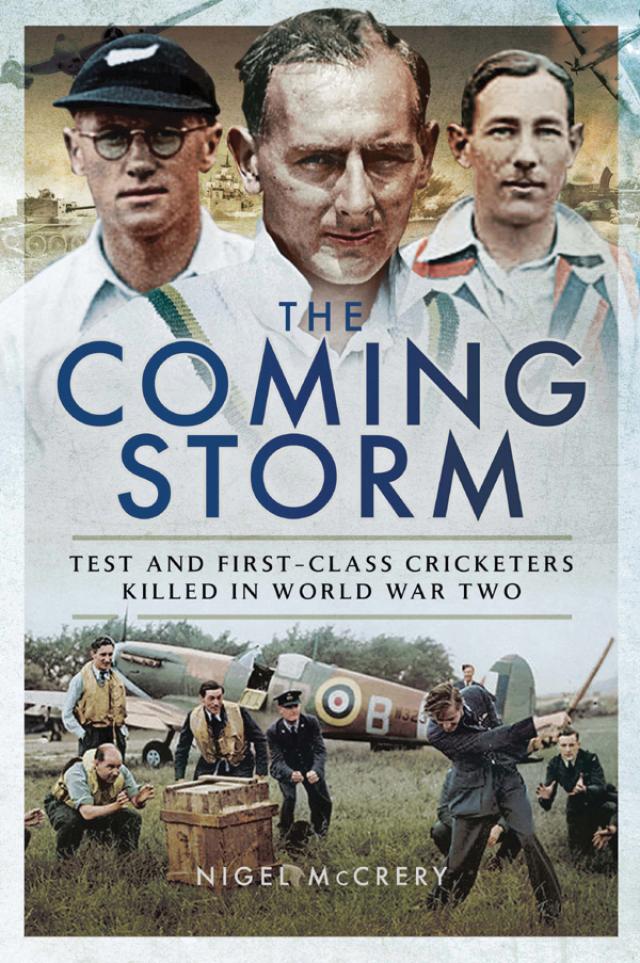
The Coming Storm
To
Richard Parkin
For fifty years of friendship, for being there at all the important times in my life and for supporting me. For the memories and for the laughs along the way.
The Coming Storm
Test and First-Class Cricketers Killed in World War Two
Nigel McCrery
First published in Great Britain in 2017 by
Pen & Sword Military
An imprint of
Pen & Sword Books Ltd
47 Church Street
Barnsley
South Yorkshire
S70 2AS
Copyright © Nigel McCrery 2017
ISBN 978 1 52670 695 9
eISBN 978 1 52670 697 3
Mobi ISBN 978 1 52670 696 6
The right of Nigel McCrery to be identified as Author of this work has been asserted by him in accordance with the Copyright, Designs and Patents Act 1988.
A CIP catalogue entry for this book is available from the British Library.
All rights reserved. No part of this book may be reproduced or transmitted in any form or by any means, electronic or mechanical including photocopying, recording or by any information storage and retrieval system, without permission from the Publisher in writing.
Pen & Sword Books Ltd incorporates the imprints of Pen & Sword Archaeology, Atlas, Aviation, Battleground, Discovery, Family History, History, Maritime, Military, Naval, Politics, Railways, Select, Transport, True Crime, and Fiction, Frontline Books, Leo Cooper, Praetorian Press, Seaforth Publishing and Wharncliffe.
For a complete list of Pen & Sword titles please contact
PEN & SWORD BOOKS LIMITED
47 Church Street, Barnsley, South Yorkshire, S70 2AS, England
E-mail: enquiries@pen-and-sword.co.uk
Website: www.pen-and-sword.co.uk
Contents
Acknowledgements
Preface
1940
Michael Herbert Anderson, 10-5-40
Colin Cokayne-Frith, 18-5-40
Patrick (Pat) William Rucker, 20-5-40
Reginald Edmund Compton Butterworth, 21-5-40
Alec Douglas Howie, 22-5-40
William Mark Welch, 25-5-40
Charles Talbot Orton, 28-5-40
Michael Harrington Matthews, 29-5-40
Robert Francis Hugh Philpot-Brookes, 28/29-5-40
Peter Thorp Eckersley, 13-8-40
Harold Gordon Jameson, 26-8-40
Michael Desmond Ponsonby Magill, 5-9-40
Clement Patrick Stephen Wareham, 30-9-40
Charles Hubert Boulby Blount, 23-10-40
Robert Prynne Nelson, 29-10-40
Geoffrey Bevington Legge, 21-11-40
George Gibson Macaulay, 13-12-40
Montague Valentine Bennett, 17-12-40
1941
Cyril Penn Hamilton, 10-2-41
George Jasper Groves, 18-2-41
John Compton Butterworth, 18-3-41
Lawrence Charles Eastman, 17-4-41
Eric (Budgie) John Hopkins Dixon, 20-4-41
Arthur Wellesley (Dooley) Briscoe, 22-4-41
Percival Barnes ‘Barney’ Wood, 9-6-41
Donald Frederick (Fezard) Walker, 18-6-41
Robert Alexander Tamplin Miller, 10-7-41
Gerald Henry Seeley, 23-7-41
Grahame Lawrence Cruickshanks, 8-9-41
Charles Richard Spencer, 29-9-41
Kenneth Farnes, 20-10-41
Alec Percy Stanley Wills, 7-11-41
Christiaan Frederick Beyers Papenfus, 18-11-41
Geoffrey Martin Warren, 21-11-41
John Devitt Elrick Gartly, 22-11-41
Geoffrey Charles Hart-Davis, 9-12-41
William Frederick Baldock, 30-12-41
1942
Vivian Alexander Chiodetti, 17-1-42
Richard Geoffrey Tindall, 22-1-42
David Frank Walker, 7-2-42
Frank Leslie Oliver Thorn, 11-2-42
Anthony Owen Leo Burke, 17-2-42
Gordon Calthrop Thorne, 2/3-3-42
Hubert Dainton ‘Trilby’ Freakes, 10-3-42
Gilbert Edgar Jose, 27-3-42
John Robert Shadwell, 25-4-42
Ross Gerald Gregory, 10-6-42
Thomas Bevan, 12-6-42
Henry Filby Myles, 15-6-42
Alastair Patrick Johnstone Monteath, 27-6-42
Francis Godfrey Bertram Arkwright, 1-7-42
David Price, 6-7-42
Denis Andrew Robert Moloney, 15-7-42
Norman Henry McMillan, 16-7-42
Howard Cyril Frederick Vella Dunbar, 23-7-42
Wilfred John Parry, 23-7-42
Clifford Mark Barker, 27-7-42
Allan James Edwards, 18-8-42
Ernest Arthur Gasson, 7-9-42
Edward James Ross Moyle, 24-10-42
Alfred Palmerston Cobden, 24-10-42
Conan Doyle, 24-10-42
Freeman Frederick Thomas Barnardo, 25-10-42
Claude Thesiger Ashton, 31-10-42
Roger de Winton Kelsall Winlaw, 31-10-42
Robert Hearfield Stephenson, 9-11-42
Roger Henry Charles Human, 21-11-42
Arthur Chudleigh Beaumont Langton, 27-11-42
Charles William Walker, 18-12-42
Peter Henry Bairnsfather Cloete, 19-12-42
1943
Ronald Clarence Crook, 17-1-43
Sydney George Fairbairn, 19-1-43
Ronald Anderson Gerrard, 22-1-43
Lancelot Townley Grove, 9-2-43
Frederick Gerald Hudson Chalk, 17-2-43
Geoffrey Phelps Longfield, 26-2-43
Stuart Patrick King, 28-2-43
Norman Henry Bowell, 5-3-43
Peter Henry Blagg, 18-3-43
Geoffrey Everingham Fletcher, 27-3-43
Paul Ewart Francis Cressall, 8-4-43
Charles Thomas Worsfold Mayo, 10-4-43
John Hamilton Bryan Barnes, 22-4-43
Leigh Arbuthnot Alexander, 28-4-43
Dudley Tabor Everett, 3-5-43
Kenneth Lovett Ridings, 17-5-43
Richard James, 29-5-43
James Bruce-Jones, 29-5-43
Alastair Keyon Campbell, 16-6-43
Eric Peter Hamilton, 15-7-43
Edward George Titley, 17-7-43
Robert Alexander, 19-7-43
Frank Bevan Kerr, 24-7-43
Hedley Verity, 31-7-43
Kenneth Bertram Scott, 9-8-43
Harry Lascelles Carr, 18-8-43
Rowland Gascoigne Musson, 24-8-43
Francis William Sides, 25-8-43
Francis (Frank) Samuel Hodder, 6-9-43
David James Falshaw Watson, 3-10-43
James Edward Mayne Alexander, 23-10-43
John Alan Jeffreys, 3-11-43
Peter Michael William Whitehouse, 19-11-43
Robin Evelyn Whetherly, 27-11-43
Bernard Howlett, 29-11-43
Tristan George Lance Ballance, 4-12-43
Glen George Baker, 15-12-43
Kenneth Wilkinson, 15-12-43
George Logan Talbot, 15-12-43
1944
William Jack Pershke, 21-1-44
Alastair Simpson Bell McNeil, 26-1-44
David Wyatt Monaghan, 27-1-44
Joseph Maurice Francis Connaughton, 12-2-44
Denys March Witherington, 16-2-44
David Arthur Sydney Day, 22-2-44
Foster (Peter) Moverley McRae, 25-2-44
Alan Louden Pearsall, 8-3-44
Edward (Jimmy) Henry Moss, 31-3-44
David Merry, 4-5-44
George Geoffrey James Fenton, 26-5-44
Cyril Matthew Francois, 26-5-44
Aubrey Davies Hodges, 27-5-44
Stanley William Emile Behrend, 30-5-44
John Philip Blake, 3-6-44
Arthur Denis Bradford Cocks, 6-6-44
William Alexander Roach, 8-6-44
Peter Marriott Raleigh Scott, 13-6-44
Harold William Dods, 18-6-44
George Durant Kemp-Welch, 18-6-44
John William Lee, 20-6-44
Charles William Christopher Packe, 1-7-44
Leslie Frank Hancock, 12-7-44
Donald William Garnham Ray, 12-7-44
Maurice Joseph Lawson Turnbull, 5-8-44
Edward Leslie Gibson, 11-8-44
Michael Trentham Maw, 13-8-44
Henry George Walters, 25-8-44
James Grimshaw, 26-9-44
Nicol Carson, 8-10-44
John Henry Hamlyn Whitty, 23-10-44
John Lawson Richards, 2-11-44
Cedric Alfred Humphries, 18-11-44
1945
Peter Ralph Cherrington, 20-1-45
Frederick Stratford Campling, 22-3-45
Sidney Clarke Adams, 24-3-45
David Russell Hayward, 21-4-45
Alexander Armstrong Shaw, 19-7-45
Charles Henry Sutton, 29-7-45
John Gordon Halliday, 3-12-45
Paul Wilson Brooks, 26-1-45
Ralph Alexander Spitteler, 14-3-45
William Murray Leggatt, 13-8-45
Alphabetical List
By Club and Country
Acknowledgments
I wish to thank the following people and organisations who have been of the greatest help in the writing of this book:
The MCC, especially Neil Robinson and Robert Curphey, MCC library and archive. Peter Wynne-Thomas, cricket historian and Nottinghamshire Country Cricket Club archivist an d librarian. Alan Clay, historian and researcher. Hal Giblin for his ever-present inspiration. Ashley McCrery, researcher. Richard Steel for his kindness and amazing ability to spot information and medals. Roger Mann for his kindness, and the contribution he made to the book from his amazing cricketing photograph collection. Roddy Fisher, Eton photograph collection. Roger Doherty for his hard work and help. Beverly Matthews, Tonbridge School archive. J. Rudman, the Uppingham School archive. Brian Turner, researcher. Emily Slingsby, Ampleforth College. Katy de la Rivière, Sedbergh School. Gráinne Lenehan, Marlborough College archive. Avril Harrison, Royal School, Armagh. Tom Keyton, Monmouth School. Clara Policella, Alumni Officer, Bedford School, for her time, trouble and speed. Martin Williamson, Cranleigh School archivist and first-class school historian. Dora Nash, the Oratory School, for her time and trouble. Sue Croucher, Epsom College, for kindly taking the time to find photographs of Aubrey Hodges (photos of Hodges copyright Epsom College). Catherine Grove, Charterhouse archivist, for her time and considerable trouble, many thanks. Jackie Wilkie, archivist at Aldenham School for going that extra mile with her help. David Bridges, Taunton School, for his help, speedy replies and additional help. Caroline Bone, Monkton Combe School, for all her time and trouble. Robin Brooke-Smith, Shrewsbury School, for his kind efforts. Alison Lainchbury, librarian and archivist, Leys School, Oxford, for searching so hard for the missing photographs. Simon Cope and Julian Reid, college archivists, Merton College, Oxford, for their persistence. Jane Teal, Christ’s College archive, Canterbury, New Zealand, for taking the time and trouble. Sebastian Puncher, Sandhurst Collection, RMA Sandhurst, for his determination. Medals Forum, Second World War Forum, First World War Forum. And lastly to Matt Jones, Jon Wilkinson, Barnaby Blacker, Katie Eaton, Mat Blurton and Katie Noble at Pen & Sword. If there is anyone I have forgotten, please accept my apologies and be assured I will include you in the next edition if you would kindly contact me.
Preface
I promised to write a memorial book for each year that commemorates the 100th anniversary of the First World War. So far I have done rugby, Into Touch, first-class cricket, Final Wicket, Olympics, The Extinguished Flame, rowing, Hear the Boat Sing, and football, The Final Season. I have now been persuaded to write two about sportsmen killed in the Second World War, this one and The Final Scrum due to be published next year. The idea behind these two books is the same as for the books on the First World War. I want to put flesh onto the bones of the lost. They were not just numbers on a casualty roll listed in some long-forgotten newspaper, but real people with family and friends, people who loved and were loved. I can’t do all of them so I have selected sportsmen. The lives have filled me with both sadness and interest. Some have been easy to research, others not so much. I am always amazed by people’s lives, some modest, some extraordinary, but all fascinating. Thanks to my father I have always loved cricket, so I suppose I have especially enjoyed writing the two books on first-class cricketers killed in both the world wars. I hope you feel the same. If I have made any mistakes – which I am sure with so many biographies I am bound to have done – please feel free to point them out and if I agree I will amend in the next edition. If anyone has any photographs that are missing from this edition I would be pleased to hear from them too. Some photos are not of the best quality either. My policy on this was better a poor photograph than no photograph. Again if you have a better quality one I would be glad to hear from you. It is my personal belief that cricket played before both the First and Second World Wars was the Golden Age. I know some disagree but for me there will never be ages like them. That we lost so much talent, so much promise, before it could be fully developed is one of the saddest legacies of war, whether sporting talent or any other.
N.B. All people identified in group photographs are as you look at the photograph.
Nigel McCrery
1940
Pilot Officer Michael Herbert Anderson
Cambridge University, Free Foresters
Four first-class appearances
RAF 600 Squadron
Died 10 May 1940, aged 23
Right-handed bat/Wicketkeeper
‘The First of the Few’
Michael Anderson was born on 11 December 1916 at Devonport, Devon. He was the son of John Slone Anderson and was educated at Clifton College, Bristol, where he was in the first XI. He also represented Lord’s School against The Rest at Lord’s Cricket Ground in August 1935. The Rest won by five wickets. On 1 October 1935, on leaving Clifton College, Anderson went up to Trinity Cambridge as a pensioner, obtaining his BA in 1938. He later married Priscilla Ann Troughton and they settled in Kingston, Lewes, Sussex.
A decent right-hand bat and above average wicketkeeper, he made four first-class appearances, three for Cambridge University and one for the Free Foresters against Cambridge. He also took part in two minor county matches both for Hertfordshire in 1936 against Norfolk and Lincolnshire. He made his debut for Cambridge against Northamptonshire on 9 June 1937 at F.P. Fenner’s Ground, Cambridge. Northamptonshire won the toss and decided to bat making 257. Anderson caught the Northamptonshire tailender John Edgar Buswell off the bowling of Norman Walter Dransfield Yardley for eight. Cambridge made 387 during their first innings, John Hanbury Pawle making 105. Anderson made 19 not out. In their second innings Northamptonshire made 174. Anderson caught the New Zealander Kenneth Cecil James off the bowling of Desmond Rought-Rought for zero and stumped Buswell off the bowling of Thomas Fraser also for zero. This left Cambridge 47 to win, Anderson making seven of these as Cambridge won the match by nine wickets.
He played his second first-class match for the Free Foresters against Cambridge on 11 June 1938, once again at F.P. Fenner’s, Free Foresters making 636 declared, Edgar Thomas Killick making 124 and Bryan Herbert Valentine 111. Anderson failed to bat due to the declaration. In reply Cambridge made 533, Paul Antony Gibb making 204 and John Ross Thompson 191. In their second innings the Free Foresters made 223. Anderson, batting second, made 60 (his highest first-class score) before being bowled by Bertram Dudley Carris. Running out of time, the match was drawn.
His next match for Cambridge was against Surrey on 15 June 1938 at the Kennington Oval. Surrey won the toss and decided to bat making 512, Edward Walter Whitfield making 198 and Fred Berry 104 not out. Anderson stumped the Surrey opener Laurence Fishlock off the bowling of Michael Kaye for 27. In their first innings Cambridge made 212, Anderson making zero, being caught by the English test cricketer Laurence Fishlock off the bowling of Edward Watts. Following on, Cambridge made 271, Anderson making five before being caught by Frederick Pierpoint off the bowling of Edward Watts once again. Surrey took the match by an innings and 29 runs.
Anderson made his final first-class appearance on 22 June 1938 for Cambridge against Hampshire at the County Ground Southampton. Cambridge won the toss and decided to bat making 330. Anderson opened the batting and was bowled for a duck by Richard Charles Lucy Court. In reply Hampshire made 333, Richard Henry Moore making 128. Anderson took two wickets. He caught Philip Weaver off the bowling of William Rees-Davies for 37 and stumped Clifford Andrews off the bowling of Michael Kaye for 15. Hampshire only needed 93 to take the match and made those quickly, only losing one wicket, that of Arthur Holt, lbw to William Rees-Davies for three. Hampshire won the match by nine wickets.