A Slave of the Shadows, page 21


I stuck out my tongue at her. If not for her pretty face and her stylish clothes, I’d find her the annoying brother I never had. Beside me, Father winced at my unladylike gesture, but held his tongue.
We reached the boardwalk on the other side and walked toward the hotel, passing the peddlers who lined the boardwalk, hustling their goods to passersby. I did a double take when a shopkeeper who stood idly outside his shop openly invited a well-dressed colored man in to purchase his goods. The shopkeeper smiled at the colored man and even offered his hand in a firm handshake. The sign hanging on a wrought-iron arm above his store indicated the proprietor was a cigar maker.
Ahead of us, a horsecar loaded its passengers. As the last passenger stepped on, a black woman and her child rushed up to catch the car, filled with conspicuously white passengers. The conductor put out his hand to refuse her passage. I saw the woman dare to challenge him, standing her ground and demanding to be let aboard. I was too far away to hear the words they exchanged, though I could tell they’d become heated. Finally the conductor gave her shoulder a rough shove and the woman lost her balance and landed in a heap on the ground. The conductor simply turned and boarded the horsecar. Seconds later it was moving along the iron track. I looked back to the woman as she rose and grabbed her child’s hand, then spun on her heels and stomped off.
We reached our hotel and checked in just in time to freshen up before meeting Kipling for supper. The twins were a library of stories from the journey and the sights they’d experienced along the way. Whitney’s hands were full, trying to get them to settle long enough to put on their evening wear.
“I don’t want to dress up.” Jack defiantly folded his arms, glaring at his big sister.
“I don’t care what you want, young man, put those clothes on and be done with it,” Whitney said sternly, her expression no-nonsense. He pressed his lips together and started getting ready.
Father was in the lobby waiting for us when we came down. “You look lovely, my dear.” He kissed my cheek.
Although his compliments remained foreign to me, it warmed me to hear them. “Thank you, Father.”
“How do I look, Mr. Hendricks?” little Kimie asked, twirling around while holding out the skirt of her yellow dress for Father’s inspection.
“Yes, Kimie, you are the prettiest of all.” Placing his black silk top hat on his head, he offered her his hand, which she proudly took and skipped out the main door with him.
THE CARRIAGE FINALLY RUMBLED TO a stop in front of a midsized building far from the main streets. In this neighborhood the streets were dark, without the gaslight lampposts that illuminated the main streets. The footman opened the door and gracefully bowed to us; offering a white-gloved hand, he assisted us out of the carriage. As I descended the carriage steps I glanced about, wondering why we were meeting Kip here.
“Father, I wonder why Kip would suggest we meet at a restaurant off the beaten path.”
Ducking to exit the carriage without knocking off his hat, Father stopped on the lowermost step to make his own inspection of our surroundings. I saw my confusion mirrored in his eyes. Turning to me, he offered a wary smile. “I say we find out.” He strode over to open the wooden door with a window in its upper half.
The restaurant was not like the brownstone buildings on the main streets, but simply constructed of lumber, with a few wide windows in its front wall. Through the windows I saw both Negro and white patrons at the white-draped tables. I sent an open-mouthed stare of shock at Whitney. She returned one of her own, then shrugged.
We followed Father into the establishment to be greeted warmly by a black man dressed in a crisp waiter’s uniform.
“Good evening, ladies and gentlemen. A table for five?”
“Um…” Father’s eyes darted around the room, scanning the diners who laughed and conversed over their meals. Skepticism had replaced his earlier jovial manner. Then his face relaxed as his eyes found Kipling, who was in deep conversation with a young black lady. “We are meeting Mr. Reed this evening,” Father blandly informed the man.
“Ah, Mr. Reed; let me show you to his table. Please, follow me.” The man guided us toward the table.
Kip glanced up as we approached and instantly stood to bow in a grand gesture accompanied by a boyish grin that put us at ease. “Well, hello, my Southern comrades. Welcome to New York. I hope you are ready for some fine hospitality.”
“I missed you and your craziness, my friend.” I offered a cheek as he leaned in to kiss it.
“I second that.” He stepped back with a wide smile.
He kissed Whitney’s cheek, then moved to shake Father’s hand. “Mr. Hendricks, always a pleasure, sir.”
“Likewise, Kipling.” Father delivered a wavering smile.
Looking at the twins, Kipling frowned, resting his fingers on his chin in thought. “Now, who are these grown-ups?” They beamed up at him, and Jack stood up straight.
“Those rascals belong to me,” Whitney said, and ushered the children to their seats.
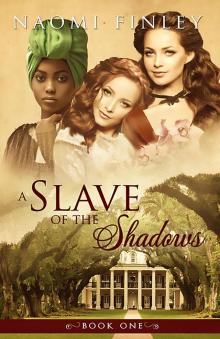
“I would like you to meet Miss Ruby Stewart, my assistant and a godsend.” Kipling placed a friendly hand on her back. She was tall for a woman, and dressed plainly, though tastefully. I guessed her to be in her mid-twenties. She regarded us with interest as she greeted us. Her eyes rested longer on me, and her brow furrowed. Then it passed as I smiled openly at her.
I glanced at my father, hoping he would remember his manners, as it was not our custom to address blacks by anything but their first name. Father seemed rendered speechless, so I quickly stepped in. “On behalf of us all, we are pleased to meet you, Miss Ruby.” I held out my hand and with a firm grip, she shook it.
“You as well, Miss Willow. I’ve heard so much about you.”
“Well, I hope he hasn’t been filling your head with nonsense.” I feigned a glower at Kipling.
“On the contrary, I assure you,” she replied politely, and offered me a seat by hers.
When the waiter came to our table, Father, who remained uneasy, managed to order a bottle of wine.
Kip addressed the waiter. “And could we get an order of those lovely sweet rolls you make here with the pecan butter, my good man.”
“Of course, Mr. Reed.”
“I was under the impression from your telegram that Mary Grace was accompanying you on this trip too. I thought she would be joining us tonight.” Kipling aimed his question at me.
“I, um, I was unaware how things worked here—I mean, I didn’t…” I stammered.
Father took over. “What my daughter is trying to say is, this is not the norm. We do not dine with the blacks. No offense, Miss…?” He looked at Ruby.
“Ruby, sir. Ruby Stewart.” She exuded remarkable confidence as she answered Father.
“Yes, Miss Stewart.”
I grimaced at Father’s bluntness and begged Kip and Ruby with my eyes to forgive his frankness.
Kipling spoke for them. “That is understandable. Do not forget, I am from the South too. I assure you, it is no different here. The free blacks are banned from almost all establishments. That’s why we met here tonight. I was eager for you to meet my assistant, and as I said, I thought Mary Grace would be joining us. The owner is a Dutch woman who is open to providing work for the blacks, regardless of threats and boycotting by the whites. She opens her doors to blacks or whites alike.”
“But why would these other, seemingly higher-class, people dine here if it is frowned upon?” Whitney asked.
“Because these folks are allies of the free blacks, and all blacks, at that. Many are standing in the fight for change and for equality. The abolitionist movement is rising even more than it was twenty odd years ago. Their voices are a powerful accompaniment to those of the blacks, and we are seeing the effects of standing united. We need to end the racial segregation and discrimination. The friction between the North and South concerning slavery is growing rapidly and spreading far and wide with every passing day.”
Kipling’s matter-of-fact explanation rattled me briefly. I gulped a mouthful of my wine as I eyed Father over the rim of my glass. I resisted the urge to squirm in my chair.
Father leaned back and observed the ambitious young man sitting before him, his expression thoughtful. “I would be careful who you become friends with, young Kipling,” he warned.
I seethed inside as I waited for Father to indulge in his opinions of how things should be run. After all, he was a Southern gentleman, and this was our way. To my surprise, he glanced at me and smiled softly before steering the conversation to agreeable pleasantries. Father remained a gentleman. The conversation remained light and sophisticated at this mixed-race table, making for a delightful evening.
THE FOLLOWING MORNING, FATHER DEPARTED early to meet with business associates on the affairs that had brought him to New York. At the end of the previous evening, Whitney and I had made plans to meet with Ruby at a coffeehouse in the same neighborhood.
The coffeehouse was small but quaint, exuding a homey atmosphere. The aroma of fresh brewed coffee and sweet pastries made my mouth water. The five tables were covered in bright yellow tablecloths, with bright bouquets of wildflowers in glass vases in the center of each. Both white and black patrons sat in the varnished maple chairs, some with their heads close together, scanning paperwork spread on the table in front of them, others conversing. Patrons at one table discussed the abolitionist movement and politics. Ruby had secured a table at the back and sat reading a newspaper. That in itself made me do a double take before going to meet her.
“Ah, ladies,” she said by way of greeting, her smile transforming her face from ordinary to pleasant as she set the newspaper aside.
“Good morning, Ruby,” I said, then turned to indicate Mary Grace. “I’d like you to meet my friend Mary Grace.”
“Mary Grace, it’s a pleasure,” Ruby said eagerly, and stuck out her hand.
Mary Grace wiped her palms in the folds of her dress before timidly offering her hand in return. Her eyes scanned the coffeehouse, looking for an overseer or someone to object to her presence. I entwined her other hand in mine and lightly squeezed it, then nudged her toward the chair facing the windows.
After we’d ordered pastries and coffee, I smiled earnestly at Ruby. “So, if you don’t mind, I’m interested in hearing your story.” I was curious about her life as a free black woman in the North.
“Well, I don’t recall much about my life before I came to New York,” she began. “I was born a slave, this I know. There are images—memories that fade in and out of my consciousness. I remember bits and pieces of my journey by ship to New York, but those memories have grown vague too.
“Once here, I lived on the streets, stealing what food I could get my hands on, until my adoptive father found me and brought me home. My adoptive parents gave me a new identity, including giving me their last name. I received a full education at an all-black school. They raised me as their own, with no concern about my ancestors.
“That’s basically my life in a nutshell,” she finished, turning her attention to her food.
I sensed Ruby wasn’t used to talking about herself. Thinking about what she’d said, I took a slow bite of my warm, sugary pastry, and widened my eyes as the incredible taste wrapped my tongue. I let out a low moan of bliss. The others looked at me. Wiping the sugar from my lips, I felt my face heat. “Sorry; it’s so good.” They laughed. “It tastes like home,” I added. “Mammy is the queen of the kitchen,” I declared proudly.
“You speak of her with affection,” Ruby noted, her voice revealing her astonishment.
“Willow has a bond with many of their slaves,” Whitney explained. “An abnormal relationship in the South, as I’m sure you can understand.”
Ruby regarded us both with an expression of wonder. “Yes, I can imagine it would be,” she said after a moment. “What about you, Whitney? What is your take on life in the South?”
“My father is also a plantation owner. He is not made of the same fine cloth as Mr. Hendricks. His weave is flawed and spun demon-tight.” Whitney lowered her eyes. “He finds much joy in torturing our slaves.”
I looked at her in surprise. Fine cloth? Was Whitney’s coffee laced with spirits? How had she forgotten the conversation we’d overheard between Captain Gillies and Father about the selling of cargo? I was annoyed that she cast him in a shining light when he was no different from the rest of the plantation owners who accepted and benefited from the practice of owning humans. He openly traded and sold slaves—I had witnessed it all my life. Even as we moved toward mending our relationship, I remained certain he was wrong in doing this.
“As a respectable woman of the South, what is your assessment of how your gentlemen handle things?” Ruby redirected her gaze to me.
“They are complete and total failures,” I replied bluntly. “We may be women, but we won’t be silenced by our men. As Southern women, we are taught to be passive and submissive to our fathers and husbands. We are considered too tender to deal with men’s issues. We are the property of our fathers until we marry and then we become the property of our husbands.” Realizing I was raising my voice, I took a moment to calm myself.
“True to his upbringing, my father tried to instill submissiveness in me, but I’ve always had a mind of my own. I rebelled against that—and much to his dismay, I inherited his stubbornness.” I chuckled. “He sent me away to a fancy boarding school when he found he couldn’t control me. He cringes when I speak, but like most parents, he wants me to have the proper manners and etiquette to be accepted in society.
“I’ve learned to curb my convictions and passions and to use wisdom when engaging in what I hold dear to my heart. I present a façade to the world that is different from what I am on the inside—I can be the proper, well-mannered lady that the world wants to see, but I must live my own truth.”
Earnest now, I leaned forward, glancing at Whitney to include her in what I said. “Times are changing. We do what we can, educating ourselves about what is happening in the country. We need to progress in our production to the level of Great Britain and France—even the ways of the North are more advanced than ours.” Whitney nodded. “I believe plantation owners have come to rely on cheap labor to make an extra dollar. We have to change that. Machinery is the way of the future.
“And all humans, white or colored, should have equal rights. They should be paid a fair wage for their work. They should be able to decide whom they wish to work for. They should be able to own homes of their own and marry whom they please. No parents should be separated from their children because a master says so. They are all entitled to have a proper education. Slavery is wrong on so many levels.” Realizing my grip on my cup had tightened, I consciously peeled my fingers free.
Whitney gently touched my arm to calm me as other patrons turned their attention to us. Then she leaned forward to rest her hands on the table and, in uncharacteristic Whitney fashion, said in scarcely above a whisper, “I agree with Willow. Speaking of the North versus the South, we may be neighbors, but the North is more advanced in the ways of the world. We seem to lack the education afforded to those in the North. Do you know how many white folk back home can’t even read? We depend so much on slaves that it hinders us in the long run. We declared our independence from Britain, but where do the slaves stand in this country’s independence? These barbarians who run the country need to wake up and apply change.” I admired Whitney’s frank and even tone.
Ruby raised an eyebrow at her bluntness and then added an opinion of her own. “Oh, don’t deceive yourself. The northern businesses rely heavily on the South’s cotton and your slaves. They are no better. The manufactures and factories use your slaves too; they just don’t physically own them. What drives men is money and power. We need to stand and fight for the rights of all God’s creations. He made all men in his image, not only the white men,” she said bluntly and without fear.
Mary Grace looked on in awe as we uncloaked our perspectives on slavery. We could become victims of our rulers, or we could rise above the dictatorship in this country. In the humble little coffeehouse in a black neighborhood, we were simply a group of women who became empowered and encouraged to persist in our efforts to apply change to the sick affliction that had overtaken our country.
Ruby’s Story
A TROUBLED RUBY, GARBED IN a white linen nightdress, stood on the balcony of the cobblestone home she shared with her aging parents. Her head tilted back, she gazed up at the infinite sky, glowing with stars, the moon hanging like a luminous globe in their midst. She reflected back over the span of her life, and her chest lifted and fell with an almost perfect contentment. Life had blessed her with a lifestyle frowned upon by society for a woman of her coloring.
She couldn’t recall her life before she came to New York. Frayed and rippled images would trickle in and out of her mind. She was skeptical of their value to her. She considered the likelihood the stories weren’t hers and simply part of her imagination. Over the years she’d helped hundreds of fugitives, and their stories became a constant in her head—their lives before their escape, and the consuming fear they shared of their grueling journeys to freedom. Her parents believed that, due to her age when she escaped slavery, she had suppressed her memories of the trauma she herself had experienced.
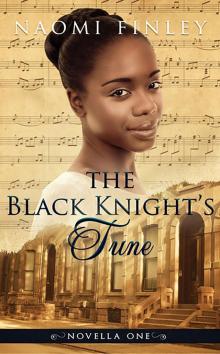
With her ultra-dark skin, she didn’t think she’d been the baby of a master; she was likely of pure Negro descent. She could not remember anything about her biological parents. Frequently a man with a face that was but a blur would come to her in her dreams. His voice was persistent and soothing, his hands steadfast and gentle as he smoothed back her hair. Then he would laugh a boisterous laugh, a sound that made an unbridled happiness bubble up inside of her and out her own mouth as an identical laugh. When nightmares terrorized her, this ever-loyal man would ride in as a black knight. He’d dismount and kneel, and she would run to the asylum of his arms. He would hum a velvety tune that vibrated in the chest beneath hers as her tears melted into the crook of his neck. When the tremors of her sobs rocked her awake, she would find her pillow wet and her heart burdened with a yearning she couldn’t place.