Soldiers and Marines Saga, page 63
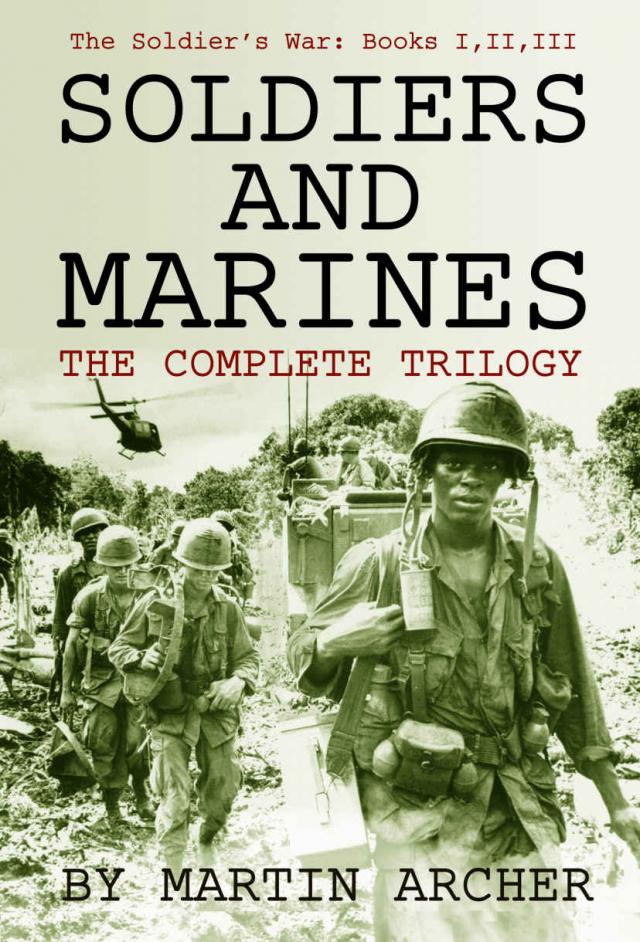


All of this meant nothing to Karl and Jacob or to the Russian troops trying to protect and repair the Trans-Siberian Railway. So far as Karl and Jacob are concerned it is still their job to kill Russian soldiers and damage the railroad; so far as the Russian troops are concerned it is their job to kill Germans and protect the railroad.
******
Karl and Jacob came over a slight rise and start down a tree covered slope about 1615 in the afternoon with the sun still high above them. Karl, carrying only his MAT-49, was temporarily in the lead and moving slowly with a pronounced limp. Suddenly there were shouts and shots being fired from down below. Bullets begin whipping through the tree leaves above their heads.
They turned and ran back over the rise and kept right on running as fast as they can—which wasn’t all that fast because of Karl’s ankle. There were whistles blowing and the sound of a lot of running and shouting men behind them.
Finally, Jacob and Karl veered off to the right and stopped to catch their breath in what looked like a pretty good defensive position at the edge of a particularly thick bunch of trees and brush. A few minutes later they crouched down and watch in horror as a long skirmish line of Russian troops, dozens and dozens of them, cautiously swept through the forest towards them.
Suddenly someone blew a whistle and the Russians stopped. And then, with lots of shouting, and still on high alert, the Russian infantry began slowly backing up.
About thirty minutes later the whistle began blowing repeated short tweets in such a way that it was obviously intended to call attention to the blower; then a Russian waving a white handkerchief moves out into the middle of a nearby open area with both hands raised high above his head.
The Russian has his shirt off so they can see his bare skin. As he walks towards them they can see that he is entirely unarmed. Then he saw them and let the whistle drop out of his mouth and began loudly shouting … “Comrade”… “Comrade”… as he walked towards them with his hands still high above his head.
“Krieg is ended”… “Krieg is ended.”
—End of Book Three—
Epilogue — Months Later
NATO’s war with the countries of the Moscow-led Warsaw Pact ended as quickly as it had begun when Moscow’s bungling communist leaders lost the war. The survivors of the Russian-led armies returned home and the Baltic countries and Hungary were quickly occupied by the armies of the United States and Britain.
Two weeks after the war ended everything went to hell in a hand bucket. NATO’s peace deal with the Soviet Union fell apart—because the Soviet Union fell apart. We had a peace treaty with an entity which no longer existed.
The collapse of the Soviet Union had been repeatedly predicted but the speed at which it occurred after the war was totally unexpected. The military defeat in Germany turned out to be the straw that broke the camel’s back of a political system already overburdened with the corruption of crony-communism and an increasingly unworkable economic system.
Whatever the cause of its collapse, the Soviet Union came apart at the seams. It happened almost overnight after the war and caught the west’s diplomats and intelligence agencies by surprise. In any event, one after another over a period of little more than a couple of days, the non-Russian members of the Soviet Central Committee flew back to their original homes and proclaimed themselves to be their country’s new president “until elections can be held.”
Now, less than a month after the shooting stopped, all of the old Soviet Union’s states are, at least on paper, once again free and independent states from Latvia and Lithuania in the west to Uzbekistan and Tajikistan in the east. And Russia continues to occupy millions of square miles of land east of Lake Baikal which the Chinese say belongs to China.
In fact, the same old Soviet-style bureaucrats and their cronies are still in power throughout Russia and they still don’t have a clue as to what to do to solve their economic and refugee problems or their big new problem— China.
******
In a few minutes I’ll be briefing the National Security Council on Russia’s ability to fight off a Chinese invasion. What I’m going to tell them is that things may be about to get difficult for Russia. Today it is a failed and repressive state with a much weakened military and a slowly collapsing economy run by the aging remnants of the Soviet Union’s Moscow-based bureaucracy, a party of crooks and thieves and extremist left-wing ideologues according to Russia’s political dissidents.
Even worse, today Russia is totally cut off from its vast eastern territories bordering China and North Korea. In a way I’m responsible for Russia being cut in two. I’m the one who arranged for the destruction of the bridges over the rivers in the middle of Russia so the Russian armies attacking Germany couldn’t get reinforcements from the east as they did years ago to help the Russians win World War Two.
Being cut off from its eastern provinces is significant for Russia. It means if war comes in the eastern half of Russia the Russian military will have to fight it out with the Chinese with the troops and equipment it has on hand along the border and whatever Russia can airlift in with the decaying remains of its battered air force.
Russia’s only alternative is to ship reinforcements and supplies all the way around the world to the port of Vladivostok on the Sea of Japan or to one of the small fishing ports immediately to its south. All those ports are served by Russia’s single east to west transportation system, the Trans-Siberian Railroad and the roads and power lines that run, or used to run, along its right of way.
The railroad remains important for a war with China even though we destroyed it in the middle of Russia - because Russian military supplies and reinforcements can still be sent by ship half way around the world to the other end of Russia at the port of Vladivostok and sent inland on the railroad to the Russian military forces located along its border with China.
Unfortunately, much of the eastern part of the Trans-Siberian Railroad and the partially paved “highway” running alongside it were built close to the Chinese border. That’s important because it means both the railroad and the “highway” along it are virtually certain to be cut by the Chinese army before meaningful amounts of reinforcements and supplies can reach Vladivostok to be sent inland to the Russian divisions along the Chinese border. Once that happens, the entire eastern half of Russia, everything east of Lake Baikal, will be totally cutoff from Moscow and on its own.
And that, I told the Security Council, is the crux of the problem—if there is a war with China the Russians will have to fight with whatever they have on hand with no way to get reinforcements and supplies.
It won’t be the first time the Russians and Chinese have fought over the lands both of them claim. Years ago the Chinese actually invaded Russia. It was an attempt to retake the land China claimed Russia illegally seized in the disputed Ussuri River area. The Russians fought them off by moving some of their then-modern military equipment and more than a dozen additional army divisions and a number of naval infantry brigades eastward across Russia on the Trans-Siberian railroad.
Unfortunately for the Russians, this time the Chinese aspirations and capabilities are significantly greater and Russia’s ability to counter them is significantly weaker. And because we took out so many of the Trans-Siberian Railroad’s bridges Moscow can no longer send reinforcements and supplies to the eastern half of Russia by road and rail. Today Moscow can only send help to its forces in the east by air and over the Vladivostok wharves and hope it will be enough.
There is one ray of hope. The dozen or more additional Russian divisions sent east to fight the Chinese in the Ussuri War are still there with all their equipment and so are a goodly number of the Russian Marines; they are there because that’s where the German airborne engineers stranded them a few months ago when they blew up so many of the Trans-Siberian railroad bridges in central Russia west of Lake Baikal.
Russia’s basic problem is simple. Another war with the Chinese is coming and this time it’s not going to be a mini-war like the one they fought years ago over a relatively small amount of land in the Ussuri River basin.
At least I think it’s coming; the Chinese have got to be looking at the lands they claim in eastern Russia as low lying fruit with not much in the way of a Russian army or air force to defend it.
******
The collapse of the Soviet Union should have been the end of Russia as a military problem for the United States and NATO. But the American Secretary of State, sixty-six year old former senator Barbara Hoffman, a statuesque woman with rigidly coiffed hair, negotiated a treaty to end the Refugee War which included a lot of nuclear disarmament promises neither side has the slightest intention of keeping and a promise by the United States to come to Russia’s assistance if it is attacked by China. Then the Senate hurriedly ratified it in late night vote in exchange for the withdrawal by the President of several of his Supreme Court nominees.
“A reasonable price to pay,” exulted the Secretary of State. She saw her efforts to obtain an agreement to begin nuclear disarmament talks and restore peaceful relations between Russia and the United States as her crowning achievement. It will be the basis for her presidential campaign next year when the current President’s second term ends. And she’s touted to win even though, according to my old army buddy and now Secretary of Defense, Dick Spelling, no one should ever vote for a woman who has her hair done by welders.
Our Vice President, former Marine captain Bernard B. “Bernie” Carey, will likely be Hoffman’s opponent in the primaries. At least that’s what the media pundits have been saying. Carey split with the President and signaled his opposition to the new treaty by refusing the entreaties of the White House to speak out in support of it.
The United States has another problem, and it’s a big one: All of the former states of the Northern Union, and most of the NATO countries except Britain, have refused to sign the treaty negotiated by Secretary Hoffman. Today only the United States and Britain are committed to help the peace-loving Russian communist crooks and thieves in the event the peace-loving Chinese communist crooks and thieves send the Chinese army to retake the lands Russia seized years ago with various one-sided “treaties” when the Chinese were weak and distracted by internal strife.
******
Our new treaty with Russia and its rapid ratification created a great deal of political stress in addition to the very real possibility that it will involve the United States and Britain in another war. It all started when I was dumb enough to allow a CBS news reporter to interview me when I was visiting the Heidelberg headquarters of the American Forces in Europe.
I was there to see how the repairs are going. As everyone now knows, Campbell Barracks is the American army’s peacetime headquarters and got heavily damaged when Russian Spetsnaz troops infiltrated into Germany and stormed it at the beginning of the war. They hit the virtually empty building in the hope that it would remain an important headquarters after the war started. It wasn’t. I may be dumb but I’m not that dumb.
Campbell Barracks was still reverberating with the sound of hammers and filled with the smell of fresh paint when the reporter and her camera crew found me talking with the German contractor supervising the work.
I was there because we’re about to begin moving back in. When we do, because the head of the United States’ European Command automatically becomes the NATO Commander, the current NATO headquarters in Brussels will return to once again being a ceremonial headquarters filled to the gills with self-important generals and politicians constantly meeting with each other and issuing insignificant orders and memos.
Actually, now that our army is without a real enemy in Europe, Campbell Barracks won’t mean much either. It really doesn’t matter. I’ll keep an office there but I certainly won’t spend much time there. Brussels is closer and has better food.
In any event, the CBS reporter asked me why I supported the new treaty with Russia. I told her I didn’t support it; and then I foolishly shot my mouth off by going on to say that no one had asked me about it and that it just didn’t seem right to help a vicious and undemocratic government stay in power, particularly one which is grossly incompetent and used the refugee crisis as an excuse to start a war to distract its people from its economic failures.
Well, goddamn it, that’s the truth. Those self-serving sons of bitches killed and wounded many thousands of our finest young men and women and traumatized hundreds of thousands more.
CBS ran the interview on Sixty Minutes, the talking heads said it was important, and the proverbial shit hit the fan. It seems the Secretary of State and the Secretary of Defense, without the President’s knowledge, had privately led key members of the Senate to believe America’s military leaders had been consulted and we had agreed that using such a treaty to establish a permanent peace between the United States and Russia was the right thing to do. Now the senators are well and truly pissed, thankfully not at me.
I sure as hell wasn’t consulted and I’m pretty sure Dick Spelling, my old army buddy and the soon to retire Chairman of the Joint Chiefs, wasn’t consulted either. At least that what Dick told me over hamburgers and beer at his place a couple of nights ago.
But who said what hardly matters to those of us who are in the military. For better or worse, the new treaty has been ratified by a well-meaning Senate whose members didn’t want either another war with Russia or a couple of political activists as Supreme Court justices. That their ratification of the treaty in exchange for the President withdrawing his nominees made it quite likely we’d end up sucked into a war between Russia and China seems to have completely escaped everyone.
Me? I’ve got everyone concentrating on getting our troops back home from Europe. Even more importantly, I’m trying to make sure our casualties get the best medical care and our troops don’t get kicked out on their asses by our politicians and military bureaucrats when the American military downsizes—as we have always done to save money when a war ends and the military’s chair warmers can make their lives easier by getting rid of the troops who did the fighting.
What’s my plan? I’m going to retire when my term as NATO Commander is over and spend more time at home with Dorothy and maybe do a little writing. It’s time to get the upstairs bathroom fixed and go shopping for a new car.
- END OF THE BOOK -
*******
*******
Would you like to know what will happen next? Please go to Amazon and search for Martin Archer’s action-packed War in the East, the fourth book in this saga.
Would you like to know what will likely happen to the United States and in the Middle East after the War in the East? Please go to Amazon and search for Martin Archer’s Israel’s Next War, the fifth and final book in this saga.
If you enjoyed the Soldiers and Marines Trilogy, Martin respectfully requests that you write a favorable review on Amazon with as many stars as possible to encourage other readers. If you found a problem and feel you cannot write a favorable review, please know that Amazon is a wonderful platform because it allows eBooks to be corrected and improved. Accordingly, it would be greatly appreciated if you would email Martin with your suggestions and corrections so that he can properly correct and re-edit it. He can be reached at martinarcherV@gmail.com. He would be delighted to know what you thought of the Soldiers and Marines Trilogy.
******
******
******
Please read more.
All of the other action-packed books in this great saga are also available as eBooks. You can find them by going to Amazon or Google and searching for Martin Archer fiction.
And a word from Martin:
I hope you enjoyed reading the three books of the Soldiers and Marines Trilogy as much as I enjoyed writing them. If so, I respectfully request a favorable review on Amazon and elsewhere with as many stars as possible in order to encourage other readers. And I would also very much like to know your thoughts about the story and about any edits and corrections you might suggest. I can be reached at the following email address: martinarcherV@gmail.com. /S/ Martin Archer
Amazon eBooks in Martin Archer’s exciting and action-packed Soldier and Marines saga:
Soldier and Marines
Peace and Conflict
War Breaks Out
War in the East
Israel’s Next War
Amazon eBooks in the exciting and action-packed The Company of Archers saga:
The Archers
The Archers’ Castle
The Archers’ Return
The Archers’ War
Rescuing the Hostages
Kings and Crusaders
The Archers’ Gold
The Missing Treasure
Castling the King
The Sea Warriors
The Captain’s Men
Gulling the Kings
The Magna Carta Decision
Fires in the Distance
Collections
The Archer’s Story - books I, II, III, IV, V, VI
The Archer’s Story II - books VII, VIII, IX, X,
Soldiers and Marines Trilogy
Other eBooks you might enjoy:
Cage’s Crew by Martin Archer writing as Raymond Casey
America’s Next War by Michael Cameron Adams – an adaption of War Breaks Out to set it in our immediate future.
Martin Archer, Soldiers and Marines Saga