

Pretty Weird, page 1


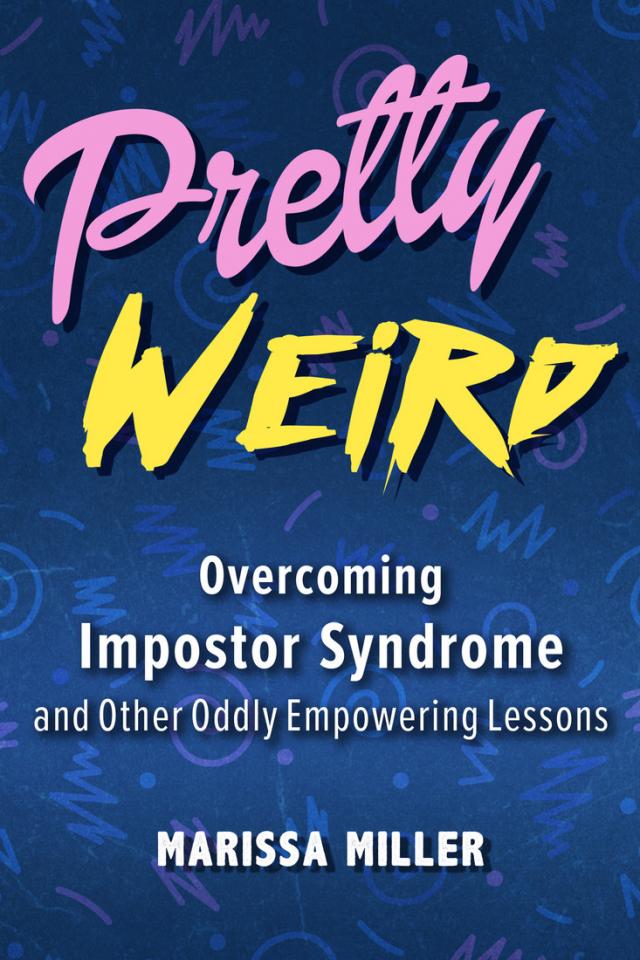
Copyright © 2021 by Marissa Miller
All rights reserved. No part of this book may be reproduced in any manner without the express written consent of the publisher, except in the case of brief excerpts in critical reviews or articles. All inquiries should be addressed to Skyhorse Publishing, 307 West 36th Street, 11th Floor, New York, NY 10018.
Skyhorse Publishing books may be purchased in bulk at special discounts for sales promotion, corporate gifts, fund-raising, or educational purposes. Special editions can also be created to specifications. For details, contact the Special Sales Department, Skyhorse Publishing, 307 West 36th Street, 11th Floor, New York, NY 10018 or info@skyhorsepublishing.com.
Skyhorse® and Skyhorse Publishing® are registered trademarks of Skyhorse Publishing, Inc.®, a Delaware corporation.
Visit our website at www.skyhorsepublishing.com.
10 9 8 7 6 5 4 3 2 1
Library of Congress Cataloging-in-Publication Data is available on file.
Cover design by Kai Texel
Print ISBN: 978-1-5107-6030-1
Ebook ISBN: 978-1-68358-401-8
Printed in the United States of America
TABLE OF CONTENTS
Introduction
Chapter 1: Pelvic Floored
Chapter 2: Mission Impostor Syndrome
Chapter 3: Coming Out Party
Chapter 4: Jew Camp
Chapter 5: Selling Myself Short
Chapter 6: Something’s Weighing on Me
Chapter 7: The F-Word
Chapter 8: A Dick Pic Says a Thousand Words
Chapter 9: Crime and Punishment
Chapter 10: Open Carry
Chapter 11: Bad Bride
Chapter 12: Pussy Power
Chapter 13: The Morning After
Acknowledgments
To Mom, Dad, Michelle and Bubby: this one’s for you.
INTRODUCTION
Growing up without a Designated Cool Female to guide me through the rituals of womanhood, I became that kid in second grade making my Barbie dolls reenact Kama Sutra positions and storing things in my nose to “see what would happen” (spoiler: that sequin from my friend Sammy’s shoe was never to be seen again). It was no secret that I was different. But to feel like I was in on the joke, I called myself a weirdo in an essay on my love of death metal in the school newspaper. It was the closest thing to writing for Cosmopolitan I could get at age thirteen, and the closest I could get to controlling my own narrative far before I knew what that word meant.
Magazines were always my Sherpa up the hill we’ll call puberty, thin lines and sharp edges my only real example of who to be when I had no idea which step came next in girlhood after exhausting every Spice Girls choreography, my breasts bouncing along timidly as they grew in at different speeds. I couldn’t tell what came first: that my hatred of my growing body led me to magazines, or that magazines led me to hate my body. Given that my earliest memory includes walking back from day camp at three years old and throwing a tantrum because my inner thighs were touching, let’s go with the former.
I didn’t look, feel, or act anything like the images of people in the magazines or the authors who profiled them. But it’s not like I publicly aspired to be anything like them. Gosh, no. Middle-of-the-road suburban kids like me were doomed for mediocre lives full of A-line skirts and single glasses of white wine at stuffy networking events. Mediocrity was something I had come to accept and even embrace—until everything changed my last two years of high school. I was winning national poetry and public speaking competitions; I was being profiled in newsletters for my budding writing career; and teachers paraded my work as prime examples of how to write as part of their class syllabi. And yet, nothing about me became any more glamorous. I was still the kid with an inability to keep her bowel schedule to herself. I was still explaining to boyfriends’ parents for the first time upon meeting them that lycopene, an antioxidant found in tomatoes and watermelon, has been proven to have anti-cancerous properties on both the prostate and uterus. For the first time, my magazines fell short in showing me how to live, what to look like, and what to do with my life.
There was literally no way of reconciling those two diametrically opposing facets of my identity—the freak and the ambitious student—without diving headfirst into an existential crisis. By that point, I had assumed psychiatric medication was strictly reserved for folks who had imaginary friends and that therapy was something old married couples did, so I figured there was no point Going There unless I had a backup coping mechanism.
I was finally able to give my general feelings of malaise a concrete name when I first heard the term “impostor syndrome” during my last year of high school, around the time when my grades and academic performance started to be decent enough not to make me sweat through my thick uniform when I got my report card in a manilla envelope at the end of the school day four times a year. A Google search of all my symptoms like “Can’t take credit for any of my success,” “This is all an accident,” and “Don’t feel like I deserve all these good things” led me to case studies about other women experiencing the same things. Most of them were high-powered CEOs who felt completely inadequate despite evidence of the contrary. Others possessed inborn exquisite talents that catapulted them to a level of fame they believed was unwarranted. All I had to show for my success was a bunch of stints on the honor roll and some dollar store-purchased awards on my wall for writing angsty MySpace poems, which I then submitted to contests because the only accounts to interact with my content were porn bots. So, not only did I have no real place in the high school cafeteria but I also had no place in the impostor syndrome sufferers’ high-powered corner office league either. Feeling like a fraudulent impostor was a complicated feeling no Google rabbit hole—and apparently no back issue of Cosmo—would ever be able to fix.
It turns out examining and reflecting on my own life, instead of looking externally, was just the thing my high school guidance counselor didn’t order—but should have.
I don’t want to ruin it for you because I spent a painstaking amount of time outlining in profane, vivid detail what exactly I reflected on. But hopefully, you’ll walk away from this little piece of literature understanding that our feelings of inadequacy often mean we deserve all those great things that happen to us. We’re worthy of success by virtue of us thinking we’re not. Unlike folks who expect standing ovations for simply existing (*cough* finance bros *cough*), us impostors constantly strive to do better and be better in order to avoid being outed as frauds. The people splayed on magazine centerfolds you dream of emulating think they’re hella weird, too. And if they don’t? Well, you don’t have much in common with them anyway, and you really don’t want to sit through happy hour with someone like that.
But don’t worry. We probably have lots in common. In this essay collection, you’ll learn that I wasn’t always this enlightened. Going to therapy would have been a big middle finger to my parents for giving me—on paper—what I thought was a fairly solid suburban upbringing. Instead, my sadness became a covert operation, taking on an almost tangible, human-like quality with its persistence and level of intensity growing by day. My sadness was the pre-rolled joints in my purse hidden in tubes of lipstick. My sadness was the rubber band I snapped against my inner wrist to distract myself from hunger. My sadness was a string of sexual assaults that I counted as standard teenage promiscuity.
No matter how many times I flirted with the idea of sawing off my love handles with an axe or how many hours I spent with an electric toothbrush down my throat after Rosh Hashanah dinner (I was never successful), I felt that as a white woman from an upstanding nuclear family with a roof over my head and food on the table, I had no right to seek help or support for my feelings of inferiority. Sadness wasn’t allowed to happen to people like me. I, like so many, reside in that liminal space of being too normal to stand out, yet too weird to fit in.
I expected my sadness to subside once I started meeting all the widely agreed-upon criteria of success: I became a small business owner leading a freelance journalism career writing for the likes of the New York Times, the Washington Post, Wall Street Journal, Vogue, GQ, CNN, and Cosmopolitan. I taught journalism workshops, and I was invited to speak on panels, on the radio, and at schools around my hometown of Montreal. College students did projects on my career that earned them actual grades. Writing service journalism for the publications I grew up idolizing became my way of guiding others through their lives, but secretly, like many of us, I had very little clue how to live my own. I’m not a “writer,” I thought. I’m just some unhygienic cat lady with illegal access to Microsoft Office.
The transition away from the “weird” one to the “successful” one felt like a performative Halloween costume that didn’t quite fit. It left me with questions like, “How are women supposed to own their achievements if we’ve been told from the beginning to stay quiet?” “How are we supposed to strive for greater things when pride is narcissism’s low-brow cousin?” “How are we supposed to feel like we deserve our successes—big and small—if social media etiquette dictates we’re overcompensating for something bigger when we post about our professional victories, our growing families, and our newfound mastery of That Cool New Yoga Pose That’ll Allow You to Lick Your Own Lady Parts?” “Why have we regressed into an archaic Dark Age where those who keep quiet about their accomplishments on social media—or better yet, leave no digital footprint—are of the superior race?”
Here’s a Hot Take: a significant chunk of Beyoncé’s al
My mom and dad—second- and third-generation Canadians who fought for their place in the workforce and feel as though they damn well earned it—don’t understand my identity crisis–driven plight *Enters stage right wearing Avril Lavigne Purim costume*. They see us all as entitled millennials who operate under the assumption that it’s our God-given right to succeed and that we can’t buy real estate because we’ve maxed out our credit cards on Jeffree Star eyeshadow palettes. They’re not wrong. We cover up our perceived shortcomings with Instagram posts that strategically crop out unmade beds and tears, self-congratulatory Facebook proclamations and eyebrows that took so long to perfect we were there to witness the first sprout of gray hair like a tulip in spring. I wish I could turn to my peers for support, for validation, so they could tell me that I earned my achievements—that I am Good at Being Me. But instead I’m turning inward because they’re sick of my shit. And, again, my psychiatrist didn’t think of prescribing it even though he knows my selective serotonin reuptake inhibitors haven’t been working properly for the last six years.
My loneliness wouldn’t have felt so pronounced if I knew others had been experiencing it, too. Forget wine—what really helps the antidepressants go down is the act of normalizing each other’s anxiety-fueled inner-monologues. Most of your friends, family, colleagues, and idols all grapple with the same condition. I have nothing to lose by talking about it. Except for maybe a few of my more vanilla acquaintances who’ve had it UP TO HERE with my potty mouth.
Chapter 1
PELVIC FLOORED
My left ribcage felt hard and cold on the linoleum floor. I read once in a women’s magazine with Jennifer Aniston on the cover that lying on your left side reduces pain. Women’s magazines are my rulebook, my dogma, my Sherpa up the hill when I am lost. I am always lost. My inner Siri is rarely activated.
“There is a scissor cutting its way through my insides and it won’t stop,” I told Noah, my boyfriend at the time, between hasty rhythmic breaths. “I feel it moving and it’s running around. I change my mind. It’s not scissors, it’s a dagger.”
He could tell, for once, that I was not being a neurotic princess.
The gluten-free pasta on the stove above me hardened around the sides of the metal pot. He rubbed my lower belly, each stroke an invitation to relax and find my “Zen” like the magazines promised.
“I’m begging you to just take a bite out of something. Please. I’m begging you,” he said, kneeling down on the floor beside me. “You need the energy for tomorrow. I don’t want to see another situation where I almost have to take you to the emergency room like that time you fucking passed out on the streets of Manhattan.”
I was now crouched on my kitchen floor with my head between my knees, just like I was six months before in 2015 on the sidewalk of 3rd Avenue and East 67th Street. It was late May, and I had just wrapped up a meeting with my editor at Cosmopolitan. I sauntered out of the Hearst building with the weightlessness of a tumbleweed down a dirt road.
I refused to eat before our meeting so as to not clog my thoughts with diner omelette grease. I always think better when I don’t eat, or so I think. When I left the Hearst building, I was running on the high of fair-trade iced coffee and a new story assignment, until cataracts—or what felt like them—clouded my eyes. My knees buckled, sending me to the ground. Noah pulled me up by the cold, damp wrist and dragged me into a nearby pizzeria.
“Quick, please, my girlfriend is fainting. She needs water now,” he’d pled into a crowded ether the year before. He sat me down onto a chair like a ventriloquist, propping my head up with his calloused hands. I felt the sweat droplets descend down each vertebrae of my spine, the cold chair against my tailbone. I belonged on the sidewalk, free from the confines of food and chairs and restaurants and calories and people who told me what to do.
Back on my linoleum kitchen floor, I knew I couldn’t pull that same shit.
“I’m begging you to just take a bite out of something. Please,” he continued. The desperation in his eyes the texture and color of a mahogany leather sofa pained me more than the emptiness did. “We have a post-marathon brunch we need to make it to. You need to get to that finish line.”
Everything was about food. Food this. Food that. Couldn’t I turn my body into a microcosmic cashless society where taking a bite of pasta doesn’t feel like a life or death decision?
Noah was always right but that didn’t say much because everyone is always a little more right than me, no matter how objectively right I am. The more he begged me to eat a spoonful of pasta hardening on the stove, the more it reinforced the idea that I really was doing it. This was thrilling. I was saying no to food again, just like I had done so well when I was fourteen years old. If I was going to think about how that one bite would affect me for the next twenty-four hours, I might as well eschew it altogether. But now, I wasn’t some kid posting “Stay strong!!” on pro-anorexia blogs. I had an alibi. I was in excruciating physical pain.
“I can’t do it. I will throw up and die,” I told him, pleading for something I wasn’t sure was even feasible. I imagined the words sounding pitiful as they exited my quivering Blue-Man-Group lips, because that’s what happens when you feel like a burden on people all the time. The pain was a pizza cutter soaring through my bodily diner grease.
I went to the bathroom to force out whatever monster made my body its home. I sat on the toilet with my head nesting in the palm of my hands and my shoulders hunched collapsing onto my lap. Nothing came out. Muscle spasms pinched my organs. Dead air whispered that I wasn’t worthy of a working system. Whether that was digestive or reproductive, I didn’t quite know.
I carefully peeled off my magenta Lululemon shorts and multiple sports bras I was wearing in anticipation for my half-marathon a meager four hours later (the key is to avoid clothes that chafe, unless you want to spend half the race jogging like a penguin with an inner thigh rash. I couldn’t afford any more discomfort). I had too much pride to rub coconut oil—or worse, deodorant—between my gapless thighs.
The pain had morphed into what felt like a colony of bees zooming around my insides, liberally erecting their stingers to mark their territory. Even though I hadn’t eaten anything in several hours, my stomach was now distended. There were boxing gloves mid-match in my abdomen, punching their way out. I was alone with my body. I was alone with the stabbing. Noah said some things about wanting to experience what I was feeling to make the pain go away.
I looked down to find a Hansel and Gretel trail of blood leading from my inner thighs down to my rough and flaky feet. Maraschino cherry-thick clumps stuck to my skin like leeches. Thick, red walls that should have been inside, it seemed, dangled like ornaments. What was more painful than the pain itself was the belief that I deserved it. My fingers were quivering too rapidly to Google what was happening to me, so I chalked it up to one of those horrifying periods women’s magazines warn you about when you get an IUD.
A half an hour of sleep later, I was stepping into those same magenta shorts in preparation for the day’s half-marathon.
* * *
I had an IUD inserted in 2012 because when you’re a spacey adolennial (if the adolescent/millennial portmanteau actually takes off as a thing I will be very surprised), you don’t trust yourself to take a birth control pill every day, let alone remember to turn off your hair straightening iron before you leave the house.
“Dr. Frontenac, on a scale from one to childbirth, how badly is this going to hurt?” I asked.
I was an open, spread-eagle wound with my feet in stirrups. But I was eager to finally rely on a method that’s been touted both by women’s service magazines and doctors alike to be fool- and fail-proof.


