

The Children of Lir, page 1


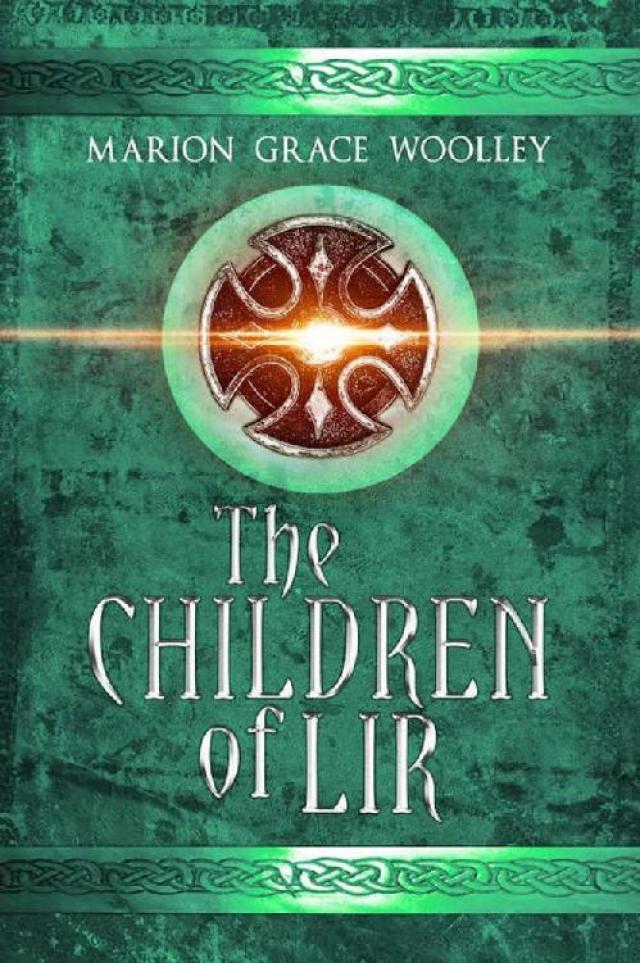
The Children of Lir
Marion Grace Woolley
© Marion Grace Woolley 2019. All right reserved.
www.authormgw.co.uk
Cover © Valdas Miskinis
Front page image: publicdomainvectors.org
For Cathryn, Danny
and Dara.
Main Houses
Bodb Dearg’s House
Bodb the Red: High King of Éire, nephew to Lir
Medb: Bodb’s wife
Dagda: Bodb’s father
Oilell of Aran: biological mother to Bodb’s foster daughters
Aobh of Aran: Bodb’s eldest foster daughter and Lir’s first wife
Ailbhe of Aran: Bodb’s second foster daughter
Aoife of Aran: Bodb’s youngest foster daughter and Lir’s second wife
Lir’s House
Fionnuala: Lir’s eldest daughter by Aobh
Aodh: Lir’s eldest son by Aobh
Conn & Fiachra: Lir’s twins by Aobh
Manannan Mac Lir: Lir’s eldest son by the sea, guardian of the underworld
Sorcha Shadowfingers: Aobh's maid
Guennola: Aoife’s maid
The Fianna
Fionn mac Cumhaill: head of the Fianna
Caílte mac Rónáin: Fionn’s nephew
Prologue: Aobh of Aran
My marriage to Lir was not one that began in sunlight, rather beneath the darkly brewing clouds of war.
My sisters and I had come to Bodb’s house as foster children at a young age. My own mother was not of the new race, but of old Fomori blood. Shortly after the invasions it was said of all Fomorians that their faces were rough as leather and their teeth jagged like the fish caught along the raging coast.
That is not true. It is the want of all oppressors to cast behind a legacy of righteous conquest. In songs and poetry they are the objects of praise, whilst those they vanquish flee like bats at daybreak, seeking shelter in their dank hovels beneath the hills or at the very depths of the ocean.
Of my true mother, Oilell of Aran, I remembered very little. She had been of dark hair, unlike my own bright glory. My sisters Ailbhe and Aoife took after her in that respect. Especially Aoife, whose hair shone slick as a raven’s wing.
My mother had been a noble lady, married to the Lord of the Aran Islands, of whom I remember even less, for he was slaughtered during the invasion. Given our circumstances, our clan could have dissipated like mist.
Though that was not to be our fate.
My father had been Fomori, yet he fought with such courage that his murderers took pity on his kin. That is how the story goes, though I think perhaps they were swayed more by my mother’s good looks and fortune than by her departed husband’s valour.
In consenting to marry her conqueror, she forced from her new husband’s lips an oath. Her children were to be raised as Danann nobles in the new realm, and to live a life no less comfortable than that which they would have enjoyed had the Men of Dea never reached our shores.
She could not have known how our fortunes would surpass even her highest aspirations. For her husband was a relation of Bodb the Red, favoured son and successor to the Dagda, the greatest of all the Danann chieftains. The Dagda held court in the mighty fort at Sí an Bhrú, its quartz walls shining like snow, encrusted with colourful snailshells to confuse mischievous spirits. There was no greater sight nor more protected place in all the known world than that fort.
Bodb and his wife Medb, Queen of all the Danann, had only a son at that point, for they were newly bound to one another. Yet even before his queen had regained her strength, she longed for more children. Medb had been from a large family and all her brothers and sisters had perished in the invasions.
Bodb, who could not refuse her anything, accepted to hear the case of the strange Fomori widow with three pretty daughters. He reasoned that older children would be able to assist his wife as their family grew, and that those children, being girls, would bring calm to his household.
I remember that journey across the sea from Aran. It is one of my first memories, for I was terribly, terribly sick. The waves threw us clean from one side of the boat to the other, and I knew then that should I live to see dry land, I would never again set foot on water.
Our mother sang to us the entire way. She seemed unaffected by the motion, for perhaps she had a greater tempest stirring within.
My first impression of Bodb was his beard. As a young man it was red as the heart of a flame. This great warrior, son of the mighty Dagda – I should have been afraid, but I was not. Broad and barrel-chested as he was, Bodb never wore a frown. His laughter echoed from hilltop to hilltop, shaking the rivers and the crags and the dells.
My mother sensed in him a protector, and when she left our company it was with head held high and shoulders straight. I thank her every day for that. She may well have wept all the way home, but she did not weep in front of us, and that gave us courage.
“My daughters, my daughters!” Bodb addressed us from the very first day. “Eat your fill, drink your fill, and fill this house with song and beauty.”
His words were prophetic, for beauties we each became. It was not we who sang, but others who sang of us, the Three Lovely Daughters of Oilell. Men came from far and wide to view us, though we were far before marrying age ourselves. Thankfully we had brothers, the true sons of Bodb, to protect us.
Though there was one man they could not protect us from, and to save my sisters, I was sacrificed.
My father, the man I came to think of as my true father, had won his seat after the battle of Tailtiu at which my own people suffered a crushing defeat. All of the Danann had been so proud of Bodb’s courage that they heartily gave their consent to his succession as king.
All except his uncle, Lir, who claimed his right to rule above that of his nephew. He raised an army to march against Bodb, yet his army was no match. Lir was captured with calls to separate his head from his body.
Instead, Bodb had him brought to his fort and received him as an honoured guest. They talked for nine days and nine nights. When Lir parted company he took with him his pride, and a bride called Aobh.
I showed my willing, for I owed my father so much, yet naught but fear flowed through my veins. Lir was an imposing figure. He stood taller than any man I had ever seen, dressed in dark furs with his thick black hair tied in a knot the size of a fist.
He did not talk to me the entire journey to Sidhe Fionnachaidh, and neither did his fellows. I took with me only one maid from my father’s household, Sorcha, a girl of infinite patience and kind character. She followed behind on her horse and never left my side, even when I dismounted to relieve myself or to take something to eat. She had no words of comfort, for what can one say in such circumstances? Yet her presence was enough. To know that, having lost my parents and my sisters in one day, I had not lost all sense of who I once was.
Those first months at Sidhe Fionnachaidh were difficult. The fort stood on a high hilltop where the wind howled through the huts at night and the stars felt close enough to touch. I was always cold, and the stirabout never seemed to quell my hunger. After the great house of my father’s lands, where music and laughter sprang from the hearths, it seemed a barren, lifeless place.
Some days, as we walked the boundaries, I would feel Lir’s eyes upon me. Turning, I would look up to the top of the bank and catch him watching from afar.
After the third full moon of my arrival, an elderly lady appeared in our hut. The fire had been built high, drawing out the earthy smell of the walls. Sorcha amused me by twisting her fingers against its light, casting the shape of a swan in flight. Its beak opened and closed as she recited a lurid poem she had heard from a drunken druid at Brú na Bóinne.
We were beside ourselves with the crazed laughter of those who desperately need to find something to laugh about, grasping at the thinnest blades of grass. When Sorcha’s laughter stopped, I turned to see what had caught her eye.
“Lady Aobh of Aran,” the crone spoke, bending her shrouded head in deference.
“Yes?”
“I have been sent to fetch you to your master.”
Silence reigned for a moment made of years.
“He requests your company in his house, but first I am here to ask whether you are wise to the ways of men?”
Blood flooded my face. I had never been asked such a question, and the age of the woman did not grant her that right. I knew Sorcha was watching me, awaiting my reaction, yet I could not bring myself to meet her gaze.
“Do you know, child, what is expected of you?”
I shook my head dumbly, like a calf who does not know its way to the pasture.
The old woman came to sit beside me. “We are all women here, there is no need to be ashamed. If it weren’t for the secrets of women passed down through the ages, not one of us would be living to tell them anew.”
I swallowed and folded my hands in my lap to stop them from trembling.
“What is expected?” I asked, my voice grown shy of my tongue.
“You know in the springtime, when the bull mounts the cow?”
I nodded.
“That, my child. Only you will lie on your back, rather than all fours, and he may grunt more like a pig than a bull. It shan’t last long, but it will hurt a little and you may bleed.”
“Bleed?”
“It is natural the first time, and it will only be a small amount. Nowhere near the blood that is shed each moon. After that, you will not feel such pain again. No woman ever died from it. Our bodies are strong, and meant for far greater transitions than this.”
I found it hard to breathe. For the first time since arriving at Bodb Dearg’s I thought of my own mother and wondered whether she might have told me herself had she been afforded the opportunity.
“Come, now,” the woman said, standing with little ceremony. “He is waiting for you.”
Sorcha instinctively came to my side and placed her soft warm hand beneath my elbow. She wrapped a woollen shawl across my shoulders and kissed my hand as I turned towards the door.
“I can’t—” I began, but the words died in my throat as I watched the old woman disappear through the gaping mouth of the hut.
“It will be over soon,” Sorcha reassured me. “I will be waiting here when you return.”
The night was so cold. In my terror I had forgotten to put on my sandals, my feet floating across the icy earth, turning that short journey to my husband’s house into a walk that stretched from the east coast to the west. When I arrived at the entrance, the old woman held aside the wolfskin and ushered me through.
The room was far grander than my own. Fine furs and woven fabrics hung from the walls and for once the fire seemed to heat me through. The air was thick with the scent of sweet herbs and the mattress was three times the girth of that which I had lain on before.
Lir stood in the far corner with his back to me, dressed in that sombre dark cloak which reminded me of my father’s soothsayer. He did not turn until the old woman left, the curtain falling back into place, trapping me like a caged bird.
In the firelight, his face seemed younger than I had imagined from afar. His beard was short and his hair unknotted, falling about his shoulders.
“Please,” he said, holding out an oak cup. “Drink with me.”
He spoke softly, his words like water, soothing my anguish. I accepted the drink with both hands and raised it to my lips. It was the sweetest heather mead I had ever tasted, reaching down to the tips of my frozen toes.
We sat together on the bed and he offered honeyed oatcakes and smoked meats, which I barely touched. I was unable to swallow for the image of the bull mounting the cow, which had seared itself across my mind. At any moment, I expected him to throw me to the ground and perform some animal act.
“How do you like your life here?” he asked, removing the plate of uneaten food from my lap.
“Well, my king.”
We were quiet for a moment.
“You are not happy, are you?”
I could not help myself. The three moons I had spent there had been the worst of my life, even worse than the day my mother left my sisters and me, for at least my new family had made us welcome, showering us with love as spring showers the wildflowers. At Sidhe Fionnachaidh there had been no such love, only silence and uncertainty.
“What have I done?” he sighed, wiping a tear from my cheek with his thumb. “I should never have taken you from your family. You are far too young and far too beautiful for the likes of me.”
I stared at him, for his words were honest and the look on his face mirrored my own.
“Sweet child, you do not have to lie here with me tonight as my wife. I cannot ask that of you, for we are strangers. Yet I beg, stay here in my arms, and talk with me, that we may be strangers no longer when the sun rises.”
His kindness was unbearable, it caused me to feel homesick as I had never felt before. As I sobbed, he held me close, stroking my hair and whispering soothing words. When eventually I calmed, we lay together on his sumptuous bed of the softest furs and rested our faces close to one another. Tired from the emotions that had shaken me, I soon fell fast asleep, without a word spoken between us.
It was dark when I woke again. The fire had died to splinters of molten red against their bed of ash, wisps of smoke curling up through the thatch towards those sparkling stars. When I sought out Lir’s face in the dark, it was still where it had been when I last closed my eyes. He was sleeping, affording me all the time I wished to study him. His skin was pale, his lips full and generous, his brow noble as his nephew’s, the lashes that framed his eyes long and straight like his nose.
He is my husband, I thought to myself.
In knowing that, and in knowing that he would always be my husband, I realised that this night was the first of many nights to come. He had been kind to me, and in the warmth of his hut my fear abated.
Oh, so very gently, I traced his sleeping lips with the tip of my finger.
I was young, but I was old enough to know. Though the intricacies of the act were a mystery to me, like any young girl I felt the stirrings of curiosity. I had looked at my father’s horsemen from time to time, their muscles flexed beneath the beating sun as they went about their chores in summer. I had heard the noises from my kinsmen’s huts of an evening, and wondered what could make a woman breathe so hard.
Slowly, I put my lips to his.
He awoke, startled.
I drew back, afraid that in the small space between sleep and wake, he might forget he had a new wife and think me an intruder.
His astonishment lasted no more than a moment.
As I leaned towards him a second time, he ran his hand through my hair, clenching his fist and drawing me to him with a power that excited me. I was no longer afraid of this man, nor was I ashamed of my own desire.
He wanted me, and I wanted him in return.
Part I
Fionnuala
Some say my father was the god of the sea, one of the Tuatha Dé Danann who walked these green shores before the age of man. Some say he shaped destinies and carried the dead to their final resting place.
I cannot tell whether that was true, for time casts strange shadows. To me he was just a man, with all the faults and failings, all the love and loyalty, of a man. He was my father, and I have loved him always.
After my mother’s death, my father became a shadow of his former self. In her lifetime my brother Aodh and I led a blissful childhood, for my father loved my mother with a passion few men have felt beyond the field of battle. He thanked Bodb every day for the gift he had bestowed, and often we travelled to Sidh-ar-Femhin to enjoy the festivals, for no one in all of Éire threw a festival quite like those of my grandfather.
The greatest of all was the Feast of Age, a celebration in honour of Tailtiu, foster mother of the sun warrior Lugh. Like my own mother, Tailtiu had been Fomori, the wife of Eochaid mac Eirc, the last of the High Kings of Tara. Lugh of the Tuatha Dé Danann had been sent to Eochaid to learn the ways of governance, for the High King had been the first to introduce laws throughout Éire.
His wife, Tailtiu, though not renowned for her beauty, had single-handedly undertaken the clearance of her husband’s lands, burning the scrub and clearing forests that barley, oats and rye might grow. Often, it was said, she could be found in the fields with her feet caked in earth and her skirts bundled about her thighs. Her people loved her, for they had enough in their stores to last a hundred winters.
Under Eochaid’s rule, the old blood of Éire prospered in both wealth and health. Yet time does not pay credence to the good, nor the bad. It simply rumbles on like a cartwheel, crushing all as pebbles beneath its weight.
Eochaid died miserably during the last throes of the invasion. The Tuatha Dé Danann, the tribe of his own foster son, sought his fertile pastures for themselves but Eochaid was not willing to relinquish the land his wife had spent a lifetime cultivating. When he refused, the Men of Dea’s mighty druids cast their magic and dried up every river. For the first time his crops failed and his people went hungry. Worse than the hunger was the thirst, for every time Eochaid went to drink, the liquid turned to dust on his lips.
As he lay dying in the dirt of Beltra, the Great Queen of the Tuatha Dé Danann thrust her spear between his ribs and stopped his heart. They say that instead of blood, only sand poured from his veins.
Knowing her husband was away fighting a battle he could not hope to win, Tailtiu occupied herself in the fields. She refused to eat or sleep or rest until her husband returned, her bare hands slick with blood from uprooting thistles. The moment the Great Queen’s lance speared her husband’s heart, she fell upon the land and died of exhaustion.


