Valknut: The Binding, page 10


“Daddy! I hurt my knee!”
She let go of Jim and rushed to Bill, wrapping skinny arms around his waist. He stroked her hair. “Uh oh,” he said gently. “You’re not supposed to do that! Let’s see the damage.”
Ashley let go and stepped back, displaying an ugly scrape just below the knee. Blood trickled down her shin and into her white ankle sock. Bill bent over the injury and frowned. “Now, Ashley,” he said in mock disapproval, “how many times have I told you, the blood’s supposed to stay on the inside of the skin. This calls for strong medicine.”
Then he kissed her knee above the scrape and gathered the half-giggling, half-sobbing girl in his arms. He held her, eyes closed, like he felt her small pain a hundred times over.
Lennie watched impatiently. She didn’t want to interrupt the father-daughter moment, but Bill seemed to have forgotten her father’s photograph and she was sure he had recognized it.
As if sensing her dilemma, Jungle Jim said, “Say, Missy, did you show Bill your daddy’s picture yet? ’Cause he knows just about everyone from here to Mississippi.”
Lennie gave Jim a grateful smile. “Yeah, I did. He was just about to tell me something.”
“What about it, Bill?” Junkyard said. “Do you know where he is?”
The fear returned to Bill’s eyes. He kissed the top of Ashley’s head and didn’t respond for a long time. Finally, he thrust the photograph at Lennie.
“Sorry, never saw him before.” He didn’t meet her eyes.
His voice was bland, but his hand shook when Lennie took the picture from him. He knew something. She was certain of it. “But you—you...”
What could she say without accusing him of lying?
“Look, I’d love to talk some more,” he said, still avoiding her eyes, “but I’ve gotta get Ashley cleaned up. Bandages, Neosporin—you know. Jim, would you mind staying with my display for a few minutes?”
Without waiting for an answer, he strode off through the tent village with Ashley in his arms.
Lennie watched him, stunned. No one spoke until he was out of sight. Junkyard looked as baffled as she was. “What the hell was that?”
“I don’t know, but I’m gonna find out.” She started after Bill, but Junkyard stepped in her way.
“Not now. He’s obviously upset. Let’s come back later and talk to him someplace more private.” His eyes narrowed at her speculatively. “Bill’s as solid as they come, though. I’d like to know what’s got him so spooked. Is there something you’re not telling me?”
What could she say? You know that mythical character, Ramblin’ Red? The one that magically disappeared? Well, somehow he put my Dad’s pocket watch in my hand while I was sleeping right under your nose. Or maybe you’d like to know about this new tattoo of mine, or the way that gangbanger’s eyes glowed yellow. Yeah, that could be important.
“No,” she said, dropping her gaze. She felt like crying. “No, there’s not.”
***
The doors opened at Mariucci Arena, where fragile model train dioramas and the more valuable, easily damaged, or less mobile displays of railroad memorabilia were housed. Railroad buffs streamed inside for a glimpse of the old railroad days and to add to their collections. Across the street, security removed the sawhorses from the carnival entrance. The rides groaned to life, gears crying for lubrication. People trickled through the entrance, dispersing throughout the tent village or crossing the lot to reach the rides before the lines grew too long.
The Greater Midwest Railroad Days were officially open.
And amidst the noise and bustle, invisible to human eyes, a shadow erupted like an oozing boil in the blacktopped pavement of the parking lot. A vague sense of revulsion imbued those who approached the apparently vacant area, and they automatically veered around it. Children straying into its aura ran to their mothers, crying from unknown fears. Even the birds and insects would not fly over the shadow.
Within its depths stood three figures—two human and the one who made the shadow. One of the humans, a gangbanger with a freshly stitched injury on one arm and a tattoo of a happy-sad theater mask on the other, fidgeted uneasily and rubbed his arms as though the clinging darkness burned his skin.
The other human, an older man, was bent nearly double, as though someone had punched him in the stomach. The top of his head was as smooth as a tonsure, with a fringe of gray hair drooping from his temples in lank strings. He stared at the ground with hollow eyes, his face locked in an expression of abject horror. He would not move unless ordered to do so.
The shadow maker himself looked as human as the other two. He looked like a businessman in his tailored suit, high-collared white shirt, and narrow tie. The black curls on his head were cut short and neat, and a trim black beard covered his broad face. But his eyes glinted yellow as he studied the carnival grounds, and blackness streamed from him like smoke from a fire.
He made the shadow, but that was all he made. In all else, he was a destroyer.
He was also immortal, or nearly so, though this body was human. The original owner had been called Angus Cook, a name lost decades ago. The shadow maker who now owned this body was Fenrir, Hrodvitnir of old. In this time and place, he was called El Lobo.
The body would not grow old or die so long as he inhabited it, though it could be killed, releasing Fenrir in his true form. But humanity was not ready for that. For now, he preferred to remain a man.
Fenrir touched the minds of any who passed. Ordinary minds for the most part. But a simple twist turned admiration into envy; a small push turned anger into rage or hatred into murder. Those he touched would take home small bits of violence. By the end of the day, pockets of chaos would break out around the city.
All to the good. His lip curled, exposing unnaturally long, sharp teeth. The festival attracted thousands of tourists, but more importantly, it attracted railroad workers from all over the country, from all levels of the industry. A push here and a twist there would create chaos on a broader scale, perhaps not as economically crippling as it would have been decades before, but damaging nonetheless.
The festival also attracted a darker type. The hobos came for the free meals and the chance for glamour in an otherwise grim life. The homeless and bums came to beg, their minds weak with hunger or booze. The drug addicts and gangs came to deal, to fight, to steal anything that could be sold.
Fear came easily to such. They were his slaves. They and others like them had spread from city to city, where they fed like termites on the pillars of civilization.
But such minor destruction was more of an afterthought. It was not why he had come to the festival.
He was nearly ready.
One or two small details to attend to, and then he could destroy the fate that had imprisoned him in prophecy. He awaited one of those details, now—One-Eye’s latest pawn. He felt his pockets and pulled out a pack of cigarettes. If the body was now his, so were the body’s habits. He sucked down a mouthful of smoke and studied the festival’s activities with a hint of a frown.
Once before, he had been nearly ready. If not for the interference of one insignificant human—a soft and weak specimen, at that—he would have brought this world to ruin years ago. He turned baleful, yellow eyes on the shriveled man beside him and drove a spike of shadow deep into his mind. The man’s limbs spasmed, but his expression didn’t change.
There would be no such interference, this time.
The Ragman, as the gangbanger liked to call himself, laid a hand on Fenrir’s arm. Fenrir stiffened, suppressing an urge to turn on his presumptuous underling and feed on his flesh. The burning yellow of his eyes tinted the Ragman’s face. The gangbanger jerked his hand away, but he didn’t cower as others might. “It’s them, El Lobo. The girl with the tattoo, like I tol’ you.”
Fenrir forced back the blood lust and studied the woman and man crossing the parking lot. The man wore a bandana and a jean jacket studded with buttons. His mind sizzled with intense emotions barely held in check by an iron will. But even the stoutest will could be broken.
Ordinarily, Fenrir would have found use for such a mind, but he was far more interested in the woman. Slender and small, even for a human female, she didn’t look like much of a threat. Signs of strain showed in her face and a confused tangle of emotions rode the surface of her mind. One-Eye must have grown desperate, sending such a champion against the Wolf. He sent a dark tendril of shadow toward her. She would be crushed as easily as her predecessor.
Chapter 8
Lennie slowed and looked back toward the tent village. “What if Bill leaves?”
Junkyard kept walking toward the Festival’s jungle. “He won’t. He looks forward to this festival all year. It’s his best chance to pick up new badges for his collection.”
“Besides,” he added, smiling, “I know where he lives.”
His assurances gave Lennie little comfort. After ten years of wondering what happened to her father, she had finally found someone—a real person—who knew something about him. It was frustrating to have to walk away.
As they approached the jungle, a pressure began to build behind her eyes, and her tattooed skin began to prickle again. She rubbed the marks uneasily, wondering about dirty needles and infections. She stuffed the suspect hand in her pocket and her fingers found her father’s watch.
“Dammit.” She had no time to get sick, now. And she certainly had no time to coddle thickheaded railroad cops. Her father could be looking down a bronze blade right now.
She rubbed her eyes. The pressure in her head had grown into a dull pain, casting a yellow pall over everything. And something was watching her. She could feel it getting closer. The hairs on the nape of her neck lifted as though tickled by hot breath. She whirled around, but no one was behind her. A slick film of sweat coated her face. She licked her lips, tasting salt.
Junkyard had moved on without noticing she had fallen behind. Two children crossed his path, screeching like blue jays as they raced for the carnival. She tried to focus, but her thoughts kept turning back to Bill. Why couldn’t he just tell her what he knew? She had to find her father before the serial killer got to him.
She had to find out why he’d abandoned her.
Bill was the key, and he was deliberately holding back. She was certain of it. And the more she thought about it, the angrier she became. She wanted to hit him, make him hurt, feel the pain that she felt…
He’d talk. She’d make him talk.
The world blurred yellow and she pictured herself shouting at Bill, tearing down his tent, smashing his meaningless display. What could a collection of police badges mean to a coward? If Bill knew something, she’d get it out of him.
A woman herding a group of chattering school children toward the carnival looked into Lennie’s face and gasped. Pulling the smallest child close, the woman hustled her charges away. Lennie hardly saw them. A memory came, unbidden, from the day after her father had disappeared—the first time she saw her mother drunk. She’d come home from school to find her mother passed out on the floor, a bottle of amaretto leaking into the carpet beside her. Lennie had tried to move her, but she couldn’t. And there was no one to help her.
She was eleven years old. Only eleven.
She remembered sitting on the couch and staring at the sprawled body of her mother, crying until her eyes and nose grew hot and puffy. Drained, hiccupping, she wiped her face on her sleeve, covered her mother with a blanket, and mopped at the carpet with a beach towel. The sweet alcoholic stench stayed in the house for a week.
That was her father’s fault. It was all his fault. And he would answer for it, every last pain and humiliation. But to find him, she had to make Bill talk.
She took an uncertain step back toward the tent village. Her body trembled with a growing need for violence. She wanted to give in to that need, but part of her knew something was very wrong.
The tattoo burned as though building an electrical charge. Hardly aware of what she was doing, she pulled her father’s watch from her pocket and flipped it open. For Jarvis, it said. She tried to remember her father’s face. Not faded and frozen in time, as it was in the photograph. Not the haggard transient she imagined he had become. A living, breathing face that smiled at her. One that loved her.
Electric fire surged from the tattoo. Her fingers convulsed on the watch. The small bones in her hand vibrated as though they caged a thousand wasps. The vibrations swarmed up her arm.
The pressure in her head vanished.
Light-headed, she swayed with the sudden release. Her vision cleared. Everything looked so ordinary. Not yellow at all. The Ferris wheel clattered and groaned, slowly rolling nowhere. The sweet, greasy smell of funnel cakes wafted on the light breeze. Her stomach rumbled, but that was all she felt. The anger had faded and the tension of restrained violence was gone.
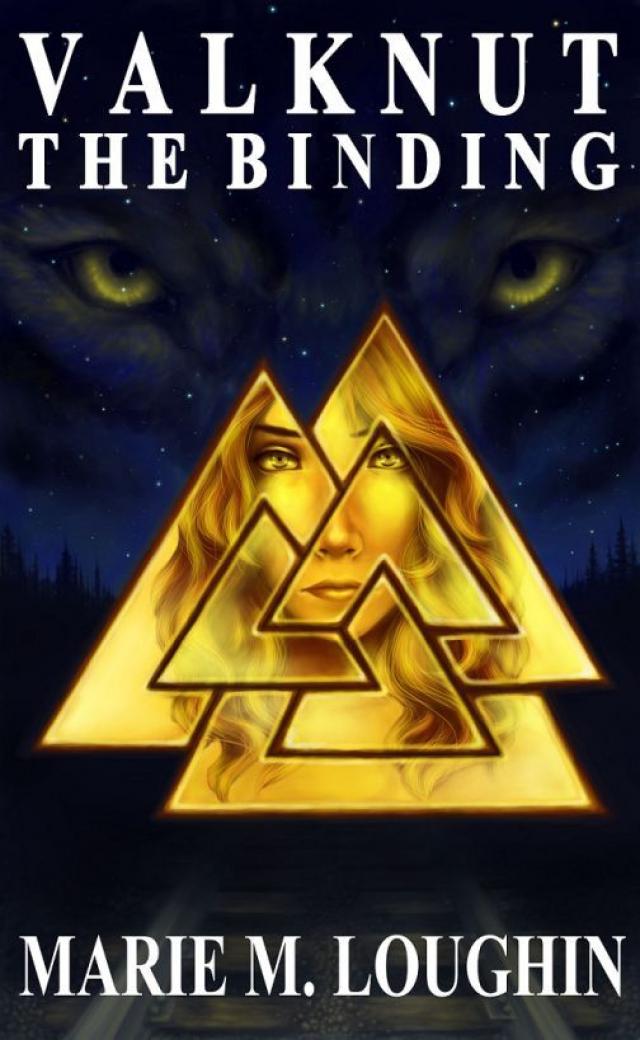
The tattoo had returned to normal, as well. Just a thing of skin and ink. With wonder, she traced a trembling finger around its three interlocking triangles. What the hell just happened?
A hand closed on her shoulder. She jumped and twisted away. It took her a moment to realize it was just Junkyard.
“Sorry, didn’t mean to startle you. You all right? “ He looked into her face more closely and frowned. “Jeez, you’re sweating. You’d better sit down.”
“No, that’s okay. I’m just, uh…” Her stomach rumbled again. “I’m—I’m just hungry. I guess that snack cake didn’t quite do it for me.”
“Easy enough. We’ll get you a bowl of Bones’s stew. Then you can show your dad’s picture around.”
Lennie nodded and let him lead her toward the jumble of boxes that made up the jungle exhibit. Her legs felt shaky. Sitting seemed like a fine idea. So did the stew. Good thing it wasn’t a long walk.
Deep inside the carnival, the giant snake came to life and chased its tail around its track.
***
At first glance, the festival’s jungle exactly matched Lennie’s image of a real hobo jungle: a warren of makeshift cardboard hovels, reinforced with plastic.
A huge maple tree growing in the nearby landscaping provided shelter from the sun. A blue plastic tarp hung over a branch, anchored by cement blocks. A cook fire burned underneath. A log had been dragged next to the fire to act as a bench.
The jungle seemed believable, but something was off. It took Lennie a moment to realize what. Everything was clean. The cardboard boxes and the wooden crates had never been touched by rain. The fire burned in a rust-free rod-iron fire ring, and the ends of the log bench were freshly and evenly cut. Even the asphalt looked recently swept.
Still, the expected smells were there. Faint whiffs of stale alcohol, old sweat, and wood smoke mingled with the usual parking lot odors of motor oil and tar. Someone had left a battered guitar leaning against the log bench. Its face was scarred and dull. A dirty, red wool blanket draped over the log beside it. Otherwise, the jungle seemed deserted.
“Where is everyone?” Lennie said.
Junkyard shrugged. He seemed more interested in the pot hanging over the fire. “They’re around somewhere.” He leaned over the pot, rubbed his hands together, and picked up the ladle. “Want some stew?”
A steamy, onion smell drifted above the less pleasant odors. Her mouth began to water. Before she could answer, a husky voice roared at them. “Hey, git your grubby mitts outta that stew. Payin’ customers only!”
A woman unfolded from an ancient pick-up truck parked on the other side of the boxes. She fixed Junkyard with a hard gaze and stretched upright, so skeletally thin that Lennie thought she might rattle when she walked. She was several inches taller than Junkyard and her maroon down vest didn’t reach the top of her jeans. A purple t-shirt pooched out between the vest and a tightly cinched macramé belt. A fedora sat on her bleached-blond hair like a turtle on a hay-mound.
Junkyard ignored her. He gave the pot a stir and lifted the ladle toward his mouth. The truck door slammed, releasing a shower of rust and dirt.
“Tetch any o’ that stew and die, Junkyard,” the woman said, except “die” came out as “dah.” Wherever she came from was way south of Iowa.
Junkyard stiffened and dropped the ladle, which missed the pot and hit the pavement with a bounce. He raised his hands high and turned with exaggerated slowness. “Easy, now. You’re not gonna shoot me, are you?”
A corner of his mouth twitched.
The woman frowned. “Oh, hush-up and give me a hug, scoundrel.” She crossed the jungle in three long strides and wrapped vine-like arms around him.
“Hello, Soo,” Junkyard said, his voice muffled by her shoulder. “I swear, woman, you could take a nap on a rail and have room to roll over. Why don’t you eat something for a change?”
“Just killed me a possum this mornin’.” Stepping back, she slapped her concave belly and smiled in satisfaction. “Ate the whole thang m’self.”
Junkyard looked her over. “You should have eaten two. And what the heck did you do to your hair?”
“Nothin’. Ah heard y’all were comin’ and it turned this color all on its own.”
They grinned at each other like cats eyeing a favorite toy. Watching them play, Lennie felt some of her tension and fear ease. That horrible spell in the parking lot began to fade like a hazy, yellow nightmare.
“Glad y’all could make it, Junkyard,” Soo said. “Ah git tired of the usual crowd. All spit an’ no polish.”
Lennie couldn’t resist. “If he’s the polish, I’d hate to see the spit.”
Bad impulse. Both heads swiveled in her direction. Junkyard’s eyes widened and he gave a little whistle that made her wish she could turn invisible. Grinning too wide for her comfort, he said, “Lennie, I’d like you to meet Too Long Soo, the best guitar player and biggest mouth on the FRC Railroad. Careful you don’t cut yourself on her wit.”