The Last Secret, page 39


It wasn’t too late.
AUTHOR’S NOTE
Jeanie’s voice has haunted me my whole life. Jeanie is loosely based on a burn survivor whom my mother took care of after graduating from nursing school. Mom kept the newspaper clippings about her tragic accident and photographs of her in the hospital, where she remained for two years. This burn survivor was moved to Mom’s gynecology ward only because a big enough room was available there to house her Stryker frame.
As I was growing up, I often studied these news articles, wondering what had happened to this burn survivor after she was released from the hospital. When I was thinking of my next historical novel, I knew I wanted to respectfully base a character on her and dream a story where “Jeanie” found her own perfect place in the world.
When plotting this book, I imagined being in a hospital ward for two years. And what “Jeanie” might have heard or seen sequestered in her universe of four walls. My mom remembered a nurse on that ward who was accused of stealing a patient’s morphine, which inspired me to create Pat O’Dwyer, and I began searching for another female character who would also be admitted to the ward and whose story would parallel Jeanie’s, linking them forever. I asked my mother about the other patients at that time, and she said there were women newly arrived from Eastern Europe. In the late fifties, when my mother was on that gynecology ward, many of these women were having hysterectomies. Why? I started to research, some kind of vague horror driving me forward. Where was this quest going to take me?
I started to look at women’s experiences in WWII in Eastern Europe. I came across articles by four remarkable female academics and daughters of Ukraine (listed below). Because the Eastern Front rolled through Ukraine many times during the war, there were often mentions of Ukrainian women’s experiences of sexual violence. These stories triggered a raw secret I still held in my own body and a startling realization. The Ukrainian and Hungarian women my mother treated in a Canadian gynecology ward in the late 1950s could possibly have been there because they’d experienced horrific sexual violence during WWII.
I did this research in the fall of 2019, not knowing that Russia was readying itself to invade Ukraine yet again. I realize now that it was my own past trauma that drew me to the Ukrainian female OUN insurgents these academics wrote about, and I felt compelled to pull their forgotten stories out of the historical record. The character of Savka Ivanets emerged as a composite of the brave female insurgents who served in the underground during and after WWII. And whose roles were not adequately reflected in history. I should mention: these stories only seem “forgotten” to most of the world, but not to the Ukrainian academics who first told them, and not to the ancestors of these women, who still carry centuries of Russian abuses in their DNA and are faced with the same dangers their mothers and grandmothers had suffered in WWII.
In an earlier draft of The Last Secret, my editor (thank you for your sensitivity and keen insight, dear Bhavna Chauhan) asked me why Savka didn’t react to injustices or say much in her scenes. I hesitated to answer, having only told therapists and my trusted friends my “terrible secret” over the past forty-two years. Taking a breath, I told Bhavna, “In 1981, I was drugged and raped by three men. Because I also experienced sexual violence, I thought Savka would be numb, like me.” My editor said, “You’re a survivor, and Savka’s a survivor. You’re going to give her a voice.” That was a pivotal moment for me. A voice? I was a writer. Supposedly I gave voices to underdog characters, but some traumatized part of me still felt I didn’t have one. The voice you hear in Savka is me trying to heal an experience of sexual violence and get past the need to keep it hidden from view for fear of pity, shame, or judgment. Perhaps the last secret I tell in this story is my own.
I was inspired by the following four remarkable female academics and daughters of Ukraine to write Savka Ivanets and the brave Ukrainian female insurgents who served in the underground during and after WWII.
Dr. Olena Petrenko: Among Men: Women in the Ukrainian Nationalist Underground 1944–1954; “Intermediate Positions: Women in the Ukrainian Armed Underground of the 1940s and 1950s”; and “Anatomy of the Unsaid: Along the Taboo Lines of Female Participation in the Ukrainian Nationalistic Underground.”
Dr. Marta Havryshko: “Illegitimate Sexual Practices in the OUN Underground and UPA in Western Ukraine in the 1940s and 1950s”; “Love and Sex in Wartime: Controlling Women’s Sexuality in the Ukrainian Nationalist Underground”; and “Women’s Body as Battlefield: Sexual Violence during Soviet Counterinsurgency in Western Ukraine in 1944–1953.”
Dr. Olesya Khromeychuk: “Militarizing Women in the Ukrainian Nationalist Movement from the 1930s to the 1950s.”
Dr. Oksana Kis, author of the article “National Femininity Used and Contested: Women’s Participation in the Nationalist Underground in Western Ukraine during the 1940s–50s.”
Maria Savchyn Pyskir’s book, Thousands of Roads, and Luba Komar’s wartime memoir, Scratches on a Prison Wall, gave me a glimpse into the lives of women in the Ukrainian underground during WWII and beyond. And other women’s experiences in Eastern Europe during and after WWII with Agate Nesaule’s A Woman in Amber and Eine Frau in Berlin by Marta Hillers.
Taras Ivanets is a fictional composite of Ukrainian intellectuals who were arrested, tortured, and sent to Siberia in the 1930s and 1940s. I am indebted to Aleksandr Solzhenitsyn’s The Gulag Archipelago, Eugenia Ginzburg’s Journey into the Whirlwind, Varlam Shalamov’s Kolyma Tales, and Danylo Shumuk’s Life Sentence: Memoirs of a Ukrainian Political Prisoner for helping me understand a political prisoner’s life in the Gulag.
The character of Lieutenant Belyakov is based on Nikolai Yezhov, the 5’1” head of Stalin’s Secret Police from 1936 to 1939. He often threatened his prisoners by making the sound of a man strangling at the end of a rope and saying, “I may be small, but I have hands of steel, because these are Stalin’s hands.” The quote in the prologue: “Do you understand how far you have fallen? I’m disgusted to look at you…a monster, a filthy person, a pervert…” was verbatim from Yezhov’s interrogator before he was executed in 1940 for “unfounded arrests,” during Stalin’s purges. Yezhov was obviously a psychopath, and I wondered, if he had lived after being denounced, what evil he might have gotten up to if assigned to look for something so valuable and elusive to the Soviets as the Rimini List. A roster of the Ukrainian soldiers who were incarcerated in the Rimini, Italy, prisoner of war camp from 1945 to 1947, this list also served as inspiration for The Last Secret. In this story, I took creative license and had Marko steal the list to keep it from the Soviets, but in reality, the Rimini List was classified and kept by the British government at the Public Records Office (now called the National Archives) in London from 1947 until it was declassified in 2014.
The character of Marko Ivanets/Kovacs is a fictional composite of several real-life Ukrainian underground leaders who joined the Fourteenth Waffen-SS Division to fight the Soviets in WWII, eight thousand of whom spent two years in a POW camp in Rimini, Italy, before the British government moved them to the United Kingdom. Some of these men continued to fight Russia for an independent Ukraine during the Cold War, sponsored by both the SIS (MI6) in England and the CIA in North America. I found valuable information in Timothy Snyder’s Bloodlands, and in Harvest of Despair: Life and Death in Ukraine under Nazi Rule by Karel Berkhoff. For more insight into the Fourteenth Waffen-SS Division, I read Per Anders Rudling’s article, “ ‘They Defended Ukraine’: The 14. Waffen-Grenadier-Division Der SS (Galizische Nr. 1) Revisited,” and Michael James Melnyk’s books The History of the Galician Division of the Waffen-SS, Volume 1: On the Eastern Front: April 1943 to July 1944 and The History of the Galician Division of the Waffen-SS, Volume 2: Stalin’s Nemesis. Also Terry Goldsworthy’s book Valhalla’s Warriors: A History of the Waffen-SS on the Eastern Front 1941–1945, and Searching in Secret Ukraine, Wasyl Nimenko.
Wasyl Nimenko, author of Searching in Secret Ukraine, helped me understand how Britain failed the Fourteenth Division in its early days at the Rimini POW camp. Nimenko wrote: “Fundamentally, the British were a little slow in realising that if they kept to the conditions agreed at Yalta, every ‘Soviet’ they sent back would be executed by Stalin’s unspoken directives or sent to Siberia as traitors who fought with the Germans against the Russians.” It was only when Eleanor Roosevelt and the Pope got involved that Britain began to protect the remaining members of the Fourteenth Division at Rimini and moved them to England to keep them out of Soviet hands.
The quote in chapter 7, “The olden times were not like the days we live in. In the old days, all manner of evil powers walked among us,” is from an old Ukrainian folk tale, “The Tsar of the Forest,” in Cossack Fairy Tales and Folk Tales, translated by R. Nisbet Bain.
Historical novelists generally stick to the historical record, but sometimes we bend facts to serve our stories. Salt Spring Islanders who lived there in the seventies will notice that I took artistic license with the ferry service to their island. In 1972, there were only two sailings each day.
I set Savka’s story in Western Ukraine. Although her family village, Deremnytsia, is fictional, what happened in so many Ukrainian villages during WWII was abominable. Ukrainian women and children suffered first under German occupation, then under Soviet reprisal when the Germans were driven out. In this story, I took artistic license in mentioning that some members of Savka’s and Marko’s families starved to death during the great famine, Stalin’s genocidal starvation of Ukraine from 1932 to 1933, which is now referred to as the Holodomor. After WWI, lands previously held by the Russian and Austrian empires became the Republic of Poland from 1918 until 1939, when Hitler and the Soviet Union invaded Poland. The Carpathian Mountains are in the Southwestern corner of Ukraine and were included in the Republic of Poland. As a result, this historic part of Ukraine narrowly missed experiencing the Holodomor.
It would be an oversight not to mention such a horrendously criminal act as the Holodomor in Savka’s story set in wartime Ukraine. The hardship and suffering wrought by this horrific genocide is in every Ukrainian’s DNA. And it is not such a difficult thing to understand why Ukrainian men joined with Germany to fight their common enemy during WWII.
I also briefly mention the Nazi forced labor transports in this book. Savka’s and Lilia’s husbands were in Waffen-SS and Schuma battalions, so they were exempt from forced labor transports, where Ukrainian children as young as ten years old were stolen from villages to work in Germany under horrendous conditions. Erin Litteken’s The Memory Keeper of Kyiv and The Lost Daughters of Ukraine are powerfully moving historical novels about how Ukrainians suffered and found ways to survive the Holodomor, and the forced labor transports in Ukraine during WWII. I highly recommend reading her novels to learn more about these harrowingly pivotal times in Ukraine.
ACKNOWLEDGEMENTS
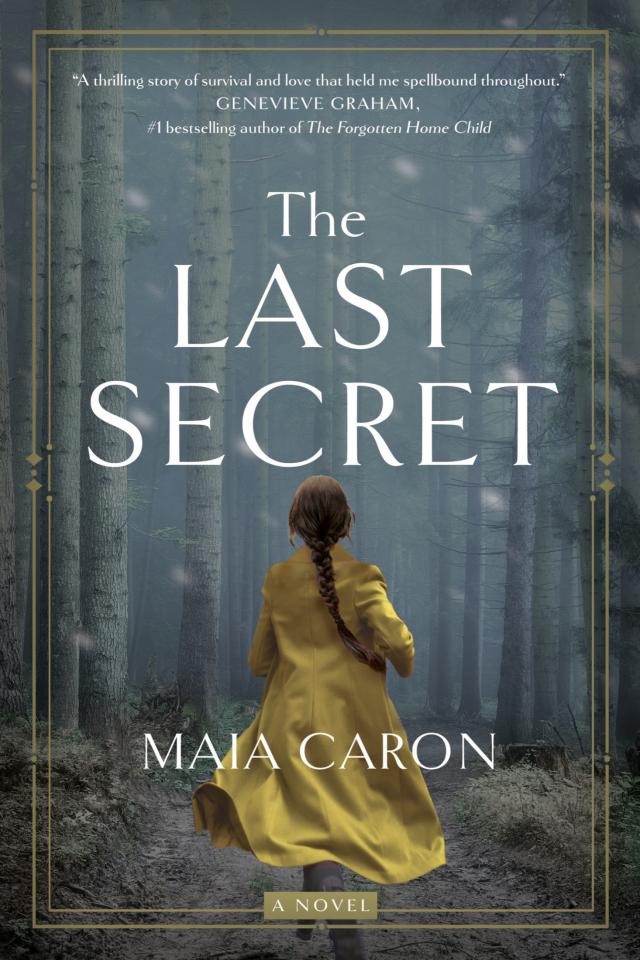
Bhavna Chauhan, editor extraordinaire, you elevated this story and brought out the best in me as a writer. I raise my grateful hands to you. Thank you, thank you to my stellar agent Carolyn Forde, who first championed The Last Secret and has been so supportive during the editing process. I’m very grateful for the team at Doubleday Canada and Penguin Random House Canada, in particular, for Maria Golikova, Megan Kwan, and for Kelly Hill for the gorgeous cover and interior design. And a gushing, fangirl thanks to Gil Adamson, an author I’ve long revered, for her brilliant copyedit.
Thank you to Canada Council for the Arts for their support in the writing of this book. I extend continued gratitude for inspiration and soul nourishment from the unceded territories of the Snuneymuxw First Nation and Coast Salish peoples of Salt Spring Island and Vancouver Island, upon which I wrote this story.
Thank you to beta readers Sandra Coldwell, Maria Peck, and Kristina Birkhans. So much gratitude to Ken Koshgarian for his fine beta read, unwavering support, and for consulting with legal issues in the text. Thank you to Dorrie Ferster for helping me with Salt Spring information and whose beautiful house on Southey Point served as inspiration for Gladsheim. Gratitude to Katja Geiger, who helped me with German words/phrases. My thanks to talented painter and friend, J.D. Hawk, who provided valuable information on painting techniques. Any remaining errors are mine alone.
A special thank you to Bogdana Varvaruk, daughter of Ukraine, whose insight into the story was invaluable to me.
My gratitude to Dr. Jeffrey Burds, whose article “Sexual Violence in Europe in World War II” was so helpful to me. Jeffrey has been very supportive of this book, keeping me supplied with articles, and patiently answering my weird research questions.
My beloved daughter Shasta—thank you for support while I was in the chair, researching, writing, and editing for four and a half years, and for not rolling your eyes too much when I hashed out plot issues with you on our walks.
I am blessed to have dear friends like Sandra Coldwell, Heather MacTaggart, Patricia Fortner, and Helen Murray, who listened to me talk about Russian submachine guns one too many times and whose support was a lifeline for me while writing this story.
My biggest thank you goes to bestselling author Lilian Nattel, who I blind emailed four years ago while plotting this book, asking a big question in regard to writing about women and sexual violence on the Eastern Front in WWII. I’d decided that if Lilian answered in a certain way (or did not answer at all!), I would take it as a sign I should abandon this story. But Lilian took a strange writer under her wing and became not only a mentor but a dear friend. You’ve read this story because of her.
QUESTIONS AND TOPICS FOR DISCUSSION
The Last Secret is largely told from Savka and Jeanie’s perspectives. How do their alternating points of view enrich the narrative?
Secrets play a pivotal role in this story. Of all the secrets kept and revealed throughout the novel, which did you find the most impactful?
The primary settings of the novel—war-torn Europe and Salt Spring Island—are dramatically different. In what ways did the contrast between these two settings affect your reading experience?
The frailty of memory appears as a recurring motif throughout The Last Secret. How do Jeanie’s memory issues influence her reliability as a narrator?
Savka is faced with an impossible choice: to spy on her husband to get her son back or to kill her Russian handler to prove she is not a spy. What would you have done if you were in her situation?
Jeanie is frequently made to feel like a monster by those around her. Who do you think are the real monsters in the novel, if anyone?
Both Savka and Ewa must make moral compromises to survive the war. How do their choices differ? Could you see yourself betraying a friend to protect your family?
At different points throughout the story, both Savka and Jeanie admit that they feel like marionette dolls, and at the mercy of puppeteers pulling the strings. How do Savka and Jeanie’s experiences mirror each other?
Imagery of caged animals appears throughout the novel, with Jeanie even referring to Pat as her “zookeeper.” To what effect do you think Maia Caron uses this imagery?
As a Ukrainian woman facing a Soviet Counterinsurgency, Savka is treated as if “her body [is] nothing but a hilltop in war, [with] the conqueror taking his spoils.” Why do you think women’s bodies are so often used as battlegrounds during periods of war and instability?
While under the thumb of Belyakov, Savka is forced to make countless sacrifices to protect her son. Was there ever a time when you didn’t agree with a choice that Savka made?
Who would you cast in the screen adaptation of The Last Secret?
While Marko values his duty to his country over his duty to his family, Savka values the opposite. How do their differing values fundamentally shape their relationship?
How do Jeanie and Taras—two people who have been profoundly hurt and betrayed throughout their lives—learn to trust in each other? Could you see yourself trusting in a stranger after everything that they have endured?
Shasta Zichmanis
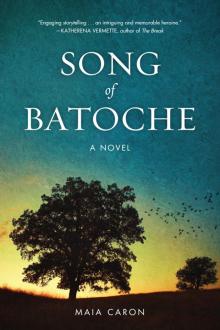
MAIA CARON is an Indigenous writer and author of Song of Batoche. She swapped her dream home in Toronto for a dream life in the Pacific Northwest, where she researches and writes women’s untold stories of the past. She can often be found hiking the wild, mossy trails of Vancouver Island with her family and a fierce little pug called Scout.
Maia Caron, The Last Secret