

Bravely, page 1


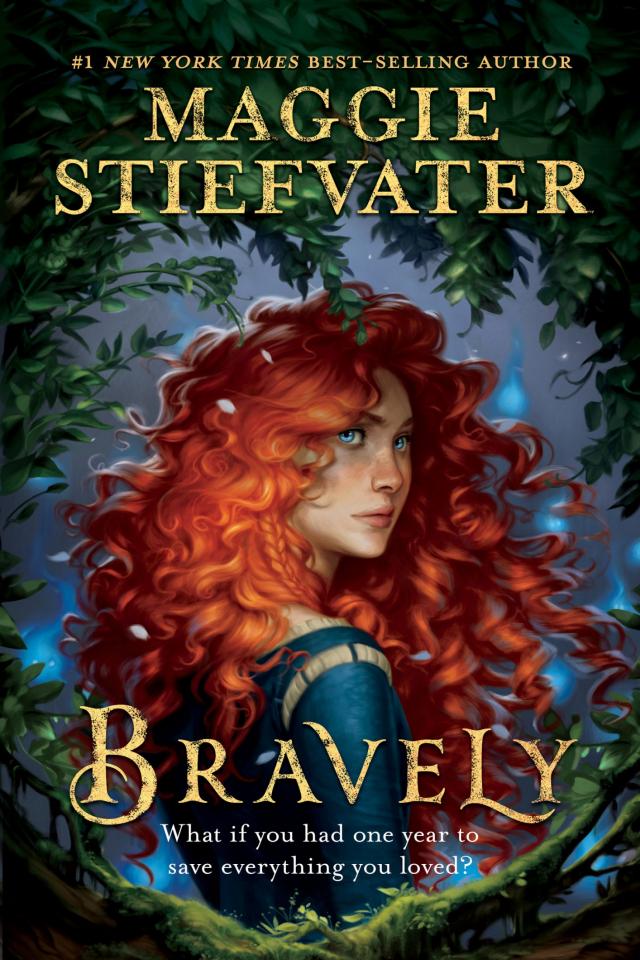
Copyright © 2022 Disney Enterprises, Inc., and Pixar.
Designed by Margie Peng
All rights reserved. Published by Disney Press, an imprint of Buena Vista Books, Inc. No part of this book may be reproduced or transmitted in any form or by any means, electronic or mechanical, including photocopying, recording, or by any information storage and retrieval system, without written permission from the publisher. For information address Disney Press, 1200 Grand Central Avenue, Glendale, California 91201.
ISBN 978-1-368-08203-7
Visit disneybooks.com
Contents
Title Page
Copyright
Dedication
Prologue
Part I: Winter
Chapter 1: Three Knocks
Chapter 2: The Black Raven
Chapter 3: The Bargain
Chapter 4: Thistlekin
Chapter 5: They Took the Feast
Chapter 6: Passages
Chapter 7: The Family DunBroch
Chapter 8: The First Journey
Chapter 9: The Road to Ardbarrach
Chapter 10: The Women of the Bells
Chapter 11: War Games
Part II: Spring
Chapter 12: Three Visitors
Chapter 13: The God of Many Faces
Chapter 14: Keithneil
Chapter 15: The Stolen Village
Chapter 16: Mother and Daughter
Part III: Summer
Chapter 17: The Wolves of Summer
Chapter 18: The Sleeping Place
Chapter 19: The Hopeless Prince
Chapter 20: I Am Nature
Chapter 21: The Holy Well
Chapter 22: No One Knows You Exist
Chapter 23: Cennedig of Fife
Chapter 24: The Gift
Part IV: Fall
Chapter 25: A Royal Trip
Chapter 26: Consequences
Chapter 27: The River Will Find Its Way In
Chapter 28: The Island of Lost Girls
Chapter 29: The Da´sachtach
Chapter 30: War and Peace
Chapter 31: Autumn Changes
Chapter 32: A Familiar Face
Chapter 33: Feradach, Feradach
Chapter 34: A Girl Made of Air
Chapter 35: Wolftail
Chapter 36: Legends Are Lessons
Chapter 37: The Girl from Nowhere
Chapter 38: The Bargain, Part II
Chapter 39: The Battle
Chapter 40: The Battle, Part II
Chapter 41: I Trust You
Epilogue: The Knock
Author’s Note
Acknowledgments
About the Author
TO THE ISLANDERS
THIS is a story about two gods and a girl.
It takes place a very long time ago, when Scotland was only beginning to be called Scotland, at a castle called DunBroch.
The first god, the Cailleach, was very old. In fact, one of her other names was the Old Woman of Scotland, although most humans never saw her in that form. Instead, those with the Sight merely felt her invisible presence in a wild storm or a rushing waterfall or even in the melted snow that pools in fresh-plowed spring fields. The Cailleach was a goddess of creation. She made trees bud. Grass thicken. Calves grow inside cows. Fruit ripen on the vine. Her work was the ancient business of making and renewing.
Oh, she was a wily old woman.
She was a rule-bending, shape-shifting, trick-playing, truth-splitting old crone, and she’d do whatever she could to get her way.
The second god, Feradach, was very young. It wasn’t that he hadn’t been around as long as the Cailleach, because he had, in his own way. But unlike the Cailleach, who had the same physical form every time she became visible, Feradach appeared as something different to every person who saw him. It meant he was always learning himself new, over and over and over, a kind of eternal youth.
Feradach was a god of ruin. His work was the ancient business of destruction. Under his attention, fires seared landscapes, plagues harrowed communities, and floods erased civilizations.
Feradach destroyed the obsolete; the Cailleach prompted renewal.
Together, they kept the balance.
Unfortunately, they didn’t always agree on what the balance required. Or rather, the Cailleach didn’t always agree. Young Feradach was unflinchingly fair, because it’s easier to have unclouded justice before experience complicates things. The Cailleach, on the other hand, was old enough to have preferences. Biases. Favorites. This meant that sometimes, even when ruin was perfectly merited, she wanted her side to win instead.
And that was usually when she cheated. She’d been playing tricks on Feradach for ages.
Some years she managed to save a warrior or a family or even an entire village from him. Some years, she lost them all. Some years, when the tricks didn’t work, she used a miracle, although she didn’t get many of those to spend. The Cailleach was old, but wherever the miracles came from was even older, from a deep part of Scotland that has always favored healing and creation. Miracle years were rare ones.
This story takes place in a miracle year.
On the day it begins, DunBroch looked particularly splendid on its perch above the glittering loch. In that sharp winter weather, everything that wasn’t green and red was black and white. Black water, white-heaped shore. Black road to the castle, white-shouldered bracken on either side. Black walls, white-capped battlements. A powdered sugar layer of snow rendered all the courtyard’s divots smooth as an iced bun. Red berries popped brightly in the holly and bay leaf boughs hung over every threshold. Old green banners flapped elegantly from the tall towers.
DunBroch was getting ready for a Christmas wedding. Yes, they had Christmas back then, and weddings, too, although neither looked exactly as they do now. The part of weddings we spend a lot of time on these days—the bride and the groom, the picking of flowers and matching of dresses, showers and stag parties, flower girls and ring boys, the kiss, the kiss—that was the least involved part back then. A DunBroch wedding ceremony was just a couple quickly exchanging a ring or a brooch in front of a cleric, then getting on with it all. No kiss. No romance. Just a perfunctory transaction. But the celebration that came after—now that was really something. It could go on for days. Pantomime plays, courtly dancing, feats of strength, silly games, and, of course, the food. The food, oh, the food! To modern eyes, it would have looked much more like a festival than a wedding.
Now, a DunBroch Christmas was more like its modern-day cousin. The Christmas turkey was more likely to be a boar or a swan, and the board games played before the fire were ones that have long since gone extinct, but the seasonal trimmings were the same. Holly wreaths and ivy boughs, mischievous mistletoe and merry carols, twelve short winter days of gifts, twelve long winter nights of treats and spiced wine. It was a natural companion to the revelry of wedding feasting.
The Christmas wedding was Leezie’s. Foolish, lovable young Leezie, who had been a member of the DunBroch household staff so long that she was like family. She loved ritual and religion. The Christians, the druids, the Jews, the witches, the Cistercians, the Lads of Cernunnos, the Ladies of the Morrigan, the Tironensians, the Cluniacs, she had tried them all. Recently, she’d dedicated herself to Minerva, the Roman goddess of wisdom and crafts, and spent weeks weaving and writing songs about owls. It was a trying time. Luckily she’d moved on to astrology and then, on to getting married. Leezie had always wanted a Christmas wedding—a perfect combination of ritual and religion—and now she’d finally found a man to star in it with her. The others at DunBroch called him the Cabbage.
Cabbage is not exciting, but it is nutritious. He would do.
Leezie is not the girl this story is about, however. It is about another DunBroch girl.
Now, there are three DunBrochs: the castle DunBroch, gazing watchfully over the wooded hillsides. The kingdom DunBroch, with its lochs and burns, its lowland fields and highland shielings, its coven of white-haired mountains and sliver of black-tongued sea. And the Clan DunBroch: King Fergus, Queen Elinor, Princess Merida, and three triplet princes, Hubert, Harris, and Hamish.
This story belongs to the Princess Merida.
Merida was less like the mannered royal you’re imagining and more like a struck match, although matches did not yet exist. Red hair, keen eyes, quick brain, built to start fires but not to put them out. She was an absolute wizard with a bow and arrow. For over a decade, before the wee devil triplet princes arrived, she’d been the only child, and where other children might have had friends, Merida had her bow. She practiced her archery breathlessly, automatically, in every moment her mother hadn’t scheduled her for lessons in embroidery, music, and reading. There was a stillness to archery she couldn’t get anywhere else. Whenever she had a problem she couldn’t solve, she went out to practice. Whenever she had a feeling she didn’t understand, she went out to practice. Hour upon hour, she collected calluses on fingertips and bruises on forearms. At night, when she dreamt, she still sighted between trees and adjusted for strong highland winds.
In the months before the wedding, Merida took her bow and traveled the kingdom. In spring she’d gone with the villagers and their herds up to the temporary bothies in the shielings. In late summer she went down to Morventon to study letters and geography with the nuns. By fall, she was traveling with a handful of her father’s old confidants who had vowed to map the varied terrain of DunBroch.
In winter, she returned for Leezie’s wedding. She hung up her bow. How safe and unc hanged she found DunBroch after her months of wandering.
She didn’t know that Feradach—and disaster—was approaching.
But the Cailleach knew. That wily old goddess.
She also knew that DunBroch had earned Feradach’s ruin. But the Cailleach was old, and she was biased, and she had a stake in the Clan DunBroch.
So she cheated.
This is that story.
MERIDA had been eating bread rolls for an hour when the first knock came.
The rolls were wonderful. Fresh baked. Crisp on the outside, pillowy and warm on the inside. Merida had finished off all the wonky-shaped ones, and had now moved on to some of the perfectly shaped ones. There were still hundreds of them piled on the rough-hewn kitchen table, far outnumbering the planned guests for the Christmas feast. The bread was destined for a silly wedding ritual: Leezie and the Cabbage were supposed to try to exchange a kiss over the top of a wall of buns. Merida was doing them a favor by making the wall just that bit shorter.
Leezie, getting married! Merida couldn’t really believe it.
As she munched bread in the dim midnight kitchen, she used her bare foot to trace her name through the flour dusting the stone floor. How pleasant to feel the chill of the floor on the bottom of her foot and the heat of the smoldering hearth on the top. How pleasant to feel the squish of the roll’s interior against the roof of her mouth and the crisp mountain crust against her tongue. How pleasant to just let her mind prattle, as her mother Elinor called it, to just let it play over nonsense like how her name spelled backward was Adirem, which wasn’t half bad, really. Adirem of DunBroch. Her mirror self, she thought. Her shadow self. As dark and pensive as Merida was bright and active.
Merida traced DunBroch into the flour. Hcorbnud didn’t look at all appealing backward.
Then came the first knock.
Tap-tap-tap.
Merida stopped chewing.
She listened.
Could it be one of the triplets? Hubert had had a mischievous look in his eye as Merida pinched the triplets’ candle out at bedtime.
But the castle was silent in the way that only castles can be. The stone stopped most sound dead in its tracks and the wall tapestries drowned the rest of it. Everyone besides Merida was dreaming of Leezie’s wedding and the Christmas feast to follow. The knock had probably just been one of the fireplaces popping.
Merida finished her roll. She took her time selecting another, resisting a somewhat triplet-like impulse to pull one from the bottom of the heap to watch it collapse across the floor. Picking a perfectly round one, she tore it open to admire the structured crevices and crannies inside. Over the past several months, she’d eaten a fair bit of bread, but none could compare to Aileen’s. Aileen, the family cook, was irritable, territorial, and foulmouthed, but Scotland’s kitchens had no better. Merida’s mother Elinor went to great lengths to find the most modern of recipes for Aileen, often all the way from France, and every time a new one came via messenger or pigeon, Aileen closed herself up in the kitchen for days, testing and retesting it before she was willing to let any of the royal family try the result. Well, most of the royal family.
This wasn’t the first time Merida had snuck down to sample Aileen’s handiwork.
As she ate this roll, she thought back over her grand homecoming earlier that day. There’d been hugs and tears, the works. DunBroch was very enthusiastic about stories, about legends, and Merida had delivered the Ballad of Merida’s Year, at volume, from atop one of the tables in the Great Hall, feinting around Christmas decorations. The triplets and her father and Leezie had hooted with delight, and her mother had pretended to look disapproving.
Ah, home! It was so nice to be back among DunBroch’s creature comforts: its bellowing fireplaces and plentiful candles, its worm-free snacks and discreet privy, its flea-free blankets and luxurious bedrooms. Nice, too, to find the little things unchanged: the herbal smell of the kitchen. The chaos of her triplet brothers caterwauling in the halls. The percussive clearing of her father’s throat as he sat in his chair by the fire. The ritual of kissing her mother’s cheek good night as Elinor wrote down the day’s events in her journal.
Tap-tap-tap.
Was that a second knock?
It seemed like it might have been. A soft triple tap, just like she thought she’d heard before.
“Hubert, I hear you,” she whispered.
But it didn’t seem to be Hubert. Was it coming from the door? The castle gate was barred at nightfall, so no one could have gotten into the courtyard, and even if they could, the closest civilization was the wee blackhouse village, which was a twenty-five-minute walk even when the road wasn’t bad-tempered with snow and ice as it was that Christmas Eve.
Merida waited. She listened. There was nothing.
She got another piece of bread.
The strange restlessness that had driven her out of bed in the first place was beginning to rise again.
Why was it even there?
She should have felt marvelous. She loved her family. She loved her home. She loved it more than she had words to say. It was wonderful to be back, to find it almost exactly as she’d left it.
But up in her tower bedroom, she’d lain awake in the cold moonlight that snuck around the window tapestry and wished desperately that it wasn’t dark so that she could go outside to the exercise fields and shoot her bow until her body and mind felt perfectly still. Instead, she fidgeted, her feet itching to take her away on an exciting journey.
Exactly how she’d felt the night before she’d left months before.
But she’d gone on the journey already. Something should have changed. She should have changed.
Then came the third knock.
Tap-tap-tap.
This one was definitely not coming from a fireplace. It was coming from the door. Not the main one, but the little ugly one around back, for deliveries, where the carts wouldn’t tear up the grass. But who would be out there on a night like this?
Merida had a sudden, hideous thought that perhaps it was one of the triplets, somehow trapped outside for hours, able to manage only that feeble tap. Leaping across the kitchen, she turned the enormous key in the lock and heaved the heavy door open.
Outside, the courtyard was brighter than she’d expected. The huge moon, although out of sight behind the castle, lit all the snow to daylight brilliance. Freezing air, scented with woodsmoke, blew into the kitchen around Merida. Every star was so bright and shimmering that they seemed as if they’d be wet to the touch.
There was no one standing on the doorstep. There weren’t even footprints in the snow. But she knew she had not imagined the knocks.
A very peculiar and particular prickling was rising inside her. She could tell that this feeling had been hiding among her other restlessness all along, only now it had become big enough for her to recognize its unmistakable timbre. It was like the wet, sharp shimmering of the stars overhead, but in her chest.
Magic, it whispered. Magic is near.
It had been a very long time since she’d felt that call.
And that was when she saw him.
In the deep blue shadow near the castle wall stood a hunched figure, although he couldn’t have been the one who knocked—there were no footprints leading from him to the door. He was paused in the act of tugging one of his gloves off, absolutely motionless, hoping she wouldn’t notice him.
This was no visitor. This was an intruder.
“Hey!” she called. “I can see you!”
The figure didn’t move.
Merida would have preferred her bow and arrow for effect, but she used what she had in her hand already: bread. With her perfect aim, she railed it right off the figure’s head.
“Hey!” she said again. “Announce yourself, stranger!”
He turned his head. What was his expression? Merida couldn’t see; it was hidden in shadow.
Merida snatched up a weapon; the closest to hand was a fireplace shovel. She crossed the courtyard in several massive strides. “I said, announce yourself!”
The stranger’s voice was scornful. “You can’t hurt me—ow!”
Merida hit him right behind his knees, a trick she’d learned not from battle training, but rather from her fiendish brother Hubert, who’d hidden for weeks beneath the Great Hall table, perfecting the technique on Merida and anyone else foolish enough to wander close.


