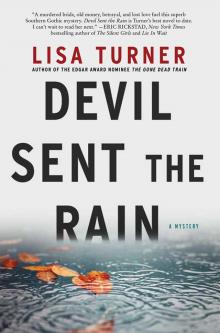
A Little Death in Dixie, page 3


In the car, she flipped her iPod to an old Lyle Lovett album.
Lyle’s voice cheered her as her shoulders relaxed, and she steered one-handed while sucking up a chunk of ice cream. Her life had changed. This trip would prove it. She wasn’t a little girl to be bullied anymore.
Not a cloud in the sky as Lyle sang about the sun coming up in his coffee cup. Sunlight bounced off the car’s hood, almost blinding her. She wedged the drink between her thighs and rummaged through her purse for sunglasses. No luck. She dropped her purse to the floor and felt around the passenger’s seat. They had to be there. She glanced down to see the case stuck between the seat and the console.
She crested a hill and looked up to see the dog, a collie, standing in the road forty feet in front of her. Seconds to react, she braked and swerved, but she saw in the dog’s dilated eyes that they both understood what was about to happen. She heard a thud and saw a whirl of fur out of the corner of her eye. Gravel pinged against the car’s undercarriage as she skidded to a stop. Heart pounding, she looked down. Milky brown root beer soaked her new slacks and sweater.
On the iPod, Lyle sang a song about going home.
Chapter Five
Saturday, 10:49 a.m.
Lady Tuggle’s bony hands fought the restraints.
It hurt Billy to watch her struggle as paramedics covered her with a blanket then tightened the gurney straps over her arms and body. Under the oxygen mask, her face looked shrunken. A good thirty minutes had passed since she’d put a bullet through her father’s face in the photograph. The smell of cordite still hung in the air.
He would write up the incident as an accidental discharge of the weapon instead of the truth; that Lady Tuggle was done with men, all men, and she wouldn’t have minded leaving her mark on a few on her way out.
As a patrolman, he’d learned early that the manner in which an event is presented counts more than the facts.
Miz Lady pointed at a battered cardboard box sitting on a chair next to the wall. Billy looked inside to see a stack of the Jesus fans with an advertisement for Rascal’s Appliance Store printed down the wooden handle. He took the top fan, brought it over and laid it on her blanket. She shook her head and pointed at him.
“For me?”
She nodded.
“Thank you, ma’am.”
They wheeled her down the front hall that smelled of lemon wax rubbed into old oak floors.
This was the last time Miz Lady would see her house. The stained glass in the door transom sparkled like gemstones. Billy understood what the house meant to a woman like her. She was the same as the women he’d known growing up on the back roads of Mississippi. Hard work. Little money. Poor education. Not a single step in their lives made easy. She wanted a few nice things in her life and some respect. He’d protected women like her all his life. He didn’t send them to jail.
The paramedics lifted her through the doorway, their backs blocking his view. He heard the gurney bump the screen door and saw it tip.
“Hey easy,” he called out.
The EMT looked back at him with placid disregard. “We got her.”
Then they were gone. Not a damned thing had gone right today.
During the search of the scene Officer Washington had found the weapon most likely used to hit Mr. Tuggle on the back of the head—an iron skillet that had been dropped into a galvanized trashcan outside the back door. A single gray hair snagged on a rough edge of the skillet’s backside, along with prints on the handle, would tie things up.
Patsy Dwyer, a pot-bellied, black-haired woman of obvious Irish descent, from the Crime Scene Unit, bagged the skillet, the .38, the concrete elf, and the shoe. Autopsy would confirm the cause of Walter Tuggle’s death, whether it was the blow to the head, the fall from the porch, or the blow to his face from the elf.
In the yard Byhalia Washington took Billy aside, shaking her head. “Would you explain what just happened?
“Lou got carried away.”
“I saw that. What about you?”
“Me?”
“You, Detective Cool,” she said, pointing her finger at him. “Strolling into the line of fire. That woman would’ve shot you dead except you knew her preacher’s name. How does a white man know who pastored a black church?”
“Guess the Lord’s looking out for me. I grew up singing in the choir of a black church. We visited Pastor Bean a couple of times a year.”
Washington reared back. “You passing?”
“No, I’m white.”
“I see. That’s why you walked into the middle of that mess instead of giving me the nod to take her down. You love black people.”
“Lou’s my partner. I did the best thing all the way around. If you took her down, we’d be standing in front of the review board next week.”
“Don’t try that with me. You’ve been watching too many cop shows. Playing hero. You saved those two crazy people from being shot.”
“Lou’s not crazy.”
She snorted.
“He got carried away. And by the way, your partner wasn’t exactly professional.”
Washington rolled her eyes. “Tell me about it.”
They agreed, rather than go into detail on their reports, to consider Rad and Lou’s more colorful moments to be training for future hostage situations. For the next forty-five minutes Billy ran the traps with the tech team. He didn’t want to think about what Lou had done.
Back inside the house the sudden dimness of the front hall made him light-headed. Lou sat in the living room in a tall-back wooden chair staring out the large picture window. A jelly jar of ice water and his cell phone sat on the floor to his right. Sweat made his bald spot shiny. Either he was unaware of Billy’s presence or he wanted to ignore him.
Billy wondered if he should bring up the incident in the dining room or turn it into a joke the way he usually did, but he couldn’t figure out how. Lou almost got himself shot today, almost got them both killed. Six years they’d worked together, sometimes eighteen hours a day. They made a good team. Billy didn’t want anything to happen to that.
Billy’s cell rang. At the sound Lou swiveled in the chair.
“Hell of a way you’re running this case,” Lou said before Billy could answer his phone. “Big fucking mess you got out there.”
Lou’s lips looked red and wet from the ice water. Something about that angered Billy.
“Hey, Lou. Don’t let your mouth start something your head can’t handle,” he said, about to make the point that any mess out there had been caused by Patrolman Rad, who had an excuse for being stupid. Lou didn’t. Then he caught his partner’s unfocused gaze and stopped. Lou was trying to push his buttons, just like Anderson had predicted.
His cell rang again, and he ducked into the dining room. The ID showed the call was their boss at the Criminal Justice Center.
“Detective Able,” he answered.
“Hollerith, here. Wanted to see how things are adding up.”
Lieutenant Kline Hollerith was a by-the-numbers guy. Should’ve been an actuary instead of law enforcement middle management.
“It’s another domestic, an older couple this time. We have the wife in custody, but she developed an arrhythmia so we’re transporting her to The Med.”
“Things running smoothly otherwise?”
“Smooth enough.”
“Any reason another team couldn’t take over?”
He glanced across the hallway. Lou held his cell phone up to the sunlight, studying the screen. Maybe getting out of here would be just the thing.
“No problem, sir, what’s up?”
“Judge Overton wants Nevers to check into a missing persons at SuperShoppers East. The woman’s been AWOL about sixteen hours. Overton insisted Lou head this up. I’d like to accommodate him.”
“We’re ready to roll.”
“Vargas and Nance are heading your way.”
He flipped the phone shut and walked into the living room.
Lou turned in his chair. “Guess that was Hollerith on the horn.” His eyes shifted under their lids toward Billy.
He knew that look. Lou was wondering if he’d dropped a dime and told Hollerith Lou had almost gotten them shot. And if I did, you’d deserve it, wouldn’t you, my friend?
“He wants us to move on to a missing person,” Billy said. “He’s sending over a couple of guys to wrap this one up. You good with that?”
“Got to make a call first.”
“I told Hollerith we had no problems here.”
“Yeah? So?” Lou punched a few numbers.
“Thought you’d want to know that.”
Lou looked up. “How about some privacy?”
“No problem. Catch you outside.”
Lou slumped in the chair, put the phone to his ear and stared out the window as if he were already alone.
Chapter Six
Saturday, 11:17 a.m.
On the second lap around the arena with Colette, Judge Overton’s cell rang. He knew who was calling.
“Judge Overton,” he answered, using his courtroom voice.
“Ah, yeah, Nevers here.”
“I paged you an hour ago. I used the 7-3-7 code. Doesn’t that stand for P-D-Q, Pretty Damned Quick?”
“Sorry about that. I’m working a scene.”
Lou sounded stressed. Good.
“That problem we discussed before,” Buck said, “I’m sure you remember.”
“Copy that.”
“Can I assume you made a move?”
Silence on the line.
“Hello?” Buck said.
“What the hell you talking about? I ain’t moved on nothing.”
“Don’t play dumb, Lou. The problem’s resolved. Your fingerprints are all over it. Hasn’t Hollerith reached you?”
“My partner just took the call. Listen, you got it wrong. I made no got-damned move, get it?” Lou was shouting into the phone.
“Are you alone?”
“Hell, yes. You think I’m an idiot?”
“Look, I called to say I’m grateful you’ve handled my dilemma.”
“I didn’t handle your dilemma. I’m up to my whacker in my own dilemmas.”
Buck stopped in the middle of the arena. This wasn’t the reaction he’d expected. Then it came to him. Lou might be a burnt-out cop, but he wasn’t a fool. Calls can be recorded. A smart cop would never admit to a crime.
This required a more oblique approach. He started another lap around the arena with Colette. “Let’s speak hypothetically. My life has been simplified. Whether or not I thank you for it isn’t the issue. Make this go away, understand? Do what you have to, but shut it down fast. Make sure there’s nothing the D.A. can hang his hat on.”
“Did you talk to somebody else about taking care of your problem?” Lou said.
“No reason for me to do that. You’ve always resolved difficult matters for me.”
“And now I’m done. Get yourself another man.”
Buck blinked in disbelief. Damned cops. Damned women. Always a battle. Collette stumbled behind him. He snatched the reins causing the mare’s head to fly up. Damned horses, too. He stood in the suffocating heat and tried to get a breath. He had to handle this right.
“Listen closely. You’re in this, like it or not. Let’s finish and move on.”
Silence on the other end.
“I want out,” Lou said. “Do what you want. I’m hanging up, Judge. Have a nice life.”
Years on the bench had trained Buck to spot a man on the edge. He either had to back off or hit the detective in the gut.
“Don’t kid yourself. Remember, you’ve told me what you’ve done. You’re about to lose your place in West Memphis and everything you love that’s in it if you don’t follow through.”
“What are you talking about?”
Buck knew fear when he heard it, and fear was all over the detective’s voice. He’d already won. He led the mare toward the gate.
“I know you were too drunk to remember all you told me the other night, but our agreement stands. Finish cleaning up my mess, and you’ll get your money.”
The line went dead. It didn’t matter. Lou would take care of the scene.
Collette followed him through the gate. He glanced back at the whelps his spurs had left on her flanks. Her head drooped and her eyes were half closed with exhaustion.
Buck didn’t believe luck made a man a winner. That took skill and the will to dominate everything and everyone around him. He believed the only true crime a man commits is getting caught. And if you’re stupid enough to get caught, the full weight of the law should be applied.
Through the double doors of the arena he saw the sun-bleached gravel yard, white as bone. Not a shadow, only light. He thought about Lou, a man who, up to this point, had been perfectly predictable. Today’s behavior puzzled him. He led the mare across the yard toward the stable aisle, dark and cool as a cavern. Since he was a child, his memory for numbers had been unerring. He opened his phone, tapped in the number of his insurance company and pressed “Snd.”
Chapter Seven
Saturday, 11:35 a.m.
Billy left Lou and stepped out onto the Tuggle’s porch. The heat hit him like a falling wall. Tulip poplar leaves big as the palm of his hand spiraled onto the lawn. The neighbors had given up and gone inside to cool off in front of their air conditioners. Days like this he wished he were one of them, a glass of iced tea in one hand, cable remote in the other, never having to look again into the unfixed eyes of a murder victim.
He breathed in deep. The neighborhood smelled of mown grass and grilling ribs. It calmed him, reminded him of the meat smoker his Uncle Kane kept out back of his roadside restaurant where Billy had worked and lived through his high school years. He thought about the sauce his uncle used on his ribs—Momma’s Homebrewed Hot and Spicy, made in an iron pot by a woman living in a dog trot that was over a century old. Remembering his time with his uncle made the knot in his chest loosen.
As a kid he hadn’t wanted to be a cop. At seven he’d wanted to be a fireman. At ten, a major-league third baseman. After a year at law school and the senseless murder of the Riley girls—two little black children he’d known from his home church—he decided to be a homicide detective.
He’d dropped out of law school and signed up with the police academy after learning the cops had been racially biased during the kidnapping and murder investigation of the two girls. He decided he’d rather intervene to ensure justice than get involved as a lawyer when all he could do was pick up the pieces.
Billy shook his head. That was the past. Now he had real-time problems with Lou. They needed to head over to the fish camp, kick back and have a talk. Life makes more sense when a man’s got a fishing pole in his hand. Maybe it was time to bring up Paul Anderson, the department’s psych counselor, after all.
Byhalia Washington stood beside her squad car, talking into the radio hand mike. He should tell her that detectives were on the way, and she needed to stay with the scene. It was a simple case, a grounder. No big deal.
Lou’s voice carried to the porch. “Ah, yeah, Nevers here.”
Billy listened.
“Sorry about that, I’m working a scene.”
Lou sounded nervous.
“Copy that.”
An unmarked car pulled up across the street. Vargas and Nance climbed out. Billy pulled out his case notes and started down the walk toward them. Lou’s voice followed him, shouting now.
“What the hell you talking about? I ain’t moved on nothin’.”
He glanced at the house. Lou was really going at it.
“Hey, Able,” Nance called out.
He turned back and saw Vargas and Nance start across the lawn. They were the same medium height, same medium build—a pair of white, middle-aged civil servants. Both wore the bored slump and slightly disgusted look veteran cops get when extra paperwork gets dumped in their lap. They’d been ribbing him about his batting slump for weeks.
A breeze picked up and blew leaves across the walk onto his shoes. Vargas and Nance grinned at him.
“Okay, Hot Shot, you’re outta here,” Nance said to Billy. Nance jerked his thumb over his shoulder like an ump throwing him out of the game. “Take Saturday off. Go hit some practice balls.”
Nance’s grin widened. That pissed Billy off. Nance could knock the cover off a ball, but he was a smart-ass and a poor excuse for a detective. The guy couldn’t find a dead horse in a bathtub. Vargas wasn’t much better. Billy looked away and looked back at them.
“Tell you what,” he called. “I’ll work on my swing; you work on closing a case or two.”
Nance held up his hands. “Come on, can’t you take a . . . ”
He didn’t finish. Both men’s gazes fixed on the house.
The breeze died. A muffled shout came from behind him.
“What’s going on?” Vargas said.
Billy turned as the picture window exploded outward. Glass shards ballooned toward them. At the center, a chair cart-wheeled through the air. The detectives raised their arms against the glass and dropped to the ground. He went down on the walk, saw the chair hit and roll. Everything stopped.
“Freeze!” Washington yelled from the back fender of her squad car. She had her Glock trained on the house.
Vargas and Nance rolled in different directions and came up with their Sigs directed at the window. He followed their focus and saw a figure inside the house step back from the window into the shadowy room.
Lou had been sitting near that window. Was it Lou, or had there been someone else in the house all along?
“Don’t shoot, that looks like Nevers,” Washington yelled.
“No way,” Nance yelled back.
Billy crouched and ran a zigzag pattern toward the porch, hoping the man would be distracted by Washington and Nance.
“Able, you idiot. Get down,” Nance shouted.
He ducked behind the bushes along the house. Miz Lady never admitted killing her husband. They assumed she was the guilty one. But old houses have crawl spaces and attics. Maybe the scene wasn’t properly secured. She could’ve been hiding someone—a son, or a jealous boyfriend.