Sultana's Legacy: A Novel of Moorish Spain, page 1


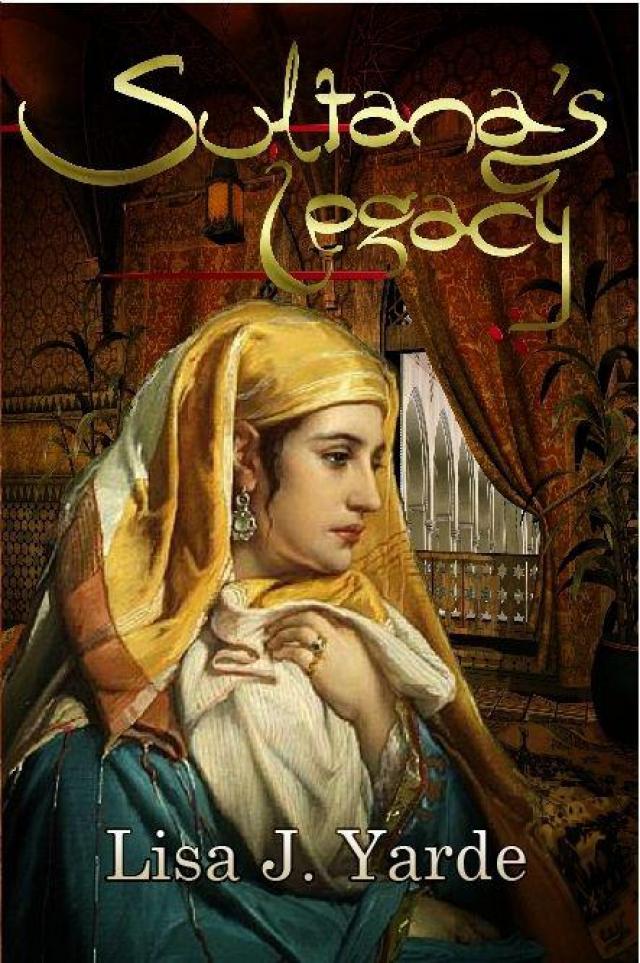
Sultana’s Legacy
Lisa J. Yarde
SULTANA’S LEGACY
Copyright © Lisa J. Yarde 2011
ISBN-10 1939138051
ISBN-13 978-1939138057
This is a work of fiction. The names, characters, locations, and incidents portrayed in it are the work of the author’s imagination, or have been used fictitiously. Any resemblance to actual persons living or dead, locations or events is entirely coincidental.
All rights reserved.
No portion of this book may be transmitted or reproduced in any form, or by any means, without the prior written permission of the Author.
www.lisajyarde.com
Cover Artwork
Femme Orientale, Jean Francois Portaels, 1877
File source: Creative Commons, Attributions License
http://nl.wikipedia.org/wiki/Bestand:Jeanfrancois-portaels-Femme_Orientale.jpg
Background courtesy of Fotolia, Royalty-Free License
Cover arrangement, title font and Alhambra Press logo by Lance Ganey
www.freelanceganey.com
Table of Contents
Dedication
Acknowledgments
Foreword
Months of the Hijri Calendar
Characters
Sultana’s Legacy Chapter 1
Sultana’s Legacy Chapter 2
Sultana’s Legacy Chapter 3
Sultana’s Legacy Chapter 4
Sultana’s Legacy Chapter 5
Sultana’s Legacy Chapter 6
Sultana’s Legacy Chapter 7
Sultana’s Legacy Chapter 8
Sultana’s Legacy Chapter 9
Sultana’s Legacy Chapter 10
Sultana’s Legacy Chapter 11
Sultana’s Legacy Chapter 12
Sultana’s Legacy Chapter 13
Sultana’s Legacy Chapter 14
Sultana’s Legacy Chapter 15
Sultana’s Legacy Chapter 16
Sultana’s Legacy Chapter 17
Sultana’s Legacy Chapter 18
Sultana’s Legacy Chapter 19
Sultana’s Legacy Chapter 20
Sultana’s Legacy Chapter 21
Sultana’s Legacy Chapter 22
Sultana’s Legacy Chapter 23
Sultana’s Legacy Chapter 24
Sultana’s Legacy Chapter 25
Sultana’s Legacy Chapter 26
Sultana’s Legacy Chapter 27
Sultana’s Legacy Chapter 28
Sultana’s Legacy Chapter 29
Sultana’s Legacy Chapter 30
Author’s Note
Islamic Regions and Modern Equivalents
Glossary
About the Author
Dedication
To Jeanne, who inspired my love of historical fiction and honors me with her friendship.
For my dear mother, devoted to her family and generous in her love, much like my heroine Fatima.
Acknowledgments
I remain grateful for the support of everyone who read and assisted with various drafts of this novel, the members of my critique groups, especially Anita Davison, Mandy Ducrot, Jennifer Haymore, Laura Hogg, Mirella Patzer, Rosemary Rach, Ginger Simpson, Devorah Stone, Richard Warren Field, and Anne Whitfield.
To my beta readers, Victoria Dixon, Mirella Patzer, Lindsay Townsend and Kristen Wood, thank you for your continued support and encouragement with this novel and its prequel. To my editor, Candice S. Watkins, thanks for your attention to detail.
As always, to my loving family, thank you for imparting the values of patience and perseverance. Without your guidance, my work would not be possible.
Foreword
The events in this book take place in the kingdom of Granada during a turbulent period for thirteenth-century Moorish Spain. Historians have referred to the rulers of Granada as Muslim princes (emirs) or kings, but I have used the title Sultan. While the first four Sultans of Granada are members of the Banu’l-Ahmar and other clans were the Banu Marin and Banu Zayyan, I have chosen the more commonly accepted names, e.g. the Nasrids for the Banu’l-Ahmar, then the Marinids and Zayyanids.
Many of the male historical figures bore the same name. I have distinguished between them with reference to their titles or familial connections where possible. There were six key characters named Muhammad, whom I have mentioned in the narrative. In addition to my protagonist Faraj, there was also Faraj, the son of Muhammad II, Faraj, the paternal grandson of my protagonist and another Faraj, who conspired with his brothers in the murder of a Sultan of Granada. There were also three historical figures named Ismail, two of them cousins.
I have also used Arabic words for Moorish cities, regions and certain terms. While the correct title of chief minister in Granada was ‘Dhu l-wizaratayn’ in various periods, I have kept the usage of Hajib throughout the novel. The chronology of events differs in a variety of sources, but the narrative follows the best-documented dates in the Moorish period.
I remain indebted to invaluable research materials for an understanding of thirteenth-century Spain and its inhabitants, including Shirley Guthrie’s Arab Women in the Middle Ages and L.P. Harvey’s Islamic Spain 1250 to 1500. Other vital sources of information on the detailed history of the Alhambra and Moorish architectural achievements came from Antonio Fernandez Puertas’ masterwork, The Alhambra: Volume 1 from the Ninth Century to Yusuf I and Michael Jacobs’ Alhambra.
Months of the Hijri Calendar
Dates approximate the equivalent periods of the Hijri and Gregorian calendars. The sighting of the crescent moon determines dates in the Hijri calendar. The term AH refers to events occurring in numbered periods after the year of the Hijra or the emigration of the Prophet Muhammad from Mecca to Medina in September AD 622.
Months
Muharram: the first Islamic month
Safar: the second Islamic month
Rabi al-Awwal: the third Islamic month
Rabi al-Thani: the fourth Islamic month
Jumada al-Ula: the fifth Islamic month
Jumada al-Thani: the sixth Islamic month
Rajab: the seventh Islamic month
Sha`ban: the eighth Islamic month
Ramadan: the ninth Islamic month, a venerated period of abstinence and fasting from sunrise to sunset
Shawwal: the tenth Islamic month
Dhu al-Qa`da: the eleventh Islamic month
Dhu al-Hijja: the twelfth Islamic month, a period of pilgrimage to Saudi Arabia
Characters
The Nasrids
Fatima bint Muhammad, daughter of Abu Abdallah Muhammad II of Gharnatah
Abu Abdallah Muhammad II of Gharnatah, the second Sultan of Gharnatah (r. 671-702 AH), Fatima’s father
Abu Abdallah Muhammad III of Gharnatah, the third Sultan of Gharnatah (r. 702-709 AH), Fatima’s elder brother
Abu’l-Juyush Nasr I of Gharnatah, the fourth Sultan of Gharnatah (r. 709-714 AH), Fatima’s younger brother, only son of Abu Abdallah Muhammad II of Gharnatah and Nur al-Sabah
Abu Said Faraj ibn Ismail, Fatima’s husband, Raïs of Malaka
Abu’l-Walid Ismail I ibn Faraj, Fatima and Faraj’s eldest son
Arub bint Muhammad, second wife of Abu’l-Walid Ismail I ibn Faraj
Abu Abdallah Muhammad IV ibn Ismail, eldest son of Abu’l-Walid Ismail I ibn Faraj and Arub bint Muhammad
Moraima bint Ismail, eldest daughter of Abu’l-Walid Ismail I ibn Faraj and Arub bint Muhammad
Zubaidah bint Ismail, second daughter of Abu’l-Walid Ismail I ibn Faraj and Arub bint Muhammad
Ismail ibn Ismail, second son of Abu’l-Walid Ismail I ibn Faraj and Arub bint Muhammad
Sahar bint Ismail, third daughter of Abu’l-Walid Ismail I ibn Faraj and Arub bint Muhammad
Jamila bint Ali, third wife of Abu’l-Walid Ismail I ibn Faraj
Faraj ibn Ismail, son of Abu’l-Walid Ismail I ibn Faraj and Jamila bint Ali
Hamda bint Ismail, eldest daughter of Abu’l-Walid Ismail I ibn Faraj and Jamila bint Ali
Muna bint Ismail, second daughter of Abu’l-Walid Ismail I ibn Faraj and Jamila bint Ali
Safa bint Yusuf, fourth wife of Abu’l-Walid Ismail I ibn Faraj
Yusuf ibn Ismail, son of Abu’l-Walid Ismail I ibn Faraj and Safa bint Yusuf
Tarub bint Ismail, eldest daughter of Abu’l-Walid Ismail I ibn Faraj and Safa bint Yusuf
Khalida bint Ismail, second daughter of Abu’l-Walid Ismail I ibn Faraj and Safa bint Yusuf
Leila bint Ismail, eldest daughter of Abu’l-Walid Ismail I ibn Faraj
Fatimah bint Ismail, second daughter of Abu’l-Walid Ismail I ibn Faraj
Aisha bint Faraj, Fatima and Faraj’s second daughter
Faridah bint Faraj, Fatima and Faraj’s third daughter
Muhammad ibn Faraj, Fatima and Faraj’s second son
Qamar bint Faraj, Fatima and Faraj’s fourth daughter
Mumina bint Faraj, Fatima and Faraj’s fifth daughter
Qabiha bint Faraj, Fatima and Faraj’s sixth daughter
Saliha bint Faraj, Fatima and Faraj’s seventh daughter
Muhammad ibn Ismail, Faraj’s brother, Raïs of Qumarich
Soraya bint Samir, wife of Muhammad ibn Ismail
Ismail ibn Muhammad, son of Muhammad ibn Ismail and Soraya bint Samir, Faraj’s nephew, Raïs of al-Jazirah al-Khadra
Leila bint Faraj, Fatima and Faraj’s first daughter, wife of her first cousin Ismail ibn Muhammad
Faraj ibn Ismail, second son of Ismail ibn Muhammad and Leila bint Faraj
Ali ibn Ismail, third son of Ismail ibn Muhammad and Leila bint Faraj
Alimah bint Muhammad, Fatima’s second sister, widow of Abu Umar of al-Hakam
Faraj ibn Muhammad, Fatima’s younger brother, only son of Abu Abdallah Muhammad II of Gharnatah and Shams ed-Duna
The Marinids
Shams ed-Duna, second wife of Abu Abdallah Muhammad II of Gharnatah, aunt of Abu Ya’qub Yusuf el-Nasir al-Marini ibn Abu Yusuf Ya’qub
Abd al-Haqq, a prince of the Marinids
Hammu, a prince of the Marinids, cousin to Abd al-Haqq
Uthman ibn Abi’l-Ula, the Shaykh al-Ghuzat in the service of Abu al-Rabi Suleiman and Abu Said Uthman of the Marinid Dynasty
The Ashqilula
Abdallah ibn Ibrahim, Fatima’s maternal uncle
The Courtiers of Castilla-Leon
Prince Juan de Castilla, Senor de Valencia, brother of King Sancho IV of Castilla-Leon
Doñ Alonso Perez de Guzman, the defender of Tarifa, a Leonese knight in the service of King Sancho IV of Castilla-Leon
Doña Maria Coronel, the wife of Doñ Alonso Perez de Guzman
Doñ Fernan Alonso, eldest son of Doñ Alonso Perez de Guzman and Doña Maria Coronel
Retainers, Slaves and Others
Ibn al-Hakim al-Rundi, the Hajib (chief minister) to Abu Abdallah Muhammad II of Gharnatah and Abu Abdallah Muhammad III of Gharnatah, head of the Sultan’s chancery
Ali ibn al-Jayyab, the Hajib (chief minister) to Abu Abdallah Muhammad II of Gharnatah, Abu Abdallah Muhammad III of Gharnatah, Abu’l-Juyush Nasr I and Abu’l-Walid Ismail I ibn Faraj, head of the Sultan’s chancery
Ibn Safwan, the Hajib (chief minister) to Abu’l-Juyush Nasr I, head of the Sultan’s chancery
Ibn al-Mahruq, minister to Abu’l-Walid Ismail I ibn Faraj and Abu Abdallah Muhammad IV ibn Ismail
Nur al-Sabah, Galician favorite of Abu Abdallah Muhammad II of Gharnatah
Khalid of al-Hakam, the Shaykh Khassa (captain of the guard) of Malaka. Alimah bint Muhammad’s brother in-law
Adulfo, the captain of the Galician guard of Abu’l-Juyush Nasr I
Abu’l-Qasim of Bannigash, chief eunuch of Abu’l-Walid Ismail I ibn Faraj and Abu Abdallah Muhammad IV ibn Ismail
Niranjan al-Kadim, Fatima’s eunuch-guard
Marzuq, Faraj’s chief steward
Leeta, Fatima’s maidservant, Marzuq’s wife, Niranjan’s first sister
Amoda, governess of Fatima’s children, Niranjan’s second sister and twin of Leeta
Faisal, chief eunuch of Shams ed-Duna
Haniya, Fatima’s maidservant, Faisal’s third sister
Basma, Fatima’s maidservant, Faisal’s fourth sister
Asiya, Fatima’s maidservant, illegitimate daughter of Khalid of al-Hakam and Haniya
Sabela, a Galician slave in the service of Nur al-Sabah
Amud, a Tuareg in Faraj’s service
Bazu, a Tuareg in Faraj’s service, Amud’s brother
Baraka, Faraj’s Genoese concubine
Hayfa, Faraj’s Nubian concubine
Samara, Faraj’s Provençal concubine
Sitt al-Tujjar, a Jewish merchant
Musa ibn Qaysi, a hashish seller
Ali ibn Musa, Musa’s son
Jumaana, a Castillan concubine of Abu’l-Walid Ismail I ibn Faraj
Chapter 1
Fathers and Sons
Prince Faraj
Tarif, Al-Andalus: Dhu al-Qa`da 693 AH (Tarifa, Andalusia: October AD 1294)
Faraj stood on the white, sandy shores of Tarif. His legs spread apart, dark red leather boots encased his feet. Dawn’s pale pink glow illuminated the sandblasted, stone battlements of Tarif’s citadel. The tides surged and brought an autumnal breeze ashore from the White Sea. The tangy scent of salt spray wafted through the cool air. The aroma mingled with lingering smoke from the previous night’s cooking fires. Atop the weathered ramparts of the citadel, Castillan banners unfurled, caught in the whip-like motion of the wind.
The camp at the beachhead on Tarif’s eastern coast stirred to life under the rising sun. Men readied themselves for war and death after the observance of the first prayer, Salat al-Fajr. Birds squawked and weaved a dizzying pattern of flight over the camp, before the flock raced across the Straits of Jabal Tarik.
Faraj imagined the majestic Arif Mountains of al-Maghrib el-Aska dominating the opposite shore. Yet the coastal landscape remained obscure behind a thick, morning mist that rose to the height of the billowing, white clouds. Hundreds of black hulking shapes, barely visible in the haze, bobbed on the water. Marinid ships hugged the coastal waters of the White Sea, their captains undaunted by Castillan bowmen aligned along the ramparts.
Faraj crouched and grasped a rough stone. He rolled it between his palms. It remained cool to the touch.
He stood and scratched his wiry beard. “The Nasrids would bring honor to our family today, if our Marinid allies from al-Maghrib el-Aska would let us. Why do we wait? Why hasn’t Sultan Abu Ya’qub Yusuf ordered the attack?”
He spoke to no one in particular, not even among his personal guardsmen standing at his back, but an answer soon followed. “Are you so eager to die, brother?”
Faraj glared across the encampment as his brother Muhammad ibn Ismail emerged from a cluster of green silken tents. The wind whipped thinning strands of graying hair back from the glistening pate of Muhammad’s egg-shaped head. Time had not been kind to him.
Both men were in their forty-eighth year, one of a few similarities that remained between them. Muhammad’s face mirrored Faraj’s own, though fleshier with jowls of dark olive skin and the same hawkish nose of most males in their family. Streaks of gray lined each remaining strand on Muhammad’s head.
Faraj twirled a lock of his own dark, silky hair at the nape. His brother displayed a sizable paunch beneath the folds of his tunic. His belt hung low beneath his ponderous belly rather than encircling his waist. Faraj straightened at the sight of his bandy-legged gait and patted the trim stomach beneath his own chainmail tunic.
He said, “How brave of you to leave the comforts of your fortress at Qumarich to attend our master’s wishes.”
Muhammad chuckled and halted beside him. “You would know more about comfort than I could guess. You still hold the prize of Malaka, a pearl compared to the rocky outcropping of al-Hisn Qumarich. The Sultan’s warriors ravaged the city when he took it from our Ashqilula enemies.”
Faraj clamped his jaws shut and glared at Muhammad before he spoke again. “Yet, fifteen years after we defeated the Ashqilula, you would have me believe Qumarich has not recovered?”
“It is not a rich territory like Malaka.”
When Muhammad fell silent, Faraj ground his teeth together. “Nothing is like Malaka.”
“True, for you are well-protected at your harbor and inland.”
Faraj rolled his eyes heavenward.
“Does the promontory of al-Hisn Qumarich offer you so little security?” He moved closer and bent toward Muhammad’s ear. “Does it require a worthy defender?”
His brother sneered at him. “I hold what is mine. I do not need anyone’s help.”
Muhammad glanced behind him. “The Marinid Sultan has not appeared. Do you think he has decided the terms we should offer the Castillans?”
Faraj shook his head. “Terms? We have besieged King Sancho of Castilla-Leon for three months. What do you think the defenders intend to do? They shall fight to the death for control of this citadel. Terms, indeed.”
“Do you doubt the resolve of our Marinid friends?”
“I doubt any ally who shifts loyalties like the Marinids have in the past. Even worse, they fight with the support of the rebel Prince Juan, whose only aim in life is to steal the throne of Castilla-Leon. The greatest danger for us lies in the unpredictability of Prince Juan. He can be foolhardy and rash, as when he first ordered our initial attacks without the benefit of siege weapons. I have also heard his tactics are brutal. He gains advantage by means of subterfuge and secrecy. It is the coward’s way.”
Muhammad nodded, but his face took on a haunted, gray pallor. Faraj wondered why his brother suddenly seemed so pensive and silent, his eyes fixed on the tableau before them. Faraj’s hands tightened into fists before he sighed.
“You disagree with my view? Speak what is in your heart, Muhammad.”
“I do not disagree with you, but your answer surprises me. It would seem the rumors are true. You have changed. You did not always disclaim ruthless and mercenary means in the achievement of any goal.”