

The Publican's Daughter, page 1


Published by Wattletales Publishing
Adelaide, Australia.
www.wattletales.com.au
First published by Wattletales Publishing in 2022.
Copyright © Lindy Warrell
The moral right of the author has been asserted.
Except as permitted by the Australian Copyright Act 1968, no part of this book may be reproduced, stored in a retrieval system, or transmitted in for or by any means, electronic, mechanical, photocopying, recording, or otherwise, without prior permission from
the copyright owner and the publisher of this book.
Wattletales Publishing and the author pay respect to Elders past, present and future
on whose country this story, albeit fictionalised, is set.
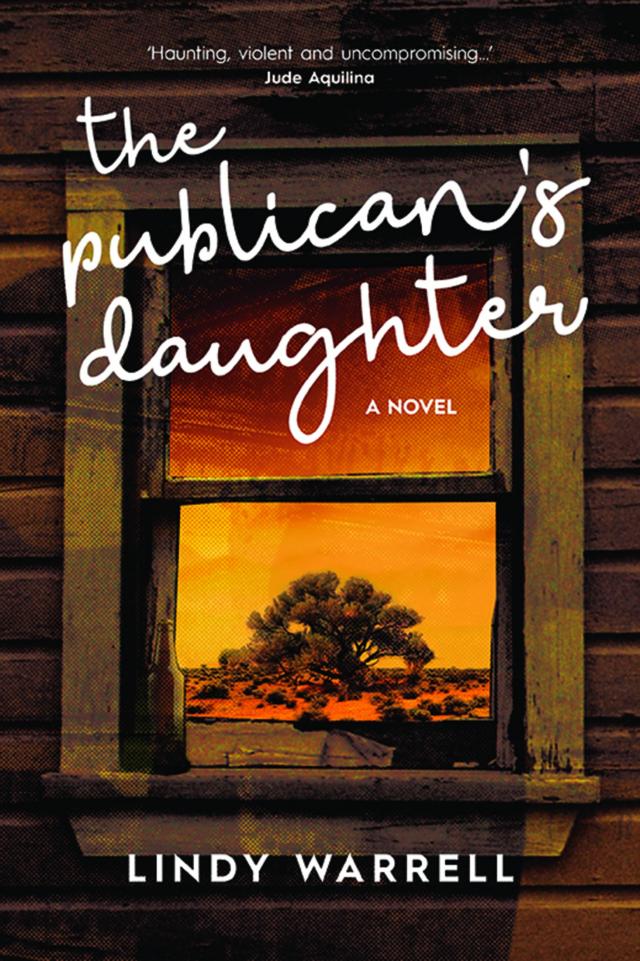
Cover Design: Nikki Jane Designs, Canberra
Typesetting: Alycia Tilley, Monique-Mai Designs, Melbourne
Gidgee Tree Image: S.A. Seed Conservation Centre
Printed and bound in Australia
ISBN: 978-0-6453129-0-4 (Paperback)
ISBN: 978-0-6453129-1-1 (e-Book)
Cataloguing-in-Publication entry is available
From the National Library of Australia
Katherine Forster is an ingénue cast into the middle of a wildly unlikely situation, at once violent, loving, primitive, and oddly tender. Lindy Warrell has a gift for compelling narrative that is rare: clear, without being obvious; matter of fact while celebrating the emotional; plausible without sacrificing the surprising.
Howard Firkin
Warrell creates a superb cinematic drama set on Australia’s wide purple gibber plains. It is portrayed with raw honesty through a direct line into young Katherine’s mind as the city girl’s life becomes entwined in the conflicts of people and land. The Publican’s Daughter is a stark coming of wisdom story of love, loss, heartbreak, and joy.
Shaine Melrose
For my mother, Phyllis May Warrell (1919-1994), and father, Stanley James Warrell (1910-1997), who gave me their world and loved me to bits. I miss them.
Foreword
Far more than a coming-of-age novel, The Publican’s Daughter is haunting, violent, dream-defiling, and uncompromising. It highlights the dichotomy between the city and outback, between white and black and alarmingly between self-entitled white men and the women who are geographically and culturally unable to escape. The era and the harsh environment make for a prison where there is no place for softness, empathy, or traditional romance.
Protagonist Katherine Forster arrives with a suitcase full of hope which is soon flung open to reveal the dark, not-so-secret underbelly of Wonnalinga. Behind the traditional and halcyon, McCubbin bush scenes that city people have held true for generations is a blight that quickly grows, poisoning the lives and relationships of Katherine and her family.
Akin to the Australian cult movie Wake in Fright, a story that the film critics weren’t ready for in 1971 yet grew to acclaim at the Cannes Film Festival almost forty years later, The Publican’s Daughter is shocking and revealing. It exposes a type of Australia that readers are only just beginning to recognise. Warrell’s page-turner has a sense of undeniable truth as she recounts the rude awakening of her naïve heroine. A fearless writer, Warrell does not beat around the tainted bush. Instead, she goes in headfirst, bloodied by the thorns.
Despite Katherine’s overwhelming sense of hopelessness, she is guided, as most of us are, by the dim light of love on a far horizon. Compelled to seek a better life, she is scantly rewarded by hindsight and hard-won wisdom.
Lindy Warrell is a skilled and natural storyteller whose characters resonate long after reading this novel. The rough ride that is The Publican’s Daughter is strangely edifying, not the least for its rich portrayal of people, place, and era, but the sense that this story needs to be told. The reader, like Katherine, comes of age in owning a part of history that, although fictional, represents the experiences of our forebears.
Jude Aquilina
Adelaide 2022
1
‘God, it’s hot.’ Lillian Forster swiped sticky flies from her face. ‘I hope you know what you’re doing, Dudley Forster, bringing us to the middle of nowhere like this.’
‘That’ll be our driver.’ Her husband pointed to an approaching billow of red dust. ‘You can see the town over there.’ He paused. ‘Look, it’s not far — can you see?’
Lillian turned to watch other passengers being whisked away by waiting vehicles in clouds of dust and laughter as their plane prepared for the next leg of its journey to Alice Springs, then Darwin.
A trickle of sweat tickled Katherine Forster’s bare legs. She moved out of earshot of her parents’ niggling to get a good look at the absurd posturing of the groundsman guiding their plane for take-off. Muff-eared and dwarfed beneath the nose of the Fokker Friendship, he waved it off with what looked like two oversized table-tennis bats. She could only see the pilot’s cap in the cockpit window, as though it alone was reversing the aircraft away from the terminal. The plane turned to taxi then roared into a climb, tucking its wheels into its fat belly. Soon it was a silver speck gliding in a haze of blue.
Katherine sat on her leather case, mooning over the flirtatious steward on The Overland from Melbourne to Adelaide. She blushed. He had grinned at her, handsome and mocking, as she struggled against the lurch of the train to eat chicken soup without either spilling it onto the white linen tablecloth or missing her mouth with the spoon. Once he lifted the cloches from their main course, he retired to the servery; nothing tease-worthy about roast lamb sodden with gravy, baked potatoes and vegetables or a dessert of golden syrup pudding with custard and cream.
On the plane to Wonnalinga, she had been able to relax because the hostesses, being girls not much older than her, didn’t bother her at all the way men did. They simply asked, as a matter of course, how she was enjoying her flight. Her flight. She liked that.
Through the glazed oval window, Katherine gazed at changing patterns on the ground; bitumen, red roofs, and tree-covered hills appearing and disappearing in swirling clouds that turned to wisps then returned as dense blobs like cotton wool. Over the desert, the clouds lifted, unveiling a sculpted panorama of fence lines and a rough dirt road alongside a railway line bridging dry riverbeds from time to time. Here and there, scatterings of large and small buildings made up a homestead. Most had dams and clay billabongs nearby, lined with trees like specks in the surrounding ocean of red dirt and purple gibber plains that etched themselves on her heart.
‘And this is our daughter, Katherine,’ Dudley said, startling Katherine, who hadn’t heard him introduce Lillian.
‘Katherine, say hello to Mr and Mrs Napper. I think you can call them Pearl and Barney.’ Dudley smiled, naming the wife before the husband in an unconscious reversal of custom. ‘Barney tells me he is the railway signalman at the station opposite the pub. All the railway workers live next to the station in railway housing, and Barney tells me his cottage is the closest to the big station house itself, where the stationmaster lives.’
Katherine smiled a mute hello, bringing herself into the present and trying not to stare. Barney Napper was a portly chap, bald in beige clothing. Beside him, his wife Pearl stood tall, flamboyant in a floral cotton print frock. Katherine could see in the woman’s myopic eyes, magnified by the thick lenses of her black-rimmed spectacles, that she adored her husband. She gave him her complete attention, even as he boasted about the new red Ford Cortina in which he was about to transport the Forsters to their new home, The First & Last Hotel.
‘I bought it last Christmas, didn’t I, Pearl love? Pity our luck ran out last week when we won the draw — or lost, depending on how you look at it — to see who was going to pick you lot up.’ Barney chuckled, pleased with his joke.
Pearl laughed, ‘He’s quick, our Barney.’
‘We won’t all fit in that thing, will we? With our baggage.’ Lillian looked in the direction of the Cortina. ‘You’ll have to make two trips,’ she told Barney, ignoring Pearl.
Katherine saw a derisive glance pass between the Nappers as if to say, who does this one think she is? Katherine felt defensive on Lillian’s behalf. She resolved to be wary of this odd pair, especially Pearl. The woman was obsequious and a bit too cocky for Katherine’s taste.
‘Well,’ Pearl stared at Dudley, ‘the town’s not far, so I suppose we can manage two trips. If that’s what Mrs Forster wants.’
Loyal to a fault where his family was concerned, Dudley did not rise to the bait.
‘Our bags can come with us in the boot, and Katherine can keep her case here until you come back for her.’ Lillian hopped into the front of the car, forcing Pearl into the back with Dudley. He was exhausted after loading their bags after their long trip and sank into the rear seat, relieved to at last be on the way to the pub, bought sight unseen with Lillian’s inheritance, without her permission. He looked at the back of his wife’s neck. Her short hair lay dank with sweat at the nape, telling him her eyes would also be stinging by now. Lillian had lost her brows to an apprentice hairdresser like herself who, overzealous, had plucked them to extinction when she was just a girl.
Katherine was pleased to be alone for a while. At least the travel arrangement averted a potential scene, so she didn’t have to worry about the goings-on in Barney’s red Cortina as it sped towards the tiny town. Full of daughterly love for her mum and
Shivering despite the heat in this now profoundly quiet place, Katherine could hear the hot breeze ripple over the folds of the passenger shelter roof. Welcome or omen? She strained to listen to its prophecy as it whistled through straggly trees nearby. It was 1962. She was just nineteen and thrilled to be in the outback.
2
With her blonde hair in a ponytail to keep it out of her eyes, Katherine pushed striped sheets through the wringer in the laundry at the back of the pub, two or more at a time. No matter how wet they were, the first sheet hung would be dry in the desert heat before she pegged out the last. Katherine loved the serene silence of the cool morning on her arms in this place. Her daydreams soared beyond the pub’s back fence, over the row of humpies in the lane to the horizon of this vast open land.
‘Hello, missy.’ Old Paddy’s weathered black face peered through the window.
Katherine jumped. Although the old fellow often stopped to say hello when she was doing a big wash, he always materialised barefoot and without a sound.
‘Good weather, eh?’
‘Yes.’ Katherine was shy with Paddy because she could not always understand what he said. Not that he mumbled, but he did seem to talk downwards, as though he let words fall from his body into the atmosphere. His voice was soft. He didn’t throw it as Katherine’s teachers taught her to in elocution class. She wondered whether people still put their children through the rigours of speech training. It had served some purpose, she supposed. Yet Katherine could not understand why it had been so important to learn how to repeat by rote strings of words written by strangers; dead ones at that. She wandered lonely as a cloud. Or was it ‘he’? She couldn’t remember. What on earth did that mean? One poem in elocution class about an ancient mariner and an albatross had fascinated her. She had learned it by heart. No, there was another called ‘The Love Song of J. Alfred Prufrock’ by T.S. Eliot. That made her think of black cats slinking around buildings.
The poem wasn’t about a cat at all, but elocution taught her to walk with her back ramrod-straight, balancing three hard-backed books on her head. She used to wonder whether their shape and weight outweighed the value of their contents. Her teacher insisted that good posture was the foundation of proper diction and, by extension, good character.
‘You got a smoke?’ Paddy waited, a wry but patient look on his face. Katherine took in his faded khaki work pants, gathered lopsidedly at his skinny waist by a long leather belt that was too wide for his emaciated body. It was far too long, dangling as it did past the end of his fly. The trousers must have once belonged to someone with thicker thighs. Paddy’s fresh-washed but unironed shirt was also loose but buttoned tight at the wrists. Curly white hair peeked through his stiff open collar.
‘Yep.’ Katherine extended her packet of cork-tipped Craven “A”, apologising for her wet fingers. Paddy tucked one cigarette into his pocket and another behind his ear and murmured something about God looking after her as he went upon his way. Katherine hoped to talk sensibly to Paddy one day about something that mattered, but she couldn’t think what.
A knot of sodden sheets prised apart the rollers. The machine squealed and danced across the concrete floor until Katherine turned it off. She wrestled with the coagulated mass of wet stripes, then went back to her dreams and the swish-swash of swirling bed linen.
Katherine liked the laundry, where she felt close to the sky. She loved the caw of crows punctuating the stillness. Their calls reached a darkness in her that made the rough texture of the rust-stained concrete tubs reassuring with her tools of trade lined on the windowsill above them; a bottle of White King bleach, a box of industrial-strength laundry detergent and a scrubbing brush she used on soiled shirt collars and cuffs. The Reckitt’s Blue instructions were almost illegible; the print was so small — Wrap Blue in cloth. Stir while squeezing the Blue in the last rinsing water. Dip articles separately for a short time; keep them moving.
Replete with its black iron copper in the corner, the pub laundry was a haven from the often-frantic bustle of the house, bar, and kitchen. The acrid stink and oxidisation stains of hot bore water didn’t bother Katherine. With detergent, it masked the stink of soiled bed linen, greasy kitchen rags, and bar runners sticky with yesterday’s dregs, leaving Katherine to flirt with the purity of the desert air. The only things she hated washing were her mother’s period-stained pants.
‘Are you there, Katherine? We need you for the lunches.’ Lillian’s face followed her voice through the laundry door.
‘Yes, Mum.’
On Tuesdays and Fridays, the Ghan stopped for 15 minutes at Wonnalinga to fill its tanks with water. Named after pioneer Afghan cameleers who helped open the outback, the train carried passengers from Adelaide to Alice Springs. Some diehards headed straight to the pub, where they got short shrift from Dudley, a stickler for liquor licensing laws. Nobody could get a drink in his pub before 10 am. The locals called tourists locusts because they swarmed in, took whatever they wanted, and then disappeared again as fast as they had come. The foolish among them would run up and down Main Street gawping at everything and snapping anyone with their Box Brownies and expensive Agfa cameras, including — without asking permission — the group of Aboriginal women beneath the old mulga tree in the open allotment next to The First & Last.
Following Friday’s Ghan came the Chaser, a supply train with a refrigerated van — the lifeline of the outback. Neither Dudley nor Lillian could drive, so it fell to Katherine in the first few weeks to meet the Chaser for the pub’s food and liquor supplies. The previous incumbents of The First & Last had scarpered from town. Nobody knew why and the Forsters inherited their red and cream Commer light truck.
The first time Katherine met the train in the Commer, a good-looking stockman stuck his head through the window of his tray-top utility to wink at her with a leer that matched the teeth-baring bark of his untethered dogs on the tray. She ignored him and turned in time to see a dark green Land Rover pull up on the other side of the Commer in a swagger of dust. Its driver, an older, leaner man, parked next to her, window-to-window, and peered at Katherine, face-to-face.
Soon there was a queue of vehicles behind Katherine. The waiting drivers sauntered around in a flux of light moleskin trousers, blue or khaki shirts, sleeves rolled up, elastic-sided boots and Akubra hats. They greeted each other with whoops and back-slaps. The stockmen made it a point to chat to the pastoralist in the Land Rover, Roger Beaming, and sized her up on the way.
It took Katherine a while to get into stride, loading the pub’s goods onto the truck. She could feel the men ogling as she rolled kegs down the wooden ramp the way Dudley had told her to, but before long, the repetitive lifting and stacking of cartons of grog and crates of soft drinks from train to truck revived her natural vivacity. Katherine loaded perishables last so that they could be unloaded first back at the pub. She thanked her stars for not being in shorts and shuddered at the idea of these mocking men gawping at her lily-white city legs. They’d laugh at the way she grappled to re-insert the Commer’s gear stick that came right out of its socket on the road.
When Dudley inherited a cheap second-hand grey Jeep from someone who owed him money, the Commer was cast to the elements in a graveyard of discarded vehicles a couple of miles out of town. He then assigned his new offsider, Jimmy Barber, a young man he’d hired from Port Augusta, to meet the Chaser.
One day, with dishes done and frying smells dissipated, Dudley popped his head into the kitchen. ‘Two more for lunch, Mum.’ He wore a silly man-grin that made him look like an imbecile to Katherine and her mother.
‘I’m not your bloody mother,’ Lillian growled under her breath.





