City of Ruin, page 1


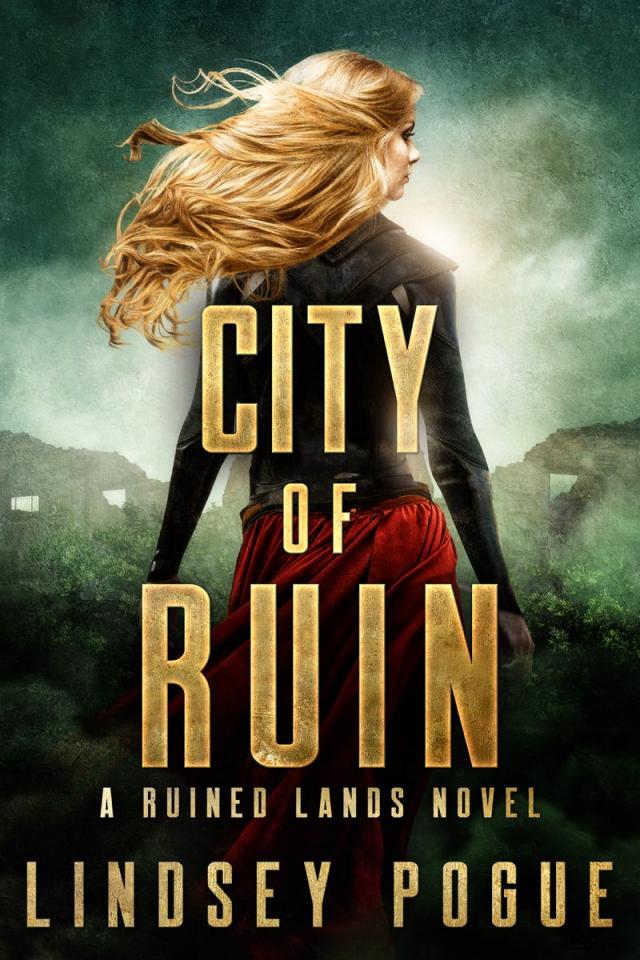
City of Ruin
A Ruined Lands Novel
* * *
By Lindsey Pogue
Copyright © 2022 Roar Press LLC
* * *
All Rights Reserved. No part of this book may be reproduced in any form without permission in writing from the author, except as used in book review.
* * *
This is a work of fiction. Characters, names, places, events or incidents are products of the author’s imagination. Any resemblance to actual people, living or dead, or to places or incidents is purely coincidental.
* * *
Cover Design by Deranged Doctor Designs
Edited by Lauren McNerney
CONTENTS
Acknowledgments
Centuries Ago…
Prologue
1. Selene
2. Selene
3. Selene
4. Selene
5. Selene
6. Selene
7. Greyson
8. Selene
9. Selene
10. Selene
11. Selene
12. Selene
13. Selene
14. Selene
15. Selene
16. Selene
17. Selene
18. Selene
19. Greyson
20. Selene
21. Selene
22. Greyson
23. Selene
24. Selene
25. Selene
26. Selene
27. Greyson
28. Selene
29. Selene
30. Greyson
31. Greyson
32. Selene
33. Greyson
34. Selene
35. Greyson
36. Selene
37. Selene
38. Greyson
39. Selene
40. Selene
41. Greyson
42. Selene
43. Selene
44. Greyson
45. Selene
46. Selene
47. Greyson
48. Selene
49. Greyson
50. Selene
51. Greyson
52. Selene
Epilogue
Other Books by Lindsey
About Lindsey Pogue
ACKNOWLEDGMENTS
To my beta team and proofreaders…You are all amazing, and I cannot thank you enough for supporting me, book after book. Story after story. Deadline after deadline.
You help my characters come to life and the pages shine!
* * *
And a very special thank you to my Patreon supporters for your contribution to this project. Selene wouldn’t have such a striking cover without you.
* * *
Shelby Sanders
Charlene Ferry
K Webster
Conrad Jellison
Helen Mays
Fred Oelrich
Tamara Pankonin
Laurie Keyser
Amanda Eide
Stephanie Edwards
Laura Price
Katelyn Bobbitt
Nicole Underwood
Sabrina Hatfield
Melinda Leininger
Julie Traina
Mindi Travis
CENTURIES AGO…
In the wake of the ingenuity, commerce, and progression that swept the continents, the world began to wither. The skies blackened, water turned to poison, and the earth began to quake. Rich or poor, young or old—there was no escaping the great Shift. And in such darkness and discord, the dead soon outnumbered the living.
When the Black Country was no longer safe, its people fled. They sailed to distant shores, trying to flee the toxins that leached from the lands. Queen Victoria was the first royal to perish, followed by all thirteen of her children. Albert, Prince Consort, was left to rule a dying country plunged into chaos. A man of science and innovation, he led what remained of his people to the underground railways and aqueducts of London to escape the detriments above.
But amidst his heroism, Albert, devastated by the death of his entire family, withdrew into a deep depression. Conflict ensued, and unfit to rule, he relied upon his closest confidantes to govern his underground kingdom. Eventually, after great suffering and turmoil, the royal council found a way to not only sustain life below ground but to thrive, garnering a love among the people far greater than that for the unfit king. And so, the day Albert died, the British monarchy perished with him. The Council of Four elevated men of skill, outranking those of nobility with little to offer the new order.
For nearly three hundred years, the Council of Four battled uprisings, bouts of illness, and starvation in the dank labyrinth of the tunnels. All hope of life above ground was nearly lost until one historic day, seventy-five years ago, when everything changed.
Men from faraway lands discovered the flailing underground city, and offered it knowledge of the reborn, breathable world above in exchange for men to work the lands the explorers claimed as their own. Accords were brokered, districts were formed, new laws were set in motion, and with the Council of Four at the helm, New London emerged from the ruins, greedy to rebuild what was left of their once great city.
PROLOGUE
SELENE
Peering through the cracked open door, I watch my father hovering over my parents’ bed. His eyes are wide and his mouth is pursed as he stares down at my mother. Blood stains her lips, and sweat still dampens her brow, but her chest no longer heaves. And her lungs . . . they no longer wheeze.
While she is the one who is dead, my father looks much the same. He is disheveled, his tawny hair hanging messily in his face, and his gaunt cheeks are pallid from lack of sleep. Limbs hanging at his sides, he simply watches, like he’s suspended in a moment that will never end.
“The world is changing, Selene, and you are meant for more than this place,” my mother told me not two nights ago as she struggled for breath. “I’ve seen it in my dreams. There will be darkness. There will be fear. But there is hope and goodness—you must trust in that. You must fight for it. You must fight for all of them.”
I’ve cried countless times, locked in the house during the weeks she’s been sick, and now, with her fair hair turned to sweaty, gray clumps stuck to her face and chapped lips, I know she will never open her eyes again. She will never explain the meaning of her dream, and tears cloud my vision once more. My mother is gone forever.
I wipe the dampness from my cheeks and straighten, just a little, as my chin begins to tremble. She would want me to be strong.
It’s only then I realize my father isn’t crying at all. He doesn’t even look sad so much as he looks afraid.
My father’s servant stands behind him just as emotionless, yet rests his hand on my father’s shoulder. He blinks, staring at my father with concern. “He has come,” James says gently, and my father’s shoulders stiffen. I’m so taken by the tender moment between master and servant, I almost miss the look they exchange. As my father rests his hand on James’s, a flare of anger envelops me.
My father forbade me from being in my parents’ room, yet James is; my father would not think to console his own daughter, but he shows such gentleness to a servant?
“Selene,” my brother whispers in my ear, making me jump. When I peer at him, his eyes are fixed on my father through the cracked door. It’s only then I register the sound of someone pacing in the downstairs entry.
“Come,” William says urgently. “Be silent.” He takes my hand and tugs me along the landing to the servants’ stairs in the back. Panic fills me as I register the tremulous edge in his voice, but I remain quiet.
Ammonia and mint from my mother’s medicines fill my nostrils as we hurry past the kitchen, where I can hear the maid weeping. But William pulls me along without faltering, then stops at the back entrance and hands me a man’s full-length coat from the coatrack. Hastily, he gathers my blonde hair atop my head and situates a cap over the tumbling heap.
“Tuck your hair into the hat,” he demands in an anxious whisper. My brother’s gaze flicks toward the entry of the townhouse, where my father speaks to someone, his voice muffled by a labyrinth of narrow hallways and sitting rooms. Though a stranger’s angry baritone replies, I can barely make out what they are saying as William bustles about, tugging me this way and that.
“—and have come to collect what’s mine.”
“You could not wait a single moment? My wife has only just died.”
“And there was no love lost between you, Sinclair. Don’t trifle with me. I’ve waited long enough. You got what you wanted, and now I want what was promised to me.”
“Selene,” William rasps, and when I look at him, he nods toward the back door.
Though I want to be as strong as my mother, I can’t help my ratcheting panic. “What’s happening, Will?”
“We must go,” he says. “Now.”
“But—” I glance anxiously in the direction of my father’s voice as William cracks the door open, peers outside, then pulls me from our townhome, toward the outskirts of the fallen city. “But Mother—Father—”
“She is gone now, so I must see to you.”
I blink the tears from my eyes and follow my brother blindly into the cold. The day is thick and dreary, seeping into my bones and making me shiver as we hurry away from the only home I’ve ever known.
William leads me through the alleyway, separating our home from another stretch of apartments. He surveys every shadow, ensuring it’s safe, though from whom, I don’t understand. As he
I stumble, and my brother curses. “Be careful,” he gripes, and I’m forced to leave the visage of my father behind.
“I’m not allowed to leave the house,” I remind him, my voice a petulant whine, but William ignores me as we wind through the streets.
Though the city has awakened from years of slumber underground, nearly three centuries of weather ravaging the world have left New London in ruins, and I stumble over a crack in the cobblestone.
“Apologies,” William mutters gruffly as he turns to help me straighten. But within seconds he continues pulling me along the fissured sidewalk toward the center of town. His steps are heavy and determined.
“Where are we going, Will?” It’s more of a command this time than a question. I stumble again in William’s haste. Though the Expansion Movement has rectified parts of the city, there is still much in dangerous disrepair.
“To Master Orson and his wife,” William says as he leads me onto the main street. I nearly run into a man on his horse coming around the corner of a collapsed saloon. My heart stills, and fear prickles over my skin as the horse sidesteps us. The man curses, eyeing me strangely when a strand of blonde hair falls in my face. I try to tuck it into my cap again before my brother herds me along.
“Will—” I yank against him. “Tell me what’s happening!” I demand. “I don’t want to go to the orphanage.”
“You must,” he says. “Just for now—”
“Will!”
He whirls on me. “It is the boom of reemergence, Selene,” he growls. “In a time when heirs and able bodies are more coveted than coin. What do you think that landowner was coming to collect?” William points toward home. “He’s come for you, Selene, to be his breeder. And Father is to blame. He can’t protect you, so it falls on me to do so now.”
Gaping, I search my older brother’s face, looking for a sign he’s lying or mistaken, that my father would protect me, but I only see fear in William’s eyes. “What has Father—”
“He traded you the first chance he got in order to climb the ranks, because he only pretends to be a man of worth. You will be safer with the Orsons. Mother has seen to it.” His blue eyes mirror mine—wide and beseeching. “Selene, you must trust me in this.”
“But—” I whimper, my mind whirling as I peer down the bending, shadowed road with mounting apprehension. “I don’t want to leave you.”
“It’s only for a little while,” he promises, but I know my big brother, and I hear the uncertainty in his voice. “I’m waiting to hear from one of Mother’s contacts—someone who can help us get to the coast. So come, the Orsons are expecting you. And it’s what Mother wanted.” He glances toward our home and his nostrils flair. I can see the sadness behind his eyes, the sorrow and hesitation.
“William,” I whisper, reluctantly accepting my fate, even if it terrifies me. “What if you never hear from them?”
A man rolls a creaking cart of crumbled bricks down the street in our direction, and as my brother pulls me under the eaves of an abandoned building, I nearly trip on the hem of my skirt.
“Please, don’t argue with me about this.” My brother’s gaze shifts over me, full of regret. “You are growing up, Selene, and Father’s acquaintances in the Council are noticing. For now, the orphanage will keep you hidden.”
I understand my brother’s meaning perfectly. We can breed armies and cities, my mother once said. Without us, men are nothing. Having just celebrated my eleventh birthday, I am, by law, of a tradeable age to work until I am sixteen and old enough to produce children.
I straighten, feeling a passing man’s questioning gaze on me keenly.
William leans in, peering into my eyes pleadingly. “These men have no land—no wealth or power—without heirs. Only young women like you can abate their greatest fears. If you don’t stay with the Orsons—if Father finds you—he will sell you to a stranger, just like the slaves they purchase each season.” William licks his lips and his expression softens a little. “Mother has helped Master Orson in the past. He owes her. And you know I would never leave you—you know I will come for you when it’s safe. For now, I need you to trust me. Trust Mother. She would not want you thrown to the wolves.”
I don’t trust any of it, but I nod because William wants me to, and I don’t have any other choice.
He must register my disbelief, because he squeezes my hand and pulls me into him. “We’ll go to the Screaming Woods, if we have to, but I will not leave you in the orphanage.”
The thought should terrify me, since the woods are known to be haunted, but I would rather live among ghosts and vengeful spirits with William than be anywhere else without him. “You promise?” I rasp, sobbing into his chest.
“I promise.” He kisses my temple and I inhale him—sweat and clay from the brick factory.
My heart breaks all over again as a sinking sense of dread fills me. My mother is dead. My brother is sending me away, and my father . . . I don’t even know what to think of my father.
William straightens, looking like the strong, work-honed seventeen-year-old that he is, and tucks another escaped tendril back into my cap. “Now,” he says, clearing his throat. “We’ve got to get you different clothes before I take you into the heart of the city.” He exhales, waiting for my acquiescence, and when my chin dips ever so slightly, we continue down the winding streets.
I glance down at my red velvet skirt swishing at my feet. It’s only then that I realize how much I stand out among the men bustling through the city, their clothes soiled and torn and hanging from their sinewy limbs.
As my brother gestures toward the seamstress, I can’t help but ask, “Won’t they come looking for me?”
“They will never think to look in a poorhouse.”
I’m about to ask my brother what will happen when they realize he is the one who has hidden me, when he leads me through the door of The Depot. A rush of dank, moldy air accosts me, and our footsteps cease to echo on the cement floor, muffled by the clothing lines of nondescript work uniforms, some of them freshly laundered, others only partially sewn. Buttonholers and framework knitters all glance up from their machines, their faces drawn and lifeless.
“Isabel is Mother’s friend,” William whispers as he ushers me along.
Tearing my gaze away from the women, I quietly follow.
“She knew this day might come. She’ll be expecting us.”
An older woman, churning a vat of dyed clothes, pauses as we approach, her eyes widening. A brass-colored curl falls in her face, and sympathy, or maybe it’s sorrow, immediately fills her blue eyes. “Oh, dear—”
“It’s time,” my brother says. “We need—” Before he can get another word out, the world roars. The ground rumbles, the clothes hanging around us tremble, and I hear the breaking of glass and the cracking of stone.
“Selene!” William wraps his arms around me, covering my body with his as the pitched roof I stare up at buckles, and darkness descends.
1
SELENE