Carla, page 15


He paused and cleared his throat. “Now you have made your choice.”
Carla nodded.
“You’ve chosen love over money.”
Carla nodded again, reinforced by the pressure of Danny’s fingers on her palm. The full impact of Ronald’s words was beginning to sink in. She thought back to the night Charles came to dinner, and again to the time Ronald had told her to take a lover if she wanted one. Bits and pieces of his actions over the past several weeks were starting to fall into place. She saw her husband all at once as a benevolent giant who sat behind the scenes, pulling the strings in an effort to make her happy.
“Love over money,” he repeated. “I think it’s the right choice, Carla. At any rate it’s the choice I hoped you would make. I wanted to give you a shove in that direction but I didn’t dare. The choice had to be yours.
“I can’t tell you how sorry I am to lose you. Nor can I tell you how glad I am that you’ve found your proper role in life.”
He stopped suddenly, and Carla could sense that he was close to tears. She felt her eyes filling, too, and the increased pressure of Danny’s fingers told her that he too was emotionally moved.
Abruptly Ronald stabbed out the cigarette and sat upright in his chair. “Now for the details,” he said briskly. “You want a divorce, as I understand it.”
“That’s right.”
“Divorces are messy, you know. One has a choice between running off to Reno or getting a New York decree on the grounds of adultery, and neither are especially attractive alternatives.”
“Would the publicity hurt your career?”
“It might,” he said, “if I had a career. As of today I’m officially retired from private practice. I’ve had enough, and the last case was almost too much for me. It’s over and I’m done. I’m going to relax—take a fishing trip once in a while, read, putter around the house a bit. So my career has nothing to do with it.
“I was thinking more of you two. You see, with a divorce there’s a waiting period, and there’s a lot of legal rigamarole that’s pretty much of a pain in the neck, and there’s the sort of publicity that can’t do you a hell of a lot of good.”
“I understand that,” Danny cut in. “But we want to get married, Mr. Macon.”
“Of course you do—and it’s what I want for you. But a divorce won’t be necessary. You see, Carla and I have never slept together—and she can easily and quickly obtain an annulment of our marriage on the grounds that it was never consummated. This is faster, easier, and free of the stigma that some people attach to divorce.”
“I never thought of that,” Carla said, half to herself.
“Why should you?” Ronald chuckled. “I’m the lawyer, you know. And now, while I don’t suppose it’s exactly standard procedure for a husband to toast his wife and her future husband, would the pair of you care to join me in a drink?”
One drink led to another, and the two drinks loosened the trio so that conversation flowed more easily. Ronald explained the legal mechanics of annulment procedure and Carla and Danny discussed when they would marry and where they would live and how many children they would have. It seemed vaguely ghoulish to talk of such things while they sat in Ronald’s house and drank his liquor, but he had set them so completely at ease that it appeared quite natural.
“Speaking of children,” Ronald said, “I have a deal for you.”
“Let’s hear it,” Danny said.
“It’s quite simple. Perhaps I’m egotistical, but I’d like some sort of namesake to leave behind when I go. As I understand it, you need a certain sum of money to purchase the franchise for your gas station. I’ll be pleased to give you the money as a wedding present if you’ll name a boy after me.”
Carla’s eyes widened. “Oh, Ronald—that’s wonderful! Of course!”
“Mr. Macon,” Danny cut in, “I’d be very proud to have a son named Ronald Rand. But I couldn’t accept the money.”
Carla turned to him. “Why not?”
“Because I want to make my own way,” he answered. “And I want to do it all by myself. It has to be that way, Carla. Otherwise it doesn’t mean anything.”
She nodded, understanding. “Yes,” she said. “You’re right, Danny. And I’m going to let you make all the decisions from here on in.”
A few moments later Ronald excused himself and the two were left alone. Several minutes later the telephone rang, but neither of them had the slightest intention of answering it.
THE END
A New Afterword by the Author
IN THE SUMMER OF 1958, my buddy Steve Schwerner and I flew from New York to Houston, Texas; hitchhiked to Laredo; disported ourselves across the river in Nuevo Laredo, Mexico; took a bus to Mexico City; did some more disporting; and took another bus to Guadalajara, where a right-wing political party staged a riot while we were trying to get back to our hotel after dinner. A pair of enterprising cops arrested us, threw us in jail overnight, and played bad cop/worse cop with us until we signed over all our traveler’s checks, whereupon they put us on a bus back to the border.
So I got home a little earlier than I’d planned.
And one of the things waiting for me at my folks’ house in Buffalo was a letter from Henry Morrison, who was then my agent at the Scott Meredith Literary Agency, where I’d been lately employed. “I hope you know what a sex novel is,” it began, “and how to write one, because we’ve got an assignment for you.”
Now I’d already written a novel about a young woman’s sexual identity crisis in Greenwich Village; Henry had read it and sent it over to Crest Books, then the country’s premier publisher of lesbian fiction. They would in time accept it and publish it as Strange Are the Ways of Love, but that lay in the future. For now, Henry knew I could start writing a book and get to the end of it, and that was enough to get me this assignment.
The note went on to explain that a fellow named Harry Shorten, who’d created the cartoon “There Oughta Be a Law,” had started a publishing house called Midwood Tower. He was looking to develop a line of erotic paperback novels much like those of Beacon Books. And Henry had picked me to write one for him.
Well, OK. I went out and picked up one or two Beacon novels, and if I didn’t exactly read them I did look them over to see what they were. They didn’t require scrutiny. Because I did know what a sex novel was, and I seemed to know how to write one.
So I went ahead and did just that. The protagonist’s name was Carla, and that was my title. Carla, by Sheldon Lord.
It never occurred to me, not for a moment, to publish the book under my own name. I wasn’t ashamed of it; I didn’t think that my writing it was evidence of moral turpitude, but neither did I entertain the notion that it was a contribution to the world of literature. It was a sex novel, for God’s sake, and it was to be published by a publisher of sex novels, and what kind of a ninny would put his own name on such a thing?
(Well, Charles Willeford would and did, as I was to find out years later. Some low-rent paperback houses, Beacon among them, published early work of his, and he used his own name. But Charles was one of a kind, a man who had elevated not giving a rat’s ass to the level of an art form. Never mind.)
The name I chose was Sheldon Lord.
Now Carla was not the first book I wrote, but it was the first book I sold, and the first to be published. It was not, however, Sheldon Lord’s first appearance in print. I’d first used the name when I had two stories slated for the same issue of one of the digest-sized detective story magazines. The editor wanted to use a pen name on one of the stories, and I came up with Sheldon Lord.
(Richard Stark, the name Don Westlake used on all his hard-boiled Parker novels, had a similar origin. Don was sleeping, and a call from his agent awakened him, albeit barely. He had two stories in the same issue of a magazine, and what name would he like on the lesser story? “Richard Stark,” Don snarled, and went back to sleep.)
Sheldon Lord. And where did that name come from? Well, I’d known a girl at Antioch College named Marcia Lord, and I really liked her last name. And I liked the name Sheldon, too, though I can’t offhand think of anyone who bore it. Sheldon Lord. I used it on that second short story, and I used it on a batch of articles I wrote for a couple of male adventure magazines. (I mean, would you want your own name on “Reinhard Heydrich, Blond Beast of the SS”? Well, neither would I.) There was one similar article I wrote that purported to be an as-told-to piece, and my byline on that one was “by C. O. Jones as told to Sheldon Lord.” The editor got the joke and spiked it, changing my evanescent collaborator to C. C. Jones.
Carla, by Sheldon Lord. I sat down in my bedroom on Starin Avenue, at the same maple desk on which I’d written Strange Are the Ways of Love a month or two earlier, and I wrote the book and sent it off. Harry Shorten loved it, Henry wrote, but the book wasn’t long enough. It needed another chapter. Could I write another chapter to be inserted anywhere in the book?
So I wrote the chapter in which Carla goes on the prowl and winds up with Lou, and we have to wait all the way to the scene’s end to realize it would play out a little differently than we’d thought. I sent it in with a note saying that here was a chapter, and it could be inserted anywhere in the book.
The book’s set in Buffalo, New York. I was born and grew up in Buffalo and lived there briefly on a couple of occasions after college, but I haven’t set much fiction there. Buffalo street names can be found in several of my stories about the criminous criminal lawyer Martin H. Ehrengraf, although their settings remains unspecified. A lost crime novel, one I called Sinner Man, had a Buffalo setting; it was sold after many turndowns but doesn’t seem ever to have been published, and its setting might as well have been the Bermuda Triangle. The only book in which a Buffalo setting carries any weight is A Week as Andrea Benstock, which bore the name Jill Emerson.
Is it significant that my very first published novel takes place in Buffalo? I don’t think so. It was a locale of convenience; I was in Buffalo as I wrote the book, so what would be more natural than to set it there? The book itself took the sort of situation James M. Cain and his many imitators used all the time: a triangle with a rich old husband, a hot young wife, and a youthful lower-class lover. Nothing original there, and certainly nothing that screamed Buffalo. I didn’t know any people like that, in Buffalo or anywhere else.
By the time I headed off to Antioch College in September, I’d begun to wonder if I was making a mistake. What did I need with college?
I’d just had a year off. When I landed an editorial job at the Scott Meredith Literary Agency the previous summer, I’d realized there was more to learn there than on campus, and I dropped out. By the following spring I’d been working long enough and was ready to go back to school.
But now I’d not only published a slew of short stories and articles, but I’d actually written two novels and sold one of them, and the guy who’d bought Carla was hungry for more. He wanted another book and seemed likely to want more after that.
(What sold Harry Shorten, it turned out, was the scene in the grease pit, which gives down and dirty a whole nother meaning. When I actually met Shorten, a couple of books later, he kept talking about the grease pit scene in Carla. Now I don’t think I’d ever seen a grease pit. I just sort of knew that they had them in service stations, so the grease would have someplace to go. You know what they tell you about writing what you know? Well, the hell with that.)
All I wanted, all I’d ever wanted, was to be a writer. Not a journalist—I knew I didn’t want to have to ask people questions they didn’t want to answer. I wanted to make things up. I wanted to write novels, and get paid for them, and have people—women, in particular—read them and admire me.
Well, I wasn’t sure the best way to win female admiration was by writing about Carla and the grease pit. Still, as I braced myself for a class at Antioch College on the eighteenth century English novel, I couldn’t help but wonder: What the hell was I doing there?
—Lawrence Block
Greenwich Village
Lawrence Block (lawbloc@gmail.com) welcomes your email responses; he reads them all, and replies when he can.
A Biography of Lawrence Block
Lawrence Block (b. 1938) is the recipient of a Grand Master Award from the Mystery Writers of America and an internationally renowned bestselling author. His prolific career spans over one hundred books, including four bestselling series as well as dozens of short stories, articles, and books on writing. He has won four Edgar and Shamus Awards, two Falcon Awards from the Maltese Falcon Society of Japan, the Nero and Philip Marlowe Awards, a Lifetime Achievement Award from the Private Eye Writers of America, and the Cartier Diamond Dagger from the Crime Writers Association of the United Kingdom. In France, he has been awarded the title Grand Maitre du Roman Noir and has twice received the Societe 813 trophy.
Born in Buffalo, New York, Block attended Antioch College in Yellow Springs, Ohio. Leaving school before graduation, he moved to New York City, a locale that features prominently in most of his works. His earliest published writing appeared in the 1950s, frequently under pseudonyms, and many of these novels are now considered classics of the pulp fiction genre. During his early writing years, Block also worked in the mailroom of a publishing house and reviewed the submission slush pile for a literary agency. He has cited the latter experience as a valuable lesson for a beginning writer.
Block’s first short story, “You Can’t Lose,” was published in 1957 in Manhunt, the first of dozens of short stories and articles that he would publish over the years in publications including American Heritage, Redbook, Playboy, Cosmopolitan, GQ, and the New York Times. His short fiction has been featured and reprinted in over eleven collections including Enough Rope (2002), which is comprised of eighty-four of his short stories.
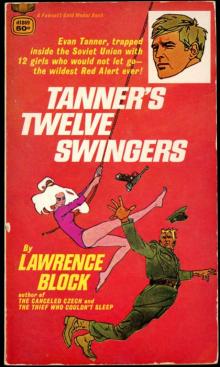
In 1966, Block introduced the insomniac protagonist Evan Tanner in the novel The Thief Who Couldn’t Sleep. Block’s diverse heroes also include the urbane and witty bookseller—and thief-on-the-side—Bernie Rhodenbarr; the gritty recovering alcoholic and private investigator Matthew Scudder; and Chip Harrison, the comical assistant to a private investigator with a Nero Wolfe fixation who appears in No Score, Chip Harrison Scores Again, Make Out with Murder, and The Topless Tulip Caper. Block has also written several short stories and novels featuring Keller, a professional hit man. Block’s work is praised for his richly imagined and varied characters and frequent use of humor.
A father of three daughters, Block lives in New York City with his second wife, Lynne. When he isn’t touring or attending mystery conventions, he and Lynne are frequent travelers, as members of the Travelers’ Century Club for nearly a decade now, and have visited about 150 countries.
A four-year-old Block in 1942.
Block during the summer of 1944, with his baby sister, Betsy.
Block’s 1955 yearbook picture from Bennett High School in Buffalo, New York.
Block in 1983, in a cap and leather jacket. Block says that he “later lost the cap, and some son of a bitch stole the jacket. Don’t even ask about the hair.”
Block with his eldest daughter, Amy, at her wedding in October 1984.
Seen here around 1990, Block works in his office on New York’s West 13th Street with, he says, “a bad haircut, an ugly shirt, and a few extra pounds.”
Block at a bookstore appearance in support of A Walk Among the Tombstones, his tenth Matthew Scudder novel, on Veterans Day, 1992.
Block and his wife, Lynne.
Block and Lynne on vacation “someplace exotic.”
Block race walking in an international marathon in Niagara Falls in 2005. He got the John Deere cap at the John Deere Museum in Grand Detour, Illinois, and still has it today.
All rights reserved under International and Pan-American Copyright Conventions. By payment of the required fees, you have been granted the non-exclusive, non-transferable right to access and read the text of this ebook onscreen. No part of this text may be reproduced, transmitted, downloaded, decompiled, reverse engineered, or stored in or introduced into any information storage and retrieval system, in any form or by any means, whether electronic or mechanical, now known or hereinafter invented, without the express written permission of the publisher.
This is a work of fiction. Names, characters, places, and incidents either are the product of the author’s imagination or are used fictitiously. Any resemblance to actual persons, living or dead, businesses, companies, events, or locales is entirely coincidental.
copyright © 1958 by Midwood-Tower Publications
cover design by Elizabeth Connor
ISBN: 978-1-4532-1213-4
This edition published in 2011 by Open Road Integrated Media
180 Varick Street
New York, NY 10014
www.openroadmedia.com
Lawrence Block, Carla