The Hundredth House Had No Walls, page 2
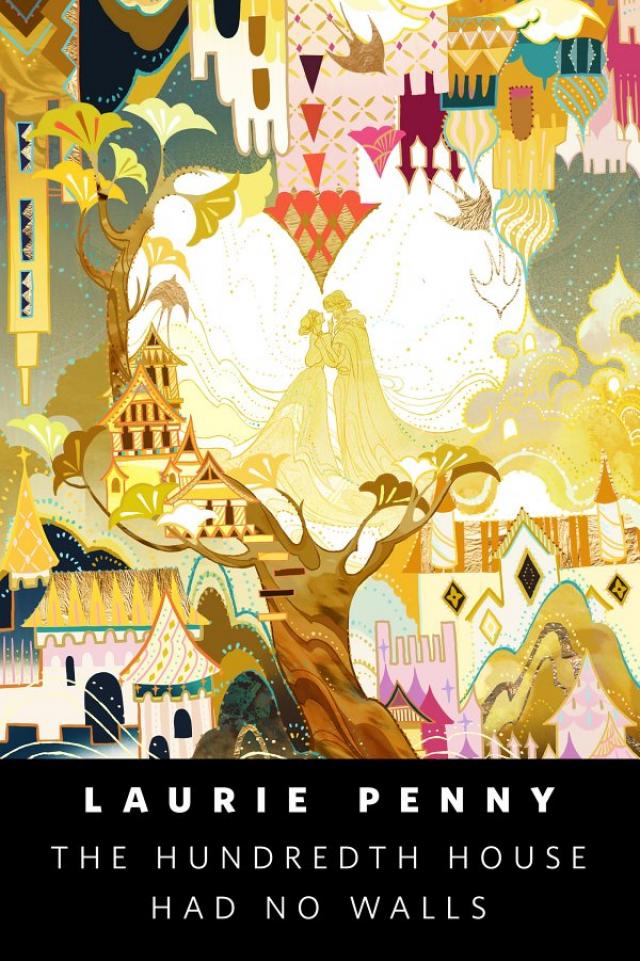


Since the King had a whole kingdom and the Princess was living out of a tour bus, it made sense that she would move in. She brought her own retinue, a crowd of lost boys and girls with wild hair and weird ideas who liked to dress in stripes and lace and drape themselves listlessly across the furniture between sets.
‘Where does she find them all?’ said the innkeeper’s wife, who by now was living in a small cottage near the palace with a nice woman named Carol who liked to go hiking on Saturdays.
‘They follow her home like cats,’ said the King. ‘She doesn’t have the heart to turn them away.’
The innkeeper’s wife saw to it that little dishes of cream and vodka were left at strategic points around the palace, and the lost boys and girls were well pleased.
After a few weeks, though, the Princess became restless. She stopped eating her sushi at breakfast. She stopped speaking to the King at dinner. Great stormclouds of dramatic tension boiled over the land, and the lost boys and girls of the Princess’ court and the King’s Knights of Wild Notion hid in the cellar and behind the curtains and under the table to wait for the weather to get a bit less metaphorical.
‘What’s wrong?’ the King asked the Princess, after three days of dreadful silence.
‘It’s the house,’ said the Princess. ‘It’s so big and so beautiful, but it makes me feel like a wooden doll in a display case.’
‘But I dreamed up a recording studio for you,’ said the King. ‘Don’t you like it?’
‘Of course I like it,’ said the Princess, ‘but I like the road better.’
The King thought and thought. He couldn’t let the Princess be unhappy. When she was unhappy, he was unhappy, and when he was unhappy, the Kingdom was unhappy. If she was unhappy in the Kingdom, she must be unhappy with him.
Eventually, he hit upon a solution.
‘I will build the Princess a new palace,’ announced the King.
And so it was done. The new palace was next door to the old one, with a gleaming pathway cut between the limerick grasses that grew wild on the mountainside. It was even more beautiful than the first. Its turrets were spun out of lost screenplays and its galleries were haunted by the mournful ghosts of singer-songwriters who never quite made it big. The King was sure that the Princess would be happy now.
And she was, for a time. The Princess liked newness, and adventure, and she recorded a well-received album in the basement of the new palace. But after a few weeks, she became restless again.
The King thought and thought. ‘If she doesn’t like this one, I’ll build her another,’ he said to the innkeeper’s wife, who put her head in her hands.
‘I know you’re trying to be romantic, but you’re approaching the question of female agency all wrong,’ she said.
‘What makes you think that?’ said the King.
‘Well, for instance,’ said the innkeeper’s wife. ‘I don’t even get a name in this story.’
‘How is that my fault?’
The innkeeper’s wife looked at the King for a long time without saying anything.
‘Alright,’ sighed the King. ‘I’ll put it on my to-do list. Right now, I’ve got a palace to build.’
The next palace was an enormous treehouse, built into the branches of the three tallest redwoods in the forest. The court had to be winched up in buckets or flown up on the backs of griffons, as there were no stairs to speak of, and an elevator would have spoiled the look of the thing. Walkways strung with fairy lanterns connected all the passageways, and the wind whispered dirty, earthy lyrics as it muttered through the leaves. Ravens and starlings and bright birds of paradise nested in the high eaves, and great dances were held on platforms in the canopy, where you could see the whole Kingdom sparkling in the endless starlight.
‘It’s great,’ said the Princess, ‘it’s really great. Let’s spend the week here.’
‘I was hoping you’d want to spend your life here,’ said the King.
‘Let’s come back to that question,’ said the Princess, taking him by the hand and leading him to bed.
By the end of the year, the King had built the Princess ninety-nine houses.
There were brutalist modern apartments and twee little cottages and cloud-castles built of the sharp, lovely dreams of underpaid academics who really wanted to be novelists. But still the Princess would leave, and go missing for days, and turn up in a dive bar a week later draped in reprobates and the obscene sweat of songwriting.
By the time she walked out of the ninety-ninth house, the King didn’t bother looking for her, and went to numb his heart for a little while in his library.
After a week, he was only a little bit worried.
After two weeks, the words swam and snickered on the page in front of him, and he couldn’t concentrate for worry.
By the end of a month, he was frantic. Where had she gone? What had he done wrong?
‘What is any of it worth,’ said the King, out loud, ‘if I can have everything I want, but I can’t have her?’
The words hung in the air like obscure art on a gallery wall, and the King had a great idea for a new story. He saw it all in his head. It would be a story about a boy, and a girl, and a kingdom, and a quest, and there’d be enough angst for a trilogy, and probably some sizzling gypsies.
The King picked up his pen.
The Princess put her hand down on the blank page. She stood beside him, and the room fell away, and they were on the steps of the castle, and the air crackled with electricity, and her rage was beautiful and terrifying.
‘Stop it,’ she said. ‘Stop that right now. I’m not a girl in one of your stories. Don’t you get it?’
‘I never thought you were,’ said the King.
The Princess raised one ineffable eyebrow. ‘So why do you keep trying to write me into one?’
‘Because I love you, and I don’t want to lose you,’ said the King.
She took his face in both her hands and kissed him.
‘I love you too much to let you write walls around me,’ she said.
‘But what sort of story can I write you into, if it isn’t one of mine?’
‘You can’t,’ said the Princess, folding her arms in a way that terrified the King more than he could possibly express. ‘I don’t want you to write me into any story. I want to make up my own story. You can be in it, if you like, but that’s all.’
‘That’s crazy,’ said the King. ‘Everyone knows my stories are the best. You’ll mess it up. You won’t get the ending right.’
‘Maybe so,’ said the Princess, ‘but I want to try.’
‘You’ll skip vital exposition,’ said the King. ‘You’ll put the plot twists in all the wrong places.’
‘I’m pregnant,’ said the Princess.
‘You see?’ said the King. ‘That’s exactly the sort of thing I’m talking about.’
Then he sat down on the castle steps and threw up into the geraniums.
‘Colin,’ said the Princess. ‘Stop being such a drama queen. That’s my job.’
‘The hundredth house is my heart,’ said the King. ‘Will you live there, at least?’
The Princess started to cry.
‘I hate it when you do that,’ she said.
Then she kissed him again.
‘This isn’t ever going to get easier, is it?’ he asked, a very long time later, when they’d come up for air.
‘I hope not,’ said the Princess. ‘That would be boring.’
‘You know,’ said Colin, drawing her onto his lap, ‘in all my life, I never met a girl who could match me.’
‘That’s funny,’ said Melanie. ‘In all my life, I never met a boy who could catch me.’
She laughed, and it sounded like the first chord of the song you loved most when you were young and longing.
Then she ran.
The King followed.
It wasn’t the end.
About the Author
Laurie Penny is a contributing editor and columnist for the New Statesman and a frequent writer on social justice, pop culture, gender issues, and digital politics for the Guardian, the New Inquiry, Salon, the Nation, Vice, the New York Times, and many other publications. Her blog Penny Red was shortlisted for the Orwell Prize in 2010. In 2012, Britain’s Tatler magazine described as one of the top “100 people who matter.” Her nonfiction book Unspeakable Things: Sex, Lies, and Revolution was published by Bloomsbury (2014). You can sign up for email updates here.
Thank you for buying this
Tom Doherty Associates ebook.
To receive special offers, bonus content,
and info on new releases and other great reads,
sign up for our newsletters.
Or visit us online at
us.macmillan.com/newslettersignup
For email updates on the author, click here.
Contents
Title Page
Copyright Notice
Begin Reading
About the Author
Copyright
Copyright © 2019 by Laurie Penny
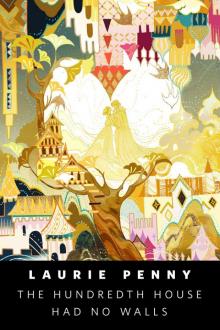
Art copyright © 2019 by Kuri Huang
Laurie Penny, The Hundredth House Had No Walls