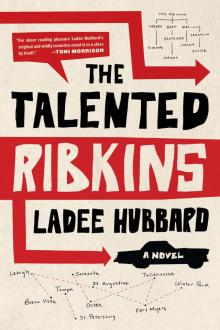
The Talented Ribkins, page 11


Johnny took off his jacket and rolled up his sleeves, then picked up the ball from the back seat of the car. He got out and walked along the row of trees that separated the house from the adjoining property. He tossed the ball over the wall and slowly walked back to the car.
“Now go get your ball.”
“Somebody probably saw you do that, you know,” Eloise said as he climbed back into the car.
Johnny shook his head. “Only one who saw me was the UPS man and he’s busy thinking about something else.”
She looked out the window and saw it was true: the truck was already turning around the corner.
“See? What you don’t realize is that most people got more important things on their minds than trying to figure out every suspicious thing they might see out the corner of their eyes, especially this time of the day,” Johnny said. “Take that house. Kids are in summer camp while the parents are out working. Only one inside right now is the maid. That’s why the best time to rob a house is eleven o’clock in the morning. That’s what I’ve heard anyhow.”
She stared at him.
“I must have read it in a magazine,” Johnny said.
She shook her head. “And you just want me to go get the ball?”
He took off H. P. Smith’s watch and handed it to her. “I want you to walk around the block first. Wait twenty minutes. Then knock on the door and when the maid answers, tell her your ball got tossed over the wall.”
It wasn’t like he was asking her to lie. It was her ball and getting tossed was, in fact, what had happened to it.
“Walk straight out the kitchen door and head toward the back wall. Turn left, go past four trees, and look down. Right next to your ball will be a rubber bag tied up with a piece of twine.”
Eloise stared out the window. She’d told him she wanted to help and he knew very well that as old and harmless as he may have looked walking through a mall there were still certain doors he could not just stroll through, certain passageways other people would always try to keep locked to him. Even if all he was really looking for was an escape route.
“What if they don’t believe me?” Eloise thought for a minute and then she said, “I could tell them my family lives next door and—”
“Don’t do that,” Johnny said quickly. He looked around at the mansions they were surrounded by and then at the girl, still in her grungy jeans, rain-frizzed curls shining around her face. “I mean, don’t let the walls fool you. People who live in houses like these tend to know their neighbors. Tend to keep track of who belongs where.”
“Well, what if I was a cousin of somebody, visiting from out of town?”
“Or better yet, a relative of somebody who works there. See? Then it would make sense if nobody bothered to mention you before.”
She squinted; he smiled.
“Stands to reason, don’t you think?”
“All right, Uncle Johnny. If you say so.”
She slid the watch over her hand and let it flop around her wrist.
“The more you explain the more complicated it gets. Now go on.”
He watched her walk down the block. Once she turned the corner, he started the car again and went back through the stone pillars and onto the wide boulevard. He kept driving until he reached the entrance to a botanical garden. He pulled into a crowded parking lot.
Walking to the main entrance he passed a yellow school bus parked in front of the gate and found himself forced to make his way through a group of squealing children in sun visors, T-shirts, and blue shorts, swarming like angry bees around a couple of teenaged camp counselors with pimply foreheads. Beyond them, in the shade of a small pavilion where you bought your entry ticket, a woman with a long blond ponytail tucked beneath a red baseball cap was standing behind a small folding table, handing out samples of heirloom tomatoes seasoned with a marinade prepared with the herbs grown inside.
AN AUTHENTIC TASTE OF THE REAL OLD SOUTH read a small banner taped to the wrought iron fence behind her. That was what the garden was known for: “History you can taste.” Inside they maintained a wide variety of herbs and vegetables that predated the Civil War, species of fruits you could no longer find in any store. Johnny thought it was a wonderful place, a unique calling card, and respected how difficult it must have been to maintain while keeping it open to the public.
They were very particular, however, about people trying to steal seed.
He paid his entry fee, and before he was allowed to push through the turnstile, he was asked to raise his arms while one of the guards waved a metal detector across his stomach and legs. He could see several other guards waving black wands over the flailing arms and legs of all the children from the tour group in front of him. When they were finished with that the children were asked to walk inside a clear glass booth that snorted quick puffs of air at various parts of their bodies. Johnny watched the hair on their heads jump in quick spasms as they laughed and squealed. Most of this, he imagined, was just for show, but the children seemed to find the indignities of all this technology delightful. After getting what he came for, he’d bring Eloise back, show her around, let her have fun passing through it too. But he needed to get it first, because what he’d come to dig up was so precious he couldn’t explain how it got there, and he didn’t feel like trying to lie.
“Enjoy your visit,” a man said, and handed him a brochure. Johnny lingered just inside the entrance for a moment to give the children a chance to scramble ahead of him. When he couldn’t hear them anymore he walked alone under the canopy of trees, then sat down on a green metal bench and looked up at the broad blue sky. Everything was just as beautiful as he remembered from the last time, when he brought his brother to meet their father.
That visit had been Johnny’s idea. It seemed important at the time but if hearing Mac explain his side of things meant anything to Franklin, Franklin had kept it to himself. Mostly he’d just listened, slurping ice from a cup of frozen lemonade, nodding every now and then as he stared straight ahead. Too much time had passed, Johnny realized, and maybe in part because there was so much to say, Franklin seemed unable to say anything at all.
Still, the visit was important because it had reminded Johnny of something: who he was not. Not his father, for example. Not the type to sit there, stuttering through a list of excuses for why he hadn’t lived up to his responsibilities. Johnny had made a promise to his brother when he lured him out of Lehigh Acres, and one way or another he was going to find a way to keep it.
Now he took a deep breath and walked to a water fountain. He leaned forward, took a sip, and looked around to see if anybody was watching him. Then he walked inside a storage shed and locked the door behind him.
He reached into his pocket and pulled out a small penknife, bent down, and pried the tip into the grout of the tiles beneath the sink. He used the same knife to jimmy the tile, then reached into the small hole beneath it and pulled out a black rubber bag tied up with a piece of twine. He washed the bag in the sink, dried it off with a paper towel, and slipped it into his pocket. Then he walked back out again.
He went all the way to the far wall and stood under a large oak. He stepped up on a tangle of roots and tossed the bag over the wall.
Just as he was lowering himself to the ground, he turned around and saw a man in a polo shirt with the garden’s logo embroidered across his chest.
“Excuse me, sir, but you can’t do that.”
“Yes I can,” Johnny said.
He tipped his hat, then walked back out the way he came.
He pulled up in front of the house and, a few minutes later, Eloise ran back out with the ball. She climbed into the car, reached under her shirt, and pulled out the black rubber bag.
“Did you peek?”
“No. What is it?”
“I want to show you something first.”
He stuffed the bag into his glove compartment and drove back around the block.
They went through security. The puffs of air, he noticed, did not make Eloise smile the way the other children had. When that was finished he took her to the main pavilion at the center of the garden and bought her a cob of corn and one of the tomatoes marinated in herbs.
“What are we doing?”
“Just walking around,” Johnny said.
The two of them sat down on the bench.
“Listen,” he said. “You remember that talk about the Rib King’s people Simone was giving you? Well, this is where they came from. Right here. This is where he learned to cook.”
The girl looked around at the trees. “Were they rich?”
“No. It didn’t look nothing like this back then. When they settled here all this was just a swamp. Didn’t anybody else want this land, so for a long time people just left them alone. I don’t know what happened. Something must have changed. Maybe somebody decided this land was valuable or maybe folks in the next town over got nervous about having all them free black people living so close by. So they decided to burn them out, take the land for themselves. Then it came down to a question of being outmanned. So far as we know, your great-grandfather was the only one to make it out alive. He was nine years old at the time.”
He studied her expression as she looked around the garden. There was no sign of any such violent past.
“Anyhow, before all that, your great-great grandmother, the Rib King’s mother, was a cook. Worked for a rich family in the neighboring town.”
He held up a cob of corn. “When I look at this, Eloise, I see her hands. See her hands holding all these fruits and vegetables and herbs she used when she was cooking. That’s what makes them so beautiful to me.”
He smiled. He knew that a cob of corn was no real proof of the world he was trying to describe, but he didn’t know how to explain what he meant any better than that. All he knew was that his last visit had seemed to require some gesture, some form of ceremony or tribute. The Rib King had had his way of paying his respects to his ancestors’ memory and Johnny had his.
They finished eating, passed back through security, and walked to the car. Johnny took the black bag out of the glove compartment and handed it to Eloise.
“Now look in the bag.”
The girl reached inside and pulled out a diamond-encrusted tiara he had stolen from a nearby historical museum. His great-grandmother had worked for the woman who owned it originally, and the first time he saw it, all he could think about was how beautiful it must have looked as she held it, just before she placed it on someone else’s head. He’d hidden it in the garden, one gesture intended to pay tribute to another.
“What is it? A necklace?”
“No, you wear it on your head, like a crown. Here, let me help you.”
He placed it on his niece’s head.
“Oh, that’s real nice on you,” Johnny said. “See that? That suits you just fine.”
He smiled as he started the car, then slung his arm over the seat and looked behind him as he put it in reverse. Two cars down, in the opposite aisle of the parking lot, was a yellow Camaro with tinted windows.
“I saw them before, you know,” Eloise said. She nodded toward the two men. “Back at my house. They were parked on the corner when I came home, just before I met you.”
“Why didn’t you say anything?”
“I didn’t think it mattered.”
He looked up at her in the rearview, still wearing the crown. He started to tell her to take it off but she looked so pretty in it. Besides, it had been sitting in that hole for decades and in its unpolished state even rhinestones had more shine. Anyone who saw it would no doubt assume it was fake.
“It doesn’t.”
He pulled out of the lot and got back on the interstate, heading toward his cousin Bertrand’s house. There was a large hole waiting for him there, the size of which seemed to reflect the relatively stable state of his life when he put it there.
7
THE KIND YOU NEED
Things were going well for Johnny when he dug that particular hole. He’d pushed through his initial ambivalence about how he and Franklin were living, and the amounts of money they were able to gather toward them had started to reflect that. It was as if he woke up one day and realized Franklin was right. Thereafter, they were no longer amateurs.
It was in the wake of this new understanding that they moved to St. Augustine and reopened their father’s dilapidated shop. The shop was the perfect storehouse and cover for moving their ever-increasing stash of stolen goods. As he set about doing renovations the irony of his return was not lost on him. Growing up, there wasn’t a thing about the place that he had not resented. Mac bought it when Johnny was sixteen and at the time had talked about the move with such clarity of intent, such surefooted references to “stability” and “fresh starts” that Johnny actually believed their lives were going to turn around. It wasn’t until he finally got up there and saw the smile on his father’s face as he unpacked his artwork that Johnny realized his father had not conceptualized it as a place to make money but rather as some sort of gallery, a showcase for his own eccentric art. If that wasn’t disheartening enough, he had to watch Mac affix little price tags to each of these works.
Mac managed to make ends meet by doing what he’d done before: painting houses. After a few years he started leasing space to a series of equally eccentric craft dealers, several of whom simply disappeared before rent was due, leaving their stock behind. In this manner the space had eventually become so cluttered that it acquired in Johnny’s mind the designation, “the apothecary of junk.”
Now he could see the apothecary for what it was and, in truth, always had been: a safe place to hide. Unfortunately the same could not be said for the neighborhood that surrounded it, which was, without question, going through a period of serious decline. Crime was rampant, businesses were closing, unemployment rates were higher than ever. The community’s already ad hoc infrastructure was not just breaking down anymore; it seemed to be buckling under. At first it was hard to understand what was happening because all signs seemed to indicate that people were on the move as never before. Barriers had been overturned, opportunities were opening up, and those in a position to take advantage began entering spaces from which they had formerly been barred. But it turned out that the distribution of mobility was not uniform. A lot of people were being left behind, locked out, and, increasingly, locked up as well. According to rumor, by 1989 one-third of all African American males had their mobility curtailed by the criminal justice system. A new nihilism began to creep into their interactions with each other, and the new drugs they were provided to soothe it only created more confusion and heartbreak. How was this possible given all the progress that had been made?
Johnny knew the answer. It was that other map, the one he’d lost everything trying to access. Every time he walked through his neighborhood and looked at the turmoil and confusion around him, all he saw was the secondary manifestations of a larger design. The manipulations of another mapmaker, the product of conscious thought. Until someone got their hands on that map, studied it, and actually figured out a way to navigate through it, nothing would ever really change. So far as Johnny could tell, the only thing that had really changed was his acceptance that maybe he was not the one for the job.
All of which contributed to Johnny’s foul mood the day Franklin found what was left of his map of time. They’d been up in the shop’s attic clearing out old boxes to make room for new inventory when Franklin came upon a shoe box stuffed with ripped-up pieces of paper covered in intersecting colored lines.
“What’s this?”
Johnny looked down at it and frowned. After the Committee fell apart he brought it with him from New York, thinking that maybe he could still work on it. The last he’d seen of it was in a garbage bin. His father, he realized, must have fished out the pieces for him, put them in the box, and tucked it in the attic. All without saying a word to Johnny.
“Maybe we could fix it.”
Johnny shook his head. It was only half-finished. Couldn’t be finished until it was realized as a series of actions he had once thought would be undertaken by the Justice Committee. In lieu of that, a lot of what he had was still just speculation, a series of sketches outlining possible passageways based on what he’d been able to intuit. There were parts he’d never seen and so there was still a lot of blank space when it came to trying to represent what he thought of as the other side. Because for him the other side was another map.
“I’m serious. You and me, working together…I bet we could do it.”
He looked down at the pieces. Even if he’d wanted to try again he knew it was too late. Its colors were too faded, certain lines had started to bleed into each other, the routes they traced further obscured by numerous erasures representing his increasingly frustrated attempts to correct false starts. But he’d made those lines so long ago he could no longer remember what those corrections were, much less what he’d been trying to fix in the first place. That map was already lost to him, in some ways, before he even met his brother—by the time he got to Simone’s with that duffel bag full of money.
He handed the box back to Franklin.
“Just let it alone.”
That part of his life was over. He’d given up trying to figure out how to save the world; it was an attempt that had started to seem like little more than arrogance a long time ago. He’d let that go and moved on because he felt he had to; had narrowed his focus, become something else entirely: his brother’s keeper. That was how he knew himself now. And over time that became his ballast, in lieu of ideals.
If Franklin still had an edge to him, Johnny was still working on ways to smooth it out, when one day a local politician came into their shop and asked if he could speak to them in private.
Johnny was sitting behind the register, reading the morning paper, when the front door buzzer rang. He looked up and saw a middle-aged man in a dark blue suit pacing stiffly up the center aisles as he gripped the handle of a large leather briefcase. The man looked nothing like their usual customers, yet Johnny had the strangest feeling he had seen him before. He watched the man make his way to the cash register, then set his elbows on the glass counter and glance down at a pair of diamond earrings lifted from a penthouse in South Beach.