

The Silent Girl: An absolutely gripping mystery thriller full of suspense, page 1
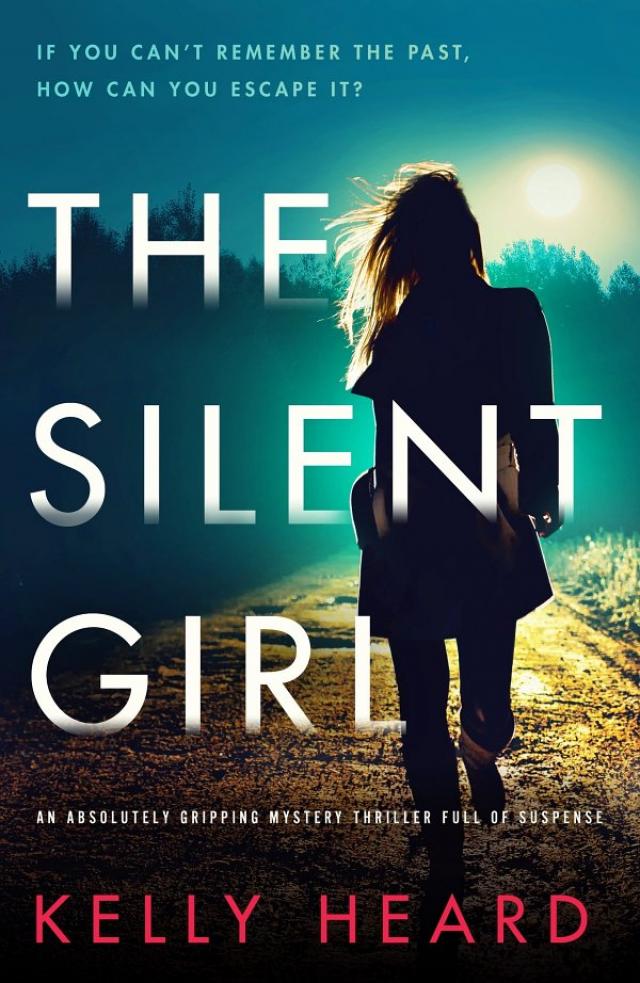


The Silent Girl
An absolutely gripping mystery thriller full of suspense
Kelly Heard
Books by Kelly Heard
The Silent Girl
The Girl I Thought I Knew
Before You Go
Available in Audio
Before You Go (Available in the UK and the US)
The Girl I Thought I Knew (Available in the UK and the US)
Contents
Chapter 1
Chapter 2
Chapter 3
Chapter 4
Chapter 5
Chapter 6
Chapter 7
Chapter 8
Chapter 9
Chapter 10
Chapter 11
Chapter 12
Chapter 13
Chapter 14
Chapter 15
Chapter 16
Chapter 17
Chapter 18
Chapter 19
Chapter 20
Chapter 21
Chapter 22
Chapter 23
Chapter 24
Chapter 25
Chapter 26
Chapter 27
Chapter 28
Chapter 29
Chapter 30
Chapter 31
Chapter 32
Chapter 33
Chapter 34
Chapter 35
Chapter 36
Chapter 37
Chapter 38
Chapter 39
Chapter 40
Chapter 41
Chapter 42
Chapter 43
Chapter 44
Chapter 45
Chapter 46
Chapter 47
Chapter 48
Chapter 49
Chapter 50
Chapter 51
Chapter 52
Chapter 53
Chapter 54
Chapter 55
Chapter 56
Chapter 57
Chapter 58
Chapter 59
Chapter 60
The Girl I Thought I Knew
Hear More from Kelly
Books by Kelly Heard
A Letter from Kelly
Before You Go
Acknowledgments
For Isla Jane: I adore your imagination, your willfulness, your incandescence. The world needs your fire—don’t let anyone tame it.
One
A man’s voice speaks into a transceiver. “Female. Thirty, maybe. Send an ambulance. And check for missing persons, anything on the news. Strawberry blonde, blue dress. There’s—flowers in her hair.” With a whispered curse, he turns away. “Hang on a minute,” he says.
I hear a different voice telling me that help is coming. That I need to hold on a little longer. But I’m not ready to leave the flowers yet. The blossoms surrounded me, a thousand red moons bobbing on delicate stems. I’m pushing back consciousness, trying not to wake up. Whatever I did wrong, whatever landed me here, I know the flowers would forgive me, and I wish that I could stay.
There is a sickening pain in my head. Blood has dried on my face, my eyelashes are sticking together, and I wonder, distantly, about time, about the pale light and the distant bird calls. I can feel scratches along my shoulder and down my right arm that scream every time I breathe. Fear, like a wild horse, runs through my veins. All of this I know, not as facts are known, but in my body, the way a fledgling bird must know which way to fly when the nights get cold. What I don’t know is where I went wrong. The red of those flowers has erased whatever came before. I stare up at glossy green leaves and, without needing to close my eyes, slip gratefully away into a field of numbing red.
“Can you tell me your name? Where are you from?”
“Head injury, see? She might not even be able to hear you.”
But they’re wrong. I didn’t answer because I don’t know.
All I know is that I don’t want to go back. That wherever I came from there was nothing waiting for me but my own end, and some worse pain than dragging myself through the woods half-dead. That, I know, is something beyond what I can imagine, even now.
Two
I open my eyes to bright fluorescent lights that send a shock to my pupils. Squeezing my eyes shut, I turn my head and tug at my arms. I feel resistance and throw all my weight against my elbows and try to sit up. This was a mistake. Suddenly, everything hurts. A pulse of pain in my head, constellations of pain lighting up my limbs, even down to my fingertips.
I can’t move.
They’ve found me.
At my side, a mechanical tone sounds at an increasing pace. Something slithers at my side, between my arm and my ribs.
If there’s no sin in your heart, the rattlers won’t bite you.
I didn’t do anything wrong, I plead. I’d never betray you.
Then prove it.
The echo leaves me with a shiver. I stare down at the writhing, gray forms, too afraid to move.
When a nurse walks in, it takes me several seconds to realize that I’m in a hospital, with IV lines that trail from both my arms. She speaks into a phone clipped to her collar: “Room sixteen’s awake.” Then, she seems to be everywhere at once. She adjusts the IV, checks the straps that hold my limbs to the bed, all the while looking into my eyes.
“You’re safe.” She checks an IV bag. “Sorry for the restraints. Didn’t want you to fall out of the bed.” Again, I try to sit up, my head jerking side to side. I rock my knees back and forth, trying to free them from whatever holds them in place. With a tearing sound, a tie loosens and they are free. I swing my feet down and find the floor, cold tile under my feet.
“Some help?” The nurse’s voice rises and an attendant rushes in. But I don’t make it far; she catches me before I hit the floor altogether. I’m still thrashing, trying to escape, as they lift me up. “She’s short,” the nurse explains. “Got out of the restraints.”
“Please,” I say, gritting my teeth. “Let me go.”
“I can get you something to help you calm down, miss.” They ease me back onto the bed. The nurse rests a hand on my shoulder. “Do you know where you are? You’re in the hospital.”
“I know,” I gasp, wheeze another breath. “I have to get out of here.”
“To where?” Now she’s listening, as if I might know something she doesn’t. “Where do you need to go?”
“Away,” I answer.
“From what?”
I think my heart stops for a moment, and in that moment I settle into her gaze. Her eyes are golden brown, dark hair, kind but serious mouth. I don’t have an answer.
“It’s alright,” she repeats. “You’re safe. Promise.” She glances to the doorway. “See? They put security outside your door.”
“Why?” I ask. This, apparently, is the first question of mine the nurse wasn’t prepared for.
“Well—since…” She busies herself with the IV, disconnecting the bag, putting on a new one, checking the port in my arm. I realize I can’t feel much. “How much do you remember?” I blink, purse my lips, feel a splash of pain.
“Tell me,” I plead.
“Don’t worry about that right now,” she says. “We’re going to try to help you get some more rest, okay?”
She turns her attention to small tasks, straightening things around the room, adjusting the blankets over my legs, updating a chart on a dry-erase board that hangs by the door. I begin to feel light, as if I’m floating away. What a relief it is, to feel less, and then a little bit less than that. Though I watch her write, the letters swim and fade before my eyes. All I can make out is the line at the top. It reads ‘Jane Doe.’
Three
The next time I wake, it seems to be morning. With a remote calm, I see that my palms are wrapped in gauze, that both arms are either stitched or bandaged. Beneath the hospital gown, there’s a row of stitches down my chest, the dark thread like ants crawling over a red welt.
I sense the absence of pain, and realize there’s either some medicine at work here, or I’ve already died. What a cruel trick, if the afterlife looked like the inside of a hospital room.
Beyond the foot of the bed, a window offers a view of blue-edged mountains that rise above the sleepy town below. I watch the stoplights changing, which they do slowly, as if there’s no reason to hurry. As if from far away, muffled through water, I hear the door open. Then, a woman in blue scrubs is opening a dressing on my arm, cleaning the skin beneath.
I watch the nurse working, feeling my dry lips crack as I smile.
“Thank you.”
Startled, she almost drops the gauze. “You’re awake!” She seals the bandage with a light touch. “I’m going to get the attending.”
I try to nod my head, but my neck is stiff. Instead, I return to the window. Beyond a row of trees, there’s a pond, and from here it looks as shallow and reflective as a hand mirror.
A white-coated woman with graying brown hair enters the room, followed by a younger man I take for a student of some sort. The attending pulls up a chair and sits at my bedside.
“Good morning. How are you feeling?” she asks me.
“Hard to say.” I begin to study my body: the bandages that cover one arm, the cuts and scratches that line the other. There’s a jagged wound on my chest, neatly held closed with tiny stitches. When I lift a hand, I can feel half -healed marks on my face, too.
When the forest cooled at night, the dew settled on the leaves. Like a chill mist, a realization settles over me. I don’t know where I am. My shoulders tense and pain reverberates up my neck. I reach up to touch my head and feel a bandage at my temple. The doctor gently pulls my hand away. “We’ll get to that. What’s important is that you’re safe now.” I pull back, rest my hand on my knee.
“First, maybe you’d like to introduce yourself?”
Why are they asking me this? The whiteboard still reads ‘Jane Doe’, and I wonder if they really don’t know, or if this is some sort of test.
“Or maybe you can tell us what year it is?”
“Two thousand and ten.”
“That’s good,” she answers. “June 3, 2010. You’ve been unconscious for three days.”
The doctor nods to the student standing behind her, and he takes a step forward. He’s holding a clipboard and wearing an ID tag that reads ‘Resident.’ “We’d like to find your family. Maybe you can try to tell us about where you’re from. What do you remember?”
“My brother.” My mouth forms the words as if from muscle memory. When I say them, I’m suddenly aware of a charge in the air, almost as if I expect speaking so to conjure something. I wait for the words to call up an image, a voice. But there’s nothing.
“So—you have a brother.” The resident nods and makes a note. “What’s his name? Do you know where he lives?”
“Miles,” I breathe, realizing with some despair that I don’t. My chest feels heavy and weightless both at once, and I say it again. “My brother. I have to find him.”
“Yes, but any specifics that come to mind?”
I raise both hands to my temples, as if I can squeeze the thoughts loose, and feel a sharp jolt of pain. The doctor gestures at one of my bedside monitors with her pen. “You see, this is a stress response. Heart rate up, BP up, but her pulse ox is steady. Miss?”
It’s something less than comforting to hear them discuss me while I’m sitting right here. At least the resident makes eye contact with me.
“You’re about thirty years old. You don’t have any tattoos or identifying scars. The police returned something of yours. We—”
“Police?” I interrupt. “Why?”
They exchange a glance, and the attending answers. “It’s standard procedure. Would you like to see?”
“Standard procedure for what?” I ask. The resident opens a plastic bag and takes out something silver, which he offers to me. I wrap my hand around it, a tarnished metal charm on a length of twine. It looks like a symbol, a semicircle topped with two crisscrossed lines, one bold dash underneath. Though it’s fascinating, smooth and cool to the touch, it calls up no thoughts in my mind, no memory.
“I can’t remember anything,” I stammer, turning it over in my palm. “This was mine?”
“You were wearing it when you were found.” The resident answers me without looking up from his clipboard.
“Found?” I demand, holding back stronger language. “Is anybody going to tell me what happened?”
“You see,” the attending says, barely raising her eyes to mine. “We were hoping you might be able to tell us.” She nods to the younger doctor, who reads from his clipboard.
“Unnamed patient, discovered roadside by a motorist, who then called emergency response.” His pen runs down a list of text, and I see that he’s skimming. “Negative for sexual assault. Negative for drugs and alcohol—although, some drugs are in the system only for a few days, so that might not give us the full picture.” I move to cover my face with my hands and see red seeping through the gauze on my palms. I can’t help but feel there must have been a mistake. That these hands can’t belong to me.
The attending clicks her tongue and indicates the monitors again. “See, you need to keep an eye on these. BP’s still up. We’ll let the nurse know about that when we’re done here. What notes do you have?”
“Head injury,” the resident answers. “Considering all of the circumstances, I’d say—amnesia, likely related to brain injury.”
The doctor shakes her head. “Incorrect. You’ve seen the MRI. The concussion was determined to be mild.” They speak as if I can’t understand them. “The scan did not return brain injury that would be consistent with memory loss.”
“But—”
“Dissociative amnesia, most likely,” the attending says. “Repressed memories, essentially. You’ll see this in instances of trauma or intense stress. But,” she adds, “the good news is that it’s virtually always temporary.” She turns a neat, professional smile my way. “We’ll send the nurse back in. Get some rest.”
“No snakebites?” I ask. The doctor turns to me with a quizzical, annoyed glance.
“No,” she answers. “No snakebites.” The doctor tilts her head. “Why?”
“A—a dream, maybe.” The doctor leaves the door open when she walks away.
The nurse must have been waiting just outside the door, because she returns immediately.
“Sorry,” she says, leaning close and moving the collar of my gown to look at the stitches there. “Just checking on this.” She’s in constant motion, returning the chair to its place, checking the monitors, adjusting the blanket over my legs. Though I realize she’s doing a job, that doesn’t make me appreciate it any less. “It’s a teaching hospital,” she says. “They forget patients are people, sometimes.”
“You heard all of that?” I grimace with embarrassment.
She purses her mouth and checks my blood pressure again.
“What happened?” I ask her, holding the necklace. “Why did the police have this?”
“Your injuries don’t look accidental.” She pauses, holding her hand out. I put my hand in hers, and she turns it over, indicating scratches around my wrist, a couple of broken nails, the cuts that reach up my arm. “These are defensive wounds. Put all of that together, it’s safe to assume you’re a victim of a crime.”
“But what happened?”
For the first time, the nurse sits still, turning her warm brown eyes my way.
“We don’t know. But you put up a fight. You don’t get cuts like that unless you gave someone hell. And you heal fast,” she says.
“Thanks—I guess.” I’m not sure that it was a compliment, but it’s something concrete. With a surplus of nervous energy, I notice that the doctor left her pen at the bedside tray. I pick it up, twirl it in my hand.
“You’ll be feeling better before you know it,” she assures me. “My name’s Anjali.”
“Nice to meet you.”
“You too. Can I get you anything?”
“Do you have anything I could write or draw on?”
“Let me see what I can find,” she says, walking out of the door.
Anjali returns with a lined notepad and a packet of colored pencils. “I borrowed these from the pediatrics unit,” she says. “But you can keep them. They have plenty.”
I thank her, and she leaves me to my thoughts.
The pencils seem to jump into my hand, to move with their own instinct when I hold them to the paper. I can’t grip the pencils the way I want to, the cut in my hand threatening to open when my palm bends, so I sketch loosely, and the motion of doing so is enough to bring some comfort. I draw shadows and lines, which soon take form, beginning to draw out the images in my mind. I fill a page, then flip to the next. Looking down at the pencils in my hands, I feel a warmth, nearly a presence. I blink, and a recollection comes to the surface of my mind: a hand around mine, a piece of construction paper on a tabletop, a figure with soft hair. Just as quickly, the sensation flees. I don’t know how, but I’m certain that I have a mother, that she taught me how to draw.


