

Mad Honey, page 1


About This Book
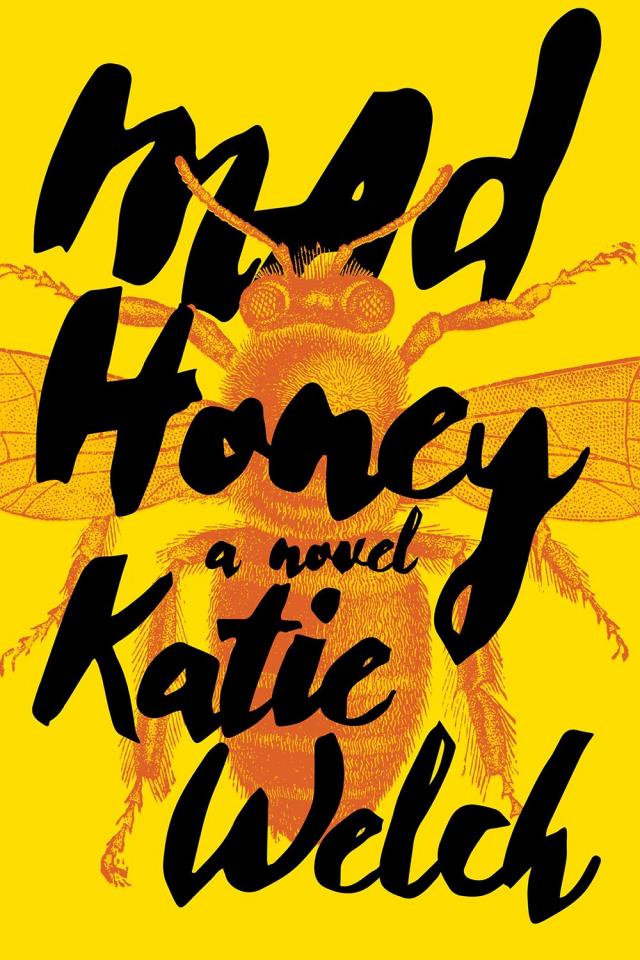
Melissa Makepeace poured herself into running the family farm when her boyfriend, and head beekeeper, vanished on an early spring day, silently absorbing yet another man disappearing from her life. But three months later Beck Wise reappears – thin, pale, with no idea what day it is and filled with strange memories of bees – and Melissa finds herself unravelling multiple mysteries. What had happened to Beck? Where did her father go? How can she keep the farm together? With gorgeous descriptions, deft characterizations and a page-turning plot, Mad Honey immerses the reader in a search for truth bounded by the everyday magic of beekeeping, of family and of finding peace, all while asking how much we really understand the natural world.
Praise for Mad Honey
“There is a buzzing hum to Mad Honey, the drone of secrets linking characters together in ways that are both sticky and sweet. From rustic cabins in the Canadian wilderness to Cuban gardens bursting in bloom, from country fairs to dive bars, the reader is taken on a wild ride. Part Canadian farmhouse gothic, part family mystery, Welch’s is a propulsive debut.” – Laisha Rosnau, author of Little Fortress and Our Familiar Hunger.
“Katie Welch reminds us that we are a very small part of a massive and complex non-human world and that, where we heed the lessons of non-centrality, we can also truly love. Mad Honey is a beautiful novel.” – Kathryn Kuitenbrouwer, author of Perfecting and All the Broken Things
to Will Stinson, for everything
and to my daughters, Heather Saya and Olivia
The busy bee has no time for sorrow.
– William Blake, Proverbs of Hell
Contents
Cover
About This Book
Praise for Mad Honey
Title Page
Dedication
Epigraph
Contents
Prologue
Chapter 1
Chapter 2
Chapter 3
Chapter 4
Chapter 5
Chapter 6
Chapter 7
Chapter 8
Chapter 9
Chapter 10
Chapter 11
Chapter 12
Chapter 13
Chapter 14
Chapter 15
Chapter 16
Chapter 17
Chapter 18
Chapter 19
Chapter 20
Chapter 21
Chapter 22
Chapter 23
Chapter 24
Chapter 25
Chapter 26
Chapter 27
Chapter 28
Chapter 29
Acknowledgements
About the Author
Copyright
Prologue
When he came back to himself he was inside the cabin, stretched out on the narrow mattress where he had closed his eyes, the folded ridges of a scratchy wool blanket pressing into the thin membrane of his skin. There was a musty smell of damp pillows and wet wood, and the distant sound of tires whooshing along a gravel road. So he had ears, and a nose, and long limbs that extended from his torso, and sensitive nerves sending information to a brain that processed information in words. In those first moments, he remembered an altogether different sensory experience, and he dwelled on the details of the dream before abandoning himself to wakefulness, catching fleeting images in his memory like butterflies in a net before they became lost to him.
Beck was whole, but he could feel his pieces. They flew like miniature striped dirigibles, coming and going from the mothership of his hive-body. Instinctively he understood the hum and thrum of life, a pulse that moved not slick red blood, but sweet amber honey. Reflective thought was absent, but he was conscious, in a way humans are not, of the building up and breaking down of things corporeal. Each of his cells was a bee performing one specific duty, the task each bee was created to do: clean, eat, build, come or go. If he sensed his core overheating, he initiated the fanning of wings, maintaining the comfort of his queen. Beck quivered at the thought of her, unique piece of his pieces, part of his parts, reigning over the glorious ordered chaos of the hive, thousands of segmented black legs shuffling up and down aromatic waxen walls, nurseries of white larvae, and perfect hexagons of heavenly honey, sweet honey, rich honey, perfect food of light and love! For a few seconds Beck remembered what it was like to sense the dawn of the sun-day and reach outside himself, sending wavering lines of gold to every fragrant receptacle, every colour-exploding flower. There, inside the flowers, parts of him slipped along silky coloured petals, cushions of fuchsia, yellow, lavender, crimson, rose and white. Inside flowers, all those bits of him sipped, with ten thousand tongues, the nectar he needed and desired. Then he called his pieces back to himself, and deep in his core, waggles spread ripples of promise and pleasure.
The plywood walls of the cabin came into focus. His eyes slid right, toward the brilliance of sun glaring through a window, then left, to a cottage kitchen. A blue enamel kettle, flecked with white and blackened around its base from the propane stovetop, reminded Beck he had a mother who often prepared hot beverages in the emptiness of this space. Glossy photographs thumbtacked above the sink were evidence of a father whose habit it was to capture two-dimensional images for contemplation at some future time. Awareness of these people, his parents, came complete with a history Beck recognized as being his own: shunted from Canada to Cuba and back again a dozen times in his school years, a perpetual stranger, a friend who like a favourite toy got lost, only to turn up again in the yard, faded from weather and stained with mould.
His four limbs were jointed in the middle. He folded them at these junctures and redistributed his weight until he sat on his bottom, facing a chipped mirror screwed directly to the wall. A face Beck recognized as his own wavered in the mirror’s imperfections, toffee-coloured skin, long dark hair and beetle-black eyes. He remembered that kids in his Toronto neighbourhood used to call him Black, and sometimes mistake him for a girl because he was skinny and pretty, with big lips and long eyelashes. In the Havana suburb where his mother’s family lived, kids had called him white. He’d never risen to the bait of juvenile racial slurs, or used name-calling to start a playground fight, but he’d never complained or run away, thus avoiding a reputation as a coward. He had stayed quiet and peaceful, deflecting punches with his elbows in eerie silence, cementing his reputation as Beck Wise, weirdo.
He had been conscious for only a few minutes, but Beck’s identity was galloping back into the paddock of his flesh. He rubbed his eyes, amazed by the squishy resilience of eyeballs, and marvelling at the hard knobs of his knuckles. Little by little he shifted his centre of gravity from his bottom to his feet, straightening the ladder of bones inside his body. Pain ran along his muscles and shot complaints through his fingers and toes. His ability to be ambulatory returned and he took unbalanced steps, coaxing an unfamiliar anatomy closer to the window. Outside, the poplars along the road were shedding brilliant yellow leaves, and the grass around the cabin had the faded look of autumn. It had been early summer, late June, when he had come to the cabin to be alone and had reclined on the rickety bed. Where had he been?
One
The day Beck came back, Melissa was trying to take a day off. It was September 14, her birthday. Daphne had insisted she would do all the morning chores, so Melissa was lying on her side in the grass beside the flower garden, pushing away a dynamic, omnipresent mental list: harvest pears and tomatoes, clear out bean rows, check on the chickens, feed the goats and the donkey, get an oil change on the truck, clean up the outdoor canning kitchen, go over the farm financials and on and on.
It was a breezy day, and the way the grass moved was mesmerizing – swords of pale green clashing silently, battling against a backdrop of white and blue. The breeze blew strong enough to sway individual blades of grass but not the stalwart orange poppies beyond the lawn. The world was sideways from where she lay, the clouds tall instead of long. Orange poppy petals exploded around pointillistic black centres suspended on hairy, pale green stems perpendicular to her body. The weight of her head pressed into the bent elbow of her warm, suntanned arm. A dark lock of hair tumbled across her line of sight, and she tucked it slowly, neatly, behind one of her prominent ears, the fleshy earlobe triple-pierced and adorned with three silver rings. Her broad hands were proportionate to her taller-than-average height and perennially dirty. She wore a creamy white sundress that day – unusual, because she eschewed dresses; they weren’t farming clothes. Daphne, who rocked splashy, multicoloured sundresses in the fields, would disagree.
Melissa was blissing out on poppies painted against deep blue sky. The centre of each poppy was made up of tiny, delicate petals arranged in ever-tightening concentric circles, swirls of orange deepening to a red that was almost black. A rivulet of drool escaped the low side of her mouth and descended, slow and glistening, to her outstretched arm. She observed one poppy in particular, the most splendid flower. The breeze settled, and her whirring thoughts settled too. For a few seconds she experienced the illusion of suspended time, achieving meditative success, the elusive quiet mind she’d heard yoga enthusiasts brag about. She felt and saw only the perfection of the tableau: border of spiky grass, vermilion floral profusion, hemisphere of sky extending to the limits of her vision.
A sound broke the spell, the characteristic buzzing of a honeybee, a high, soft pitch, not the guttural rumbling of a bumblebee. She heard the insect approach but didn’t look for it, focused as she was on the epitome of an orange poppy in all its resplendent stillness. When the bee flew into her sight, she pinpointed the little creature’s location by its insistent hum. Every hair on the bee’s body stood out in sharp definition. Melissa imagined she could see the mosaic of its compound eyes, thousands of iridescent surfaces creating pixelated sight. Quivering in anticipation, the bee navigated the forest of orange flowers and, improbably, chose to land on the very flower she observed. Six black legs twitched, extended and contracted as they assumed the insect’s weight: landing complete.
Melissa broke her meditation, reminded again of yoga classes she had once attended, and how she used to lie still during savasana, waiting for the all-clear so she could get going. She sat up slowly, abs contracting bottom to top, and the universe righted itself. In the distance, the back side of a stone farmhouse loomed up behind the flower garden, erupting out of the earth’s crust, but she kept watching the bee, zeroing in on the delicate filigree of veins in its wings. The flicker of something human in an upstairs window, an arm waving, caught her eye. She tore her gaze away from the poppy and its fascinating striped occupant. Why would you interrupt me now?
Daphne was waving frantically from a bedroom window. Her hair, which she either twisted into tidy braids or allowed to puff out freely, defying gravity, was big that day. A halo of tight brown curls filled the window, and the whites of outsized eyes shone like searchlights in the middle of this mane. Her mouth opened and closed in a pantomime of a spoken name – wide, narrow, wide, repeat.
“Melissa! Melissa, Melissa!”
The faraway voice was an itty-bitty insect noise by the time it reached Melissa, but there was no mistaking the urgency in the swing of Daphne’s arm, or the too-round aperture of her mouth. In an easy movement Melissa levered her nearly six feet of muscle and bone to its default upright position. She reached down and snatched a pair of mirrored sunglasses from the grass, catching a glimpse of her distorted features in the lenses – broad lips, roman nose, black caterpillars of never-plucked brows like thick bridges over hazel eyes. Genetic gifts from her father, mostly; nobody believed her short, blond, snub-nosed mother was biologically responsible for her Amazonian frame and glossy dark-brown hair. She didn’t hurry back, but sauntered, relaxed for the first time in weeks and loath to get uptight again. Daphne and her arm disappeared from the upstairs window, then emerged with the rest of her springy, lithe limbs from the kitchen door at the back of the house. She had the knack of being beautiful, and could do it in ripped pyjamas with a head cold. On the day Beck came back Daphne was especially striking in a green tie-dyed tank top, frayed jean shorts and bare feet. She pursed her lips and arched her eyebrows; Melissa could tell that she’d regretted yanking the birthday girl away from the repose that was supposed to be her present.
“Sorry. It’s Beck. I wouldn’t have interrupted you for anything less.”
“Beck – here? Now?”
“Not yet. On his way.”
Beck had departed one evening in spring, leaving a short note saying he would be back, but taking his toothbrush and his favourite jeans and shirts. As ever, Melissa had been busy. A week had gone by before she’d wondered if he would keep his written promise to return, and at a month she’d known he wouldn’t. She supposed he had broken her heart; Daphne assured her it was definitely broken, but there were ways to shut off inconvenient feelings. When she was young Melissa had found a toggle switch in her chest. Flipped to ON, the switch opened a circuit and allowed pain to course through her body like electricity through a wire. In the OFF position, the current halted. With her heart switched off she could still profess love, nurture animals and mourn sad news. It was as simple as saying the right things, pantomiming feelings, playing emotional charades. But hurt accumulated behind this electrical gate, and there were nights when alone in her room, she flicked the switch and let pain circulate, wiping away the weakness of tears with rumpled bedsheets. As time passed she’d found she could live without Beck her lover. But he was also her beekeeper, and he cared for the livestock: a dozen chickens, Hotay the donkey and goats Jeffrey and Edna. She had muffled romantic sorrow when Beck had evaporated, but business-wise, his departure had been a letdown and a big inconvenience, and it had pissed her off. Ironically, when Beck vanished, he had been trying to protect the Hopetown Farm beehives from colony collapse disorder, a mysterious plague marked by vanishing bees. In the crispy, stifling last weeks of August, the rest of the farm staff had cobbled together what they knew about beekeeping and honey extraction, and planned for the imminent honey harvest. When Melissa had cursed and complained and worried out loud about the bees, she’d overheard sticky sympathy: This is so hard for her – she misses Beck so much.
Daphne chewed her bottom lip and shifted her weight from side to side in an impatient dance, waiting for a reaction. Melissa stifled a germ of excitement – he’s back, he came back – and concentrated on summoning up the bitter taste of Beck’s betrayal.
“Do me a favour? When he gets here, tell him to go away.”
“But don’t you want to know where he’s been?”
“Not really. I stopped wondering a long time ago. Please tell him to leave.”
Daphne narrowed her eyes and folded her arms. “Maybe he got amnesia,” she said. “You don’t know what happened.”
“Oh, give me a break. How do you know he’s on his way – did he call?”
“Natalie called. She spotted him on the road and pulled over to talk to him. He told her he was coming over here today to check on Hotay.”
“Check on Hotay? How does Beck know Hotay’s still alive? What is he thinking, that he left just yesterday? Wow. Just, wow.”
Melissa pushed past Daphne into her favourite room in the farmhouse, an oversized, sunny, butter-yellow kitchen with a blue, red and green Mexican tile splashboard running along spacious wooden countertops. Scooping an apple from a big terracotta fruit bowl, she took an aggressive, juicy bite, chewed vigorously and swallowed hard.
“I don’t want him here. Deliver that message for me. Come on, it’s my birthday – please?”
Daphne picked up her own apple from the bowl and crunched into it, her bite matching Melissa’s in intensity. She spoke wetly, around a mouthful of fruit.
“Nuh-uh. I’m not going to deliver that message.” Daphne wiggled a remonstrative finger. “You need to tell him yourself.”
Melissa didn’t have a problem delegating chores on the farm, or bossing everyone around, as her mother would say, but there was a tendency for that directive energy to spill over into her personal affairs. She had once told – told, not asked – Beck to do her banking while he was in town, after making the farm deliveries. She remembered the wave of indignation she had felt when he had laughed at her. She had opened her mouth to give him a lecture on insubordination, and realized what was so damn funny. Melissa Makepeace, queen of her little realm. Daphne and Beck knew the boundary between their employee and friend roles, and defended it valiantly. Melissa sighed.
“All right, fine. Would you check on Hotay, then, please? And the chickens, and Jeffrey and Edna? I’m going to change, grab a sunhat and attack the weeds.”
“So much for your holiday. You’re supposed to be chilling out beside the lake, remember?”
“Thanks, Daph. You’re sweet, but I can’t sit down now. I’ll get wound up.”
The women swung their apple-free hands together and clasped them, Daphne’s delicate fingers inside Melissa’s big calloused palm. Daphne was Melissa’s adopted sister and understood her better than anyone else; she leaned in, kissed Melissa on the cheek, then whirled and left, letting the wood-framed screen door bang shut behind her. And at that precise moment, it started up again: the old puff-and-tuck routine. Pushing her broad lower lip out past the curved bow of the upper, Melissa forcefully expelled three breaths, blowing errant strands of hair toward the sky. Automatically she tucked this hair from her face, roughly, three severe tugs on each side, anchoring it firmly behind her ears.


