Kathy Hogan Trocheck - Truman Kicklighter 02 - Crash Course, page 2
part #2 of Truman Kicklighter Series


Jeff was saying something else now, something about weekly payments, and then he wanted to be sure she had been on the same job for a year now, hadn’t she? And could he call her landlord to verify her address?
“No credit check,” he said hastily. “It’s just another of Ronnie’s rules. Come on in the office, Jackie, let’s get this paperwork taken care of, get you on the road in this fine car of yours.”
Jackie got out of the car and the heat swallowed her up. Her knees were all wobbly and the asphalt in the parking lot was soft and sticky, like chewing gum under her work shoes. The pink Caddie wobbled crazily on the roof. She wanted to ask Jeff how they got that car up on the roof. But the heat and exhaust fumes made all the cars a blur of color and vague shapes. All except the red Corvette. She ran her fingers lightly over the hood as she trailed Jeff Cantrell into the office of Bondurant Motors.
Chapter THREE
Sense and Sensibility was one of those books Truman had always meant to read. He’d even borrowed the Cliff’s Notes from Cheryl, who was supposed to read it for an English lit class she was taking toward her Master’s degree.
But Jane Austen didn’t have quite the zip he was looking for these days.
He sat in the back of the brightly lit meeting room, drowsily enjoying the air-conditioning and the mixed smells of cologne and baked goods. He only half listened while the ladies chattered away about the predicament of the Misses Dashwood and the conflicting themes of desire and conservative moralism.
That the two sisters in the book were named Elinor and Marianne he had detected from the Cliff’s Notes. And Cheryl, who had earned a B in the lit class, informed him that Jane Austen’s work was critically hailed because of her satirical powers of observation of the mores of eighteenth-century gentry.
But his attention wandered now from English lit to English trifle. There was a large cut-glass bowl of the stuff on the refreshment table, layers of cake and peaches and raspberries and fluffy clouds of whipped cream. Right beside it was a dish heaped high with something like chicken salad. One of his favorites. But didn’t you have to use mayonnaise in chicken salad? Wasn’t there some kind of food poisoning issue if mayonnaise got left out in the heat? Salmonella was nothing to mess with.
“And Truman?”
He jerked his head around. All the ladies were staring at him. Old man Drewry was working a crossword puzzle. Margaret McCutchen seemed especially amused. Had his eyebrows started bleeding again?
“Uh, yes?” Truman said.
Mildred Davis coughed gently. “We were just wondering if a man could truly appreciate Elinor’s predicament in the book. What do you think, Mr. Kicklighter?”
Truman thought it was mayonnaise in the chicken salad, and he was already regretting the chicken salad sandwich he would not be enjoying for Sunday lunch tomorrow.
He coughed, examined the tops of his brown shoes, and pulled his glasses down to the bridge of his nose to give himself time to stall.
“Well,” he started. “Of course, those were different days, weren’t they? Who among us can say they really understand any fictional character’s predicament?”
There. Profound but not prolonged.
“I think the next book we pick ought to have snappier pictures and bigger print,” old man Drewry said, standing up so fast his metal folding chair fell to the linoleum floor with a clatter. “Now let’s eat.”
“But we haven’t voted on next month’s book,” Elvida Hamm protested. “And Margaret hasn’t finished reading her remarks.”
“I’ve finished,” Margaret said, snapping her folder shut.
“I move we read To Kill a Mockingbird,” Truman said loudly. Cheryl had just finished writing a paper on To Kill a Mockingbird, and the movie with Gregory Peck had always been a favorite of his.
“Excellent,” Margaret said, beaming. “A contemporary Southern female author. Girls?”
Daizye Belle Fletcher waved her hand for recognition. “Is it in paperback?”
“Large print?” Pops Drewry demanded.
“Both,” Margaret said. “You can even listen to it on an audiotape checked out from the library. We’re adjourned.”
Truman picked up his foil-lined book bag and headed for the refreshment table. There was a system to his buffet browsing. The gooey things, like the trifle and some pineapple cheesecake, he wolfed down as quickly as he could, at the same time scooping up the more stable items, such as oatmeal-fudge bars, sausage- cheese balls, and finger sandwiches, to be deftly transferred to his waiting book bag.
The fried chicken was a bonanza he hadn’t anticipated. It was hidden away behind a large tray of cubed purple meat skewered together with canned pineapple chunks and cocktail onions.
“Try one.” Mildred Davis held out the tray to him, her plump little hands fluttering with excitement. “Spam Kabobs. They’re my specialty.”
Truman nearly dropped his drumstick. Damn, these widows were sneaky. He hadn’t even seen her coming.
“Oh no,” he said, waving the kabobs away. “Pineapple and I don’t get along at all. But I’m sure they’re wonderful.”
“Too bad,” she said as she set the platter aside. “But Truman, I hear that you are somewhat of a home-repair expert. Maybe you’d be interested in seeing my lawn irrigation system. It’s very complicated, with all these pipes and dials and gauges. There’s this one sprinkler head that’s not working at all properly. It gurgles, but it won’t spit. And I thought, since you’re an expert—”
“Excuse me,” Margaret McCutchen said, boldly moving between Truman and Mildred, forcing Mildred to take a step backward. “I’m sorry, Mildred,” Margaret said, tugging gently at Truman’s shirtsleeve. “I need to borrow Truman to help unload my cooler of ice cream from the car. We won’t be but a minute. All right?”
“But,” Mildred said, her rouged dewlaps quivering unhappily, “I was just explaining about the pipes.”
“And I’m sure Truman is dying to find out about that,” Margaret said in that refined Southern drawl of hers. Not a rural kind of grits-and-gravy accent; more like bourbon and branch water. Biloxi, maybe, or Charleston.
Truman allowed himself to be steered toward the kitchen door. But he was puzzled. Despite her refined manners, Margaret McCutchen was no weak sister. She was as tall as he, skinny as a whip, with the weather-beaten skin of the lifelong amateur sailor he’d heard she was. Unlike most women her age, Margaret didn’t seem to fuss much about things like casseroles or flowery dresses or pictures of her grandchildren. He didn’t know if he’d ever heard her mention any grandchildren.
“The coast is clear,” she said when the kitchen door swung shut behind them and they were alone. The laugh lines around her intelligent dark eyes deepened. “You can go out the back here. Run like hell, or before you know it, Mildred will have you on a leash for sure.”
“What about the cooler?” Truman wondered. He had no intention of being conned into examining Mildred Davis’s pipes, aboveground or otherwise, but by damn, not many people went to the trouble to churn homemade ice cream these days. He didn’t want to miss out.
“There is no cooler in the car,” she said. “The ice cream’s out there under the table, packed in a tub of dry ice. I brought it in earlier. Do you really think I look that helpless?”
“Well, probably not,” Truman admitted.
Margaret shook her head. “Never mind. My fault. It’s a bad habit of mine. Trying to throw a lifeline to a man who’s only testing the water. Go on back in there. Mildred’s probably sent out a search party for you by now.”
“I’m full,” Truman said. “In fact, I was trying to leave gracefully when Mildred ambushed me. So I do thank you for the rescue.”
“Full?” Margaret said, hooting. “Leaving? Oh, please. You were loading up that bag of yours with food to take home. That’s the only reason you come to these meetings, isn’t it? Not that I blame you. I was only wondering. How did you plan to brown-bag the ice cream?”
Truman blushed furiously.
“I’m an avid reader,” he said. “Read all the time. Just not Jane Austen. And if you must know, I was actually holding back on the chow tonight, saving room for that ice cream of yours.”
She reached for the book bag, which he’d been trying to hide behind his back. He let her take it, feeling both foolish and a bit relieved.
“Guess you caught me,” he said. “Red-handed. I didn’t know I was being so obvious. That’s sort of embarrassing for somebody like me. I’m a journalist, you know. We pride ourselves on not being obvious.”
Margaret smiled widely and he could see the pale pink skin in the folds of the tanned laugh lines.
“I’m a busybody. We pride ourselves on noticing everything.”
She handed the bag back to Truman.
“I’ve got another whole quart of peach ice cream in the freezer at home,” Margaret offered. “And my car is parked just outside.”
It sounded good, but Truman didn’t like the feeling that he was being buttonholed. Or that she would have the impression that he had nothing but time on his hands. Or that he was just out to mooch free meals.
“The Braves are playing a doubleheader on the coast,” he said. “Thought I’d go get a beer, see how L.A’s new manager is doing.”
She nodded that she understood. “Another time, then.”
A tray of plastic bowls and spoons was sitting on the stainless-steel kitchen countertop. She picked it up. “Good night, then.”
He held the door open for her. It seemed the thing to do.
“Margaret?”
She caught the door with her hand. Her nails were as short as his, scrubbed bone white.
“Yes?”
“How’s your air-conditioning?”
“Excellent,” she said. “I have a ten-year service contract. And I never allow gentlemen callers to see my pipes.”
It was her broad wink that caught Truman off guard.
Ollie wasn’t supposed to work Saturdays at the news stand. There were no office workers or post office customers or passengers waiting around to catch a bus at Williams Park across the street on Saturday evenings. Especially not in August, when anybody with any sense or money had escaped up north for the summer.
Bored, he’d wandered over to Chet’s some time after seven. He read some professional wrestling magazines, straightened the dusty rack of postcards, ate a package of Cheez Nips washed down with an orange soda, and busied himself uncreasing the dog-ears of the foldouts in Playboy and Hustler. It had gotten dark outside, past nine o’clock, when he shut off the lights and locked up.
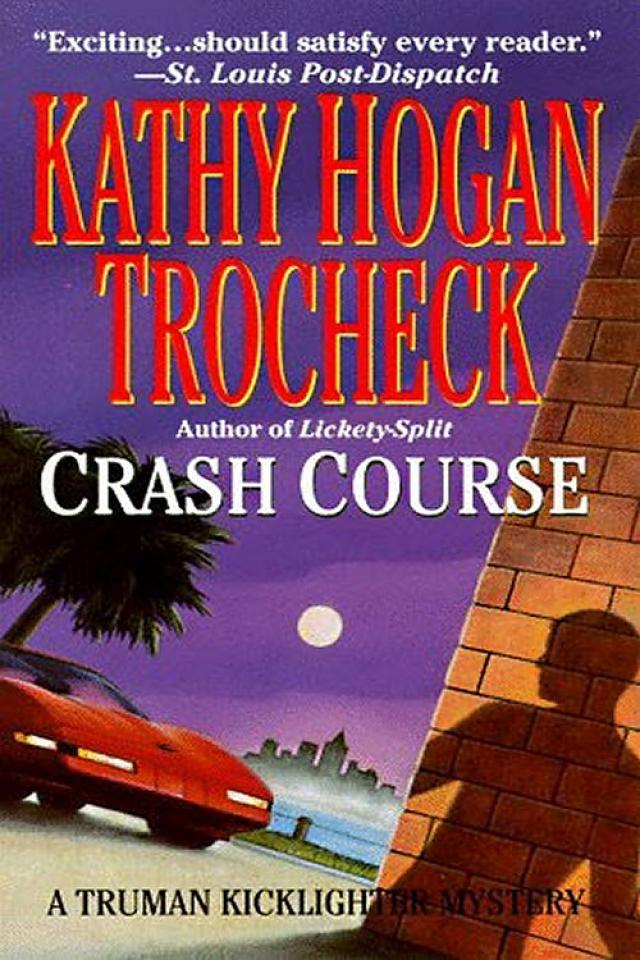
He was crossing Central Avenue toward the hotel, minding his own business, not even jaywalking for once, when a flashy red sports car roared up to him and slammed on its brakes, sending Ollie flying sideways to avoid ending up as a hood ornament.
BEEEEP. The driver, a woman wearing a flowing white scarf, laughed hysterically.
“I’m hit,” he screamed, dropping to the pavement. “Christ, lady, you killed me.” BEEEEP.
“Scared you, didn’t I?” Jackie said, standing up with her head sticking out of the open T-top of the red Corvette.
Her laugh, not like any laugh he’d ever heard from Jackie, scared him almost as much as nearly being splattered all over the blacktop.
Ollie got to his feet. “Jackie? You tried to kill me? On purpose?”
“Check it OUT!” she yelled. “What do you think of my new wheels, Ollie?”
“My knees are bleeding,” he pointed out. “And look. I got tar on my good new shorts.”
The crotch of the baggy orange shorts hung to his knees, which were indeed slightly scratched up. And his high-topped white cotton crew socks were streaked with tar and dirt, his thick-lensed glasses askew.
“I’m sorry,” Jackie said. “I guess I got carried away. What do you think? Isn’t it cool?”
Ollie straightened his glasses and stepped up to the Corvette, running his finger down the glistening red hood, whistling in admiration.
“You can make it up to me,” he told her. “Let me drive.”
Chapter FOUR
At breakfast Sunday, the youth hostel kids pushed their tables together and were noisier, sloppier, and ruder than usual.
Or so it seemed to Jackie. Her feet hurt. She and Ollie had walked all the way back to the hotel after the Corvette broke down while they were joyriding out on the beach. Neither of them knew anything much about the way cars worked, they’d had only a dollar in cash between them, and Jackie had been too proud to call anybody to tell them her brand-new used car wouldn’t crank. If she’d been alone she might have tried hitchhiking, but Ollie was sure that the only people who picked up hitchhikers were homicidal maniacs.
So they’d walked. And walked. And arrived back at the hotel around two a.m. And she’d had to get up at six to work the first breakfast seating at seven.
She slammed plates caked with maple syrup and egg smears into a bus tray and snarled at anybody who asked for seconds of anything.
Ollie never came to Sunday breakfast, which cost a dollar more than weekday breakfast because you got bacon and ham, plus hash browns and a lot of other stuff. He usually slept late, had peanut butter crackers and orange soda in his room, and showed up starved at dinnertime.
Truman didn’t materialize until the second sitting. Nearly eight o’clock.
He’d gotten in late, too, around one, but unlike Jackie, he was beaming now with energy and conviviality.
“Hello, Sonya,” he said, passing Mrs. Hoffmayer. She was so shocked by this sudden show of friendliness that she coughed and sputtered bits of french toast all over her chin.
“Hello, KoKo,” Truman said to the small dog whose head poked up from Mrs. Hoffmayer’s lap. The dog pricked up its ears and bared its teeth, remembering the last time Truman had shown him any attention. The incident had involved white paint and necessitated an expensive and unattractive new grooming style for KoKo.
“Don’t touch him,” Mrs. Hoffmayer screeched.
Truman smiled and made his way to the corner table.
He had to signal Jackie twice to get her attention. Finally she trudged over with a tray of steaming food, and slid the bowls of food noisily onto his table.
“You’re late,” she said.
Truman eyed the offerings with frank disappointment Only one biscuit in the bread basket, two shriveled strips of bacon, and an anemic-looking slice of ham. He touched his finger to the grits. They were cold. The eggs, too. And Jackie was obviously in a foul mood.
“Coffee?” he asked.
“It’s brewing,” she snapped. “And don’t say nothing about the food, ‘cause those damn hostel kids came through the first seating like a horde of locusts. You’re lucky to get this.”
Truman took a biscuit and slathered it with butter. She hadn’t brought any of his strawberry jam, but he was in too good a mood to let her sour his morning.
“You seen Ollie?” Jackie asked.
“No,” Truman said. “Why?”
She shrugged. “I thought maybe he told you about what happened last night. About my new car. How it broke down.” She glared at him reproachfully. “We tried to call you for a ride. Spent all the money we had. Then we had to walk home. All the way from the beach. Where were you so late?”
“I went out with a friend after Great Books,” Truman said. “We watched the ball game. It was a late one. The Braves were playing on the West Coast.”
That much was true. After they’d left Mirror Lake, Truman had suggested they might watch the game at the El Cap. He was still apprehensive about wandering into widows’ lairs.
It turned out that Margaret McCutchen had never been to his favorite watering hole, the tiny sports bar on Fourth Street that was the nearest thing to a hangout Truman had.
He had introduced Margaret to Frankie, who was running the place now that Steve and Rose were retired. They ordered a pitcher of Budweiser, and Margaret insisted on paying for half.
This was a woman he could like, a woman who drank real beer and didn’t mind paying her share. She knew about baseball, too, although she was an American League fan due to growing up in Boston. She could cook, too.
After the game, she’d invited him over to her place, and he’d gone.
Margaret lived in a very nice condominium in the old Detweiler Hotel, which had been renovated and was now quite upscale. As promised, her air-conditioning was cool and efficient They’d talked and laughed and gotten to know each other.
He’d learned that she’d been divorced only six months before her wealthy husband had died, while they were both in their fifties. So, Margaret told him firmly, she was not technically a widow at all. There were no children or grandchildren. She’d been a college physics professor before retirement, liked to sail and travel, had her own money and a late-model Nissan.
They’d talked until quite late, enjoyed large dishes of her delicious ice cream and healthy slabs of her home-baked pound cake. In fact, a good chunk of that pound cake was upstairs, wrapped in foil on his dresser. He would have it for his late-afternoon treat.
“A friend?” Jackie said. “Like, a date?”
“It wasn’t a date, dammit,” Truman said. The eggs were cold and greasy, and his biscuit was burned on the bottom. “But what if it was? Anything wrong with that?”
“None of my business,” Jackie said. She went over to the coffee station and got the pot of coffee that had finished brewing. As a peace offering, she went in the kitchen and grabbed some biscuits that had just come out of the oven, and tucked Truman’s strawberry jam in the basket, covering it with a napkin.
When she got back to the table, Truman had his head buried in the sports section. She poured his coffee, but didn’t leave.