Through Splintered Walls, page 1
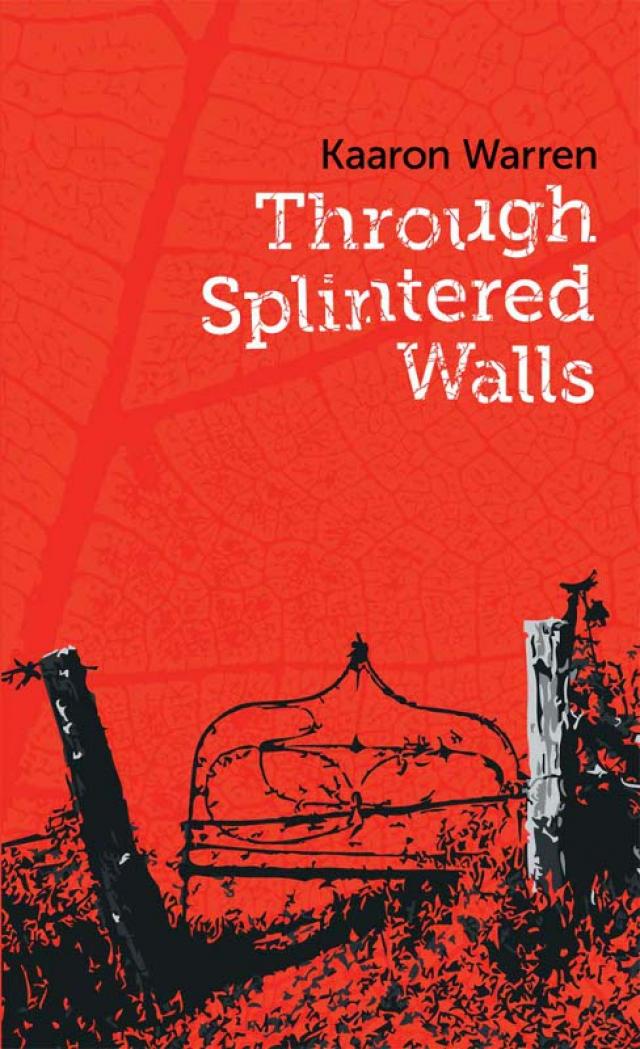


Through Splintered Walls
by Kaaron Warren
First published in Australia in May 2012
by Twelfth Planet Press
www.twelfthplanetpress.com
All stories are copyright © 2012 Kaaron Warren
Design and layout by Amanda Rainey
eBook layout by Charles A. Tan
All rights reserved. Without limiting the rights under copyright above, no part of this publication may be reproduced, stored in or introduced into a retrieval system, or transmitted in any form, or by any means (electronic, mechanical, photocopying, recording or otherwise), without the prior written permission of both the copyright owner and the above publisher of this book.
National Library of Australia Cataloguing-in-Publication entry
Author: Warren, Kaaron.
Title: Through splintered walls [electronic resource]: a twelve planets collection / by Kaaron Warren; edited by Alisa Krasnostein.
ISBN: 9780987216236 (eBook)
Subjects: Short stories, Australian.
Other Authors/Contributors: Krasnostein, Alisa.
Dewey Number: A823.4
Table of Contents
Introduction
Mountain
Creek
Road
Sky
About the Author
Also From Twelfth Planet Press
Introduction
Kaaron Warren has the true gift of spell-casting, the sort of deceptively direct, declamatory literary style which says: I simply have to speak a thing, and no matter how odd it may seem in the telling, it is instantly rendered so—solid, actual, honest, real. Fiction, but not. Sometimes her stories are about an urban legend created by a ward-full of anorexics, or the difficulty of tracking down an entirely new breed of dog; often they are about hunger and dread, sexuality and corruption, grief and power, the unreasonableness of hope.
Every Warren story is a trip with no map. She admits to not planning things out, to simply having an idea and going with it, finding out where it leads along the way. Thus, in ‘Creek’, the protagonist finds herself haunted by a tinnitus-spreading horde of drowned ghosts, the Quaking Women, who rise from the titular bodies of water demanding the return of their long-dead loved ones—and possibly, this all springs from a single turn of phrase. In ‘Sky’, meanwhile, the plot and protagonist of the story shift radically from section to section, with one mystery deepening into another, increasingly existential: Where did that finger in the cat food can come from? Is strength always measured in violence? Does pain travel a circular track, moving from giver to recipient, and back again?
In ‘Road’, a couple whose son died on the same cliff-haunted stretch of highway, deliberately reel in the ghosts of other vehicular victims, knitting themselves a hollow new ‘family’. And in ‘Mountain’, a holiday spot the narrator thinks should be named ‘Temptation’ provides its visitors recipes for public sex, suicide and covert murder—but instead of dragging her down, it provides the (literal) push which takes her back up again, rewriting her family’s future, with only a small sacrifice required.
In many ways, Warren’s particular brand of between-the-lines witchcraft reminds me of that practised by genre cornerstones like Shirley Jackson—but unlike Jackson, isn’t here to seduce you into sharing her point of view, so much, as to quickly and effectively render it all but impossible for you to refuse to. Similarly, there’s an epic scope to her always-dangerous visions which recalls the literal, temporal and philosophical landscapes she sets her stories in: Australia, Fiji, the far future, the ancient past, the surprising lack of distance between allowable and inappropriate behaviours.
If you are bent on opening this book, therefore, remember: Keep your eyes open, accept all of what it has to offer without qualm, and beware—the only thing I can promise you is that you will be taken where you may not want to go. For Kaaron Warren, while many things, is very much not your mum; she owes you nothing except the words on the page, this open door into four very different someplaces else through which she will escort you, then take her leave, without a single glance back. And it will be entirely contingent on you to get yourself back out.
Gemma Files
Mountain
When writing a recipe, you have to be linear. This, then that, then this. You can’t jump ahead of yourself; you have to follow the logical progression from ingredient, to action, to end result. Meanwhile you keep things on the boil and prepare for the next step.
I sometimes feel Temptation Tor wrote my recipe template, everything leading to this moment; an episode of my cooking show, in the place where the idea for Motorbike Munchies was born. I didn’t warn the producers they might see a ghost; I’d long since learned to keep quiet about her. About them.
‘Bush Food at the top,’ the producers said, so at dawn we transported stove and ingredients and camera and crew around the hairpin bends of the mountain. I rode my bike up, loving the freshness of the air, the tightness of the road. They’d have me lean on it, as they did every week.
It’s one of those quirky things reporters love to start their stories with. ‘TV Chef on two wheels’, that kind of thing. They’ll also describe my clothing, and my hair. They don’t do that to men. With men it’s all about how they sit, how they lean forward to make a point.
I always drive myself. Analyse that how you will. It’s simple, really. The chain of years I was driven by my father, then boyfriends, then by my husband, to places I didn’t want to go. Or driven quickly past places where I wanted to stop.
My father was an A to B man. Often, I was tempted to shout at him, or wet my pants, or pinch my elder sister till she screamed, anything to make him stop. I never did it, though. My sister had tested those waters once and been left on the side of the road for half an hour. When we picked her up again she was shaking; what did you see? I kept asking her, but she would never answer. Even then, I knew the mountain must be haunted.
As I moved into my teens, we heard horror stories of the mountain; was it haunted by all those who committed suicide from its scenic outlook? We went to test our courage, to make out, to drink, to throw bottles over the side. The time I finally saw the ghosts I’d heard about most of my life, I sat in the back with a handsome boy called Pat, his fingers working their way up my thigh. He kept up a steady patter of flirtatious nonsense while my boyfriend, Dave, drove. In the passenger seat was Sue, Pat’s girlfriend, who suffered from carsickness and saw some power in the front seat. That was why I was letting Pat play with me in the back. If they could fool around, why couldn’t we?
We ate the chocolate chip cookies I’d baked and drank warm beer.
It was very dark, no streetlights, just the ineffectual flash of reflectors and the broad drag of our headlights. I kept catching glimpses of things moving outside, tall, white, but they were probably gum trees.
Then someone ran out in front of the car, arms waving. Hair flapping.
‘Fuck,’ said Dave, braking sharply. He was a good driver, observant and quite careful. I would have married him for that, if he’d asked.
He stopped just short of the woman. She was naked.
‘Fuck,’ Dave said. Softly this time. She ran into the car, mouth open, screaming. Ran into the bonnet. We all instinctively recoiled. She seemed to grow bigger, whiter … then she disappeared. She didn’t run away or fall into a hole, though that’s what people told us must have happened. She just … vanished.
‘Where’s she gone?’ Sue asked. I caught movement, coming from the same trees the woman-thing had emerged from.
‘Someone else’s coming,’ I said. Pat leaned forward and tapped Dave on the shoulder.
‘Let’s head off, mate,’ he said calmly, and for that I would have married HIM if he’d asked. He didn’t marry Sue, either; none of us saw much of each other after that night.
Dave took off. I watched out the back window. A hairless, naked man stood in the middle of the road. Smiling. He shook his head, waved his index finger at us, tut tut. Pat lifted my hand to his lips and kissed my palm. Dave caught him and we screamed at each other all the way home. The break up didn’t hurt at all.
Progression. One step leads to the next. If I hadn’t broken up with Dave, I wouldn’t have gone out to the pub with friends, and Milo wouldn’t have been there as a friend of a friend, and we’d never have met.
I’d never have married him.
As a young mother, I thought I could make our holidays better than my childhood ones had been. We holidayed and weekended down the coast often. It was a more pleasant break for me than for the children; they always said going for walks with their father was worse than school.
It was a feat of endurance. Milo would insist on all bags packed and ready the night before, with no additions apart from toiletries. One time, my daughter Judy, just six, wore her favourite pyjamas (orange with dogs and bones) to bed, thinking she could take them with her.
‘The bags are packed,’ my husband said. He never shouted. He spoke with a clenched teeth smile. Judy cried for an hour, Milo getting angrier and angrier.
‘Shut her up,’ he said at last. It was a beautiful dawn, the sun rising to our left as we reached the mountain. I imagined that desperate, naked girl, running in front of us. I wondered what Milo would do, if he’d act, or if he’d drive on, as so many did.
Milo considered the day wasted if we hadn’t made a dent by daylight. It meant toast while dressing the kids, no cuppa. Children too sleepy to eat, so cold toast saved for later. I alway s baked muffins and cereal bars, but this time, we were all so stressed I left them behind on the kitchen bench. It was on this long, hungry trip I first came up with the idea of a motorbike food service, travelling the roads, offering breakfast, lunch and dinner, simple and wholesome.
I addressed my idea to my children, mostly to pass the long road time and to distract Judy from thinking about her pyjamas.
‘What would you think about a mobile food motorbike, cruising around the roads, full of yummy food to buy?’
‘Cool!’ said Judy. ‘I’m hungry now.’
‘You could have chips and chocolate,’ said Donny. ‘You could call it “Mum’s Mobile Meals”.’
‘And you could make your meatballs and those yummy little tarts and that roll-up thing,’ said Judy. I laughed.
‘And you can help, painting the bike so people will notice it,’ I said.
Milo had been clearing his throat, waiting for the right comment to come as he negotiated the sharp mountain curves.
‘And who’ll drive? You can barely face driving a car, let alone a motorbike.’ He glanced at me, then patted my hand. ‘I don’t want to share your cooking with anyone.’ As we reached the top of the mountain and began the descent, he held his hand to my chin, caressing it, but effectively keeping my jaw closed.
Somehow, I married a bully. I don’t know how it happened. Some evenings, as I crumbed cutlets because he wouldn’t eat anything fancier, as I mixed a pudding same as I always did, as I steamed the broccoli for the ten minutes he insisted on, I wondered; what if he didn’t come home from work? How long would I wait before reporting him missing? And I thought about my tears, and the great mystery, and about the meals I would create.
Traffic slowed to a crawl; an accident blocking the road that could take hours to clear. When we finally approached the site, we saw an overturned truck, its load emptied.
‘It’s dog food,’ said my son. He was nine; he loved to be first with information. People were scrabbling over the road, scooping up armfuls and driving away.
‘Grab a couple of cans,’ said my husband.
‘We can’t steal dog food,’ I said. ‘We haven’t even got a dog.’
‘It’s all over the road!’ said Milo, as if that was an excuse. ‘Go on,’ he said to Donny.
Donny came back with an armful. ‘Shove over,’ he said to his sister. He and Milo laughed as we drove away. My son showed signs of joining the chain of bullying behaviour, while my daughter retreated further and further into herself.
I didn’t see any ghosts.
That trip sparked the beginning of my true desire to cook for a living, though of course I could do nothing for many years, apart from buy every new cookbook that launched. I sometimes think of that as I prepare for another recording of my TV show. Especially when we have a celebrity in to cook, someone Milo used to sneer at me for admiring.
‘You think these people are better than us?’ he’d say. Than him, he meant. He was certain there were plenty of people better than me. Donny took on his tone of voice sometimes, if he didn’t like what I’d cooked for dinner, or I cut my hair. He’d been such a sweet little boy, gentle, generous to his sister, making us laugh. On our long holidays, he would keep us all responsive, making his sister sing (she still has a beautiful voice) until Milo told them to shut up.
I read later that the truck driver’s entire load was stolen that night. By people like us, citizens. Each taking just a few, feeling justified because they weren’t stealing the lot. I thought then that the mountain was aptly named Temptation and I said so at a barbeque party soon afterwards. Names are so important. Talking to our friends, and reading the paper, it seemed that people couldn’t resist temptation on the mountain.
One couple confessed to pulling over and, as they put it, going carnal. Another man confessed he parked there to take drugs; his partner nodded, ‘He doesn’t do it anywhere else.’ And there are always pockets of teenagers, some who hike there, some who drive, drinking and giving in to the usual teenage temptations. One woman said, ‘But has anyone seen ghosts there? I swear I did, once. It was a young boy, a kid, sitting by the side of the road. I pulled over to see what was wrong. He didn’t move when I stopped. I got out of the car, but by the time I walked around to him, he was gone.’
I shivered. Milo snorted. Others laughed. ‘He just disappeared into thin air?’ someone asked. The woman nodded. I was tempted to tell my own ghost story; I had stopped talking about it, tired of the disbelief and the pity on people’s faces when they heard it.
I said nothing.
It was about this time that a hiking club found a human leg bone on the side of the mountain. Searching revealed many more. The killer was never caught; I knew that was because no one ever stopped to help the victims, and the killer himself had died on that mountain. He was one of the ghosts. The police never thought that some of the remains could belong to the killer. Perhaps he slipped and went over the edge while slitting someone’s throat. Perhaps he felt fulfilled, complete, when he’d murdered enough young people, so killed himself.
After much agonising I made a call to the police.
‘Do you think perhaps the killer was one of the suicides? You may not have known who he was.’
‘It’s very rare for a suicide to remain unidentified,’ the policeman told me. ‘They usually want people to know who they were.’
‘But he could have been identified without anyone knowing he was the killer. He wouldn’t have had it printed on his forehead.’
Anonymity made me rude.
‘Thank you, Miss. We’ll look into it,’ he said. I could hear the clenched teeth smile in his voice. I considered calling the newspapers but decided I’d done enough.
I dabbled with plans for my mobile café. I investigated prices, and came up with a fantasy menu. Judy knew what I was doing; she’d rip recipes out of magazines, tell me the truth if she didn’t like something. Milo slapped her once, just her hand, but enough to make her run to her room. ‘She can’t deride you,’ he said, although of course she hadn’t been. Then he and Donny ignored me to talk sport.
Judy read more and more romance stories. Donny played rugby very well, encouraged at the sidelines by his father, who criticised weak behaviour. I rarely drove, because Milo didn’t like me to, and somehow in the passage of time my self-esteem seeped away. I was no longer sure if I could drive, or cook, or hold a job.
Sometimes, though, when he was at work and the children at school, I drove up Temptation Tor. I parked. Sometimes I wrote poetry. Dark, nasty, shocking stuff. Sometimes I worked on cookbooks, food I knew people would want to eat.
I thought about my responsibilities to my children, my obligations to provide them with the best, most ethical life. I thought about chains of behaviour, and the courage needed to break them.
It seems so simple when I write it down. Such a clear progression of events, one thing leading to the next like a well-written recipe.
My husband and I went away for our anniversary, planning on driving over Temptation Tor to the coast. My sister took the kids; they’d spend the weekend eating junk food and doing creative things I could never think of.
Donny said, ‘I don’t want to stay there. She’s an idiot.’ Milo laughed and said, ‘Kid’s got a point.’ I looked at them both missing everything that was wonderful about my sister and it brought tears to my eyes. I wondered if I’d ever have the ingredients to leave; courage, money, support. I didn’t think so.
Milo let me drive because he’d had too many beers the night before and wanted to sleep. It didn’t mean he kept quiet; he instructed me on speed, on when to turn the wheel, until he dozed. I was happy he was quiet as I drove up the mountain; it took concentration.
I felt momentarily at peace.
Then I saw her. White, naked, arms waving, mouth open, screaming. ‘Help me!’
Help.
I stopped the car, but it was too late.
She vanished.
I didn’t want to see her killer again. I started the car, my fingers as malleable as frozen sausages. I took off, kangaroo-hopping in my panic. He was there, coming towards me, that knowing smile. ‘You’ll do nothing. You won’t do a thing.’ Tut tut. He jogged along beside me, smiling, waving his arms.