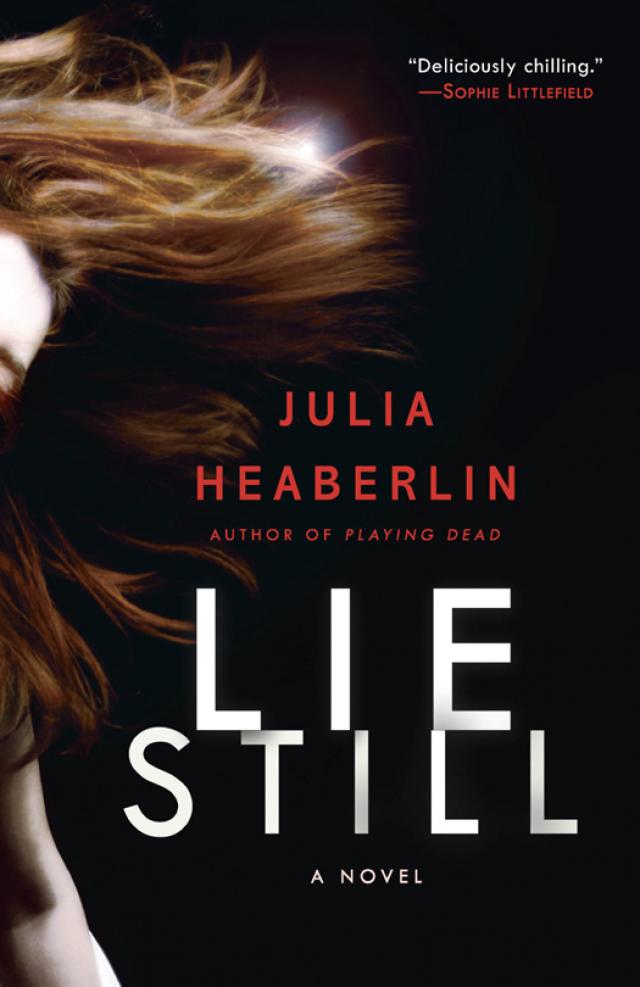
Lie Still, page 24


There wasn’t a single part of me that wanted to venture farther down the hall to survey the sunroom. But I wanted complete assurance more. What if Jesse hadn’t checked, just like the police the other day? I didn’t have good feelings about that room. A few days ago, I had asked Mike to rig a chain lock on this side of the sunroom door, the side that faced into the hall. Mrs. Drury had the right idea. We just feared different things from behind the door. She believed in ghosts. I believed in windows that gave up a perfect view of me, in evil flesh and blood fingers that could lift up those old, rusty latches.
It was a silly request with everything on Mike’s mind and the thousands of dollars he’d just spent on home security. I turned the corner cautiously. Surprise. I was staring at a gleaming, industrial-looking brass door bolt that belonged on the back of a motel room door in case an angry pimp came to call. Latched tight. Not overkill as far as I was concerned. When did Mike do this?
My breathing eased. Red eyes blinked at me from the ceiling, from the doors, from the windowsills. I headed to my bed, carefully rested the .22 on the bedside table, pointed away, plopped down, kicked off my shoes. The baby rolled over inside his cocoon, which was sweet, sweet relief, because he hadn’t budged for the last five hours. The books say these patches of stillness are nothing to worry about, but tell that to any warhorse of miscarriages.
I pulled the cell phone out of my pocket to silence it during my nap.
As if protesting, it buzzed, tickling my palm.
It buzzed again, setting off a chain reaction shiver.
RESTRICTED.
He’d never called on my cell phone.
My hands started to shake. It took three tries to slide the bar over to answer.
“Hello.” I kept my voice as even as possible, and my eyes on the gun. I imagined that dog outside digging his teeth into my stalker’s face, disfiguring him, so everyone would always know on sight that this was a monster.
“Hi, Emily? You sound far away. It’s Renata.”
28
Twenty seconds into my conversation with Renata Tadynski I realized I liked her, a lot.
“Thank you so much for calling me back.” My voice was fused with relief.
“Why wouldn’t I? I worked through that period of my life years ago. So what’s up?”
“Do you remember me?”
“Yes. The pretty Catholic girl who sat beside me that day pretending to read The Cider House Rules. I was kind of mixed on the whole abortion thing at the time. You brought me some water when I felt a little dizzy. You told me everything was going to be OK.”
“How did you know I was Catholic?”
“You mouthed along with me to the Prayer of Saint Michael as I worked the hell out of those rosary beads. My grandmother gave them to me at my first holy communion. She loved that prayer.”
She began to recite in a melodic, practiced voice.
“Saint Michael, the Archangel, defend us in battle; be our safeguard against the wickedness and snares of the Devil.”
My eyes closed. My chin dropped. I fell into the river of her words.
“May God rebuke him, we humbly pray. And do thou, O prince of the heavenly host, by the power of God, thrust into hell Satan and all evil spirits who wander through this world seeking the ruin of souls.
“Amen,” she said.
“Amen,” I echoed. It was this kind of mystical moment that always overruled any of my doubts about believing in God. He showed up. He spoke through strangers. If only the holy rollers didn’t give these experiences such a bad name.
I knew in a flash of certainty that Renata never exacted revenge on Pierce. She’d left that to a higher power.
“You’re a nun.” I just knew.
“You can tell? Not sure if that’s good or bad. Eleven years this January. Saved my sanity, literally. I help kids who have suffered more than I could ever imagine. And they help by letting me.”
She paused. “You didn’t call for my sappy life story.”
No, but it was somewhat comforting to hear. I broke out the little speech I’d rehearsed in my head.
“I’ve received some strange letters over the years. Hateful ones. I always thought they were from Pierce’s mother. But recently I received a package in the mail. The campus police report from the night Pierce Martin … raped me. Nothing else. Just that report. I’d never seen it. I’d never told many people about Pierce. Even my husband. I just wondered if, well, if I was the only one.”
“That’s weird. How scary for you, Emily. I’ve never received any letters. But I didn’t report anything officially on … my rape. My current address and phone number aren’t listed. Someone has to go through the church to get to me unless they call my cell phone. And I only give that out to parents, a few students I worry about, and select friends and relatives.”
“I have to ask, why are you still talking to Brad? A reporter?” It came out a little accusing.
“Because he’s much more than that. He saved my life. I was an hour away from killing myself after the episode with the police. I’d planned it. Bought the rope. Brad called for a quote while I sat on my dorm bed with a pair of scissors in my hand, figuring how many feet I needed. He could hear something in my voice, called my parents, biked over, and stayed with me until they got there nine hours later. He never got his quote.”
Brad saved lives. He biked. Over the phone line, he picked up that a good Catholic girl was calculating the number of inches of rope she needed to hang herself, while I sat inches from her the hour before and didn’t have a clue.
“I was wondering if you knew the full names of any of the other girls,” I said weakly. “I’d like to ask them the same thing. Maybe Brad told you … he thought it would be unethical for him to give me the names.”
“That doesn’t surprise me. He’s got the Jewish guilt thing going. Me, I’d like to help you, which is probably why he pointed you my way. I’ll need to call my parents, though. I’m sure they saved the document with all the names in it. They save everything.”
“Document?”
“That lawsuit drawn up by one of the girls’ fathers, some big-shot attorney. The sorority girl’s dad. Brook … Everheart? I think that’s it. Didn’t you ever see it? I’m pretty sure your name was in it, along with the rest of the girls whose pictures ran in the paper. It was never filed. Just used as blackmail against Windsor officials to keep this whole thing quiet. Mr. Everheart suggested to them that they were looking at a very large judgment. It was overkill—the university was bending over backward to make the situation right. They were horrified that our photos were printed in the school paper. Of course, I only knew all of this after the fact. I spent a couple of months at what my family likes to call a mental health spa. You didn’t know about the document? Didn’t Brook’s father call your parents, too? He must have. I don’t think they could have used your name in the suit otherwise.”
“I’m not sure,” I said slowly. “I spent some time abroad after that.”
“Maybe your parents wanted to take care of it for you. Try to protect you from thinking about it. As if they could. Some nights when I’m staring at the ceiling, it still comes back. He put his pocketknife to my throat. There’s a little scar there. I think if he’d moved the knife up a few inches and cut my face, I would have reported him to the police instead of trying to kill myself. It’s weird. How guilt works.” Her voice quivered. “I don’t know about your parents, but mine were torn to pieces. That was the worst part. I honestly think my father would have killed Pierce if someone else hadn’t beaten him to it.”
A high-pitched, drama-girl scream rang out in Renata Tadynski’s world. She put a hand over the phone and her muffled voiced called out, “Demitri Owens, knock it off!” Then, to me, “My English lit class is filing in, so I’ve got to go. One of my best students just unhooked a girl’s bra. Reached right under her shirt, two feet in front of a nun. It doesn’t work to threaten them with burning in hell anymore. A little devil with horns doesn’t seem that scary compared with some of their real-life daddies. I’ll try to round up those names for you. In the meantime, I’ll get some prayers going with Mary.”
I placed the phone gently on the nightstand, careful not to disturb the gun, and lay flat on the bed, staring up at the ceiling fan, hoping the spinning blades could lull me to sleep. The fan creaked and wobbled as the blades whipped around. I imagined it falling, crashing the plaster ceiling on top of me and the baby. That’s how Mike would find his family, cut up by a killer fan.
Could I possibly have two stalkers? One who left the rape report and one who smoked cigars? Maybe they could meet and duke it out. Take care of each other. In less than a minute, I sat at the kitchen table, powering up my laptop.
Brook Everheart.
I signed on to Facebook and searched for her name. Brook Everheart Marcum in Chicago, Illinois. A good guess. I thought for a second and typed a Facebook message to her:
Hi, Brook. We attended Windsor together thirteen years ago. I’m trying to find some of my fellow alums and sorority sisters.
Then I tacked an exclamation point to the end of every sentence because I figured that’s what a sorority sister would do.
Vague enough. Only the sorority part wasn’t true. I sent the message and made a friend request. Now I’d play the waiting game. I’m not sure what I expected to glean from viewing Brook’s Facebook page if she confirmed our friendship. But something.
I punched in Black Patch Cigar Co., found the main website, and was rewarded with a picture of my pirate feminist. A link to a blog declared it one of the best cigars in North America. A twenty-count box cost upward of a $100, and a bizarre and confusing hexagonal chart said the cigar leaned more toward spice and nut than peat and cocoa. At least that’s what I think it said. This was a whole new way to fall down the rabbit hole.
My cell phone sang and danced on the desk.
I breathed out slowly after reading the screen.
DUNN, LETICIA.
“Hi,” I said.
“This is Leticia Lee Dunn,” she said, as if we hadn’t shared an awkward hug less than twenty-four hours ago. “I am organizing a small memorial service for Caroline Warwick in my home, since that butcher from Dallas isn’t going to give up her body anytime soon. Tonight at seven-thirty. I know it’s late notice, but a lot of us are suffering. I expect you will be there?”
“Sure.” The word was out of my mouth before I could stop it.
“It’s women only.”
When I didn’t reply, she said, “So don’t bring Mike.”
“I got that.”
“Would you like to speak a few words?”
“No, no, I wouldn’t.” I spoke firmly. “I didn’t know her that well. Actually, I’m not sure I can make it, after all.”
“If I can pick you up at the airport when I’m out-of-my-mind bereaved, you can show up and say a few words about Caroline. I’ll put you down for five minutes. No, ten. Don’t be late.”
At 7:29 p.m., I drew the station wagon to a stop at the end of a long line of vehicles parked in a string down the curb of a bland, upscale street called La Mirada. Both sides were crammed with million-dollar brick homes barely distinguishable from one another.
About twenty seconds later, Jesse pulled in behind me and switched off his motor and headlights. I flipped him a thumbs-up. I had briefly poked my head in his car window and met Parker the dog before heading off to Letty’s express memorial.
Parker had licked my hand. Jesse had called me ma’am. Other than the ma’am and the 9 mm lying on the seat beside him, it sort of felt like a protective teenage brother had my back.
I walked quickly, scanning the numbers on the houses, pretty sure my destination was ten houses up with a large, glowing display of some kind in the front yard. The street was void of human life. My low heels clicked on the sidewalk. Not a tree big enough to hide anyone. The only other sound in the failing twilight was the hiss of a sprinkler system spitting on. I counted eight white Lexuses and five black BMWs before deciding it wasn’t that interesting to count them.
Letty’s cushy little neighborhood, made up of nondescript 5,000-square-foot houses and short lawns, wasn’t in Caroline Warwick’s astronomical league but it was more posh than any place I’d ever dreamed of living. The brick landscape grew up out of flat Texas farmland, one more layer of life on top of centuries-old Indian graves and thousand-year-old fossils and million-year-old dinosaur bones.
On time in Texas must mean Get there early. I picked up the pace, regretting my wardrobe choice—a dark blue suit with the waist button undone, a gray blouse that gapped a little between the top buttons if I moved my arms too much, and my mother’s pearls.
I used a Manolo Blahnik toe to scoot a Billabong skateboard left carelessly in the middle of the sidewalk onto a lawn. In Manhattan, it would have disappeared less than a minute after the kid abandoned it. Every kid on this block probably had at least one to spare.
I was right about one thing. The street address was unnecessary. Letty’s house glowed with candles in every window, like a New England Christmas. She’d planted an enormous memorial wreath of red carnations in the middle of her lawn, lit in the dusk by the glare of a portable spotlight, its orange cord snaking across the grass. A white ribbon with CAROLINE splashed in glitter stretched across the front of the wreath. A plastic gold cross, about twice the size of a priest’s, dangled from the top.
I twisted the doorknob, hoping to sneak in, and found myself in the entrance hall, struck dumb by a giant framed color photograph. Not of Letty’s children. Not a family portrait. A blown-up, professional head shot of Letty in better days. Misty hadn’t lied. The old Letty reminded me of a prettier, more feminine Cameron Diaz. Three candles flickered on the table underneath the portrait. The real memorial.
I followed the cacophony of voices to the back of the house, noting that Letty’s interior design didn’t match her flashy wardrobe. Tasteful but dull, and Letty was neither. She had handed someone a blank check and stayed out of the way. It felt light and airy, with creamy walls, flowered and paisley upholstery, and generic fine prints.
I stopped short at the entrance to the family room and kitchen. The atmosphere was electric, almost frenzied. The loud, dissonant sound of an orchestra warming up—only, the violins and bassoons and clarinets were forty women, shoulder to shoulder, chattering chaotically. A killer in their town.
Two sets of French doors led out to a brick patio and a pool filled with floating candles. White, rented folding chairs lined either side of the pool and the grassy area behind it. A small podium with a microphone was set up by the shallow end with a white baby grand piano beside it. The man in the tux on the piano bench appeared rented, too.
None of the guests turned her head to acknowledge me as I veered toward the kitchen. I slipped around to the mosaic-tiled kitchen island, big enough to lay a twin mattress on top and go to sleep, and grabbed a glass and one of the first bottles of wine out of a line of pewter ice buckets. I took a sip of decent pinot, stuffed a boiled shrimp in my mouth, and wondered about the inch-high plastic cups with lids lined up on the kitchen island like tiny party favors.
“Please feel free to take a sample. I’ve just started selling. The company I work for is the Mary Kay of freeze-dried fruits and vegetables. It’s the wave of the future, with terrorists and all.” The woman speaking at my elbow was slightly pudgy, about forty-five, in colorfully striped glasses and a black pantsuit.
She pried open one of the plastic containers to reveal a shriveled collection of dead things. A pea, a banana slice, a bit of carrot. I think I recognized a strawberry. And there was something brown and unrecognizable, like a tiny tick.
“They’ve got a shelf life of ten years. You soak them in water and they jump right back to life.” She picked up a nearby jar of water floating with small objects that looked like something drained out of the garbage disposal. “Would you like a taste?”
“Tammy, I think Letty said she’d give you a few minutes to make your pitch at the end of the service, right? Do you even know this woman’s name?” My rescuer, a schoolteacherish sort, placed her body between Tammy and me, like she was setting a basketball pick, and stuck out her hand. “I’m Letty’s cousin, Lee Ann Womack.”
“You always try to control everything, Lee Ann,” Tammy whined.
“I’m Emily Page, the new chief’s wife.” I thought it might ease things to finally interject. “Nice to meet you both.” This was a new thing for me, identifying myself by my husband’s career, and I had no idea why in the hell I was doing it.
Tammy nodded, irritated, and stalked off. Lee Ann guided me to the center of the family room, where I was instantly mesmerized by the giant wedding portrait of Letty and Harry over the fireplace. Squint a little, and they morphed into Cameron Diaz and Hugh Jackman.
“It’s a shock the first time you see it. You can’t believe it’s her, right? Well, it’s her. Put the bitchy personality you know with that face and body up there, draw on a cheerleader uniform, and you’ll pretty much have a picture of what I had to face every day in high school, not to mention all the torturous Easter dinners. But life’s a wicked little bastard. I got my master’s in library science from Harvard and she got Harry and an addiction to high fructose corn syrup.”
Before I could figure out my response to that, screeching feedback from the microphone outside sliced through the room like a dying cat. I plugged my right ear with a finger, because I held the wineglass in the other hand and there was no immediate place to put it down. Letty was visible through the open door to the patio, decked out in black evening pants and a black sequined top. She was teetering on seven-inch heels gallantly struggling to support her body mass. She grabbed the podium and thumped the microphone with her finger, making things worse, which seemed to be her self-assigned role in life.
“Ladies! Please be seated so we can begin.” The pianist hustled to work on the microphone, and in a few seconds worked it down to a soft, bee-like buzz.
The women streamed expectantly to the patio, a herd of clomping, designer heels. Caroline couldn’t have planned the drama better herself. Two young Mexican women at each of the double French doors handed us programs with a fifteen-year-old glamour shot of Caroline on the front along with her date of birth and death. High-gloss paper. Raised, gold type. Caroline was only fifty-two. She seemed so much older. The matriarch. The Queen.
It was a silly request with everything on Mike’s mind and the thousands of dollars he’d just spent on home security. I turned the corner cautiously. Surprise. I was staring at a gleaming, industrial-looking brass door bolt that belonged on the back of a motel room door in case an angry pimp came to call. Latched tight. Not overkill as far as I was concerned. When did Mike do this?
My breathing eased. Red eyes blinked at me from the ceiling, from the doors, from the windowsills. I headed to my bed, carefully rested the .22 on the bedside table, pointed away, plopped down, kicked off my shoes. The baby rolled over inside his cocoon, which was sweet, sweet relief, because he hadn’t budged for the last five hours. The books say these patches of stillness are nothing to worry about, but tell that to any warhorse of miscarriages.
I pulled the cell phone out of my pocket to silence it during my nap.
As if protesting, it buzzed, tickling my palm.
It buzzed again, setting off a chain reaction shiver.
RESTRICTED.
He’d never called on my cell phone.
My hands started to shake. It took three tries to slide the bar over to answer.
“Hello.” I kept my voice as even as possible, and my eyes on the gun. I imagined that dog outside digging his teeth into my stalker’s face, disfiguring him, so everyone would always know on sight that this was a monster.
“Hi, Emily? You sound far away. It’s Renata.”
28
Twenty seconds into my conversation with Renata Tadynski I realized I liked her, a lot.
“Thank you so much for calling me back.” My voice was fused with relief.
“Why wouldn’t I? I worked through that period of my life years ago. So what’s up?”
“Do you remember me?”
“Yes. The pretty Catholic girl who sat beside me that day pretending to read The Cider House Rules. I was kind of mixed on the whole abortion thing at the time. You brought me some water when I felt a little dizzy. You told me everything was going to be OK.”
“How did you know I was Catholic?”
“You mouthed along with me to the Prayer of Saint Michael as I worked the hell out of those rosary beads. My grandmother gave them to me at my first holy communion. She loved that prayer.”
She began to recite in a melodic, practiced voice.
“Saint Michael, the Archangel, defend us in battle; be our safeguard against the wickedness and snares of the Devil.”
My eyes closed. My chin dropped. I fell into the river of her words.
“May God rebuke him, we humbly pray. And do thou, O prince of the heavenly host, by the power of God, thrust into hell Satan and all evil spirits who wander through this world seeking the ruin of souls.
“Amen,” she said.
“Amen,” I echoed. It was this kind of mystical moment that always overruled any of my doubts about believing in God. He showed up. He spoke through strangers. If only the holy rollers didn’t give these experiences such a bad name.
I knew in a flash of certainty that Renata never exacted revenge on Pierce. She’d left that to a higher power.
“You’re a nun.” I just knew.
“You can tell? Not sure if that’s good or bad. Eleven years this January. Saved my sanity, literally. I help kids who have suffered more than I could ever imagine. And they help by letting me.”
She paused. “You didn’t call for my sappy life story.”
No, but it was somewhat comforting to hear. I broke out the little speech I’d rehearsed in my head.
“I’ve received some strange letters over the years. Hateful ones. I always thought they were from Pierce’s mother. But recently I received a package in the mail. The campus police report from the night Pierce Martin … raped me. Nothing else. Just that report. I’d never seen it. I’d never told many people about Pierce. Even my husband. I just wondered if, well, if I was the only one.”
“That’s weird. How scary for you, Emily. I’ve never received any letters. But I didn’t report anything officially on … my rape. My current address and phone number aren’t listed. Someone has to go through the church to get to me unless they call my cell phone. And I only give that out to parents, a few students I worry about, and select friends and relatives.”
“I have to ask, why are you still talking to Brad? A reporter?” It came out a little accusing.
“Because he’s much more than that. He saved my life. I was an hour away from killing myself after the episode with the police. I’d planned it. Bought the rope. Brad called for a quote while I sat on my dorm bed with a pair of scissors in my hand, figuring how many feet I needed. He could hear something in my voice, called my parents, biked over, and stayed with me until they got there nine hours later. He never got his quote.”
Brad saved lives. He biked. Over the phone line, he picked up that a good Catholic girl was calculating the number of inches of rope she needed to hang herself, while I sat inches from her the hour before and didn’t have a clue.
“I was wondering if you knew the full names of any of the other girls,” I said weakly. “I’d like to ask them the same thing. Maybe Brad told you … he thought it would be unethical for him to give me the names.”
“That doesn’t surprise me. He’s got the Jewish guilt thing going. Me, I’d like to help you, which is probably why he pointed you my way. I’ll need to call my parents, though. I’m sure they saved the document with all the names in it. They save everything.”
“Document?”
“That lawsuit drawn up by one of the girls’ fathers, some big-shot attorney. The sorority girl’s dad. Brook … Everheart? I think that’s it. Didn’t you ever see it? I’m pretty sure your name was in it, along with the rest of the girls whose pictures ran in the paper. It was never filed. Just used as blackmail against Windsor officials to keep this whole thing quiet. Mr. Everheart suggested to them that they were looking at a very large judgment. It was overkill—the university was bending over backward to make the situation right. They were horrified that our photos were printed in the school paper. Of course, I only knew all of this after the fact. I spent a couple of months at what my family likes to call a mental health spa. You didn’t know about the document? Didn’t Brook’s father call your parents, too? He must have. I don’t think they could have used your name in the suit otherwise.”
“I’m not sure,” I said slowly. “I spent some time abroad after that.”
“Maybe your parents wanted to take care of it for you. Try to protect you from thinking about it. As if they could. Some nights when I’m staring at the ceiling, it still comes back. He put his pocketknife to my throat. There’s a little scar there. I think if he’d moved the knife up a few inches and cut my face, I would have reported him to the police instead of trying to kill myself. It’s weird. How guilt works.” Her voice quivered. “I don’t know about your parents, but mine were torn to pieces. That was the worst part. I honestly think my father would have killed Pierce if someone else hadn’t beaten him to it.”
A high-pitched, drama-girl scream rang out in Renata Tadynski’s world. She put a hand over the phone and her muffled voiced called out, “Demitri Owens, knock it off!” Then, to me, “My English lit class is filing in, so I’ve got to go. One of my best students just unhooked a girl’s bra. Reached right under her shirt, two feet in front of a nun. It doesn’t work to threaten them with burning in hell anymore. A little devil with horns doesn’t seem that scary compared with some of their real-life daddies. I’ll try to round up those names for you. In the meantime, I’ll get some prayers going with Mary.”
I placed the phone gently on the nightstand, careful not to disturb the gun, and lay flat on the bed, staring up at the ceiling fan, hoping the spinning blades could lull me to sleep. The fan creaked and wobbled as the blades whipped around. I imagined it falling, crashing the plaster ceiling on top of me and the baby. That’s how Mike would find his family, cut up by a killer fan.
Could I possibly have two stalkers? One who left the rape report and one who smoked cigars? Maybe they could meet and duke it out. Take care of each other. In less than a minute, I sat at the kitchen table, powering up my laptop.
Brook Everheart.
I signed on to Facebook and searched for her name. Brook Everheart Marcum in Chicago, Illinois. A good guess. I thought for a second and typed a Facebook message to her:
Hi, Brook. We attended Windsor together thirteen years ago. I’m trying to find some of my fellow alums and sorority sisters.
Then I tacked an exclamation point to the end of every sentence because I figured that’s what a sorority sister would do.
Vague enough. Only the sorority part wasn’t true. I sent the message and made a friend request. Now I’d play the waiting game. I’m not sure what I expected to glean from viewing Brook’s Facebook page if she confirmed our friendship. But something.
I punched in Black Patch Cigar Co., found the main website, and was rewarded with a picture of my pirate feminist. A link to a blog declared it one of the best cigars in North America. A twenty-count box cost upward of a $100, and a bizarre and confusing hexagonal chart said the cigar leaned more toward spice and nut than peat and cocoa. At least that’s what I think it said. This was a whole new way to fall down the rabbit hole.
My cell phone sang and danced on the desk.
I breathed out slowly after reading the screen.
DUNN, LETICIA.
“Hi,” I said.
“This is Leticia Lee Dunn,” she said, as if we hadn’t shared an awkward hug less than twenty-four hours ago. “I am organizing a small memorial service for Caroline Warwick in my home, since that butcher from Dallas isn’t going to give up her body anytime soon. Tonight at seven-thirty. I know it’s late notice, but a lot of us are suffering. I expect you will be there?”
“Sure.” The word was out of my mouth before I could stop it.
“It’s women only.”
When I didn’t reply, she said, “So don’t bring Mike.”
“I got that.”
“Would you like to speak a few words?”
“No, no, I wouldn’t.” I spoke firmly. “I didn’t know her that well. Actually, I’m not sure I can make it, after all.”
“If I can pick you up at the airport when I’m out-of-my-mind bereaved, you can show up and say a few words about Caroline. I’ll put you down for five minutes. No, ten. Don’t be late.”
At 7:29 p.m., I drew the station wagon to a stop at the end of a long line of vehicles parked in a string down the curb of a bland, upscale street called La Mirada. Both sides were crammed with million-dollar brick homes barely distinguishable from one another.
About twenty seconds later, Jesse pulled in behind me and switched off his motor and headlights. I flipped him a thumbs-up. I had briefly poked my head in his car window and met Parker the dog before heading off to Letty’s express memorial.
Parker had licked my hand. Jesse had called me ma’am. Other than the ma’am and the 9 mm lying on the seat beside him, it sort of felt like a protective teenage brother had my back.
I walked quickly, scanning the numbers on the houses, pretty sure my destination was ten houses up with a large, glowing display of some kind in the front yard. The street was void of human life. My low heels clicked on the sidewalk. Not a tree big enough to hide anyone. The only other sound in the failing twilight was the hiss of a sprinkler system spitting on. I counted eight white Lexuses and five black BMWs before deciding it wasn’t that interesting to count them.
Letty’s cushy little neighborhood, made up of nondescript 5,000-square-foot houses and short lawns, wasn’t in Caroline Warwick’s astronomical league but it was more posh than any place I’d ever dreamed of living. The brick landscape grew up out of flat Texas farmland, one more layer of life on top of centuries-old Indian graves and thousand-year-old fossils and million-year-old dinosaur bones.
On time in Texas must mean Get there early. I picked up the pace, regretting my wardrobe choice—a dark blue suit with the waist button undone, a gray blouse that gapped a little between the top buttons if I moved my arms too much, and my mother’s pearls.
I used a Manolo Blahnik toe to scoot a Billabong skateboard left carelessly in the middle of the sidewalk onto a lawn. In Manhattan, it would have disappeared less than a minute after the kid abandoned it. Every kid on this block probably had at least one to spare.
I was right about one thing. The street address was unnecessary. Letty’s house glowed with candles in every window, like a New England Christmas. She’d planted an enormous memorial wreath of red carnations in the middle of her lawn, lit in the dusk by the glare of a portable spotlight, its orange cord snaking across the grass. A white ribbon with CAROLINE splashed in glitter stretched across the front of the wreath. A plastic gold cross, about twice the size of a priest’s, dangled from the top.
I twisted the doorknob, hoping to sneak in, and found myself in the entrance hall, struck dumb by a giant framed color photograph. Not of Letty’s children. Not a family portrait. A blown-up, professional head shot of Letty in better days. Misty hadn’t lied. The old Letty reminded me of a prettier, more feminine Cameron Diaz. Three candles flickered on the table underneath the portrait. The real memorial.
I followed the cacophony of voices to the back of the house, noting that Letty’s interior design didn’t match her flashy wardrobe. Tasteful but dull, and Letty was neither. She had handed someone a blank check and stayed out of the way. It felt light and airy, with creamy walls, flowered and paisley upholstery, and generic fine prints.
I stopped short at the entrance to the family room and kitchen. The atmosphere was electric, almost frenzied. The loud, dissonant sound of an orchestra warming up—only, the violins and bassoons and clarinets were forty women, shoulder to shoulder, chattering chaotically. A killer in their town.
Two sets of French doors led out to a brick patio and a pool filled with floating candles. White, rented folding chairs lined either side of the pool and the grassy area behind it. A small podium with a microphone was set up by the shallow end with a white baby grand piano beside it. The man in the tux on the piano bench appeared rented, too.
None of the guests turned her head to acknowledge me as I veered toward the kitchen. I slipped around to the mosaic-tiled kitchen island, big enough to lay a twin mattress on top and go to sleep, and grabbed a glass and one of the first bottles of wine out of a line of pewter ice buckets. I took a sip of decent pinot, stuffed a boiled shrimp in my mouth, and wondered about the inch-high plastic cups with lids lined up on the kitchen island like tiny party favors.
“Please feel free to take a sample. I’ve just started selling. The company I work for is the Mary Kay of freeze-dried fruits and vegetables. It’s the wave of the future, with terrorists and all.” The woman speaking at my elbow was slightly pudgy, about forty-five, in colorfully striped glasses and a black pantsuit.
She pried open one of the plastic containers to reveal a shriveled collection of dead things. A pea, a banana slice, a bit of carrot. I think I recognized a strawberry. And there was something brown and unrecognizable, like a tiny tick.
“They’ve got a shelf life of ten years. You soak them in water and they jump right back to life.” She picked up a nearby jar of water floating with small objects that looked like something drained out of the garbage disposal. “Would you like a taste?”
“Tammy, I think Letty said she’d give you a few minutes to make your pitch at the end of the service, right? Do you even know this woman’s name?” My rescuer, a schoolteacherish sort, placed her body between Tammy and me, like she was setting a basketball pick, and stuck out her hand. “I’m Letty’s cousin, Lee Ann Womack.”
“You always try to control everything, Lee Ann,” Tammy whined.
“I’m Emily Page, the new chief’s wife.” I thought it might ease things to finally interject. “Nice to meet you both.” This was a new thing for me, identifying myself by my husband’s career, and I had no idea why in the hell I was doing it.
Tammy nodded, irritated, and stalked off. Lee Ann guided me to the center of the family room, where I was instantly mesmerized by the giant wedding portrait of Letty and Harry over the fireplace. Squint a little, and they morphed into Cameron Diaz and Hugh Jackman.
“It’s a shock the first time you see it. You can’t believe it’s her, right? Well, it’s her. Put the bitchy personality you know with that face and body up there, draw on a cheerleader uniform, and you’ll pretty much have a picture of what I had to face every day in high school, not to mention all the torturous Easter dinners. But life’s a wicked little bastard. I got my master’s in library science from Harvard and she got Harry and an addiction to high fructose corn syrup.”
Before I could figure out my response to that, screeching feedback from the microphone outside sliced through the room like a dying cat. I plugged my right ear with a finger, because I held the wineglass in the other hand and there was no immediate place to put it down. Letty was visible through the open door to the patio, decked out in black evening pants and a black sequined top. She was teetering on seven-inch heels gallantly struggling to support her body mass. She grabbed the podium and thumped the microphone with her finger, making things worse, which seemed to be her self-assigned role in life.
“Ladies! Please be seated so we can begin.” The pianist hustled to work on the microphone, and in a few seconds worked it down to a soft, bee-like buzz.
The women streamed expectantly to the patio, a herd of clomping, designer heels. Caroline couldn’t have planned the drama better herself. Two young Mexican women at each of the double French doors handed us programs with a fifteen-year-old glamour shot of Caroline on the front along with her date of birth and death. High-gloss paper. Raised, gold type. Caroline was only fifty-two. She seemed so much older. The matriarch. The Queen.