The Nine-Spoked Wheel, page 18
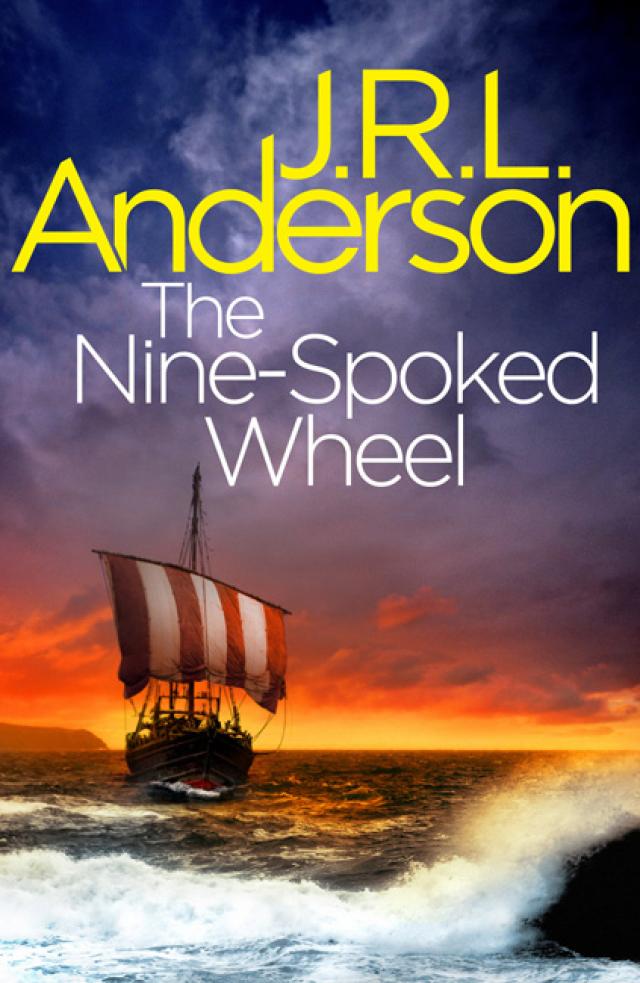


‘I’ve got a boat,’ said Marryat. ‘I’ve just come ashore, but I’m quite game to put to sea again.’
‘What sort of a boat?’
‘A damned good boat. I’ll take you round the world, if necessary. I’ve just come over from Ireland, but it’s a long story and I don’t want to go into it all now. If you want to pursue Arbolent, my boat’s there. We can be under way in half an hour. And I reckon I’m a good deal faster than his weird tub can be.’
‘Do you want me?’ asked Sergeant Grey. ‘I’m not much of a sailor. And what about the car?’
Revers considered. ‘I’m not at all sure what we do,’ he said. ‘My instinct is to go after Dr Arbolent’s boat, but whether we shadow him wherever he’s going, or try to get on board and take him off, I don’t know. I’m sure it’s all highly irregular, anyway, though I suppose Dr Marryat’s offer of a boat comes under the heading of the citizen’s obligation to help the police. If I can flag down a car, I don’t see why I can’t borrow a boat. OK Grey – you go home and explain what’s happened. Ask the Super to get a couple of men to Bristol, anyway. Right, Dr Marryat. If you’re still game, I’ll go with you.’
‘If we’re going to be shipmates,’ Marryat observed, ‘it might be easier to say Tony.’
*
Revers had brought no luggage, so there was nothing to take on board. Marryat reckoned that he had more than enough food and water for the two of them: he had stocked Clio amply before leaving Plymouth, and he had taken nothing from her stores while in hospital ashore. But he thought they’d better get some newspapers, to learn what they could of Dr Arbolent’s latest plans. This turned out more of a problem than he’d thought. It had been a circulation manager’s field day, and the crowds had bought practically every paper in the town. They did manage to get one popular paper, and Revers picked up another, thrown away in the street and left lying in the gutter. They were full of Dr Arbolent and descriptions of his boat, but otherwise not much help. One did print a drawing of his Nine-Spoked Wheel, and a map to illustrate his proposed course, but the scale was so small, and the account of his navigational methods so bewildering, that it was useless for practical purposes. ‘Well, we know from his earlier statements that he’s got to round the Pembrokeshire coast, and if we go in the same general direction we may be able to find him. He’s got about two hours’ start, but we are likely to be a good deal faster than he is, so I don’t doubt that we can catch him up. The problem is going to be to see him, but we can but try. He’s supposed to be reporting by radio, so we may get something from one of the news programmes. Let’s go, anyway.’
Marryat climbed down into the rubber dinghy first and steadied it with his good arm against the quay for Revers. ‘I’ve only got half a left arm,’ he said, ‘so it will be a help if you can row. There’s my boat – the white yacht lying to that buoy.’ Revers had done some dinghy sailing, though mostly on reservoirs and inland waters, so although he had little experience at sea, he was not wholly unfamiliar with small boats. Noting the competent way in which he rowed over to Clio, Marryat felt glad to have him.
On board the yacht, he took Revers below, showed him his berth in the small cabin forward of the saloon, and said ‘You are much too respectable in those clothes. And if you want to keep them respectable, you better put them away. We’re much of a size, so here are some trousers and a couple of pullovers; and I’ve got some spare oilies if you need them. You can’t wear those shoes. I’m not so sure if you can manage mine, but this old pair is pretty roomy, so see what you can do. When you’ve changed, we’ll get the dinghy on board and cast off.’
Revers did manage to get into Marryat’s old yachting shoes, and when he came on deck he both looked and felt more comfortable. ‘We won’t deflate the dinghy,’ Marryat said. ‘We’ll turn her over and lash her down just aft of the mast. She fits well there and then she’s ready if we need her. It’s a godsend to have your two arms!’
*
Lady Penelope ran well across the bay. Freemantle left the great sail fairly free. He needed to experiment with her, and he reckoned that it did not matter much if he let the wind take her out of the eastern arm of the bay, by Dinas Head. It would mean having to make good two or three miles of easting when they turned, but it was worth it for the sake of letting Lady Penelope settle down – she was still horribly untried.
As they left the shelter of the bay to meet the Irish Sea things became much less comfortable. The day was worsening, and the waves were beginning to show white horses. Lady Penelope seemed to ride quite well, but she began to be thrown about a bit. Dr Arbolent had retired to his cabin under the steering platform, and Freemantle took the steering oar himself for a time. He was relieved to find that in spite of the chop she still responded well, but he did not like the way the heavy oar worked in its fastenings. Calling another man to take the helm, he had a close look at them. They would be all right, he thought, as long as the oar stayed fairly close to the hull, but what would happen if Lady Penelope heeled sharply and the big oar swung outwards? The leverage on the fastenings would be immense, and he doubted if they could stand up to it. He put an extra lashing round the oar, and decided to have two men permanently at the helm, one to steer, and one to watch the oar. If it did start to lift dangerously, the steersmen would just have to use their combined strength to check it.
By mid-afternoon they were well clear of the headlands, and Freemantle considered that it was time to turn west. He could make neither head nor tail of the nine-point circle on the deck, and he couldn’t see any conceivable use for it, but presumably Dr Arbolent knew what he was doing. He waited another half hour – still the archaeologist did not appear. Fearing that if they stood on much farther they’d end up somewhere on the Caernarvon peninsula, he went to Dr Arbolent’s cabin to ask for orders. Dr Arbolent was being violently seasick.
Freemantle decided to act on his own and let the archaeologist sort out things later. Taking the steering oar again himself, and keeping one man by him to watch it and be ready to try to hold it down, he called all the rest of the sailing crew to man the sail. As far as he could tell without a compass, they were heading about due north, and he had to turn through ninety degrees to make a new course due west. He was not at all clear how the sail would behave. It was acting almost as a square sail at the moment, and he wanted to haul it round to try to set it almost fore-and-aft. That, at least, was the theory he had worked out: what would happen in practice was far from clear.
There was nothing to do but try. Waiting for what seemed a slightly smoother patch in the rather broken sea, he judged his moment nicely, and brought her head round. She lost way rapidly as she came more nearly on the wind, but yelling to the crew to sheet in hard he got the sail into its new position without stopping her. It was desperately hard work for the crew – Freemantle would have given anything for some winches, which, alas, had not been invented in 2000 BC.
Still, Lady Penelope seemed to settle down on her new course, and with the land still in sight astern Freemantle reckoned that it would carry her well clear of Strumble Head. Without a compass he couldn’t do more than guess at her actual heading: probably, he thought, it was fairly considerably north of west, but they were going more or less in the right direction, and not standing into any particular danger.
At five o’clock Dr Arbolent was scheduled to make a R/T call to The Sunday Examiner. Two of the sailing crew were skilled radio operators, and they got through to the marine wireless station at Portishead without difficulty. Dr Arbolent just managed to get to the radio, when he was again seasick, so Freemantle took over. ‘The doctor’s checking up on navigation,’ he said loyally. ‘We’re having a bit of a blow, but the boat seems to be going fine. I can’t give an exact position because, as you know, we aren’t using instruments, but Strumble Head is in view astern. I reckon we’re well clear of it, going slightly north of west.’
*
This was the news, relayed by the newspaper to the BBC, that Marryat and Revers picked up on the radio news bulletin at six o’clock. They were then about eight miles south-west of Strumble Head, beating into a sea that was growing more and more unpleasant. ‘They don’t seem to have got far,’ Marryat said. ‘We’ve not only caught them up, we’re well ahead of them. Why on earth did they go so far north after leaving Fishguard Bay? If they were still going north of west an hour ago, they’ll be farther out to sea than we are when they come down to clear St David’s Head. Wise, no doubt. I hope Roger Freemantle’s supervising Arbolent’s absurd navigation. Juliet’s on board, and I wish she wasn’t. I think the best thing for us to do is to stand out to sea ourselves until we pick up the light on South Bishop. That’s one of a horrible group of islets and rocks off Ramsey Island, two or three miles south-west of St David’s Head. They have the jolly name of The Bishops and Clerks. We’ll give ourselves plenty of sea-room, and trust that they will, too. When we’ve identified South Bishop Light, we can keep a safe distance, and stand around. With luck, we shall be able to see Arbolent’s boat as she comes down. They didn’t have navigation lights in the second millennium, but I hope Board of Trade regulations override at least some of his absurdities. At their present rate of progress, though, it may be dawn before they get here.’
Marryat was profoundly worried. He had had nothing to do with the marine side of Dr Arbolent’s work, and what he knew of it seemed to him preposterous. It made a marvellous newspaper stunt, no doubt, but to risk lives in a vessel of untried design, off an extremely dangerous coast, was going much too far. (Had he known just how untried Lady Penelope was, he would have been frantic with anxiety.)
Revers took the helm while Marryat lay down for an hour or so: he had had no sleep at all the previous night and he needed what rest he could get. He was not, however, permitted to rest long. He had not been lying down for more than half an hour when the sense of kinship between man and boat that develops in all good seamen told him that Clio was beginning to feel unhappy. He went on deck to find that the wind was backing: it was now about west-south-west, and in gusts was coming nearly from the west. That put them hard on the wind, and the wind was undoubtedly increasing. With Revers to help him, he put a reef in the mainsail and changed Clio’s working jib for a storm jib. He’d put a reef in the mizzen a bit earlier, and he decided to leave that as it was for the present.
Clio was now more comfortable in herself, but far from comfortable to be on board. She was lying hard over, beating into a horribly broken sea. ‘This bloody wind is going to back still more,’ Marryat said. ‘It will be coming from the north before we’re through the night. God help Arbolent’s boat if we get a north-westerly gale.’
*
The same thought was in Freemantle’s mind on board Lady Penelope. Conditions on her were becoming exceedingly unpleasant. All the archaeologists and even some of the sailing crew were seasick. Freemantle badly wanted to serve out hot drinks – he badly wanted one himself – but it proved impossible to get the brazier going. It should not have been dark yet, but the low cloud was blotting out the last of the daylight, and visibility dimmed rapidly. He was not at all sure where he was. Even if Dr Arbolent possessed any real skill in estimating the positions of stars, he showed no sign of trying to use it. Freemantle was a loyal soul, and having agreed to take part in Dr Arbolent’s experiment, he didn’t want to let him down. But instinct told him that things were going badly wrong. He decided that the time had come to break out his compass, and to try to get a radio-fix. But he felt it only fair to Dr Arbolent to ask him first. The doctor, however, was sitting slumped over his table in his quarters, and did not even look up as Freemantle came in. So Freemantle got out the compass and the chart, and told the man on duty at the radio to see if he could get some sort of fix.
Lady Penelope was wallowing sadly. The wind had backed to the west, and headed her. With so little practice in handling her rig they could not get the sail to set properly to give her any drive into the wind. Also they were having trouble with the blocks. They had seemed tough enough, but either the yew wood was not properly seasoned, or the bronze work of the fastenings was not up to the job. One had broken away altogether, so that one end of the spar on which the sail was set was sagging dangerously, and another, partly broken, was jamming one of the sheets.
Freemantle cut away the half-broken block and freed the sheet, but with no block to run through it became viciously hard to control. The sagging spar was much more serious. One of the crew volunteered to climb the mast. The alternative would have been to lower the sail, but Freemantle was scared of the huge open hold amidships: with the sail off her she would wallow still more, and perhaps start rolling tons of water inside her. Feeling miserably responsible he let the volunteer go up. He could not replace the block, but he managed to bend a flag-halliard round the spar itself. Here Dr Arbolent’s conception of primitive seafaring helped a little, for the flag-halliard was of good stout hemp, not the sort of light line in use for such things nowadays. The lift was not where it should have been, and the repair made it harder than ever to reset the sail, but at least the spar no longer sagged so badly, and it looked considerably safer. There was a spontaneous cheer, combining applause and a collective sigh of relief, for the volunteer as he regained the deck. He had done a damned good job.
The immediate emergency dealt with, Freemantle turned his mind to navigation. Their radio was primarily for R/T and not equipped for direction-finding – Dr Arbolent had accepted the sealed compass but he did not want anyone to be able to suggest that he had used radio assistance for his navigation. But, given a chart of radio beacons, a skilled operator can get an idea of his position by assessing the relative strength of the signal from different beacons received on a constant bearing. It may give only a rough idea, but it is a great deal better than nothing. When Freemantle had packed chart and compass, he had put in a radio chart as well, feeling that if they needed one they might as well have the other.
He tried the radio now, and did not like the result though he accepted that it was probably not very accurate. They were well clear of Strumble Head, though still to the north of it, but they were not properly clear of Cardigan Bay, and still to the east of St David’s Head, and the harsh coast surrounding it. But they still had – or he hoped they had – a fair bit of sea-room, and if the wind stayed where it was, and he could persuade Lady Penelope to head south-west, they ought to be all right. He considered trying to get back to Fishguard, but that would mean closing the coast with what was now a strong onshore wind, and he rejected the idea: with a good seaman’s instinct, he felt safer at sea.
But could Lady Penelope be made to head south-west? She was now going about north-north-east, and they just hadn’t managed the technique of turning her into the wind. He decided to try to wear her round: it would be a difficult manoeuvre, and possibly rather dangerous – he was horribly aware of her great open hold if a heavy sea came on board – but she could take her time, and it seemed about the only thing to do.
Armitage, who had been seasick, was feeling slightly better, and he asked Freemantle for a job. Freemantle, who was at the steering oar himself, told him to stand by as second man – his weight would be as good as anyone else’s if the oar started to lift. This enabled the second helmsman to join the rest of the crew at the sail. Juliet was gallantly trying to get the brazier to burn. She abandoned her efforts while they were trying to turn the ship, and joined one of the sailing girls at one of the guy-ropes from the sail. ‘Tell me when to pull, and I’ll pull,’ she said. The girl smiled at her. ‘OK,’ she replied.
Freemantle ran Lady Penelope off a bit, and then began edging her round. All went well, and he’d just about got her to head south on a kind of beam-reach, when the wind suddenly gusted and backed still more. Now they were practically running again, with the wind almost in the north. There was no difficulty in going south, or south-west, but the sail was becoming more than she could carry. It had got to be reefed. They had never had a chance to practice reefing, but Freemantle had studied the system of brailing-ties provided by the designer and he knew, at least in theory, what to do. Calling one of the sail-hands to take the helm, he went forward to the sail.
It was a diabolical job in the darkness. Everything was still unfamiliar, and whenever he pulled or released something he was not at all sure what would happen. But the crew was magnificent. No one lost his head, and gradually they got two folds in the big sail. It was a clumsy job, but it held, and Lady Penelope rode more easily. She was holding a course south-west and Freemantle began to breathe again. They would damned well get this extraordinary ship and her cargo of great stones to Bristol.
After running for about two hours he picked up a light, fine on the port bow. It would be, he reckoned, the light on South Bishop. It was still several miles away, but he was relieved to see it, for it told him where it was, and also warned him to keep well away from it. As they were going now, they ought to be all right.
Suddenly an appalling shudder went through Lady Penelope – the heavier of the two great stones she carried had shifted. It was followed by the other. She listed through about forty-five degrees and the sea began pouring over her port gunwale. The steering oar swung wildly out of control; there was a sharp crack, and the whole fastening that held it to the vessel carried away. Lady Penelope heeled still more, a large area of sail hit the water, and the enormous drag on it brought the huge spar crashing from the mast. With the weight of the sail released, she righted a little, and lay helpless. She had still some buoyancy forward and aft of the hold, and might float for a while longer, but she was clearly doomed. The northerly wind was now taking her straight to the rocky archipelago of The Bishops and Clerks. The one remaining question was whether she would sink before she got there.
It was a minute or two before Freemantle took in what had happened. With the steering oar gone he could do nothing aft, and as the greatest buoyancy was forward, over the decked sleeping accommodation, he yelled to everyone to go to the foredeck. Then he went forward himself. There were no steel axes in the second millennium, and Dr Arbolent had not thought to include even bronze axes in the ship’s stores, so they had nothing much with which to cut away the wreckage of the sail. Freemantle and the sailing crew had pocket knives, but the wreckage didn’t seem worth bothering about – and the huge spar, lying across the ship, might even act as a kind of outrigger for a bit. The important thing was to find out who was still on board. Freemantle mustered the little party. Three men and one of the girls from the sailing crew were missing, and so was Armitage and one of the archaeological students. It was hopeless to attempt to look for them. Dr Arbolent was also missing – but he had been in his cabin, and was probably still there. Freemantle went back to find out. Dr Arbolent was on the floor, with his table lying on top of him. He was dazed, but did not seem greatly hurt. Freemantle got him to his feet and led him forward along the side deck, now steep as a pitched roof. The hold was already more than half-full. She couldn’t last much longer.