The Living Dead, page 1


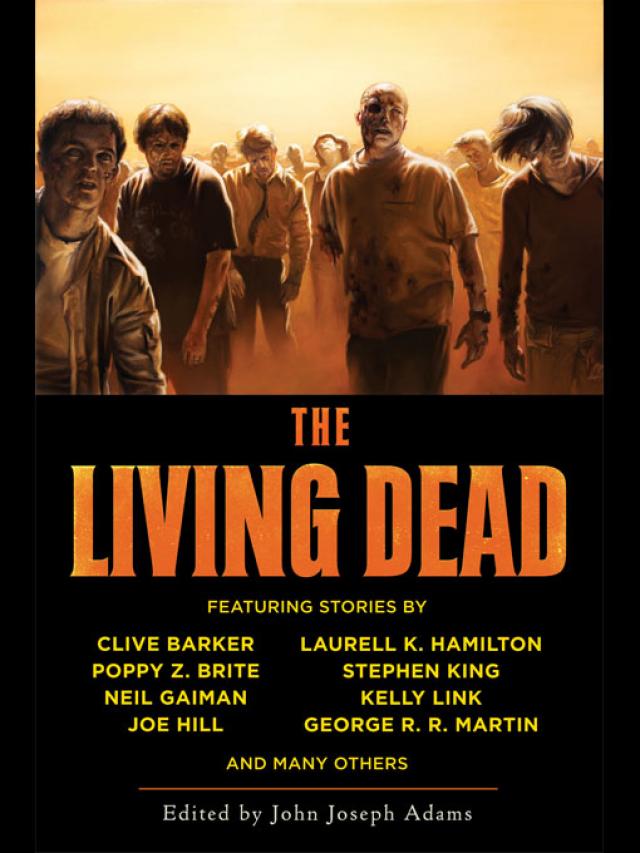
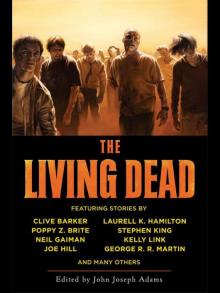
THE LIVING DEAD
edited by John Joseph Adams
The Living Dead © 2008 by John Joseph Adams
This edition of The Living Dead © 2008 by Night Shade Books
Cover art © 2008 by David Palumbo
Cover design by Michael Fusco
Interior layout and design by Ross E. Lockhart
All rights reserved
"Introduction" and author notes © 2008 by John Joseph Adams
The following two pages represent an extension of this copyright page.
Printed in Canada
First Edition
ISBN 10: 1-59780-143-7
ISBN 13: 978-1-59780-143-0
Night Shade Books
Please visit us on the web at
http://www.nightshadebooks.com
Acknowledgment is made for permission to print the following material:
"Some Zombie Contingency Plans" by Kelly Link. © 2005 Kelly Link. Originally published in Magic for Beginners. Reprinted by permission of the author.
"Death and Suffrage" by Dale Bailey. © 2002 Dale Bailey. Originally published in The Magazine of Fantasy & Science Fiction, February 2002. Reprinted by permission of the author.
"Blossom" by David J. Schow. © 1989 David J. Schow. Originally published in Book of the Dead, 1989. Reprinted by permission of the author.
"The Third Dead Body" by Nina Kiriki Hoffman. © 1993 Nina Kiriki Hoffman. Originally published in The Ultimate Zombie, 1993. Reprinted by permission of the author.
"The Dead" by Michael Swanwick. © 1996 Michael Swanwick. Originally published in Starlight 1, 1996. Reprinted by permission of the author.
"The Dead Kid" by Darrell Schweitzer. © 2002 Darrell Schweitzer. Originally published in The Book of More Flesh, 2002. Reprinted by permission of the author.
"Malthusian's Zombie" by Jeffrey Ford. © 2000 Jeffrey Ford. Originally published in SCI FICTION, May 2000. Reprinted by permission of the author.
"Beautiful Stuff" by Susan Palwick. © 2004 Susan Palwick. Originally published in SCI FICTION, August 2004. Reprinted by permission of the author.
"Sex, Death and Starshine" © 1984 Clive Barker. Originally published in Books of Blood, Volume 1 by Little, Brown Book Group Limited.
"Stockholm Syndrome" by David Tallerman. © 2007 David Tallerman. Originally published in Pseudopod, June 2007. Reprinted by permission of the author.
"Bobby Conroy Comes Back from the Dead" by Joe Hill. © 2005 Joe Hill. Originally published in Postscripts #5, December 2005; and also in 20th Century Ghosts, copyright © 2005, 2007 by Joe Hill, published by William Morrow, an imprint of HarperCollins Publishers.
"Those Who Seek Forgiveness" by Laurell K. Hamilton. © 2006 Laurell K. Hamilton. Originally published in Strange Candy, 2006. Reprinted by permission of the author.
"In Beauty, Like the Night" by Norman Partridge. © 1992 Norman Partridge. Originally published in Mr. Fox and Other Feral Tales, 1992. Reprinted by permission of the author.
"Prairie" by Brian Evenson. © 1997 Brian Evenson. Originally published in The Silver Web #14, 1997. Reprinted by permission of the author.
"Everything Is Better with Zombies" by Hannah Wolf Bowen. © 2006 Hannah Wolf Bowen. Originally published in Phantom #0, 2006. Reprinted by permission of the author.
"Home Delivery" by Stephen King. © 1989 Stephen King. Originally published in Book of the Dead, 1989. Reprinted by permission of the author.
"Sparks Fly Upward" by Lisa Morton. © 2005 Lisa Morton. Originally published in Mondo Zombie, 2006. Reprinted by permission of the author.
"Meathouse Man" by George R. R. Martin. © 1976 by Damon Knight. Copyright renewed 2004. © 2004 by George R. R. Martin. Originally published in Orbit 18, 1976. Reprinted by permission of the author.
"Deadman's Road" by Joe R. Lansdale. © 2007 Joe R. Lansdale. Originally published in Weird Tales, February/March 2007. Reprinted by permission of the author.
"The Skull-Faced Boy" by David Barr Kirtley. © 2002 David Barr Kirtley. Originally published in Gothic.net, March 2002. Reprinted by permission of the author.
"The Age of Sorrow" by Nancy Kilpatrick. © 2007 Nancy Kilpatrick. Originally published in Postscripts #10, April 2007. Reprinted by permission of the author.
"Bitter Grounds" by Neil Gaiman. © 2003 Neil Gaiman. Originally published in Mojo: Conjure Stories, 2003. Reprinted by permission of the author.
"She's Taking Her Tits to the Grave" by Catherine Cheek. © 2008 Catherine Cheek. Originally published in Ideomancer, June 2008. Reprinted by permission of the author.
"Dead Like Me" by Adam-Troy Castro. © 2000 Adam-Troy Castro. Originally published in A Desperate, Decaying Darkness, 2000. Reprinted by permission of the author.
"Zora and the Zombie" by Andy Duncan. © 2004 Andy Duncan. Originally published in SCI FICTION, February 2004. Reprinted by permission of the author.
"Calcutta, Lord of Nerves" by Poppy Z. Brite. © 1992 Poppy Z. Brite. Originally published in Still Dead, 1992. Reprinted by permission of the author.
"Followed" by Will McIntosh. © 2007 Will McIntosh. Originally published in Lady Churchill's Rosebud Wristlet #18, Summer 2006. Reprinted by permission of the author.
"The Song the Zombie Sang" by Harlan Ellison® and Robert Silverberg. © 1970 by Harlan Ellison® and Robert Silverberg. Renewed, 1998 by The Kilimanjaro Corporation and Agberg, Ltd. All rights reserved. Harlan Ellison® is a registered trademark of The Kilimanjaro Corporation.
"Passion Play" by Nancy Holder. © 1992 Nancy Holder. Originally published in Still Dead, 1992. Reprinted by permission of the author.
"Almost the Last Story by Almost the Last Man" by Scott Edelman. © 2007 Scott Edelman. Originally published in Postscripts #12, December 2007. Reprinted by permission of the author.
"How the Day Runs Down" by John Langan. © 2008 John Langan. Original to this volume.
Other books edited by John Joseph Adams
Wastelands: Stories of the Apocalypse
Seeds of Change
Introduction
by John Joseph Adams
"You know Macumba? Voodoo. My granddad was a priest in Trinidad. He used to tell us, 'When there's no more room in hell, the dead will walk the earth.'"
—Ken Foree as "Peter" in George A. Romero's Dawn of the Dead
When I first started assembling this anthology, I thought to myself: This is not going to be the sort of book that begins with an origin of the word zombie. Because that's not the point, is it? Zombie fiction is about the unburied dead returning to life and seeking human victims. It's about battling a frightening, implacable foe and imagining what it would be like to survive the end of the world and trying to figure out what to do when the dead won't stay dead.
Regardless of where the word actually comes from, today the word "zombie" generally refers to the sort of shambling reanimated corpses as depicted in George A. Romero's landmark film Night of the Living Dead. In his short fiction collection Zombie Jam, author David J. Schow explains the influence of Romero: "The plain fact is that the aptly-christened 'Romero zombies' have infiltrated the culture to the extent that even people who have never experienced the movies 'know' what zombies are in shortform: They're dead, they walk, they want to eat you, and they usually outnumber you."
Most of the stories in this book are either inspired by Romero's "unholy trilogy"—Night of the Living Dead, Dawn of the Dead, and Day of the Dead—or are a reaction to it. That influence is obvious in much of the fiction contained herein, and authors frequently cite seeing Romero's films as pivotal moments in their youth (and, indeed, their lives).
So why are we so drawn to zombie fiction? What's so appealing about the idea of the living dead?
John Langan, author of "How the Day Runs Down" (pg. 469), says that zombies—the post-Romero zombie that has defined our current concept of the beast—have the virtue of simplicity. "While you can trace aspects of their behavior to a host of monsters that have come before (like vampires, they rise from the dead; like ghouls and werewolves, they eat our flesh; like Frankenstein's monster, they're reanimated corpses; like most monsters, they have a particular weakness that will kill them immediately), they boil all that down to the basics: they're back from the dead, they want to eat us, they can be killed with a shot to the head," he says. "I suspect that part of their effectiveness lies in the way they present us to ourselves, by which I mean, if you think about a monster like the vampire or the werewolf, you can see them as aspects of human behavior magnified and embodied; i.e. the vampire's connection to various kinds of (taboo) eroticism has been explored ad infinitum, while the werewolf's link to animal violence has also been recognized. With the zombie, what you get is us, pretty much as we are, maybe with a little damage, and we consume one another. No eroticism, no animal violence, just a single, overwhelming appetite. That's simultaneously very straightforward and very disturbing."
David Barr Kirtley, author of "The Skull-Faced Boy" (pg. 331), says that there are two reasons we find zombies appealing. "One, I think there's an enormous segment of our brain that's evolved for running away from packs of predators, and zombie stories give us a rare opportunity to take this primal part of our psyches out for a spin," he says. "And, two, zombies are a great metaphor. The great mass of humanity often comes across to us as unreasoningly hostile and driven to consumption, and the image of the zombie captures this perfectly."
The popularity of zombies comes from the fact that the vampire that we all loved got lost, says "The Age of Sorrow" (pg. 343) author Nancy Kilpatrick. "A lot of us miss the old resuscitated corpse, the ugly vampire, the mindless one that can't be reasoned with," she says. "I think zombies were there already and evolved from the Haitian Voodoo zombie to the Romero zombie that evolved further over the course of his film series so that the cause of zombification became different and rather than being bland slaves, they turned into full-blown predators, en masse. Most of us miss the predatory vampire. Zombies I think have ascended in popularity because they not only fill that archetypal void, but they also reflect society's fear of something overtaking us, making us less-than-human, or the victim of that less-than-human. It's especially traumatizing when less-than-human is family, friends and neighbors, but hey, strangers, in numbers, will do it for most of us—I think there's an inherent fear of mindless mobs in all of us. It's the hordes that swarm over you. Add to that our unconscious horror of our rampant consumption in the first world and it's like a hundred-thousand inhuman Pac-Men, eating everything in sight. There's not much in the horror field that terrifies me, but zombies do. Their driven, single-minded quality is both terrifying and awe-inspiring. I think it's what all sane people fear, being confronted by something/someone that has your destruction at heart and which/who can't be stopped."
And now a note about the stories that are in this book and the ones that aren't.
In the process of assembling this anthology, I read more zombie stories than you could possibly imagine, and I found more good ones than could possibly fit in one volume, even a mammoth tome like this one. So, in order to help narrow down my selections, I created a few loose guidelines for myself.
First, I wanted to avoid taking too many stories from any one source.
Second, I wanted to avoid taking too many stories from other zombie anthologies. I discovered a lot of great zombie fiction elsewhere and thought that this book would be more valuable to zombie fans if it were to collect that material. Many hardcore zombie aficionados will have already read John Skipp and Craig Spector's zombie anthologies (Book of the Dead, Still Dead, and Mondo Zombie) or James Lowder's Eden Studios zombie anthologies (The Book of All Flesh, The Book of More Flesh, and The Book of Final Flesh), so rather than reprint a large number of stories from those books, I reprinted a few from those volumes, but focused my efforts elsewhere. (And for those of you who haven't read any of those other zombie anthologies, well, go dig them up.)
Third, I deliberately didn't always choose the "obvious" story from an author. (Assuming, of course, that the stories I included instead were just as good.) For instance, I didn't reprint Joe R. Lansdale's "On the Far Side of the Cadillac Desert with Dead Folks" or David J. Schow's "Jerry's Kids Meet Wormboy" because they each have written other great zombie stories as well, and I figured if you've read one story by either of them, it would have been that one.
Fourth, I didn't want to use anything that felt like an excerpt of a larger work, so, for example, that meant omitting anything from Max Brooks's excellent zombie novel World War Z. (Although the novel is episodic, reading the episodes separately robs them of some of their power, I thought; instead, I'll just urge you to go buy it right now. Well, after you've bought this book.)
And finally, I wanted the anthology to include a wide range of zombie fiction, incorporating all types of zombies, from the Romero-style zombie to the techno-zombie and everything in between. So herein you will find the dead mysteriously returned to life hungering for human flesh, corpses reanimated by necromancers, corpses reanimated by technology and/or science, voodoo zombies, revenants, and other, less easily categorized zombies.
But getting back to the appeal of zombies . . . So what about it? Why do you enjoy zombie fiction? Well, whatever your reason for liking zombie stories, there are enough great zombie stories in the pages that follow to please even the most discerning zombie aficionado. So dive in and consume these stories as if they were the brains of the last human left on Earth. Bon appétit!
Some Zombie Contingency Plans
by Kelly Link
Kelly Link is the author of many wonderful short stories, which have been collected in two volumes—Stranger Things Happen and Magic for Beginners—with a third, Pretty Monsters, due out shortly. Her short fiction has appeared in The Magazine of Fantasy & Science Fiction, Realms of Fantasy, Asimov's Science Fiction, Conjunctions, and in anthologies such as McSweeney's Mammoth Treasury of Thrilling Tales, The Dark, The Faery Reel, and Best American Short Stories. With her husband, Gavin J. Grant, Link runs Small Beer Press and edits the zine Lady Churchill's Rosebud Wristlet. Grant and Link also co-edit (with Ellen Datlow) The Year's Best Fantasy and Horror annual. Her fiction has earned her an NEA Literature Fellowship and won a variety of awards, including the Hugo, Nebula, World Fantasy, Stoker, Tiptree, and Locus awards.
"Some Zombie Contingency Plans" first appeared in Link's collection, Magic for Beginners (which, incidentally, also includes another great zombie story called "The Hortlak"). As this story illustrates, a zombie contingency plan is an important thing to have, so before we progress any further in this anthology, you should have a look at this tale so that you can stop and consider a plan of your own. In fact, you may want to think about that now; although this book is a rather weighty tome it probably wouldn't make a very effective weapon against the living dead.
This is a story about being lost in the woods.
This guy Soap is at a party out in the suburbs. The thing you need to know about Soap is that he keeps a small framed oil painting in the trunk of his car. The painting is about the size of a paperback novel. Wherever Soap goes, this oil painting goes with him. But he leaves the painting in the trunk of his car, because you don't walk around a party carrying a painting. People will think you're weird.
Soap doesn't know anyone here. He's crashed the party, which is what he does now, when he feels lonely. On weekends, he just drives around the suburbs until he finds one of those summer twilight parties that are so big that they spill out onto the yard.
Kids are out on the lawn of a two-story house, lying on the damp grass and drinking beer out of plastic cups. Soap has brought along a six-pack. It's the least he can do. He walks through the house, past four black guys sitting all over a couch. They're watching a football game and there's some music on the stereo. The television is on mute. Over by the TV, a white girl is dancing by herself. When she gets too close to it, the guys on the couch start complaining.
Soap finds the kitchen. There's one of those big professional ovens and a lot of expensive-looking knives stuck to a magnetic strip on the wall. It's funny, Soap thinks, how expensive stuff always looks more dangerous, and also safer, both of these things at the same time. He pokes around in the fridge and finds some pre-sliced cheese and English muffins. He grabs three slices of cheese, the muffins, and puts the beer in the fridge. There's also a couple of steaks, and so he takes one out, heats up the broiler.
A girl wanders into the kitchen. She's black and her hair goes up and up and on top are these sturdy, springy curls like little waves. Toe to top of her architectural haircut, she's as tall as Soap. She has eyes the color of iceberg lettuce. There's a heart-shaped rhinestone under one green eye. The rhinestone winks at Soap like it knows him. She's gorgeous, but Soap knows better than to fool around with girls who aren't out of high school yet, maybe. "What are you doing?" she says.
"Cooking a steak," Soap says. "Want one?"
"No," she says. "I already ate."
She sits up on the counter beside the sink and swings her legs. She's wearing a bikini top, pink shorts, and no shoes. "Who are you?" she says.
"Will," Soap says, although Will isn't his name. Soap isn't his real name, either.
"I'm Carly," she says. "You want a beer?"
"There's beer in the fridge," Will says, and Carly says, "I know there is."
Will opens and closes drawers and cabinet doors until he's found a plate, a fork and a knife, and garlic salt. He takes his steak out of the oven.