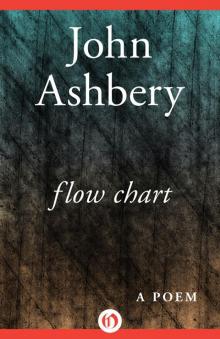
Flow Chart: A Poem, page 23


of outrageous fortune were what finally put us across,
its message. And some days the wind does blow heavier
but it’s with special understanding for our case, those inverted commas
without which we can’t function it seems.
An odor of big bands in the night and one stands up,
free to go. If ever they
came looking for us, this is where we’d be. And who doesn’t want to be right here?
Yes, the more I think about it. We’re going to stay. We’ve elected to.
Pass the celery.
Then the travel came at him. You know what I mean.
A last chance to air the old mass. Going home, after so many promises
to consult the self before the next spin. It erodes. We all had a chance
at the city of faces moving around. Now it’s humdrum detection
from a many-sided tower on which we interact,
perhaps. And this neck of the woods is picked over.
After a rain the slattern light spreads again
creating all endeavors like ditches that only spread
farther into the trees and eyesight as my wrenched narrative drips on, decays
while some sing of the heart and a few, in a home, of lasting walls
or winds, and live in and love the riddle that proposes us.
Also by seacoast moles the wave gives up the ship, slams
it against the slip. We are in more heartfelt times now that
vacancy defines itself, that true aether. Conversely the body lines
“evanish all, like vapours in the air,” burnish the curve or cove
at certain times seen as majestic, or merely at rest, a timeless,
unwired mood from which good can fall. And chiefly does. Though I am aware
of a moaning under the door, a secret treaty, plans to shanghai the settled
order during the night when we are awake and cold, losing the thread.
This said, the bauble that peace sprouted, is
it another camp collectible, or are its strings somehow
drawn too taut in us? Then the next thing explodes,
like a cigar or a vase of flowers. Left in the rubbery wake one still keeps
meaning to be around both before and after, not during necessarily,
since there is no fruitful rest there, only a game of opposites posing
as right for the happy-to-be-blind and the tense modifiers,
grouping. All along that stand of trees you shed a path
adjacent to the end and some grazed there, mooring
large questions of how do you get off and what are we waiting for? Standing
like this? When all of spring is away? Who do you get to change it?
You take a guy who’s never seen one before, a weather like this, and perforce he
will deduce brightnesses out of the pervading dullness we never knew were there;
it becomes a construction. So that the later glare of tidings seems almost “natural,”
and the agreement that hands closed on, a bargain, in that time and place.
Suddenly they all stopped talking about it. Yet I
can’t get it out of my head. I just saw it here somewhere
late last evening. As a result, nobody thinks I’m normal, but I don’t
care. Every answer may have been salted and put away just so as to spoil,
like a dissertation of some kind. A great deal of thinking went into it and out the other side.
But I did want to get back to the personal barbs. Why was I wailing for them?
Fact: people leave their doors open and don’t even flush the toilet.
Fact: loving one another in these parts is more like gunboat diplomacy than it is
like a soap opera, and I, who don’t care, always get caught in the middle.
I belong there anyway. I’m going to someplace from someplace, and think in these terms.
I’m like a corset string that gets laced up but never tied. I’ve tried to be kind and helpful,
I know I have, but this is about something else. It’s about me. And so I am never
off the hook; I look at others and reflect their embarrassed, sheepish grin: all right,
can I go home now? But I know deep in my heart of hearts I never will, will never want to,
that is, because I’ve too much respect for the junk we call living
that keeps passing by. Still, I might be tempted
to love or something if the right person came along, or the time were right;
I know I would. But I can’t be tempted, so far. I’m too pure, like the nature
of temptation itself, and meantime the fans stand back and wonder what to admonish
the players with, and I sit here empty-handed, my breast teeming
with unexplained desires and acrostics. I’ll go on like this. Take my glasses off.
And he says to me, I’ll vote for you. Our roads are poor. And he laughed and said it.
Others were paying for this call which is why in the first place
no string of dignity remained, no mention of how they would reopen
the clogged career of someone just starting out in life who finds himself injured
and cannot explain why. There is blood everywhere—no wound,
just the sign of bleeding. If one had thought not to count
and tabulate every moment and expose it to the litmus of living in some way
I can’t understand, then it would be all right for those bald men at the beach and some could
redeem the morning pledge and saunter off distractedly into the football fields
of dusk, and leave others alone, and welcome death as a diversion and they in turn could write
this down. Lakes and raccoons and unspotted moons would be the result.
As it is, everyone now finds himself inferior: repeat, everyone.
There is unrest; the shadow of the ball carries over.
I am left to repeat standards that have no particular relevance for me. I write
on the sides of buildings and on the backs of vehicles, and still
no nail divides the splinter from its neighbor, no fish swims close to another.
I have seen it all, and I write, and I have seen nothing.
Draw up a map right now—all of the notches are there.
If we cared like this it would be all right, wouldn’t it, so why
doesn’t somebody do something? In addition to which God doesn’t want us to be stupid
or overreact, else why these chains? We don’t have much call for those. We can
slip into the forest with it, and be bait. I know I’d be taking off nothing
if I let you believe otherwise, but it’s all I can do. The season is even rude
to finish us off, but there is something we have to do, weather permitting,
across the street before the king is murdered.
Anyway, it was the commandant’s word against mine.
The incubus awoke from a long, refreshing sleep.
A lot of people think they have only to imagine a siren for it to exist,
that the truth in fairy tales is somehow going to say them. I tend to agree
with dumb people who intervene, and are lost; actors of a different weakness
who explain the traceries of fallen leaves as models for our burgeoning etiquette,
a system that doesn’t let us off the hook as long as we are truth and know it,
the great swing of things. And of course it may yet turn up.
I couldn’t believe he said it. But that’s the way we lived. It existed.
I’ve been at this stand for years and I think I see how the wool
is pulled over our eyes gradually, so that each of us thinks of ourselves as falling asleep
before it happens, then wakes to a pang of guilt: was it that other me again?
Why did I take my mind off the roast, as it turned
hypnotically on its spit, and now it’s charred beyond recognition?
The multiplication of everything ran on years back, she said,
until two scraps had been assembled. Then it was up to the death-rattle.
There was a great conflict at that time.
There are canisters of cartridges from that era which do little to dispel
the legend of our rabid ancestors. Hey,
they’re yours as well as mine, buster.
Yet once the funeral herbs were strewn there was peace of a sort. The evergreen
canopy became an anagram of itself, telling us much
about how gold was hidden in the old places, and spirits that came forth, irritated,
from their resting place and pulled the magic latch-string, and the door flew open
and there were the wolf and Red Riding Hood in bed together, except that the wolf
was really Grandma. Whew! What a relief! They don’t write them that way anymore,
because the past is overlay. What a city this is! In what rich though tepid layers you can
almost detect the outline of your head and then
you know it’s time to read on. When crisis comes, with embraceable side-effects,
let’s put a roof on the thing before it sidles, world-bound,
toward an unconvincing other world. I’m more someone else, taking dictation
from on high, in a purgatory of words, but I still think I shall be the same person when I get up
to leave, and then repeat the formulas that have come to us so many times
in the past (“It’s softer”), so faithfully that we extend them
like a sill, and they have an end, though a potentially hazardous one,
though that’s about all we can do about it. Every film is an abidance. We are merely agents, so
that if something wants to improve on us, that’s fine, but we are always the last
to find out about it, and live up to that image of ourselves as it gets
projected on trees and vine-coated walls and vapors in the night sky: a distant
noise of celebration, forever off-limits. By evening the traffic has begun
again in earnest, color-coded. It’s open: the bridge, that way.
About the Author
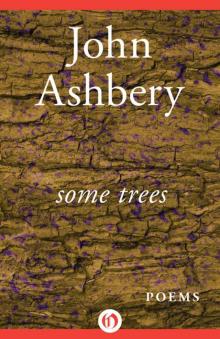
John Ashbery was born in 1927 in Rochester, New York, and grew up on a farm near Lake Ontario. He studied English at Harvard and at Columbia, and along with his friends Frank O’Hara and Kenneth Koch, he became a leading voice in what came to be called the New York School of poets. Ashbery’s poetry collection Some Trees was selected by W. H. Auden as the winner of the Yale Series of Younger Poets prize in 1955—the first of over twenty-five critically admired works Ashbery has published in a career spanning more than six decades. His book Self-Portrait in a Convex Mirror (1975) received the Pulitzer Prize for Poetry, the National Book Critics Circle Award, and the National Book Award, and since then Ashbery has been the recipient of a MacArthur Fellowship, a National Humanities Medal, the Ruth Lilly Poetry Prize, and a Gold Medal for Poetry from the American Academy of Arts and Letters, among other honors.
For years, Ashbery taught creative writing at Brooklyn College and Bard College in New York, working with students and codirecting MFA programs while continuing to write and publish award-winning collections of poetry—all marked by his signature philosophical wit, ardent honesty, and polyphonic explorations of modern language. His most recent book of poems is Quick Question, published in 2012. He lives in New York.
All rights reserved, including without limitation the right to reproduce this ebook or any portion thereof in any form or by any means, whether electronic or mechanical, now known or hereinafter invented, without the express written permission of the publisher.
Selections from this poem have appeared in American Poetry Review, o-blek, The Paris Review, and Scripsi.
Copyright © 1991 by John Ashbery
Cover design by Mimi Bark
978-1-4804-5939-7
This edition published in 2014 by Open Road Integrated Media, Inc.
345 Hudson Street
New York, NY 10014
www.openroadmedia.com
EBOOKS BY JOHN ASHBERY
FROM OPEN ROAD MEDIA
Available wherever ebooks are sold
Open Road Integrated Media is a digital publisher and multimedia content company. Open Road creates connections between authors and their audiences by marketing its ebooks through a new proprietary online platform, which uses premium video content and social media.
Videos, Archival Documents, and New Releases
Sign up for the Open Road Media newsletter and get news delivered straight to your inbox.
Sign up now at
www.openroadmedia.com/newsletters
FIND OUT MORE AT
WWW.OPENROADMEDIA.COM
FOLLOW US:
@openroadmedia and
Facebook.com/OpenRoadMedia
John Ashbery, Flow Chart: A Poem