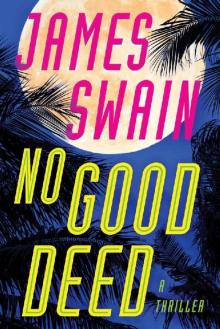
No Good Deed, page 9
part #2 of Lancaster & Daniels Series


Only she’d let him go. That wasn’t like her, and she supposed it was the nagging desire to rekindle their relationship, and start dating again. It was weird. She liked athletic-looking men, and Jon wasn’t that. Nor was he handsome or debonair. His wardrobe left a lot to be desired, and the blond stubble that covered his chin would never pass as a beard. So what was the attraction? She wasn’t entirely sure, just that it was real, and that she wanted to see him again.
She entered the station’s convenience store to buy a water and spied three teenage boys hovering around the register. They wore heavy gold chains and looked like trouble. She placed her purchase on the counter, tossed her money down, then pulled back her blazer to show them the sidearm strapped to her side.
“Get out of here,” she said.
“You can’t order us around. We didn’t do nothing,” the tallest one said.
She showed him her badge. “I’m with the FBI, and I can do whatever the hell I want, which includes searching you. If I find any drugs or weapons, I’ll arrest you. Now get your sorry asses out of this store, and don’t come back.”
The teens took off. Through the store window she watched them race down the sidewalk as if their pants were on fire. It lifted her spirits, and the manager gave her an appreciative smile along with her change.
She drove north on the interstate. A few miles before her exit, she got a call from her boss. His name was Joseph Hacker, J. T. to his subordinates, and he was the acting director of the FBI’s Criminal Investigative Division. They had worked together for over a decade, and J. T. was responsible for her rapid rise within the department.
“Good morning, J. T.,” she said.
“Hello, Beth. Are you on a speakerphone?”
“Yes. I’m in my car, driving back to the hotel.”
“Are you alone?”
The question caught her by surprise. “I am,” she replied.
“Good. This conversation goes no further.”
“Understood.”
“Have you had a chance to question Jon Lancaster?”
“We just finished up. Jon did most of the talking. He knows a lot.”
“Do you think he’s involved with the gang behind these abductions?”
“Absolutely not. Jon is here on behalf of Team Adam, and discovered that his brother Logan was involved in Elsie Tanner’s murder and her granddaughter’s abduction. That’s the story Jon gave to the police, and I have to believe that it’s true.”
“Will Jon help us?”
“That’s up in the air. Jon wants to join my team. In return, he’ll help us track down the gang’s ringleader, Dexter Hudson.”
“What did you tell him?”
“I didn’t give him an answer.”
“But you’re considering it.”
“I don’t have much choice. Our investigation has hit a brick wall. If Jon can find Dexter, then I need to bring him on board.”
“I’m not comfortable with this, Beth. Call me on Skype when you reach your hotel. We need to talk this over further.”
J. T.’s voice had turned cold. That wasn’t like him, and she sensed that she’d said the wrong thing. She agreed and ended the connection. Her exit was up ahead, and she flipped her indicator on. The bureau had forty-five directors who dealt with everything from domestic terrorism to cyber security, and they’d all been walking on eggshells since Deputy Director McCabe had been fired and stripped of his pension. It was a hard time to be in the FBI, and she assumed that J. T. didn’t want his career to go down in flames because one of his agents had done something stupid.
The Residence Inn by Marriott on State Road 54 was tucked behind a complex of commercial development and invisible from the street. She used a plastic key to take the elevator to the basement where the conference rooms were located, and walked down a hallway to an unmarked door, which she rapped softly upon.
The door swung in, and she entered. Her team had seven members including herself, and the others sat around a conference table, poring over reports. Photos of the victims were thumbtacked to a cork bulletin board, while a whiteboard contained the details of each abduction. To help them keep their geography straight, a map of Florida was taped to a wall, with gold stars applied to each city where a woman had vanished.
The room also had a flat-screen TV, and it contained a live feed of surveillance cameras from Tampa’s highways and roads. The images were sharp, the faces of drivers and their passengers being compared to the victims on a software program. So far, there had been no hits, but there was always the chance.
She murmured hello, and got several muted greetings in return. She didn’t need to ask them how things were going; the worry on their faces said it all.
She entered a breakout room, and shut the door. Taking her laptop from her purse, she put it on the table, and sat down in front of it. The FBI had switched to using Microsoft Surface Pros, which were the size of a tablet but more powerful than most PCs.
She got on to Skype and found J. T. in her contacts. Moments later, his face filled the screen. He was pushing fifty but looked older, his face lined with worry. His unhappiness was more evident than it had been during their phone conversation.
“I’m not comfortable with this situation,” he said, forgoing the usual hello. “Jon Lancaster is the brother to a suspect in this investigation. He’s also your boyfriend. How the hell do we put these things into a report?”
“He can find Dexter Hudson. I have to use him,” she said defensively.
“Please answer my question.”
“My relationship with Jon has no bearing on the case. I wasn’t planning to include it in my report.”
“But what if your investigation breaks bad?”
She shook her head, not understanding. J. T. gave her a slow burn. He didn’t like to explain himself, and she found the ensuing silence unbearable.
“We’re going to find these guys,” she said. “They’re hiding out in the Tampa Bay area, and we’re going to sniff them out. It’s just a matter of time.”
“But what if one of their victims is dead?” he said. “You know how the families react when a loved one dies. They blame us, and we end up in court.”
One of the sad truths about performing rescues was that the victim’s family was often not prepared to deal with tragedy. If a victim died in captivity, there was nothing the FBI could do about it. But that didn’t stop the grieving family from filing a wrongful death lawsuit, which would lead to the bureau having to turn over the investigation’s reports, and the agents who’d handled the case being deposed. Daniels had been on the receiving end of these lawsuits before, and they were never fun.
“That wouldn’t be good,” she admitted.
“Actually, it would be a shit storm,” he corrected her. “If it came out that you and Lancaster were romantically involved, and that his brother was a suspect, we’d all go down hard. I could lose my job, and so could you.”
“What do you think the odds are of that happening?”
“You mean of a lawsuit?”
“Yes.”
“If there were only one victim, I’d say the odds were slim. But because there are so many victims, the odds are much higher. We already have our lawyers gearing up for it, just to be safe.”
Her mouth had gone dry. Their work was hard enough without throwing a bunch of lawyers into the mix. She took the water bottle from her purse and had a drink.
“There’s another problem with Lancaster,” he said.
The words caught her by surprise. She didn’t date men with problems, and she wondered what J. T. had unearthed in Jon’s past.
“What’s that?” she asked.
“I called the Broward County Sheriff’s Office this morning, and had an off-the-record conversation with Jon’s former boss, Sheriff Dempsey. I asked Dempsey if he believed Jon might be involved with these abductions.”
“What did he say?”
“Dempsey didn’t think Jon was capable of doing such a thing.”
“Then what’s the problem?”
“Jon worked for the sheriff’s department for fifteen years. I asked Dempsey if there were any blemishes on Jon’s résumé.”
“Were there?”
“That’s the interesting part. After Jon became a detective, he was accused of breaking the rules during several investigations. These accusations came from attorneys whose clients Jon had busted. The accusations were formally reviewed by the sheriff’s department, and Jon was cleared of any impropriety.”
Lawyers were paid to get their clients off, and she wanted to ask J. T. why he was bringing this up. She bit her tongue and waited for him to continue.
“Sheriff Dempsey confided that he believed that Jon had broken the rules during these investigations, but had cleaned up his transgressions,” he said. “The sheriff said, and I quote, ‘Jon is a master at covering his tracks.’”
Jon often talked about his cases as a police officer, and he was rightfully proud of his record while on the force. Not once had he mentioned tampering with or destroying evidence, which was what J. T. was inferring that Jon had done as a detective.
“Did Sheriff Dempsey offer any proof?” she asked.
“No, he didn’t. But he seemed convinced of it.”
“I don’t think we should judge Jon based upon what his ex-boss thinks he may have done. Jon has been fighting the good fight a long time, and the world is a better place because of it.”
“Are you in love with him?”
It was a fair question, one that she’d asked herself when they’d dated. Jon wasn’t her type, yet she’d found herself drawn to him.
“I don’t think love is the right word,” she said.
“Then what?”
“I admire him.”
The answer caught J. T. off guard, and he gingerly touched his stomach. From his desk drawer he removed a box of antacids, popped two tablets into his mouth, vigorously chewed, and then washed them down with a glass of water.
“So what do you want me to do?” she said.
“The way I see it, you’re stuck between a rock and a hard place,” he said. “Your investigation is stalled, and more women are disappearing. The only person who can help you is also capable of ruining your career. That’s a no-win situation.”
“I know it is,” she said.
“I’d like to offer my opinion, but I don’t know enough about Lancaster to do that,” he said. “The decision rests squarely on your shoulders. It’s your call.”
The FBI usually stood behind its agents, but there were always exceptions, and she supposed this was what happened when people were made to work in a climate of fear. “I need to think about this. I’ll call you later,” she said.
“I’ll be here,” he said.
She hit a command on her keyboard, and the screen went dark.
CHAPTER 15
Leaving the Jayhawk, Lancaster drove to the county medical examiner’s office on North Forty-Sixth Street. It was a depressing place, the soulless brick building sitting on earth so brown that it looked scorched.
He spent a half hour waiting in line to claim his brother’s body, and another half hour arranging for Logan to be transported home to Fort Lauderdale after the medical examiner performed an autopsy. The process was draining, and he went outside to the parking lot and sat in his car for a while.
He’d discovered the music of Jimmy Buffett after getting out of the navy, and had been a fan ever since. He listened to the steel drum happiness of Buffett’s classic song “Volcano” on his car’s CD player, and gradually started to feel better.
He was having a hard time accepting that Logan was dead. It wasn’t easy having your brother in prison for twenty-five years, and he’d convinced himself that someday, when he and Logan were old men, they’d reunite, and become friends again. Maybe it was a fantasy, but it had made the situation a lot easier to accept.
His cell phone vibrated on the passenger seat. He flipped it over and saw a strange number with an 813 area code. He was in no mood to talk and let it go into voice mail.
A minute later the same person called again.
Then they called again.
Pissed off, he answered it.
“Jon, is that you?” a female voice asked.
“Who is this?”
“Lauren Gamble with the Tampa Bay Times.”
“Yeah, it’s me.”
“Are you okay? You don’t sound like yourself.”
He asked himself why Gamble was calling. Had she heard about Logan’s murder, and figured out they were brothers? He hadn’t seen any reporters milling around the Jayhawk last night, and told himself to stop being paranoid and talk to her.
“My sinuses are bothering me,” he said. “What’s up?”
“I’m in Gainesville working on a story about yesterday’s kidnapping,” Gamble said. “There are some eerie similarities with the victim’s background and Elsie Tanner’s.”
“Like what?”
“The victim’s name is Audrey Sipos, and she’s a thirty-year-old nurse practitioner who lives in a remote area several miles outside of town. My GPS couldn’t locate the address, so I had to ask directions.”
“Just like Elsie’s place.”
“Correct. Sipos left work yesterday and went to the mall to do some shopping. Her kidnapper abducted her about a half hour after she returned home. The timeline is similar to Elsie visiting the Citrus Park Mall.”
“This is very helpful. Good job.”
“There’s more. Sipos works at Shands Hospital, which is part of the University of Florida. Every person I spoke with at the hospital told me how compassionate Sipos is, and how she always went out of her way to help patients and their families.”
“Another Good Samaritan.”
“That’s right. Sipos studied nursing at UF, and was a member of the Alpha Chi Omega sorority. I visited the sorority this morning, and discovered that there’s an award named after her.”
“What did she do?”
“She saved a sorority sister who was being raped by a guy who picked her up in a bar. This happened when Sipos was a sophomore.”
The last three kidnapping victims had made it their mission to help people, and he wondered if that were the case with the previous victims as well.
“Did you share this information with the Gainesville police?” he asked.
“Not yet. I wanted to call you first.”
“I appreciate that. But you should tell the police what you’ve learned. It might help their investigation.”
“I’ll call them after we hang up. Do you have a minute? I’d like to talk to you about your work with Team Adam. It will help me with my story.”
The conversation had taken a bad turn. He didn’t want Gamble’s story to be about him, and why he’d chosen to join Team Adam after retiring from the police force. That wasn’t anybody’s business, and he planned to keep it that way.
A black woman clutching a baby to her chest came out of the medical examiner’s building and walked past his car. She’d been behind him in line, and had scowled when he’d offered his spot to her. She was racked with sobs, her face awash in tears.
“Let me call you right back,” he said.
He ended the call and got out. The woman was trying to get her keys out of her purse while not losing her baby. He offered to help, and this time she accepted. He fished out her keys and manually opened the car, then opened the back door so she could secure her child into a baby seat in the back. The child was fussy, and it took a while.
“Would you like a water? I’ve got one in my car,” he said.
“No, but thank you,” she said.
“My name’s Jon.”
“Shawnda.”
He dug a wad of Kleenex out of his pocket and gave it to her. She dabbed at her eyes and tried to pull herself together. “Came here to claim my sister’s things, only her stuff’s down at the police station,” she said. “Got to go down there and go through this nonsense all over again. Why didn’t they put a sign up saying that?”
For Shawnda’s sister’s body to be here meant she hadn’t died of natural causes. The poor woman was barely holding on, and he wished there was more he could do.
“I’m sorry for your loss,” he said.
“Why are you here?” she asked.
“To claim my brother.”
“World isn’t a safe place anymore.”
“No, it’s not.”
She thanked him for his help, and drove away. He returned to his car and got directions to his hotel. Back on Interstate 275, he got a call from Gamble and let it go to voice mail. A minute later, she called again. Then, she called again. She was like a dog that refused to let go of a bone.
“Sorry about that,” he answered, “but I needed to help a lady in distress.”
“You enjoy doing that, don’t you?” Gamble said.
“I guess. Look, I would really prefer if you didn’t focus on me when you write your story. There are a lot more important people in this investigation.”
“The managing editor at my paper feels otherwise. I told him how you volunteered to work this case, and he thought that was fascinating.”
“I’m actually a pretty dull guy,” he said.
“You could have fooled me,” she said. “So here’s what I want to ask you. I did a search on the internet, and found a photo on the front page of the Times-Picayune that was taken after Hurricane Katrina hit New Orleans. It shows you standing on an airport tarmac with a bunch of kids who got separated from their parents. There’s another man in the photo named Andy Vita, who’s identified as being a member of Team Adam. Were you doing a job for them?”
“No. I didn’t even know what Team Adam was back then.”
“Was Andy Vita the reason you joined?”
“Andy was part of the reason. He had amazing resources. With one phone call, he could move mountains. That stuck with me.”
“So he was your inspiration. What exactly did he do?”