Lion & Lamb, page 1


The characters and events in this book are fictitious. Any similarity to real persons, living or dead, is coincidental and not intended by the author.
Copyright © 2023 by James Patterson
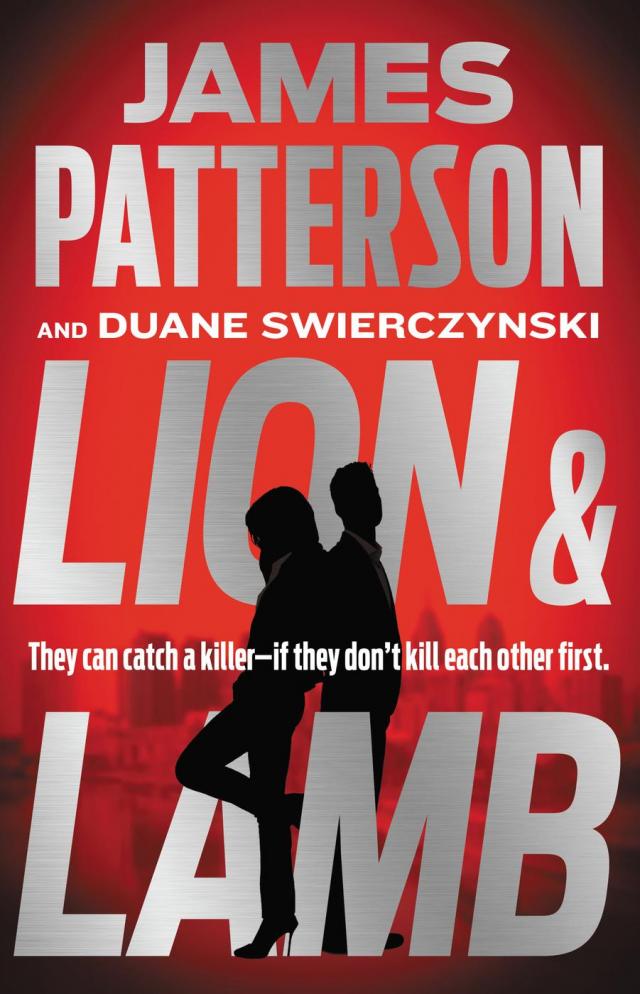
Cover images: couple © Ridofranz/Getty Images, Philadelphia © Harold Stiver/EyeEm/Getty Images, steel © Shutterstock
Cover copyright © 2023 by Hachette Book Group, Inc.
Hachette Book Group supports the right to free expression and the value of copyright. The purpose of copyright is to encourage writers and artists to produce the creative works that enrich our culture.
The scanning, uploading, and distribution of this book without permission is a theft of the author’s intellectual property. If you would like permission to use material from the book (other than for review purposes), please contact permissions@hbgusa.com. Thank you for your support of the author’s rights.
Little, Brown and Company
Hachette Book Group
1290 Avenue of the Americas, New York, NY 10104
littlebrown.com
facebook.com/LittleBrownandCompany
twitter.com/LittleBrown
First ebook edition: August 2023
Little, Brown and Company is a division of Hachette Book Group, Inc. The Little, Brown name and logo are trademarks of Hachette Book Group, Inc.
The publisher is not responsible for websites (or their content) that are not owned by the publisher.
The Hachette Speakers Bureau provides a wide range of authors for speaking events. To find out more, go to hachettespeakersbureau.com or email hachettespeakers@hbgusa.com.
Little, Brown and Company books may be purchased in bulk for business, educational, or promotional use. For information, please contact your local bookseller or the Hachette Book Group Special Markets Department at special.markets@hbgusa.com.
ISBN 9780316404990
E3-20230710-NF-DA-ORI
Contents
Cover
Title Page
Copyright
Dedication
Prologue: Sunday, January 23 One
Two
Three
Four
Five
Six
Seven
Monday, January 24 Chapter 1
Chapter 2
Chapter 3
Chapter 4
Chapter 5
Chapter 6
Chapter 7
Chapter 8
Chapter 9
Chapter 10
Chapter 11
Chapter 12
Chapter 13
Chapter 14
Tuesday, January 25 Chapter 15
Chapter 16
Chapter 17
Chapter 18
Chapter 19
Chapter 20
Chapter 21
Chapter 22
Chapter 23
Chapter 24
Chapter 25
Chapter 26
Chapter 27
Chapter 28
Chapter 29
Chapter 30
Chapter 31
Chapter 32
Chapter 33
Wednesday, January 26 Chapter 34
Chapter 35
Chapter 36
Chapter 37
Chapter 38
Chapter 39
Chapter 40
Chapter 41
Chapter 42
Chapter 43
Chapter 44
Chapter 45
Chapter 46
Chapter 47
Chapter 48
Chapter 49
Chapter 50
Chapter 51
Chapter 52
Chapter 53
Chapter 54
Thursday, January 27 Chapter 55
Chapter 56
Chapter 57
Chapter 58
Chapter 59
Chapter 60
Chapter 61
Chapter 62
Chapter 63
Chapter 64
Chapter 65
Chapter 66
Chapter 67
Chapter 68
Chapter 69
Chapter 70
Chapter 71
Friday, January 28 Chapter 72
Chapter 73
Chapter 74
Chapter 75
Chapter 76
Chapter 77
Chapter 78
Chapter 79
Chapter 80
Chapter 81
Chapter 82
Saturday, January 29 Chapter 83
Chapter 84
Chapter 85
Sunday, January 30 Chapter 86
Chapter 87
Chapter 88
Chapter 89
Chapter 90
Chapter 91
Chapter 92
Chapter 93
Chapter 94
Chapter 95
Chapter 96
Monday, January 31 Chapter 97
Chapter 98
Chapter 99
Chapter 100
Chapter 101
Chapter 102
Chapter 103
Chapter 104
Chapter 105
Chapter 106
Tuesday, February 1 Chapter 107
Chapter 108
Chapter 109
Chapter 110
Chapter 111
Chapter 112
Chapter 113
Chapter 114
Chapter 115
Chapter 116
Chapter 117
Chapter 118
Chapter 119
Chapter 120
Chapter 121
Chapter 122
Chapter 123
Chapter 124
Chapter 125
Chapter 126
Super Bowl Sunday, February 6 Chapter 127
Chapter 128
Acknowledgments
Discover More
About the Authors
Ad Card
For Parker and Evie
— D.S.
Explore book giveaways, sneak peeks, deals, and more.
Tap here to learn more.
Prologue
Sunday, January 23
One
12:20 a.m.
THE NIGHT Philadelphia lost its mind, police officer Deborah Parks was patrolling the Ninth with her rookie, Rob Sheplavy.
He was a nice enough kid, maybe a little overeager. They’d been together since just after New Year’s Day, when the red-and-gold holiday decorations were quickly replaced by Eagles-green banners to celebrate the team clawing its way to the NFC playoffs.
Now it was just after midnight on a freezing Sunday in late January, when Philly was at its darkest and coldest. The Birds were facing off against the Giants, and aside from a few rowdy drunks with their faces painted green, the residents of the city had apparently decided to take a collective breather before tonight’s kickoff.
As they went around the Museum of Art toward Eakins Oval, Sheplavy’s face lit up. “Check out that sweet Maserati.”
Parks followed his sight line to the sports car, which had been detailed with a laser-blue holographic wrap. The thing literally glowed in the street, where it appeared to have paused at a stoplight at the far end of the traffic circle. Only problem: The traffic circle had no light. But still, the Maserati had come to a dead stop, nose slightly out of its lane.
“What is up with this guy?” Parks said. “Look, we’re going to pull up a little closer and I’ll check it out. You stay here.”
“Wait—can’t I come with you?”
“I need you to hang back. And don’t touch the radio!”
Parks hated being rough with the new kid. But he had a tendency to go rogue, and she knew something was off about this even before she climbed out of the car.
As Parks moved closer, she could see someone slumped behind the wheel of the glowing vehicle. Was the driver passed out drunk?
No. The body language was all wrong—his head was tilted at an unnatural angle, his shoulders were completely still, and there was no sign of breathing.
Parks glanced back to make sure the rookie was where he should be. “Stay in the car, Sheplavy!”
If the rookie heard, he didn’t respond.
Steeling herself, Parks moved to the driver’s side, hand near her service weapon just in case this guy turned out to be (a) alive and (b) drunk and pissed. But she knew that would be the best-case scenario.
Parks called out to him, trying to wake him up. The driver didn’t stir. She reached in and touched the side of his neck with two fingers. The man’s skin was ice cold, and there was no pulse.
Parks had forgotten to put on gloves, and when she lifted her fingers away from the driver’s neck, she was surprised to find them tacky. She looked down at her hands and realized that the city’s new LED streetlights had made the body look as if it were covered in shadows.
But it was blood. So much blood…
Two
Audio transcript of police officer Deborah Parks’s body-cam footage
OFFICER DEBORAH PARKS: What are you doing with that radio in your hand?
OFFICER ROB SHEPLAVY: I called in the plate number. Figured I’d save us some time.
PARKS: Damn it, Shep, what’d I tell you about shutting up and staying off the radio?
SHEPLAVY: Why are you freaking out? We’re supposed to call this in, right?
PARKS: I told you to wait, and that’s all you needed to know. Now get out of the car and get the crime scene tape out of the trunk.
SHEPLAVY: What happened ove r there? Is that guy all right?
PARKS: No, he’s pretty much the opposite of all right. Which is why I need you to go in the trunk and dig out some flares and crime scene tape.
SHEPLAVY: (Grumbles) Jesus…
PARKS: You got a problem, rookie?
SHEPLAVY: Whatever’s in that car, I can handle it. I’m not a toddler.
PARKS: Look, I’m sorry for snapping. But you just put out the license plate of a potential murder victim’s car over the radio. You know who listens to the police band? TV reporters. Not to mention people bored or twisted enough to come check out a crime scene.
SHEPLAVY: I’m sorry, I didn’t—
PARKS: Everybody’s excited about the first dead body until they actually see it.
SHEPLAVY: Oh, Christ. Look, I said I’m sorry…
PARKS: It’s fine. Just remember rule number one: Do not touch anything. You got me?
SHEPLAVY: I know. I promise, Parks, I’m good.
(The officers approach the Maserati. The vic is partially obscured by the wheel and the door of the Maserati. Sheplavy crouches down for a better look.)
SHEPLAVY: You’ve gotta be kidding me.
PARKS: What is it?
SHEPLAVY: It couldn’t be…I mean, tonight of all nights?
PARKS: Sheplavy, what? Hey, you okay? Take a deep breath. We need to secure the scene. I’m thinking this is a carjacking gone wrong, that’s all.
SHEPLAVY: I can’t believe…
PARKS: Look, we’re going to see this kind of thing from time to time. Are you…Sheplavy, are you crying?
SHEPLAVY: I can’t believe it’s actually him.
PARKS: Can’t believe it’s who?
SHEPLAVY: Look at his face!
Three
AS THE rookie was sobbing, a tall man in a dirty gray hoodie cut across Eakins Oval.
When he spied the two cops, he stopped in his tracks. He pulled his phone from his pocket and snapped a photo. Then he inched closer, a stunned expression on his face.
“Hey, back off!” Parks shouted. “Crime scene!”
Too late. The hoodie guy snapped another photo and ran away, thumbing something into his phone as he went.
“Hey! Stop!”
A photo of the vic was going to be online in a matter of seconds. Shit! But what was she supposed to do, chase after him and—what? Confiscate his phone? While leaving a rookie alone at his first murder scene?
It turned out that Parks had been right to worry; when the two images of the blood-covered man in the Maserati hit social media, it was over. The news traveled worldwide at breakneck speed. People enlarged the grainy photos until the victim’s face was pixelated but identifiable. The reaction everywhere: utter astonishment.
Some claimed the photos were photoshopped or deep-faked. But most who saw the images believed they were real. The powder-blue Maserati alone was confirmation of the victim’s identity.
Online there was collective grief and an instantaneous outpouring of tributes. There were also macabre jokes, as always. And even though it was well after midnight, locals began to gather at the scene, arriving from Center City and Spring Garden and Fairmount and West Philly. As the crowds got bigger, more images from the crime scene spread online. Some people took awkward selfies in an attempt to place themselves in this historic moment. Some simply stared in shock. Some wept inconsolably, held by their friends.
Fortunately Parks and Sheplavy had been joined by half a dozen other officers from the Ninth, and they’d established a wide perimeter around the car, so between that and the wall of bodies, the victim’s face was largely blocked from view.
Unless you were in a helicopter.
Parks had been right about local TV news always keeping an ear on police radio. An overnight staffer chained to the assignment desk at the local NBC affiliate heard the word Maserati and had a cop friend run the license plate on a whim—maybe some local CEO or sports figure had been involved in an embarrassing traffic accident.
But when the Maserati’s owner’s name popped up, the staffer knocked over his Diet Coke in his scramble to get to the assignment editor.
That station’s news chopper was kept at Penn’s Landing, which was thirty minutes from any location in the city. The art museum was so close, however, that the chopper was circling overhead within five minutes. A minute after it arrived, the station was interrupting the local broadcast to go live with footage from the air.
Until they had official word from the Philly police brass—that meant a captain or higher—the station couldn’t confirm exactly who was in the powder-blue Maserati.
But the word was already out, and distraught fans on the street knew the truth.
Philadelphia would never be the same.
Four
1:02 a.m.
HOMICIDE DETECTIVE Mickey Bernstein, forty-three, was the son of a Philly PD homicide legend, Arnold “Arnie” Bernstein.
Dad was famous for working the city’s most violent cases and resolving them with lightning speed, usually thanks to his hunches and gut feelings. He nailed gangsters (the guys who blew up Leo “Chicken Man” Caranchi) and serial killers (coed slayer Herman “the Guru” Bludhorn). Every administration since the early 1960s loved Arnie—he got results. Nobody questioned him. Ever.
Arnie’s only son operated in much the same way—except Mickey had a degree from UPenn under his belt and extensive forensic training to back up his hunches, so he got even more respect than his famous father.
What was not to love? He was a street-smart cop with an Ivy League degree who knew how to talk to TV and print journalists. Philadelphia magazine had run a fawning profile on him a few years back, and the cover still hung in his parents’ retirement home in Margate, Florida.
If you were doing a true-crime doc about something that happened in Philly and you didn’t check in with Mickey Bernstein, you were just not doing your job.
So when Mickey climbed out of his glossy black Audi A3, murmurs rippled through the crowd, and TV reporters started fighting their way to him. Mickey pushed past them and made a beeline for the crime scene.
The detective was easily identifiable—six foot three with the kind of handsome, chiseled face that you see on coins. The looks, people assumed, came from his mother, a statuesque Atlantic City showgirl back in the day. (Arnie was many things, but attractive wasn’t one of them.) In a city starved for celebrities, Mickey Bernstein would probably have been a star even if he weren’t police royalty.
Parks saw the detective approaching and hurried over to meet him. The sooner she could put this scene in Bernstein’s hands, the better.
“Well, this isn’t how I imagined spending my Sunday morning,” Bernstein said with a sly smile. “Are you the one who caught this?”
“Yeah, me and Sheplavy. He’s my partner.”
Bernstein assessed him in about two seconds. “Rookie?”
“Uh-huh.”
“You made the ID?”
“My partner recognized him right away.”
Bernstein raised an eyebrow. “And you didn’t?”
“Not really a sports fan.”
“Heresy, Officer Parks!” Bernstein exclaimed with fake outrage, clutching his chest. “How can you call yourself a Philadelphian?”
Ordinarily this kind of comment out of a detective’s mouth would have rubbed Parks the wrong way. And throughout the brief conversation, most of his attention was on the scene. But something about Bernstein’s delivery—that boyish smile and deadpan sarcasm—made it okay.
The detective crouched down by the corpse as if he were about to have a little chat with him. So what happened here, buddy? Looks like somebody punched your ticket real good. “Something’s missing, Parks.”
“What’s that, Detective?”
“Anyone else come near this crime scene after you arrived?” Only now did Mickey Bernstein give Parks his full attention. He studied her face for tells. His eyes were ice blue and didn’t miss a thing.
Parks felt guilty even though she’d done everything by the book. Damn, this guy was good. “No, Detective,” she assured him. “We kept everyone away.”
“How about the rookie?”
“No, he’s fine.”
Bernstein went back to examining the scene, a sour look on his face.
“What’s missing, Detective?” said Parks. “If you don’t mind me asking.”