The Saxon Might, page 11
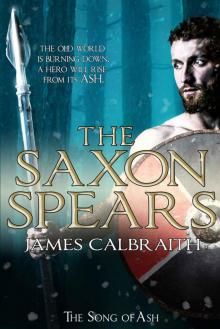
part #3 of The Song of Ash Series


“Thank you.”
I slurp the infusion in silence.
“What are you going to do now?” she asks.
“Do?” I shrug. “Nothing.”
“You can’t just sit here and look at the rain.”
“Why not?”
“Your soul will die if you do.”
“Don’t I deserve to mourn her?”
“This is not mourning. Where are your tears? Where is the wailing? Why aren’t you at her grave, tearing your hair out?”
“You know we’re not allowed to go to the graves yet.”
“Fine, forget about the grave. But this — this must end. How long have you been stuck in this attic? You mourn to cleanse yourself of death. What you do is wallow in it. I’ve seen this happen. Women who have lost their husbands and children, they would sit just like you, in the darkness. They might as well have been dead themselves.”
I look up from the mug. “I know you’ve lost your loved ones, too,” I say. “And I appreciate your pain. But maybe I’m just not as strong as you.”
“This isn’t about me. And I know how strong you really are. The people need you. Beormund is out of his depth. There’s too much politics. You need to go talk to Fastidius, tell him to let us go from here before the Britons start fighting each other.”
“I don’t need his permission,” I snarl. “The Iutes are a free people, we can come and go as we please.”
She smiles.
“What’s with the smile?”
“At last, you’ve shown some emotion.”
“It’s only anger.”
She lays her hand on my chest. “Anger is good. It burns out the sorrow. I was angry a lot after I lost my village. Angry at the Britons, the Fate, the gods. Use it well.”
“Use it for what?”
“To help yourself. To help your people. They are waiting for you.”
She leans back. “And go talk to Fastidius. He is your brother. He was there with you from the beginning.”
A sound like a raging of waves crashing against the cliffs disturbs my melancholy. As I emerge from my hermitage into the street, I realise I am not the only one who’s chosen anger over sorrow.
A vast crowd of Iutes surrounds the curia, overflowing out into the gardens and the surrounding streets. It seems everyone who can still stand is here, men, women, even younglings who can barely hold a weapon. Beormund, standing on a broken pillar base, struggles to contain them. They are crying vengeance. I don’t know on whom or for what at first. Then somebody spots me and shouts:
“There he is! She was his woman — let Ash lead us to battle if Beormund is not willing!”
I raise my hands. “Halt! What do you mean? What battle?”
“They killed our Princess!” the men and women howl. “They killed Rhedwyn — and they must pay!”
I let them wail. I am reminded that all of them, except the younglings born in the new villages, have lived for a generation together in a tight community on the Isle of Tanet. They saw Rhedwyn grow up, walk amongst them. She was the last living scion of the three Drihtens, a beam of hope in her green dress among the muck, perhaps even destined to be a chieftain herself one day.
I recognise the pain hidden in their wailing. They cry not for the Princess, but for themselves, for their own suffering, their own dead. They demand to avenge Rhedwyn, but what they really want to avenge is their own sorrow and loss; and, somehow, not just the dead fallen in the war with Wortimer, but everyone they’ve ever lost since setting out in their wobbly ceols across the whale-road. There are many here who still remember the crossing and its terror; who remember the filth and squalor of Tanet, the disease and hunger that took so many; the fighting with the Picts and the Frankish pirates raiding the island; the first war with the Britons and those who fell at the Crei. I hear all those dead called forth now, as witnesses to the woe.
“Haven’t you had enough of fighting?” cries Beormund. “We’ve barely finished burying the dead, how many more graves do you want to dig?”
“If they have killed the Princess, they will come for us next,” shouts a tall man with a deep scar across his face. The scar is fresh; must be from the battle at the Wall. “We have to strike first, while they’re still reeling!”
“Reeling? The soldiers are not reeling, they’re more ready to fight than you or I!”
“I’m ready!” The tall man shakes his axe. “Are you a coward now, Beormund?”
“Yes, Eadric,” Beormund throws his healthy hand up in exasperation, “I’m a coward. That’s why I lost a hand at the Gate. Out of cowardice. Ash, tell them what a terrible idea you think this is.”
I want to tell him he’s right. I want to tell the Iutes to disperse and wait for how the situation develops further. But their howls are like a wind that fans the burning in my heart. It speaks louder to me than Beormund’s logic. For them, Rhedwyn is just an idea — but for me, her death is real. I will never hold her again, I will never hear her sing again. We will never figure out how to live together through our pain. Only my pain remains. Only my pain counts. The world without her might as well burn for all I care.
“Gather your weapons,” I say. “And torches. Come back here at dusk.”
“What?” Beormund turns, stricken with horror. “Have you gone mad?”
“That’s right, Beormund. I’m mad with grief. I will lead these men to glory or death, if that is their wish, or I will go alone if need be.”
The Iutes raise a cry of triumph and vengeance that shakes the city to its very foundations.
“I’ve come to warn you,” I say. “Tonight, I’m putting the city to the torch.”
He sits with his back to me, at his desk by the window, surrounded by piles of documents. He’s reading one of them, a long, handwritten scroll.
“I’d much rather you didn’t, brother,” he says.
“I will spare the Cathedral. Tell anyone you care about to come here.”
“I care about every single one of my flock,” he replies. “The Cathedral won’t fit all of them.”
“Then open the gates and let them out.”
“If I do that, you and your Iutes will all die.”
I step up to him, grab his shoulder and force him to face me. “What do you mean by that?”
He throws the scroll in his hand at me. “This is Wortimer’s last will,” he says. “As dictated to me on his death bed. I’m about to read it out in public. And before you try anything, it’s not the only copy.”
The will reads like a sad joke. Wortimer, aware of the lack of a successor, set up a task to determine who will rule Londin and Britannia Maxima in his place. A contest as gruesome as only Wortimer could have invented. The prize — the jewel-studded diadem, and the throne; the playthings — the Iutes.
“I want to be buried in the grounds of the monastery of Martinus on the Isle of Tanet, my head facing Rome and Jerusalem where our Lord Christ suffered…” the will reads. “For this, the Isle must be cleansed from the vile heathens, who took it by deception and hold to it by force. Whosoever kills the most Iutes, will be granted not only the rule of Londin, but no doubt a seat in Heaven.”
I crumple the scroll and throw it back on Fastidius’s desk. “Are you going to honour this absurdity?”
“It doesn’t matter what I think. The Comites stand at the gates with their armies, poised to strike. I spoke with them — they’ve agreed to terms between themselves. It makes more sense than having them fight each other. The Walls are shut not to keep you out — but to keep them from adding your people to the headcount.”
“Then we were right,” I say. “First you’ve killed Rhedwyn, now you’ve come to kill us.”
“Have you started believing your own lies, brother? If anyone killed her, it was you, insisting on your foolish scheme. I told you this would end in tears!”
“Don’t you dare —!” I grab his throat and raise a fist.
He looks at me calmly.
“If it makes you feel better,” he says.
“Fuck you.” I push him back on the chair. “Open those gates, I don’t care. We will take them all on, or die trying. Your desert God’s Heaven may be a place for the meek, but Wodan’s Mead Hall only has seats for the brave.”
I storm out. On the threshold, I turn around one last time.
“I was going to let your Cathedral stand, but now I’m not so sure anymore.”
We are a snake of fire, a salamander, weaving through the streets of the Poor Town. The heat from the torches is like that of a blacksmith’s furnace; it ignites the straw on the roofs of the huts, and soon the entire district is standing in flames. The Britons flee before us in terror, aware that their betrayal will not go unpunished.
I march in front, alone, with a torch in my left hand and Eadgith’s sword in my right. Eadgith is not with us — she stayed at the curia with Beormund and a handful of others who couldn’t, or wouldn’t, answer the summons; children and infirm among them. She didn’t try to stop me, just stared at me with disapproval. It does not matter. I am the flame, I am the hammer. Donar is in me, and Hel follows after me. I have drunk the henbane of grief and madness.
I don’t know where I’m going.
I turn from one narrow, smoke-filled street into another, until I march out onto Cardo Street. Six hundred feet away, a jagged shadow marks the ruined walls of the Governor’s Palace. This is where Rhedwyn died. This is where we will have our vengeance. All we need to do is reach it.
There is another angry crowd standing between us and the palace, a dark, heaving mass filling the entire length and breadth of the avenue. These aren’t soldiers — they’re citizens of Londin, average Britons, poor and tired, mostly unarmed and, like us, incensed into a rage-addled mob by their own grievances. They have no leaders, no strategy, no plan. They, too, howl for vengeance. They demand justice for the death of their Dux at the hand of a pagan woman. They want retribution for the long months of poverty and humiliation they have suffered under Wortimer, for which they blame not him but us, the newcomers. They are our mirror image, only vastly multiplied.
I feel no fear. We are the Iutes. Every one of us is born a warrior. They are just some pampered city folk. We will cut through them as if they were reeds on a river bank. I raise my sword.
The low mowing of battle trumpets sends a tremor through the air. The sound comes from the south, where the Bridge Gate guards the ancient river crossing. A line of braziers lights up along the Wall, disappearing into the night. More trumpets play in the distance, to the north and the east of us. A faint echo reaches from the west.
Fastidius has opened the gates. The armies of the Comites are pouring in through the breaches to stop us. But I will not have my prize taken from me, not when it’s so close. The palace is a bow shot away. We will reach it, and we will raze it to the ground, and then I will drink mead in Wodan’s Hall with Rhedwyn, Beadda, Horsa, and everyone else at my side.
I lead the charge. The roar of two hundred throats carries me forward. The Britons hold firm for a moment, but then they falter and fall back. Their hearts do not burn as hot as ours, they did not love Wortimer as much as we loved our Princess. Clusters of them decide to stand and fight, here and there, brave or foolish, or both; but the rest of the crowd flees from our blows and slashes, from our howls, from our pain. Their fear fans our flames. We are death. We push into the streets on the other side of the avenue, and some of the Iutes disperse to burn and rob the houses along the alleyways leading towards the Forum, but most push with me straight towards the Governor’s Palace.
The guards at the entrance flee as we approach. The main gate is barred, but the younglings among us climb the outer wall and open it from inside. We pour into the inner courtyard, setting fire to everything that can burn — straw patches on the roof, hay for the horses, wooden crates, carts, bales of cloth waiting to be weighed. I tell the Iutes where to find the best fuel: libraries, kitchens, heating storerooms, and then release them into the palace. I see their torches in the windows, followed by flame. I hear cries of terror and gurgles of death: not everyone has heeded my warning to abandon the palace tonight; I wonder, briefly, if these are courtiers and guards, loyal to the last, or some poor servants and slaves, not even aware of what is happening or why.
I stride inside and reach the throne room. Here is the seat that Wortimer took from his father. Here is the long table at which I gave council for so many years, the strange curiosity, the half-Iute courtier. Here is the seat where Rhedwyn once sat, in a splendid gown and a sheer veil, when Riotham came to visit. To all of this I put the torch, until it becomes nothing but a bonfire of painful memories.
I want to get to the garden, but the corridors are too hot to get through already. I go back outside. The ruined hallways of the palace’s disused wings were filled with waste and debris; all of this is now one giant burning beacon. The flames in the east wing reach the clouds, turning the courtyard into the mouth of a great furnace. The west wing yet stands, but it will soon succumb to the heat. I think of all the riches that go up in those flames; the books and scrolls in the palace library, the gold and silver melted into pools in the treasury, the lead oozing from the brickwork and plumbing. I feel like Rome itself is burning down and falling apart around me.
Most of the Iutes have already left the compound, unable to stand the heat — and are now fighting in the streets. One of the Comites armies has reached us at last. In the chaos, I can’t tell whose soldiers they are. If they thought we’d be an easy prey, they were sorely mistaken. The Iutes fight as if they have drunk the henbane beer. They shrug off wounds and stand fast until they have no limbs or all blood flows from them. They tear weapons from the hands of the dead and wounded and use them against the enemy. A horse rides past me in panic, its rider thrown off by the mob and clubbed to death.
But we are too few; trapped in the maze of streets, we’re split into small groups, each slowly succumbing to the onslaught. I hear the battle trumpets again, nearer this time, marking the arrival of another army to finish us off. I pick up a shield — it’s marked with the white horse of the Cants — draw the sword and throw myself into the brawl. A fountain of blood spurts in my face from the first enemy I stab.
The world is shrouded in a purple mist, from which enemies emerge only to end up at the stabbing end of my sword. Sometimes an axe comes at me, and bounces off from the shield, then a spear thrust that I swerve to dodge. A club blow hits my shoulder, shattering the nerves, but I do not flinch. I spin and cut the enemy across the stomach until his guts fall out. My sword arm rises and drops in a monotone motion, like a thresher’s flail, each drop ending in somebody’s scream. I feel no pain; the spearheads reach me as if they were pinpricks, swords cut like letter openers.
But I have not drunk the henbane, after all. My limbs weaken. My blood flows freely. A powerful mace blow brings me to my knees. I get up and slash, then fall again. An axe crashes through what little is left of the shield. I throw the shards away, grab the sword in two hands and whack a Briton on the head, splitting his skull in two. The sword hilt slips from my hand. I pick it up just in time to parry another blow, but barely.
The enemies around me disappear into the purple mist. All I see in the haze is the laughing face of the bearded, one-eyed man. He beckons me to follow; I see the great Mead Hall, ablaze with warm light, echoing with laughter and song. Among the laughing voices I think I can hear Fulco and Horsa; I hear Beadda singing praises of the women of his village, and many other familiar, long-gone voices of the fallen warriors. They’re all here, waiting for me to join them…
A sword cuts through the mist and the vision disappears. Arms reach out to me and help me up: they belong to Eadgith and Beormund. Behind them stands the faint figure of Fastidius, almost translucent in a white robe with a purple trim, looking nervously around him. A troop of soldiers, both Iutes and Britons, surrounds us in a tight circle of steel, their white tunics marked with the crosses and swords of Saint Paul’s.
Supporting me on their shoulders, Eadgith and Beormund press through the brawl. Fastidius leads the soldiers ahead of us, out into the open space of the main avenue. A two-horse cart stands here, the beasts’ ears anxiously perked up.
“Get him up there,” says Fastidius. I notice he’s holding a short sword, its edge bloodied. They shove me onto the cart. Eadgith climbs up after me and sits beside me, holding my hand. Beormund gives a sign to the driver.
“We’ll meet at Beaddingatun,” says Beormund, “if all goes well.”
“May Christ guide you, Chieftain,” says Fastidius.
“And may Wodan protect you, Bishop,” adds Beormund.
The first cold drop of rain falls on my face.
CHAPTER VII
THE LAY OF PAULINUS
Heaven, I’m surprised to discover, looks just like the bedroom in Ariminum that I shared with Fastidius when we were children, all the way down to the musty old bed with sheepskins and woollen covers, the bookcase full of war manuals, and the desk upon which Fastidius took his religious studies.
The angel in this Heaven has taken the form of Eadgith. She puts a cold cloth on my forehead. I moan. She rolls her eyes.
“You’re not that badly hurt,” she says. “I don’t know how you’ve managed it, but most of your wounds are just bumps and scratches.”
“I… I thought I died a dozen times.”
“You’ve got a spear stab on your thigh that would’ve killed you if it had gone in an inch to the left,” she says, putting her hand gently on the wound. “But Paulinus took care of that already.”
“Paulinus…!”
“I’m still here.”
The old priest staggers into the room. He’s changed; he no longer reeks of ale, and his eyes are clear.
“I did not think I would ever see you two together in this house,” he says. “God and his mysterious ways, eh?”
I sit up. The world wobbles. Eadgith lifts me to my feet and helps me to a chair. My right hand feels sore from gripping the sword. My long-suffering left shoulder is burning again, but I’ve grown so used to it hurting over the years I barely notice.
I slurp the infusion in silence.
“What are you going to do now?” she asks.
“Do?” I shrug. “Nothing.”
“You can’t just sit here and look at the rain.”
“Why not?”
“Your soul will die if you do.”
“Don’t I deserve to mourn her?”
“This is not mourning. Where are your tears? Where is the wailing? Why aren’t you at her grave, tearing your hair out?”
“You know we’re not allowed to go to the graves yet.”
“Fine, forget about the grave. But this — this must end. How long have you been stuck in this attic? You mourn to cleanse yourself of death. What you do is wallow in it. I’ve seen this happen. Women who have lost their husbands and children, they would sit just like you, in the darkness. They might as well have been dead themselves.”
I look up from the mug. “I know you’ve lost your loved ones, too,” I say. “And I appreciate your pain. But maybe I’m just not as strong as you.”
“This isn’t about me. And I know how strong you really are. The people need you. Beormund is out of his depth. There’s too much politics. You need to go talk to Fastidius, tell him to let us go from here before the Britons start fighting each other.”
“I don’t need his permission,” I snarl. “The Iutes are a free people, we can come and go as we please.”
She smiles.
“What’s with the smile?”
“At last, you’ve shown some emotion.”
“It’s only anger.”
She lays her hand on my chest. “Anger is good. It burns out the sorrow. I was angry a lot after I lost my village. Angry at the Britons, the Fate, the gods. Use it well.”
“Use it for what?”
“To help yourself. To help your people. They are waiting for you.”
She leans back. “And go talk to Fastidius. He is your brother. He was there with you from the beginning.”
A sound like a raging of waves crashing against the cliffs disturbs my melancholy. As I emerge from my hermitage into the street, I realise I am not the only one who’s chosen anger over sorrow.
A vast crowd of Iutes surrounds the curia, overflowing out into the gardens and the surrounding streets. It seems everyone who can still stand is here, men, women, even younglings who can barely hold a weapon. Beormund, standing on a broken pillar base, struggles to contain them. They are crying vengeance. I don’t know on whom or for what at first. Then somebody spots me and shouts:
“There he is! She was his woman — let Ash lead us to battle if Beormund is not willing!”
I raise my hands. “Halt! What do you mean? What battle?”
“They killed our Princess!” the men and women howl. “They killed Rhedwyn — and they must pay!”
I let them wail. I am reminded that all of them, except the younglings born in the new villages, have lived for a generation together in a tight community on the Isle of Tanet. They saw Rhedwyn grow up, walk amongst them. She was the last living scion of the three Drihtens, a beam of hope in her green dress among the muck, perhaps even destined to be a chieftain herself one day.
I recognise the pain hidden in their wailing. They cry not for the Princess, but for themselves, for their own suffering, their own dead. They demand to avenge Rhedwyn, but what they really want to avenge is their own sorrow and loss; and, somehow, not just the dead fallen in the war with Wortimer, but everyone they’ve ever lost since setting out in their wobbly ceols across the whale-road. There are many here who still remember the crossing and its terror; who remember the filth and squalor of Tanet, the disease and hunger that took so many; the fighting with the Picts and the Frankish pirates raiding the island; the first war with the Britons and those who fell at the Crei. I hear all those dead called forth now, as witnesses to the woe.
“Haven’t you had enough of fighting?” cries Beormund. “We’ve barely finished burying the dead, how many more graves do you want to dig?”
“If they have killed the Princess, they will come for us next,” shouts a tall man with a deep scar across his face. The scar is fresh; must be from the battle at the Wall. “We have to strike first, while they’re still reeling!”
“Reeling? The soldiers are not reeling, they’re more ready to fight than you or I!”
“I’m ready!” The tall man shakes his axe. “Are you a coward now, Beormund?”
“Yes, Eadric,” Beormund throws his healthy hand up in exasperation, “I’m a coward. That’s why I lost a hand at the Gate. Out of cowardice. Ash, tell them what a terrible idea you think this is.”
I want to tell him he’s right. I want to tell the Iutes to disperse and wait for how the situation develops further. But their howls are like a wind that fans the burning in my heart. It speaks louder to me than Beormund’s logic. For them, Rhedwyn is just an idea — but for me, her death is real. I will never hold her again, I will never hear her sing again. We will never figure out how to live together through our pain. Only my pain remains. Only my pain counts. The world without her might as well burn for all I care.
“Gather your weapons,” I say. “And torches. Come back here at dusk.”
“What?” Beormund turns, stricken with horror. “Have you gone mad?”
“That’s right, Beormund. I’m mad with grief. I will lead these men to glory or death, if that is their wish, or I will go alone if need be.”
The Iutes raise a cry of triumph and vengeance that shakes the city to its very foundations.
“I’ve come to warn you,” I say. “Tonight, I’m putting the city to the torch.”
He sits with his back to me, at his desk by the window, surrounded by piles of documents. He’s reading one of them, a long, handwritten scroll.
“I’d much rather you didn’t, brother,” he says.
“I will spare the Cathedral. Tell anyone you care about to come here.”
“I care about every single one of my flock,” he replies. “The Cathedral won’t fit all of them.”
“Then open the gates and let them out.”
“If I do that, you and your Iutes will all die.”
I step up to him, grab his shoulder and force him to face me. “What do you mean by that?”
He throws the scroll in his hand at me. “This is Wortimer’s last will,” he says. “As dictated to me on his death bed. I’m about to read it out in public. And before you try anything, it’s not the only copy.”
The will reads like a sad joke. Wortimer, aware of the lack of a successor, set up a task to determine who will rule Londin and Britannia Maxima in his place. A contest as gruesome as only Wortimer could have invented. The prize — the jewel-studded diadem, and the throne; the playthings — the Iutes.
“I want to be buried in the grounds of the monastery of Martinus on the Isle of Tanet, my head facing Rome and Jerusalem where our Lord Christ suffered…” the will reads. “For this, the Isle must be cleansed from the vile heathens, who took it by deception and hold to it by force. Whosoever kills the most Iutes, will be granted not only the rule of Londin, but no doubt a seat in Heaven.”
I crumple the scroll and throw it back on Fastidius’s desk. “Are you going to honour this absurdity?”
“It doesn’t matter what I think. The Comites stand at the gates with their armies, poised to strike. I spoke with them — they’ve agreed to terms between themselves. It makes more sense than having them fight each other. The Walls are shut not to keep you out — but to keep them from adding your people to the headcount.”
“Then we were right,” I say. “First you’ve killed Rhedwyn, now you’ve come to kill us.”
“Have you started believing your own lies, brother? If anyone killed her, it was you, insisting on your foolish scheme. I told you this would end in tears!”
“Don’t you dare —!” I grab his throat and raise a fist.
He looks at me calmly.
“If it makes you feel better,” he says.
“Fuck you.” I push him back on the chair. “Open those gates, I don’t care. We will take them all on, or die trying. Your desert God’s Heaven may be a place for the meek, but Wodan’s Mead Hall only has seats for the brave.”
I storm out. On the threshold, I turn around one last time.
“I was going to let your Cathedral stand, but now I’m not so sure anymore.”
We are a snake of fire, a salamander, weaving through the streets of the Poor Town. The heat from the torches is like that of a blacksmith’s furnace; it ignites the straw on the roofs of the huts, and soon the entire district is standing in flames. The Britons flee before us in terror, aware that their betrayal will not go unpunished.
I march in front, alone, with a torch in my left hand and Eadgith’s sword in my right. Eadgith is not with us — she stayed at the curia with Beormund and a handful of others who couldn’t, or wouldn’t, answer the summons; children and infirm among them. She didn’t try to stop me, just stared at me with disapproval. It does not matter. I am the flame, I am the hammer. Donar is in me, and Hel follows after me. I have drunk the henbane of grief and madness.
I don’t know where I’m going.
I turn from one narrow, smoke-filled street into another, until I march out onto Cardo Street. Six hundred feet away, a jagged shadow marks the ruined walls of the Governor’s Palace. This is where Rhedwyn died. This is where we will have our vengeance. All we need to do is reach it.
There is another angry crowd standing between us and the palace, a dark, heaving mass filling the entire length and breadth of the avenue. These aren’t soldiers — they’re citizens of Londin, average Britons, poor and tired, mostly unarmed and, like us, incensed into a rage-addled mob by their own grievances. They have no leaders, no strategy, no plan. They, too, howl for vengeance. They demand justice for the death of their Dux at the hand of a pagan woman. They want retribution for the long months of poverty and humiliation they have suffered under Wortimer, for which they blame not him but us, the newcomers. They are our mirror image, only vastly multiplied.
I feel no fear. We are the Iutes. Every one of us is born a warrior. They are just some pampered city folk. We will cut through them as if they were reeds on a river bank. I raise my sword.
The low mowing of battle trumpets sends a tremor through the air. The sound comes from the south, where the Bridge Gate guards the ancient river crossing. A line of braziers lights up along the Wall, disappearing into the night. More trumpets play in the distance, to the north and the east of us. A faint echo reaches from the west.
Fastidius has opened the gates. The armies of the Comites are pouring in through the breaches to stop us. But I will not have my prize taken from me, not when it’s so close. The palace is a bow shot away. We will reach it, and we will raze it to the ground, and then I will drink mead in Wodan’s Hall with Rhedwyn, Beadda, Horsa, and everyone else at my side.
I lead the charge. The roar of two hundred throats carries me forward. The Britons hold firm for a moment, but then they falter and fall back. Their hearts do not burn as hot as ours, they did not love Wortimer as much as we loved our Princess. Clusters of them decide to stand and fight, here and there, brave or foolish, or both; but the rest of the crowd flees from our blows and slashes, from our howls, from our pain. Their fear fans our flames. We are death. We push into the streets on the other side of the avenue, and some of the Iutes disperse to burn and rob the houses along the alleyways leading towards the Forum, but most push with me straight towards the Governor’s Palace.
The guards at the entrance flee as we approach. The main gate is barred, but the younglings among us climb the outer wall and open it from inside. We pour into the inner courtyard, setting fire to everything that can burn — straw patches on the roof, hay for the horses, wooden crates, carts, bales of cloth waiting to be weighed. I tell the Iutes where to find the best fuel: libraries, kitchens, heating storerooms, and then release them into the palace. I see their torches in the windows, followed by flame. I hear cries of terror and gurgles of death: not everyone has heeded my warning to abandon the palace tonight; I wonder, briefly, if these are courtiers and guards, loyal to the last, or some poor servants and slaves, not even aware of what is happening or why.
I stride inside and reach the throne room. Here is the seat that Wortimer took from his father. Here is the long table at which I gave council for so many years, the strange curiosity, the half-Iute courtier. Here is the seat where Rhedwyn once sat, in a splendid gown and a sheer veil, when Riotham came to visit. To all of this I put the torch, until it becomes nothing but a bonfire of painful memories.
I want to get to the garden, but the corridors are too hot to get through already. I go back outside. The ruined hallways of the palace’s disused wings were filled with waste and debris; all of this is now one giant burning beacon. The flames in the east wing reach the clouds, turning the courtyard into the mouth of a great furnace. The west wing yet stands, but it will soon succumb to the heat. I think of all the riches that go up in those flames; the books and scrolls in the palace library, the gold and silver melted into pools in the treasury, the lead oozing from the brickwork and plumbing. I feel like Rome itself is burning down and falling apart around me.
Most of the Iutes have already left the compound, unable to stand the heat — and are now fighting in the streets. One of the Comites armies has reached us at last. In the chaos, I can’t tell whose soldiers they are. If they thought we’d be an easy prey, they were sorely mistaken. The Iutes fight as if they have drunk the henbane beer. They shrug off wounds and stand fast until they have no limbs or all blood flows from them. They tear weapons from the hands of the dead and wounded and use them against the enemy. A horse rides past me in panic, its rider thrown off by the mob and clubbed to death.
But we are too few; trapped in the maze of streets, we’re split into small groups, each slowly succumbing to the onslaught. I hear the battle trumpets again, nearer this time, marking the arrival of another army to finish us off. I pick up a shield — it’s marked with the white horse of the Cants — draw the sword and throw myself into the brawl. A fountain of blood spurts in my face from the first enemy I stab.
The world is shrouded in a purple mist, from which enemies emerge only to end up at the stabbing end of my sword. Sometimes an axe comes at me, and bounces off from the shield, then a spear thrust that I swerve to dodge. A club blow hits my shoulder, shattering the nerves, but I do not flinch. I spin and cut the enemy across the stomach until his guts fall out. My sword arm rises and drops in a monotone motion, like a thresher’s flail, each drop ending in somebody’s scream. I feel no pain; the spearheads reach me as if they were pinpricks, swords cut like letter openers.
But I have not drunk the henbane, after all. My limbs weaken. My blood flows freely. A powerful mace blow brings me to my knees. I get up and slash, then fall again. An axe crashes through what little is left of the shield. I throw the shards away, grab the sword in two hands and whack a Briton on the head, splitting his skull in two. The sword hilt slips from my hand. I pick it up just in time to parry another blow, but barely.
The enemies around me disappear into the purple mist. All I see in the haze is the laughing face of the bearded, one-eyed man. He beckons me to follow; I see the great Mead Hall, ablaze with warm light, echoing with laughter and song. Among the laughing voices I think I can hear Fulco and Horsa; I hear Beadda singing praises of the women of his village, and many other familiar, long-gone voices of the fallen warriors. They’re all here, waiting for me to join them…
A sword cuts through the mist and the vision disappears. Arms reach out to me and help me up: they belong to Eadgith and Beormund. Behind them stands the faint figure of Fastidius, almost translucent in a white robe with a purple trim, looking nervously around him. A troop of soldiers, both Iutes and Britons, surrounds us in a tight circle of steel, their white tunics marked with the crosses and swords of Saint Paul’s.
Supporting me on their shoulders, Eadgith and Beormund press through the brawl. Fastidius leads the soldiers ahead of us, out into the open space of the main avenue. A two-horse cart stands here, the beasts’ ears anxiously perked up.
“Get him up there,” says Fastidius. I notice he’s holding a short sword, its edge bloodied. They shove me onto the cart. Eadgith climbs up after me and sits beside me, holding my hand. Beormund gives a sign to the driver.
“We’ll meet at Beaddingatun,” says Beormund, “if all goes well.”
“May Christ guide you, Chieftain,” says Fastidius.
“And may Wodan protect you, Bishop,” adds Beormund.
The first cold drop of rain falls on my face.
CHAPTER VII
THE LAY OF PAULINUS
Heaven, I’m surprised to discover, looks just like the bedroom in Ariminum that I shared with Fastidius when we were children, all the way down to the musty old bed with sheepskins and woollen covers, the bookcase full of war manuals, and the desk upon which Fastidius took his religious studies.
The angel in this Heaven has taken the form of Eadgith. She puts a cold cloth on my forehead. I moan. She rolls her eyes.
“You’re not that badly hurt,” she says. “I don’t know how you’ve managed it, but most of your wounds are just bumps and scratches.”
“I… I thought I died a dozen times.”
“You’ve got a spear stab on your thigh that would’ve killed you if it had gone in an inch to the left,” she says, putting her hand gently on the wound. “But Paulinus took care of that already.”
“Paulinus…!”
“I’m still here.”
The old priest staggers into the room. He’s changed; he no longer reeks of ale, and his eyes are clear.
“I did not think I would ever see you two together in this house,” he says. “God and his mysterious ways, eh?”
I sit up. The world wobbles. Eadgith lifts me to my feet and helps me to a chair. My right hand feels sore from gripping the sword. My long-suffering left shoulder is burning again, but I’ve grown so used to it hurting over the years I barely notice.