The Shieldmaiden's Throne (The Song of Madron (Song of Britain, Vol. 3)), page 1
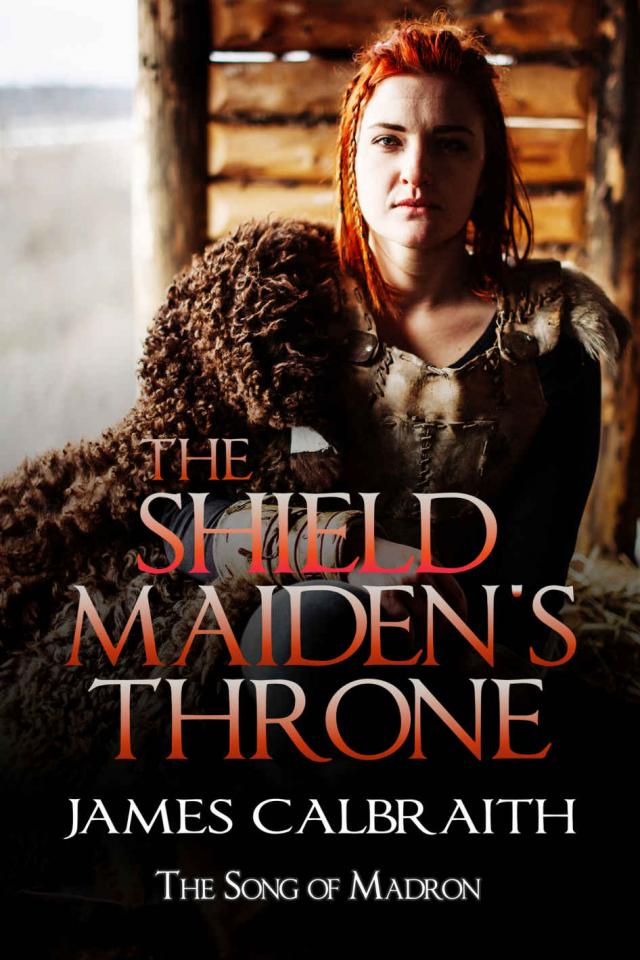


THE SHIELDMAIDEN'S THRONE
The Song of Madron, Part Three
James Calbraith
Copyright © 2023 James Calbraith
This book is a work of fiction. Names, characters, places and incidents either are products of the author’s imagination or are used fictitiously. Any resemblance to actual events or locales or persons, living or dead, is entirely coincidental.
All rights reserved. Except as permitted under the U.S. Copyright Act of 1976, no part of this publication may be reproduced, distributed or transmitted in any form or by any means, or stored in a database or retrieval system, without the prior written permission of the publisher.
Fan fiction and fan art is encouraged.
Visit James Calbraith’s official website at https://jamescalbraith.co.uk for the latest news, book details, and other perks
Cover photo: Viacheslav Boiko via Shutterstock
LORDS OF BRITANNIA
WESTERN BRITANNIA, CA. 486 AD
NORTHERN GAUL, CA. 486 AD
THE SHIELDMAIDEN’S THRONE
CAST OF CHARACTERS
Britannia Prima:
Anlaf: Decurion of eastern frontier of Britannia Prima
Antonia: Madron’s former handmaiden, wife of Anlaf
Breccan: former Decurion of Madron’s bodyguard, commander of Cicuc
Caius: Decurion of Madron’s bodyguard
Caratac: Son of Madron and Honorius
Cundleus: the youngest son of Councillor Solarius
Deodata: Daughter of Madron and Honorius
Dubric: Officer in Cicuc
Gladusa: Madron’s former handmaiden, wife of Breccan
Gweyn: Ambrosius’s daughter, elder sister to Honorius
Honorius: Dux of the western province of Britannia Prima
Madron: also Myrtle, daughter of Wortimer, former Dux of Britannia Maxima, and Rhedwyn, princess of the Iutes
Moridun: a Drui of Mona, tutor of Madron’s children
Ogten: commander of Corin’s garrison
Paul Aurelianus: the eldest son of Councillor Solarius
Pedwyr: a soldier in Madron’s bodyguard
Council of Corin:
Agricola: Comes of Demetia
Budic: Patrician of Armorica, exiled to Demetia
Concennus: Comes of Cornowia
Gerontius: Comes of Dumnonia
Falerius of Sulian Waters: a nobleman, ally of Solarius
Itonus: Comes of Siluria
Lucianus: Bishop of Corin
Madoc: son of Utir of Dewa
Petran: Secretary of the Council
Solarius of Glewa: a nobleman, husband to Gweyn
Utir: Ambrosius’s younger brother, Comes of Deceinglia
Britannia:
Beoda: Gesith of the Gewisse Saxons
Croha: consort of Octa, Dux of Londin
Ennian: Rex of the Weneds
Eafa: warchief of the Gewisse Saxons
Goldfinch: warchief of the Meonwara Iutes
Nowantic: Comes of Coriadaws
Octa: Dux of Londin and Rex of the Iutes
Parthicus: Comes of Belgian Wenta
Ridbed of Wirocon: Bishop of Lindocoln
Sualinos: self-proclaimed Comes of Belgian Clausent
Weroc: Octa’s private secretary, son of Councillor Riotham
Frankia and Gaul:
Agroecius: Bishop of Senones
Aurelian: chief advisor to Dux Syagrius
Chararic: a Frankish warchief, lord of Tungrorum
Eishild: Princess of the Goths, wife of Decurion Drustan
Eleuther: former commander of the Frankish royal guard
Genowifa: abbess of the shrine of Dionysius at Catulac
Gwinda: young niece of Dux Syagrius
Heraclius: a Frankish priest in Senones
Hildut: a Briton eques from Lugdunum, younger son of Porcius
Hlodoweg: Rex of the Salian Franks
Lantechild: oldest sister of King Hlodoweg
Irminberht: a Frankish warchief
Maegla: a Briton eques from Lugdunum, elder son of Porcius
Marcus: Dux of Armorica
Porcius: a Briton Decurion from Lugdunum
Ragnachar: a Frankish warchief, lord of Camarac
Riotham: a Councillor of Londin, exiled to Lugdunum
Remigius: Bishop of Remi in Gaul
Sichild: a Frankish shieldmaiden, wife of Ragnachar
Syagrius: Dux of Gaul
GLOSSARY
Aetheling: a member of the Iutish royal family
Caer: a Briton hill fort
Centuria: a troop of (about) hundred infantry
Ceol: barbarian warship
Comes, pl. Comites: administrator of a pagus, subordinate to the Dux of the province
Contubernium: a squad of eight legionnaires
Decurion: officer in the Roman cavalry
Domus: the main structure of a villa
Domnus, Domna: Roman lord and lady
Dux: overall commander in war times; in peace time – administrator of a province
Equites: Roman cavalry
Francisca: throwing axe
Frua: Lady in Frankish tongue
Gesith (Iutish), Gisindh (Frankish): chief of the household guard
Herr: Lord in Frankish tongue
Ketern: Hibernian war dart
Liburna: Roman warship
Mansio: staging post
Pagus, pl. Pagi: administrative unit, part of a province
Pancratium: combat wrestling
Praetorium: chief administrative building in a Roman town
Rex: the king of a barbarian tribe
Seax: Saxon short sword
Spatha: Roman long sword
Villa: Roman agricultural property
Vigiles: town guards and firemen
Waelcyrge: Valkyries, spirits taking the fallen warriors to Wodan’s Mead Hall
Wealh, pl. wealas: “the others”, Britons and Gauls in Iutish tongue
Walh, pl. Walhas: as above, in Frankish tongue
Witan: a gathering of elders
PLACE NAMES
Alawna on Arbe: Alcester, Cotswolds
Armorica: Brittany
Belgian Wenta: Winchester, Hampshire
Callew: Silchester, Hampshire
Camarac: Cambrai, France
Cantia, Cantiaca: Kent
Catulac: Saint-Denis, France
Cicuc: Y Gaer, Wales
Clausent: Southampton, Hampshire
Corin: Cirencester
Dewa: Chester
Dorowern: Dorovernum, Canterbury, Kent
Dorun: Dorn, Cotswolds
Dumnonian Isca: Exeter, Devon
Dun Taiel: Tintagel, Cornwall
Glewa: Gloucester
Icauna: River Yonne
Letocet: Letocetum, Wall, Staffordshire
Lindocoln: Lincoln
Lugdunum: Lyons, France
Lutetia: Paris, France
Matrona: River Marne
Mona: Anglesey, Wales
Monapia: Isle of Man
Parisios: Ile de la Cite, Paris, France
Rath: Ratae, Leicester
Remi: Reims, France
Rotomag: Rouen, France
Sabrina River: River Severn
Senones: Sens, France
Sequana: River Seine
Silurian Isca: Caerleon, Wales
Sorbiodun: Old Sarum, Salisbury
Suessionum: Soissons, France
Sulian Waters: Bath, Somerset
Tornac: Tournai, Belgium
Tongrorum: Tongeren, Belgium
Wened: Gwynedd, Wales
Wirocon: Viroconium, Wroxeter, Wales
PART 1: BRITANNIA PRIMA
485 AD
CHAPTER I
THE LAY OF BEODA
“They split up here,” says Anlaf, swiping his hand over the tracks in the mud. He stands up and brushes an unruly strand of his fair hair from his eyes. “Three-ways.”
“They know we’re after them,” I say.
We’ve been following the riders for almost two hours now. Briefly, the trail disappeared in the marshes along the Tamesa’s right bank, but a warband this size could not stay hidden from our trackers for long.
“We’re too few to chase all three of them,” says Breccan, and I agree. By Anlaf’s count, there may well be more than twenty riders in the band we’re pursuing. We might just be able to confront them as we are; if we split up into three, we’ll be at too significant a disadvantage. “Which ones should we go after first?”
I study the forked road before us with a frown. “The path to the west would take them straight back to Corin,” I say. “But it’s too obvious. We’d only need to ask the guards at the gate if they’ve seen a troop of bloodied cavalry.”
“We should still send someone back to the capital, to warn the Dux,” says Breccan.
I nod. “Pedwyr, take two men, tell my husband what you’ve seen,” I say. “Be careful. They might be waiting in ambush.”
“The eastern road goes through the Gewisse territory,” Breccan says when the three riders depart. “I doubt they’d dare sneak past the border watch twice in a day.”
“There’s another crossroad some six miles in that direction,” says Anlaf, “a ridge path turns north, into the hills.”
“As does this Letocet highway in the middle,” I note, glancing at the moss-grown milestone, half-sunk in the mud. “They’ll all be meeting in the hills, then. We have to cut them off before they join forces again.”
“We can cut through the moors, but only on the ponies,” says Anlaf. “We’d reach the ford on the White Fen in an hour or so… We might be outnumbered.”
“We’ll take the risk,” I say. “Breccan, you go after the ones on the highway.”
The men in my guard, as well as those commanded by Breccan, are all Briton equites, cavalrymen mounting tall Gaulish war horses – swift and mighty, but only on the roads and grassy plains. I ride Fulla – an ageing but trusty moor pony, gifted to me a long time ago by the Cantian, Rex Aeric; Anlaf’s men ride ponies, too, but altogether we’re less than a dozen; I can feel Breccan’s disapproving frown on my back. Ever the faithful guardian, he’s loath that I should risk my safety in what must seem to him a foolhardy manner.
“Cheer up, Breccan!” I say. “It’ll be just like hunting the Ordows back in the day!”
“We’re not so young anymore, princess,” he replies. “And you’re a politician now, not a soldier.”
“I still know how to hold the sword. Try to catch up to us, or you’ll have no one left to fight!”
I kick Fulla’s sides and launch into a dash down the moor path. Behind us, Breccan puts the war horn to his mouth and blows a charge. The earth rumbles under the hooves of twenty Gaulish war horses, thundering down an old Roman road.
At the day’s dawning, we travelled through a young forest. The trees there were no more than six years old; the oaks and beeches were mere children, no taller than myself. The hasty maples and ashes, their leaves yellowed and withered by the swift coming of autumn, had grown faster, their sprouting branches hung low over our heads, in a desperate, youthful hope of joining into a canopy, stealing the light from the sky – but it would take a generation before this land started succumbing to the green darkness.
This was a border wood, planted to mark a demarcation treaty between the Gewisse settlements and the province of Britannia Prima; and this was a border land, empty save for mounted patrols, the bandits they sometimes chased, and occasional refugees, fleeing real or perceived oppression from either side of the frontier – slaves seeking new masters, serfs whose farms got burnt down by the raiders, or simply men who failed at making a good life for themselves in one land, and hoped to find better fortune in another.
It was with one of such patrols that we rode out that morning – Breccan the Atecot, once the commander of my guard, now a Decurion of the Black Mountains; Anlaf the Iute, chief of the border forts; and I, Madron, daughter of Wortimer, wife and envoy of Honorius, Dux of Britannia Prima – accompanied by a retinue of equites and a couple of supply carts – past the border wood, past the border river, deep into the Gewisse territory. We were not chasing a band of roughs yet; gone were the days when I could entertain the idea of joining such a hunt on a whim. I am the wife of a Dux now; the mother of his heir; a diplomat and politician in my own right. It takes an extraordinary occasion for me to mount up, put on my armour, strap the sword to my belt and the ketern darts to my back, and ride out into a foreign country.
“We’re almost there,” said Anlaf. He knew these woods like the back of his hand – for almost ten years now, the Iute warrior, once a member of the Londin Dux’s guard, had been guarding these borderlands. This particular stretch of the frontier once belonged to some nobleman’s villa – we’d passed the ruined domus half an hour ago – but like so many in these parts, it’d been abandoned for more than a generation, long even before the wars and plagues that brought the ultimate desolation to these lands. “Careful now. I’ve heard some rumours…”
“Rumours?” Breccan frowned, laying his hand on his sword. Though he long ago ceded the command of my bodyguard to young Caius, who rode in the vanguard with his close friend Pedwyr, he still felt responsible for my safety whenever we travelled together. “What rumours?”
Anlaf winced. “Nothing much, really. Words in the wind. They won’t dare try anything. Here, across the river.”
The scholars and travellers claimed that the small, fast-flowing stream that we waded through to reach our destination was the Tamesa itself; that a man could, in theory, take a boat and row down it all the way to Londin. I found it difficult to believe. The Tamesa I knew was a vast, deep, sprawling channel of mud-coloured water, almost a sea gulf, spanned by the greatest bridge ever built in Britannia, and bound by the walls of the greatest city the Romans ever raised on the island. How could this insignificant brook, cutting through some empty fields just half a day’s ride away from Corin, be the same as the one in Londin?
There was a proverb in this, I was sure, though I couldn’t think of one at the time.
“I thought you said we were almost there,” I said as we climbed up a gentle, but arduous, muddy, wooded incline. That forest was older than the border one – not quite as ancient as those in the western hills or the Andreda, but dense enough to darken the sky and stiffen the air.
“We are now,” said Anlaf. “It’s up this hill.” He nodded at the tall mound rising steeply before us, its top flattened and bound by a ditch and an embankment. A few wisps of black smoke rose above the palisade which surrounded the summit.
“A caer?” asked Breccan. “We let them settle in one of our hill forts?”
“We didn’t let them do anything,” I said. It was my husband who’d sealed the treaty with the Gewisse at the end of the last war, and I was sensitive to anyone putting his painstaking diplomatic work into doubt. “This is their land now. They can do what they want with it.”
Anlaf winced. “It was only an old earthen bank, covered in yew and hazel, when they moved here. Everything you see is what they themselves have built.”
“If we’re so near, then why haven’t we met anyone yet?” I asked. “Isn’t this the only path through the wood?”
“It is.” Anlaf frowned and bid us halt. “Pedwyr! Go see if everything’s all right.”
The young soldier – not so young anymore, I reminded myself; none of us were – spurred his horse and rushed ahead; we were halfway up the slope when he returned, in an even greater hurry, his face marred with worry. Breccan drew his sword and moved ahead of me in an old reflex of a bodyguard, but Pedwyr, catching his breath, shook his head.
“There’s no imminent danger,” he said, “as far as I could tell.”