

Lush Lives, page 1


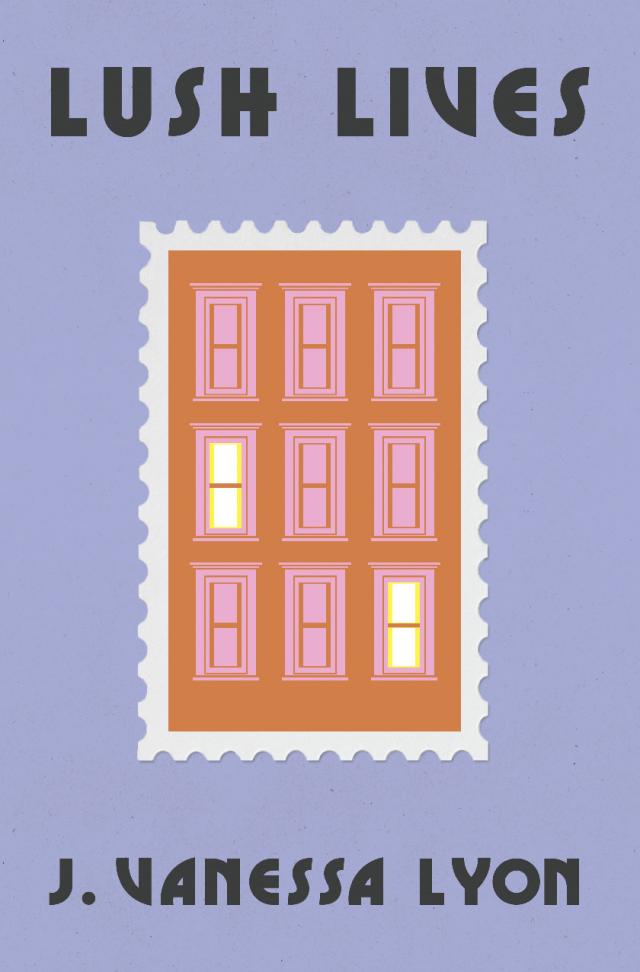
lush lives
lush lives
A NOVEL BY
j. vanessa lyon
New York
Copyright © 2023 by J. Vanessa Lyon
Jacket design and artwork by Rodrigo Corral Studio
All rights reserved. No part of this book may be reproduced in any form or by any electronic or mechanical means, including information storage and retrieval systems, without permission in writing from the publisher, except by a reviewer, who may quote brief passages in a review. Scanning, uploading, and electronic distribution of this book or the facilitation of such without the permission of the publisher is prohibited. Please purchase only authorized electronic editions, and do not participate in or encourage electronic piracy of copyrighted materials. Your support of the author’s rights is appreciated. Any member of educational institutions wishing to photocopy part or all of the work for classroom use, or anthology, should send inquiries to Grove Atlantic, 154 West 14th Street, New York, NY 10011, or permissions@groveatlantic.com.
This book is a work of fiction. Any resemblance between these fictional characters and actual persons, living or dead, is purely coincidental.
Epigraph courtesy of Jennifer Tseng.
Published simultaneously in Canada
Printed in the United States of America
This book is set in 10.5-pt. Berling LT Std by Alpha Design & Composition of Pittsfield, NH.
Designed by Norman E. Tuttle at Alpha Design & Composition.
First Grove Atlantic hardcover edition: August 2023
Library of Congress Cataloging-in-Publication data is available for this title.
ISBN 978-0-8021-6198-7
eISBN 978-0-8021-6199-4
Roxane Gay Books
an imprint of Grove Atlantic
154 West 14th Street
New York, NY 10011
Distributed by Publishers Group West
groveatlantic.com
To my own great-great aunt,
JAG officer Lt. Colonel Lucille Caldwell
(1909–1978).
Sudden Onrush of Affectionate Feeling
an erasure of Nella Larsen’s Passing
A queer outpouring of pent-up,
Terrible, wild, queer, peculiar
Caressing. Those queer eyes!
Black, strange, languorous eyes,
Set in that ivory face.
Easy on the eyes.
Queer prick of satisfaction.
A kiss on her dark curls.
A queer choking in her throat.
Shunned fancy.
Queer & black,
The feeling passed.
She could not define it.
I am so lonely, she thought.
She was bound to her.
Queer to think
Of never seeing her again.
—Jennifer Tseng
Chapter 1
Glory was determined to make it, and she had. The appraisal of at least some of her great-aunt Lucille’s things would happen today, before another week, or month, slid by. Now that she was here, though, taking a seat in the cramped little vestibule felt like a punishment. Like being sent to the principal’s office. Or the Department of Motor Vehicles.
The arrangement of the reception area at the top of the stairs was haphazard. More musical chairs than the first impression a pretentious New York auction house should want to make. Maybe it was always this way, but Glory had a feeling the close quarters were even closer today because it was a “Walk-In Wednesday.” Free appraisals. Drop-ins welcome. Welcome to wedge yourself into a corral of orphaned antiques with a bunch of other hopeful strangers sitting knee to knee. She looked for an indication that the place was worth the wait but found instead, randomly stacked on the hunter green walls behind the mismatched chairs, a dozen ostentatiously framed but indisputably crappy Victorian landscape paintings, each with its own brass plaque and metal-shaded light. The floor, a checkerboard of buffed black and white, seemed to dare her to cross its gleaming surface.
However claustrophobic, the foyer of Madeline Cuthbert Auctioneers LLC was appropriately intimidating simply for being what it was—a gateway to the kind of old Manhattan firm with unpaid interns and tastefully hand-drawn advertisements in the style of a New Yorker cartoon. A business that sold mostly dead white people’s valuable things to the mostly white people who wanted to buy them. Glory knew she had every right to be there. But even as she was announced by a two-toned door chime, the receptionist, a dark-rooted twentysomething engrossed in her multiple screens, failed to register her presence. She hadn’t even looked up when Glory repeatedly excused herself to take the only open seat in that steerage-like space. There was no choice but to balance the heavy liquor box she’d been carrying on her lap.
Once she was settled, legs together, elbows tucked tight at her sides, Glory cast a furtive glance at the seven or eight other people around her. They might have been nice enough, nodding and rolling their eyes in shows of camaraderie. But she wasn’t in the mood for small talk. Or any talk. Unlike her mother and sister, she didn’t feel compelled to make people comfortable through the performance of neutral chatter. Everyone was busy anyway. Some were texting, others reading. One, a middle-aged man in a sweatshirt, was clipping his nails into the soil of the potted ficus beside him. Snap, snap, snap.
The room was windowless, warm, and stuffy. As soon as Glory’s rear hit the seat cushion, she’d wanted to lay her head down on the box and sleep. This was her own fault, really. For painting through the previous night and into the next afternoon, forgetting that today was the only day you didn’t need an appointment for a free appraisal. By the time she’d remembered, traffic was too bad to get anywhere fast by calling a car.
In a matter of minutes, she had dropped her paintbrushes into a coffee can of turps and thrown what she hoped were several representative specimens from the estate into the first container she could find, a Johnnie Walker carton left over from the wake. Then she’d rushed out of the house without a coat and hustled over to 116th to take the train downtown.
Lucille had been dead for close to six months. But only a few weeks ago had Glory found the energy to unlock the door to the attic at the top of the brownstone’s spiraling staircase. Knowing that her great-aunt had died in her own bed, Glory couldn’t easily get herself to enter Lucille’s second-floor apartment, let alone that spidery storage space where she seemed to have secreted away the most personal belongings from her past.
It was sad and unnerving to think about a lonely woman’s last breath being taken in what was now Glory’s house. It couldn’t have been the first time someone died there, and Glory didn’t believe in ghosts. But she did respect the mysterious power of places and things to retain vestiges of the people who possessed them, to radiate the almost palpable charge of their previous owners’ feelings. With limited experience in the world beyond her home, her great-aunt Lucille had surrounded herself not with people but with objects. If she’d made a museum of her life, Glory was now its reluctant curator.
To Glory’s right, a woman, carrying a logo’d purse that wasn’t quite deep enough to conceal her offering of an ornate silver candelabra, rose when beckoned. She’d hardly been there long enough to do the paperwork. But just like at the DMV, there didn’t seem to be any rationale behind the auction house’s intake process. After filling out the questionnaire they’d been given, the people in chairs were definitely not being called in order of arrival. It all seemed arbitrary. Completely at the whim of the gossip girl behind the desk. This would-be greeter had barely offered a thank-you when Glory returned her clipboard. But she did seem to be reading the completed forms. And by some dubious algorithm, she also seemed to have determined the likely return on time invested in those who were seated in her midst.
One by one, almost everyone was instructed to proceed to a room down the corridor where a specialist in X or Y or Q would be happy to reveal their fate. By 4:45, even the brown-haired brother-and-sister-looking couple with the plastic laundry hamper (who had arrived long after Glory) were directed to see someone down that hallway. Only fifteen minutes remained, and Glory could officially feel her blood coming to a steady simmer. She didn’t like to make a scene, but she hated to be ignored.
A door slammed somewhere deep in the building’s bowels.
Minutes later, the nail clipper, making a hurried exit, nearly tripped over Glory’s boots on his way out the door. Chin to his chest, he muttered a slew of obscenities as he walked by her, still carefully guiding his submission—something thin and rectangular wrapped in a striped bedsheet—through the door to the lobby. Once he was gone, the receptionist glanced up from her computer, mechanically sweeping the room like a Cylon.
Only two contenders remained. Aside from Glory, Cuthbert’s other potential client was a pink-faced, expensively suited older man who had placed a large, faded-turquoise Tiffany box on the chair next to him as if it were his companion.
“Sir, if you’d like to go ahead,” said the receptionist in the most dulcet of tones. “Just down the hall to the right, our specialist in decorative arts will see you.”
“No, no,” said the fellow in pinstripes, waving his hands. “I believe this young woman was here before me. I’m a retiree with a punch bowl. I can come back another day if need be.”
Glory was relieved to be able to return the man’s empathetic smile.
/> The girl at the desk raised her barely there eyebrows. As Glory set the box on the floor, a few stray beads of dried paint popped off her gray coveralls. She suddenly realized her hands, too, were stained with still-moist oils. Come to think of it, she more or less reeked of minerals and solvents.
“Oh, I’m sorry,” the receptionist said merrily. “I didn’t see you. How can we help you today?”
Before Glory could answer, a woman around her age, maybe a little younger, emerged from the mysterious hallway. She had to be close to six feet tall, and she wore a tailored navy skirt suit over a kelly green, nearly see-through chiffon blouse with a flouncy bow. She walked over to the receptionist and leaned the silver-handled walking stick she’d been using against the edge of the desk. While the woman was making a series of rapid entries on her clipboard, a thick lock of her strawberry blond—or was it more like French ochre—bangs kept getting in her eyes. Each time it did, she pushed out her lower lip and blew it off her forehead, not seeming to care if her professionalism took a hit.
“I’m sending three and four to Nicholas,” the woman said, evidently referring to the numbers assigned to the prospects she had already seen. “Is anyone else good for me?” she asked, turning to the odd couple still sitting there. The redhead gave them a disarmingly friendly smile. Her tone and the mischievous look in her eyes were sexy and suggestive, and Glory found herself hoping she was their intended target.
“I was just, um, determining that,” said the receptionist. “This . . . woman hasn’t told me what she brought in.”
“Because this woman’s presence wasn’t even acknowledged until this nice man pointed it out,” Glory said. “Even though she was here first.”
The tall woman’s smile disappeared and her green eyes, trained now on the receptionist, went cold. She came Glory’s way and stuck out her left hand.
“Parkie de Groot,” she said solemnly, as Glory stood. “I’m so sorry. Please accept our apologies, I can’t imagine how that happened. There’s no excuse for it. But if you still have time for an evaluation, we do, too.”
Glory nodded. The woman’s name was ridiculous in a way that seemed almost strategically engineered to offset her good looks. But her sincerity was a nice surprise. TBQH, the Parkie package as a whole was worth waiting for. In the first place, those hips.
She shifted her weight from one stockinged leg to the other. “Why don’t you show me what you’ve got? It’s not as if anybody here goes home at five.”
Glory thought better than to respond to that request, so she bent down and hefted her box onto the chair. She flipped open the cardboard flaps, but as soon as she had, a wave of embarrassment overtook her and she immediately wanted to close the box back up. This initial surge of discomfort was followed by the more unseemly feeling of being ashamed to be embarrassed to begin with.
These were her family’s things, not hers. If what was in the box wasn’t valuable, it shouldn’t reflect on Glory—though she couldn’t help feeling it would.
The redhead looked so eager. Standing there with her eyes darting from Glory to the open carton. Glory thought about telling her to forget about it. She could come back another Wednesday. In a dress. Freshly showered. With the good stuff.
Under the auction house’s harsh lights, Lucille’s things now seemed woeful in a way Glory imagined they might not seem if she were white with a social registry name. And it was worse with the eyes of the old man and the receptionist now upon her, in addition to the interested gaze of Miss de Groot, who looked on encouragingly as Glory pushed aside the loose balls of crumpled newspaper shoved into the box for protection.
“I really have no idea if any of this is even worth showing you,” Glory said apologetically as she pulled out a tarnished coffeepot engraved with Lucille’s geometric initials.
The redhead’s face fell almost, but not quite, imperceptibly. She sat down stiffly in the neighboring chair.
“May I?” she asked.
Glory handed over the coffeepot.
“How stylish,” she said, sounding almost as if it were an insult. “So. This is a very nice piece of 1930s silver plate. But being plate, it’s not something we would normally offer at auction. Most of what we sell from this period is sterling, or of that grade. You know, Jensen, even Spratling, Christofle. French Deco is sort of our signature. But yours is attractive, isn’t it? Looks like it was well loved.”
What a condescending little . . .
“Is there anything else you’d like me to see?” the obnoxious woman named Parkie asked, handing back the coffeepot.
Glory set down her stylishly worthless piece of nothing and felt around for the scrapbook and French enameled boxes and porcelain vases she had also packed. Not only was this a waste of time, it was humiliating. The redhead was acting as if, obviously, Glory had heard of those Deco designers—she had. But then she also implied Glory couldn’t tell silver from silver plate—she couldn’t.
Still.
“Anything else? I mean, nothing that’s worth your time,” Glory said.
“I don’t know about that. I saw on the questionnaire your great-aunt lived in Harlem? Was she there a long time?”
“A century, basically.”
When Parkie whipped her ponytail around to see if Glory was serious, there was real curiosity in her eyes, like a kid about to hear a ghost story.
“No way.”
“Yep. Lucille’s parents died young. She and her sister inherited the same brownstone where they grew up. They stayed on the second floor and rented out the apartment downstairs. According to family legend—which is basically stories my grandfather told my dad because, as someone new to the family, he believed them—a few famous people lived in the rooms downstairs. Possibly, though no one can prove it, Cab Calloway when he was home between gigs. Duke Ellington came by for parties, supposedly.”
“Holy shit. That’s amazing,” Parkie said.
“Amazing isn’t worth much, I guess.”
Across the room, the phone rang. The receptionist answered, closing her eyes after enduring the first few seconds.
“So sorry to interrupt,” she said when the noise of a muffled diatribe had ceased. “Parkie, I have Madeline from Miami and she’s wondering if you have a sec to update her on the Flagg estate.”
Parkie straightened in her chair at this announcement, and Glory could almost see the anxiety start to seep out of her scarcely visible, increasingly colorless pores. When Parkie turned to get up, her flashing eyes met Glory’s and both of them looked immediately away, as if they’d been privy to something they shouldn’t have.
“Ms.? I’m sorry, I don’t think I got your name,” Parkie said, pretending to look for it on her clipboard.
“Gloria Hopkins.”
With the receptionist watching, the redhead was back in customer-service mode. Glory had liked her better when she let her patrician but pliant features show how she really felt. Excited, annoyed, flustered. And, it seemed to Glory from the way she’d listened when she talked about Lucille, interested.
“Perfect. Miss Hopkins, again, I’m really so sorry for what happened before. I’m afraid I have to return this call from my desk. But if you’d like to leave the box and your number with Olive here, I promise to have whatever else you brought in evaluated and call you myself with the results. Would that work?”
“That would work,” Glory said. “Thank you, Ms. de Groot, I appreciate it.”
Glory would appreciate it even more if Parkie de Groot was the kind of woman who popped up on one of the apps she’d been meaning to get serious about, though she wondered if the appraiser’s chilly magnetism would come across digitally. For the briefest moment Glory considered asking Parkie for her number—in case she had any questions in the meantime. But she had her business card now, so asking for her cell might seem too thirsty. Better to wait until the redhead made the next move.
Parkie was on her feet now.
“Well, have a nice evening,” she said.
“I will if you will,” Glory replied inexplicably.
“With this call I’m about to do, not likely.”


