The Battle of Maldon, page 14


This may be mere ‘seasoning’, of course. If what we want is the recipe – to discover whether there is some core connection between these works, we can look to the questions posed by The Homecoming. Is war romantic or merely waste? How can war and sport be fused or confused? What makes a hero? What motivates him? Of what use is the Northern heroic spirit? Such questions are explored throughout Tolkien’s legendarium.
The verse drama takes a hard look at them from the start. Whatever stirring action and brave deeds may have occurred, they are done. We find ourselves like Totta: alone with the dead in the dark. That eerie scene, the spent battlefield, is moving and disturbing in Tolkien’s hands, and at times his attention seems to linger there longer and more vividly than it does on the great battles themselves. The last stand before the Black Gate fades from view almost before it begins, with Pippin crushed under the weight of a troll; but Gimli afterwards describes the search for his friend – ‘the look of a hobbit’s foot, though it be all that can be seen under a heap of bodies’ – and effort of heaving ‘that great carcase off’ of him. We get no proper account of the Battle of Dagorlad – but we know the Dead Marshes, oh yes.
We see over and over the uneasy connection between war and sport: from the origins of the game of golf in The Hobbit, to the friendly orc-slaying wager between Gimli and Legolas at Helm’s Deep. When Frodo draws first blood with Sting in Moria, Aragorn shouts encouragement – ‘One for the Shire!’ – as if tallying up the scoreboard. Like Beorhtnoth’s sporting decision, both the allure and the peril of confusing the two are frequently on display. Faramir goes so far as to describe Gondor’s decline in such terms: its people, he laments to Frodo and Sam, ‘now love war and valour as things good in themselves, both a sport and an end’. We sense that such a decline has been long in the making, encouraged by those who might be expected to offer a better example. We learn in the Appendices of the brief reign of Eärnur, the last king of Gondor, nearly 1,000 years prior to Aragorn and the return of the king.
He was a man of strong body and hot mood; but he would take no wife, for his only pleasure was in fighting, or in the exercise of arms. His prowess was such that none in Gondor could stand against him in those weapon-sports in which he delighted, seeming rather a champion than a captain or king.
Unwilling to abide the taunts of the Witch-king, he rides off with a ‘small escort’ to meet his foe in an ill-advised duel before Minas Morgul and is ‘never heard of again’, needlessly ushering in the era of the Stewards.
In his discourse with Frodo on the great tales and the boundless web of story by the Stairs of Cirith Ungol, Sam too notes such a confusion on the nature of adventure tales: ‘I used to think that they were things the wonderful folk of the stories went out and looked for, because they wanted them, because they were exciting and life was a bit dull, a kind of a sport’. His realization points to the gulf between the actors in a drama and its audience, and the moral questions it poses. From the audience’s perspective: the more dire the straits, the better the story. As Sam puts it, setting aside his distaste, ‘even Gollum might be good in a tale’.
The critique of Beorhtnoth’s conduct in ‘Ofermod’ turned the conversation on The Battle of Maldon away from the established notion of the poem’s purely heroic quality and its celebration of the bonds of what the Roman historian Tacitus terms the comitatus: the band of retainers loyal to a lord unto death in battle. Yet in spite of his condemnation of Beorhtnoth’s conduct, Tolkien is unequivocal in his admiration for the ‘superb’ heroism of those who chose to lay down their lives in love and loyalty. Just as Tída and Totta sing the praises of brave men like Ælfwine and Offa in 991, the comitatus motive is movingly expressed in the accounts of war in the legendarium. When Théoden falls from Snowmane on the Pelennor Fields and the Lord of the Nazgûl comes to gloat over his prey, the king is not ‘utterly forsaken’ though the ‘knights of his house lay slain about him’. Éowyn still stands between them, undaunted, and it is she who fells the Nazgûl’s monstrous winged steed. Merry, too, remembers his vows – ‘King’s man!’ – though paralyzed by fear, his ‘will made no answer’ until he sees Éowyn’s example, and his ‘slow-kindled courage’ rises, and together, against all odds, their loyalty to Théoden (and their blades) make certain that the Lord of the Nazgûl is ‘never heard again in that age of this world’.
The comitatus bond often overlaps with family ties as in the case of Éowyn and Théoden. The relationship between uncle and nephew – sister’s son – Tolkien notes, is of particular historical and legendary importance. We recall that Thorin Oakenshield is not the only dwarf to fall in the Battle of the Five Armies, the young Fili and Kili join him: they ‘had fallen defending him with shield and body, for he was their mother’s elder brother’.
Such conduct would appear deeply ingrained in the cultures of Middle-earth. This is apparent in the iconic scene in which Gandalf holds the bridge of Khazad-dûm against the Balrog, commanding the rest of the fellowship to flee. The scene’s likenesses to The Battle of Maldon have been discussed by scholars; Alexander M. Bruce has called it a kind of correction of Beorhtnoth at the causeway. Here Aragorn and Boromir are so reluctant to leave their leader’s side with battle at hand as to be disobedient: they ‘did not heed the command, but still held their ground’. Battle-cries raised, they rush to the wizard’s aid, and it is only after his command is repeated – ‘Fly, you fools!’ – and he is gone into the abyss that they grudgingly obey, Aragorn leading the company now on the desperate escape from Moria.
On some level, these two may have preferred to tangle with the Balrog, and even fall with Gandalf – to express that Northern heroic spirit, the doctrine of doomed resistance summed up in The Battle of Maldon by the old member of the comitatus, Beorhtwold. From their first exchange at the Council of Elrond, almost an episode of flyting, Aragorn’s grim assurance that both his sword and his sinews will be put ‘to the test one day’ echoes, as Tom Shippey notes, the stirring speech of Ælfwine in Maldon: ‘Now may it be put to the test who is bold’.
Whether tied to bonds of loyalty, or duty to a mission, or that alloyed desire to make at least a good song, this desperate creed finds expression throughout The Lord of the Rings. During his turn as Ringbearer, Sam in fact is described in terms that quite plainly echo Beorhtwold’s famous expression: when Frodo, presumed dead, is carried away by the orcs, Sam’s ‘weariness was growing but his will hardened all the more’. And in the final stages of the push toward Mount Doom, he finds himself transformed:
But even as hope died in Sam, or seemed to die, it was turned to a new strength. Sam’s plain hobbit-face grew stern, almost grim, as the will hardened in him, and he felt through all his limbs a thrill, as if he was turning into some creature of stone and steel that neither despair nor weariness nor endless barren miles could subdue.
Such shared ingredients are by no means confined only to The Hobbit and The Lord of the Rings. Maldon peeps through in the tradition of Isildur’s death, told in the late narrative ‘The Disaster of the Gladden Fields’. The king meets his end in the fatal waters of the river Anduin. As for the knights in Isildur’s ‘picked bodyguard’, even their great shield-wall cannot long withstand the greater force of the orcs, and ‘ere long they all lay dead, save one’. It is probably in the saga of Túrin Turambar that they are most prominent, as Richard C. West has suggested in his study of the theme of ofermod in that tale’s long development. Túrin was reared on the aristocratic traditions much like Beorhtnoth and Torhthelm; his personal canon would include, among other legends, those recent tales of doomed resistance against Morgoth like Fingolfin’s duel or his own father’s last stand in the Battle of Unnumbered Tears. Túrin devotes his short unhappy life to redressing the wrongs done to his family by Morgoth. As hope – for peace, family, or victory – fades, his pride does not. And this pride, coupled with Morgoth’s curse, will lead him from one disaster to the next. So he devotes himself wholly to the game of war, which he plays quite well – his prowess with sword and shield nearly unmatched. In Nargothrond he scorns even the Valar, and Beorhtwold’s code of doomed resistance – where defeat, though inevitable, is no refutation – becomes for Túrin almost a religion. He looks to emulate his father, who, in his defiance of Morgoth has wrought a ‘great deed’ that death cannot undo, for it is ‘written into the history of Arda’. In this high spirit, he manages to one-up even Beorhtnoth: building the bridge – and later refusing to cast it down – that soon enough speeds his enemies to the sack and ruin of Nargothrond.
Túrin does in fact go on to author one of the most audacious deeds of any Age; he will be remembered (vaguely) even late in the Third Age for his slaying of Glaurung: the prototypical hero, the first dragonslayer. Does he learn his lesson in the final confrontation with Glaurung, bringing willing companions (though they fail or fall in the end), opting for a tactically cunning approach instead of a sporting frontal assault? Are his misdeeds redeemed in this feat? Does Tolkien seek to reward his resistance via the strange prophecy of Mandos and a role to play in the Dagor Dagorath at the world’s end? His legacy, like Beorhtnoth’s, is open to interpretation. And while Tolkien wrote and rewrote Túrin’s story at length and in brief, in verse and in prose, it is important to remember that the source material for this tale was intentionally withheld, as if lost to time. A legendary ur-text, The Narn i Chîn Húrin, is not, like Maldon, the extant fragment from a lost poet, but the lost poem from a named poet, Dírhavel. The verse form of this lost tale was said at least to resemble in some ways the old English alliterative metre, in which Maldon is written and in which Tolkien once experimented with Túrin’s story, a project abandoned in the 1920s, though it gave rise also to what has been called ‘the earliest Silmarillion’.
That The Homecoming and the legendarium share an essential ingredient in the concern with the wages of war and the ethics of combat will come as little surprise, but if it is indeed the recipe that we want, we must also consider how such ingredients are incorporated into the recipe’s procedure. Here we find a connection that has received less attention: a large portion of The Lord of the Rings may be said to follow the same dialogic scheme of The Homecoming.
The debate of Tída and Totta ultimately transcends Beorhtnoth and the causeway, their perspectives come to represent a Quixotic contrast between fantasy and reality, romance and realism. Such perspectives are frequently contrasted in Tolkien’s stories; it is hard not to think of Maldon, in fact, when Bilbo claims in The Hobbit that having ‘heard songs of many battles’ he has ‘always understood that defeat may be glorious’. Bilbo struggles to square this view with his own experience having landed in such a battle – ‘It seems very uncomfortable, not to say distressing’. Yet even the earthbound hobbit must admit to feeling ‘splendid’ about wearing a blade out of legend from Gondolin; and while that battle was ‘the most dreadful of all Bilbo’s experiences, and the one which at the time he hated most’ it is, also, paradoxically ‘the one he was most proud of, and most fond of recalling long afterwards’.
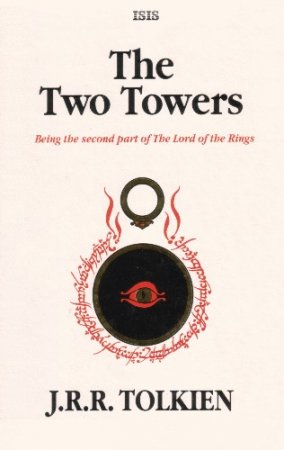
But in The Lord of the Rings these perspectives are baked into the essential structure of the story: like the voices of Tída and Totta, they alternate in tension from Book III to Book VI. With the departure of Boromir (another figure who has drawn comparison to Beorhtnoth) at the outset of The Two Towers, the fellowship is scattered, and the tale’s simple quest narrative is rent apart, allowing Tolkien to show off his considerable aptitude for the medieval romance technique of interlacement. The many plot threads converging and diverging can be dizzying at times, but Tolkien boiled down the ‘two main branches’ thus: ‘1. Prime Action, the Ringbearers. 2. Subsidiary Action, the rest of the Company leading to the “heroic” matter’. In the latter branch, extending through Book III and Book V, we see Gandalf’s miraculous return as the White Rider, the old magic of Fangorn Forest and the overthrow of the wizard Saruman and his Uruk-hai, our heroes tread the Paths of the Dead and ride to break the siege of Gondor. If the narrative remains hobbit-centric, if Merry and Pippin are our chief focal points, still we have an adventure that borders on sport: they pledge their swords as knights to kings and great lords, enjoy the spoils of war amidst the wreckage of Isengard, or ride like the wind atop Shadowfax with Gandalf at the reins.
In contrast, the journey of the Ringbearers recounted in Book IV and the early chapters of Book VI is of a different kind. As Frodo and Sam plod along (vaguely) toward a destination they can hardly fathom, they are led not by the Wise or the returning King but the wretched Gollum. They dress in Orc rags to escape detection; the battlefields they traverse were fought upon thousands of years ago (though the muddy pools seem no less treacherous) and food, clean water, or an hour’s rest all come to be like the rarest of luxuries. The contrast between the hobbits’ experiences, if it were not already apparent, is hammered home upon reflection. Finding themselves back at long last on the borders of the Shire, Merry likens his adventure to a ‘dream that has slowly faded’. But to Frodo, the return is ‘more like falling asleep again’.
Thus when Tolkien wrote of The Homecoming reflecting the ‘division of sympathy exhibited in The Lord of the Rings’, he meant it. The keyword is ‘division’, for it captures both the essential structure of the narrative and the tensions between the two branches. C.S. Lewis’s early reviews of his friend’s great work praised this ‘structural invention of the highest order’, revelling in Tolkien’s ability to locate a ‘cool middle point between illusion and disillusionment’. While we might say that Tolkien seems to occupy the edges more than that cool centre between them, both of these texts do present a kind of synthesis in resolution. The heroic matter of the Captains of the West and their last stand before the Black Gate is of course subsidiary, no matter how many heroes they boast in their ranks. Yet that desperate – if not utterly hopeless – display of doomed resistance has still a part to play in bringing the quest to fruition. For Sauron is distracted, he does not register two hobbits and their tricksy guide creeping toward the Cracks of Doom until it is too late. Perhaps his head too is full of old lays concerning bright swords and kingly faces. Likewise, the recovery of Beorhtnoth’s body requires the cooperation of both Tída and Totta. Without Tída, we might still find Totta with his teeth chattering among the dead. But on the other hand, without Totta’s vim and sharp eyes, Tída surely would have blundered over the brink of the Blackwater.
I have said a word now on ingredients and procedure, but as Tolkien reminds us in his other great cookery metaphor from ‘On Fairy-stories’, we ‘must not wholly forget the cooks’. Behind The Homecoming’s dramatic dialogue is Tolkien’s search for the lost Maldon poet: Totta’s terrifying journey through the battlefield, his long debate with Tída, and his mysterious dream serve up an imaginative genesis for the older poem, the last surviving fragment of Old English minstrelsy. Totta thus joins figures like Dírhavel, and Bilbo and Frodo – the long line of storytellers that both peoples and (we are told) produces Tolkien’s tales. The runic scripts adorning the dust-jackets of The Hobbit and The Lord of the Rings identify Tolkien only as a compiler or translator of these ancient works, the last link in the kind of long chains of transmission he explores in ‘The Tradition of Versification in Old English’. The Homecoming and The Lord of the Rings are both ultimately stories about stories. It is the poets – the cooks – who bear the heavy burden of preserving fact and fiction, history and legend. Our later understanding of these is heavily influenced by the shape they give their poems and stories.
And finally it is in the hands of the reader, whose freedom Tolkien was at pains to defend. Can we hear the tears through the harp’s twanging? Do we take up the voice in the dark’s appeal to listen for a while? The proof of the pudding, we might say, is in the reading.
When Totta laments that ‘the songs wither, and the world worsens’, he recalls in a way Treebeard’s lesson, after telling Merry and Pippin the sad story of the Entwives: ‘songs like trees bear fruit only in their own time and their own way: and sometimes they are withered untimely’. We may be grateful for poets like Totta, and for the unlikely chance survival of their words, conspiring to give us the Maldon fragment, and Beorhtwold’s unforgettable code, and finally helping to produce The Homecoming of Beorhtnoth and The Lord of the Rings, too.
BIBLIOGRAPHY
Atherton, Mark. There and Back Again: J.R.R. Tolkien and the Origins of The Hobbit. London: I.B. Tauris. 2012.
——. The Battle of Maldon: War and Peace in Tenth-Century England. London: Bloomsbury. 2021.
Bruce, Alexander M. ‘Maldon and Moria: On Byrhtnoth, Gandalf, and Heroism in The Lord of the Rings’. Mythlore 26, no. 1, art. 11. 2007.
Bowman, Mary R. ‘Refining the Gold: Tolkien, The Battle of Maldon, and the Northern Theory of Courage’. Tolkien Studies 7. 2010. 91–115.
Carpenter, Humphrey. J.R.R. Tolkien: A Biography. London: HarperCollins. 1977.
Deegan, Marilyn and Stanley Rubin. ‘Byrhtnoth’s Remains: A Reassessment of his Stature’ in The Battle of Maldon AD 991. D.G. Scragg. Oxford: Blackwell. 1991.
Drout, Michael D.C. ‘J.R.R. Tolkien’s Medieval Scholarship and its Significance’. Tolkien Studies, vol. 4. 2007. 113–76.
Eddison, E.R. (Trans.). Egil’s Saga. London: HarperCollins. 2014.