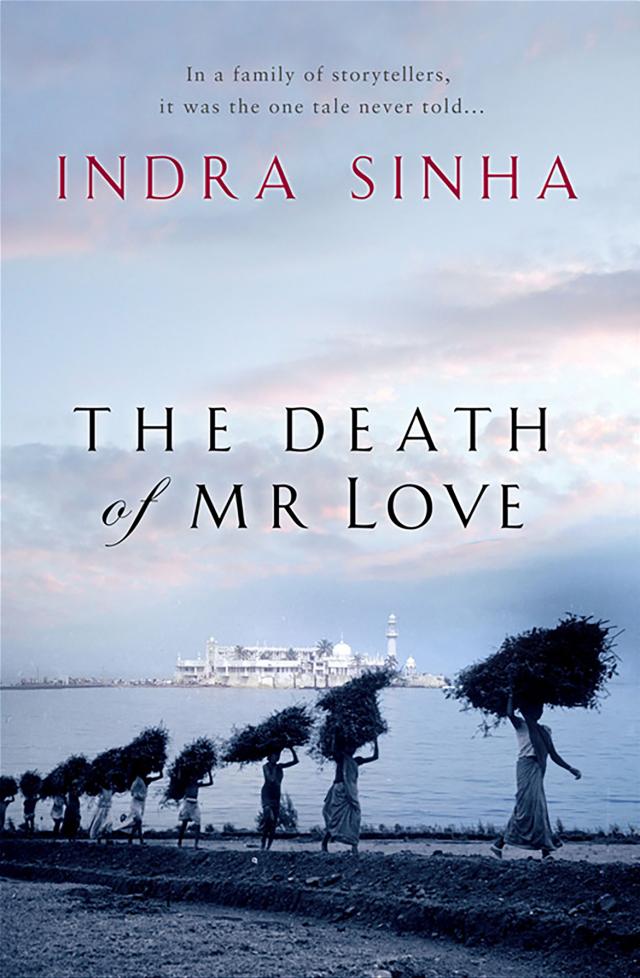
The Death of Mr Love, page 48


I felt sick. How could we have been so stupid as to leave her on her own? But what danger could there have been here, in these familiar surroundings? When I began to think of it, there were many dangers. Cobras in loose stonework, particularly during the monsoon. Dusk falling over the mountain. Perhaps she had gone for a walk. There were crevices you might miss in the gloom. Not far away were the terrifying cliffs from which Dost and Murad had just returned. One false step and you would tread thousands of feet of empty air. There was one peril of which I dared not think. The enemy. Had we underestimated him? Had he somehow guessed where we would go after we left his house? He lived barely twenty miles further into the mountains, among the hills of beyond and a day. Had he come here? Or one of his hirelings? That scream, caught on the wind, the night Rosie died. From westward, where the dark bars of cloud were streaked with pink, came a rumble of thunder. A tongue of green lightning licked the distant Duke’s Nose.
Jula said, ‘I’ll go to the village. We’ll get people out searching. We must find her quickly. There’ll be an almighty storm.’
‘Wait!’ I said. ‘I know where she has gone.’
I would not let them accompany me. If she had gone alone, so must I. It was forty years since I had last climbed up Bicchauda mountain, but the old path was still there, stretching palely into the dark. I climbed through clumps of karvanda thorn flung into strange shapes by a wind which was already keening in the grass and in the trees higher up the mountain. The lightning was nearer and the air was full of the scent of coming rain. This was the way. It was the way she must have gone, because it was the way we had climbed before, all those years ago. The path winding up between groves of trees on the higher slopes. Fewer of them now. Wide spaces where once forest had stood. The view opening out to the west, above the vast blackness of the lake below, now full and probably churning. When the wind blew hard, as it was doing now, the lake produced breakers that crashed against its shoreline in bursts of white foam, like the sea. Rain began falling. Far to the west, the lightning was at play again, over the Sugarloaf and the nameless mountain beside it, the one whose existence Kali Das the tea- and vada-pau-wallah had denied, though he had lived by the lake all his life. For the first time I hesitated. Ahead of me stretched the slippery rock slope, drenched by steadily dropping rain, where Rosie had fallen to her death. For the first time I hesitated. I was so high up the mountain that the lights of the villages in the valley below were tiny glimmers. I had been hoping to catch sight of Phoebe, sure, filled with a certainty beyond any doubt, that she had come up here. Had she passed this way? Crossed the dangerous rock? We had done it before, when we were children. Slowly, very carefully, I began to inch forward, not daring to look anywhere but at the ground right under my feet. A bright blare of lightning lit up the entire rock face. I jumped back, slid, fell to my knees, my fingers scraping desperately at the treacherous surface. I thought I had seen a snake writhing just in front of me, but it was a current of cold water, coiling over the rock, on its way to become a waterfall hundreds of feet below. Gradually, the angle of the rock eased, became gentler, gave way again to grass. I was near now. There was still no sign of Phoebe. But I knew where she must be. Close by. And we would be close, when we met again, in this place. When she knew that I had come after her, proved that I had read her mind and did, after all, share her deepest wishes. Already, in a part of my own mind, I was rehearsing the words we would exchange, and the knowledge, too deep for words, that we were one, could never be parted. Here, we would renew the solemn vows to one another that we had made when we were children. It was our destiny, this night. I was looking for a clump of tall trees, a glade, but the mountainside was different. Eventually I came upon what at first I had taken to be a pile of rocks. It was the little shrine. Still there. But now it stood in the middle of a grassy field. No tree to be seen for dozens of yards. The forest had gone. Lightning again, dancing all round Bicchauda. Inside the shrine, the eyes of the little goddess glared out, as they always had done, surveying with no change of expression a scene changed beyond all recognition.
This was where I had expected to find Phoebe. But she was not there. It then came to me that she really had vanished, and that I was alone on the mountain.
Nearby, the stone still reared. In one of those lightning tremors when the whole sky seems to light up for a moment like a faulty fluorescent tube, I could see that its tip was still thickly coated with vermillion. So the villagers still came here. The old gods were still alive. And on a night like this, the spirits would be dancing.
I did not know what to do. So I sat down with my back pressed against the stone and closed my eyes.
In my mind, but quite clear, as if the words were spoken out loud, I heard my mother saying, Hamari kahaniyan apné aaramb sé pahle aaramb hotin hain, aur apné anta ké baad tak jaari rahtin hain. Our stories begin before their beginnings and continue beyond their ends.
Mother, you craved too much responsibility. You took upon yourself the guilt of millions. Maybe you could not bear to be insignificant. I should never have listened to you.
You always were a foolish boy, comes her reply, delivered by the booming of thunder off basalt cliffs. Look at you, sitting on top of a mountain getting soaked when there are important things to be done in the world.
What things, may I ask? How do I know what is important and what isn’t? How are we to act – isn’t this your famous impossible question – when we can have no idea what the result of our actions will be? Judged solely by outcomes, it’s impossible to determine whether any act is moral. Or immoral. According to your logic, in fact, since consequences fan outwards and onward without end, everything we do must be both infinitely good and limitlessly evil.
Don’t be so stupid, roars the downpour, conveying her reply. It means we must act with the best intentions. We must try, try, try to be good. Have you tried to be a good boy, my little Bhalufer?
I have not, not, not, been a good boy. That’s why I am soaking here on this humpy hill. I mustn’t have done my lessons because I still don’t understand how to live in the world. I do not catch on or get-it-in-one and have never done the right or clever thing. I drove poor Katy to exotic birds. And last night I fornicated in a sewer pipe with a woman not in the least my wife.
Bhalu, murmured a gentle voice near my ear, what’s to be done with you? You have behaved like an irresponsible shyster. Aren’t you just like Mister Love, who could not decide which of two women he loved and lost them both?
It is cold. I am shivering. The spirits come here to dance at the time of lightning. I can see the shadows flying around me, leaping to the beat of an enormous drum. They are all here. Maya is here. Sybil, young and pretty, cradling a baby whose body bears the marks of dogs’ teeth, happy at last. Killy is with her. I see Grandfather with his hookah. Nafísa Jaan, whose fingernails were torn off clawing at the inside of a brick wall. Rosie, smiling now, dancing on her Haadal feet. And look, here is Mister Love in his bloody bathtowel, with his empty whisky bottle and half-emptied skull at the centre of a crowd of elegant women. Over there is Noor, waltzing fit to break your heart with her faithful sub-human.
Here comes Gandhi, all smiles, the wounds in his chest scarlet as Remembrance Day poppies, laughing with Nathuram, whose neck is still twisted from the rope. Here is Lord Mountbatten, mangled by the explosion that killed him, chatting to Nehru, who alone of his dynasty, died intact. All those who were killed in the riots are here. And those who died in the Partition. And here is dear Manto, looking for a pencil. A sea of ghosts, crowding to the stone, waiting to be released.
EPILOGUE
FREDDY THE TAXI DRIVER
(LEWES, SEPTEMBER 1999)
Jula found me and brought me down from Bicchauda. He stayed by my bedside for the three days I lay in the cottage hospital in Ambona. In Bombay we went to the police and reported Phoebe missing. Weeks went by and there was no sign of her. My money had run out and I was staying with Dost.
So at last I came home. Caught a morning train from London to Lewes. It was a fine late summer day. I walked from the station through fields loud with birds. The harvest was in and the fields were blonde stubble dotted with hay bales. I passed along the river, noting the perfect symmetry of poplars, entered the lane that led to our cottage with a feeling of wild expectation. I had not been able to contact Katy. My return would be a surprise. I came to the cottage and let myself in. It was empty. I ran from room to room, my feet thudding on bare floorboards. What would I have given for a blue sofa and the music of birds? But there was nothing. I ran to the stable. Oxymoron was not there. Nor was he grazing in his paddock. His saddle and tack were gone. The concrete floor was swept bare and washed down. They had gone.
Eventually, I came out and sat on the grass. By the living room window the ceanothus had long since finished flowering.
I walked back up into the town. The bookshop was closed and locked up. I had no key. When I went to the bank, the manager told me apologetically. ‘The account is closed. Your wife withdrew all the funds, as she was entitled to do. She told me that you had gone abroad and that she was joining you.’
I could not even afford to visit Charlotte, but found Piglet in his workshop, chary of meeting my eye.
‘Been wondering when you’d return, lad. I’ve got a couple of things for you.’ He handed me an envelope in Katy’s handwriting and a package that had been addressed to me at the cottage.
Her note said: ‘I have bought a cottage and a field in the South of France. The Lot Valley. The twins helped me move. We did it in several trips, in the horsebox. Your things are here. If you want to come home, I’ll be glad to see you. But I won’t expect you, Katy.’
Went to the bookshop, broke in through the back door and made myself a cup of tea. Everything was as I had left it on the day of my departure to India. The boxes of Maya’s books still occupied the centre of the bindings room. I picked up the phone and asked the operator to connect me to a number in France.
It took weeks to sort out the things I wanted from the stock I would leave for the new owner. I slept meanwhile in one of the storerooms, on a camp bed lent to me by a kindly and anxious Piglet. A letter arrived from India. A note from Jula.
Bhalu, I found Phoebe. She is staying in Candolim in Goa, with an Italian chap. I think she just met him. She says to tell you that she is grateful for everything you did . . . As far as I can tell, on the night she disappeared she walked down the hill, took a lift from a passing truck and went back to see the man we had left. They appear to have come to some understanding because she now has no plans to leave India. I make no comment. If you want to contact her, the only address I have is c/o Freddy the taxi driver, Outside Summer Villa Hotel, Candolim, Goa. Dost and I are meeting next week. We have joined forces to start a community liaison group. He and I will chair it. For some reason Dost calls it our debating society.
The day before I am due to leave for France, I find the parcel that Piglet had given me on the day of my return, still unopened. Inside is a package wrapped carefully in brown paper and a note in Panaghiotis’s small, beautiful copperplate. My dear Bhalu, your mother had left this book with me for safekeeping. I meant to send it to you after she died, but unaccountably, I find I still have it. So I am posting it to you. I miss her greatly, as I am sure you do . . . Some courtesies followed and an invitation to visit him when next in London.
I undo the wrapping and a slim brown volume comes into my hands. An odd volume of Robinson Crusoe in early eighteenth-century binding. Something about it looks wrong. I open it and immediately see why. The covers from an old book have been bound round an elderly notebook. Lined paper. I recognise the handwriting immediately. It is not in shorthand, but in plain English. Everything is there. Dates, times, places and amounts, listed in rupees. The dates begin in 1959 and continue through to mid-1960. There are passages of narrative too.
I turn a page and the name jumps out at me. For a long time I sit staring at it. What should I do? Send it to Phoebe, c/o Freddy the taxi driver, Candolim, Goa? Return to the hills of beyond and a day?
I am shivering. There is a fire burning in the grate.
ACKNOWLEDGEMENTS
To all those friends who gave their time to read and comment on an apparently endless series of manuscripts: to Sathyu Sarangi in Bhopal, who knows what it is to struggle against injustice; to Shreeram Vidyarthi for always being there when I needed to pick his brain about this or that aspect of Indian cultural life; to Anil Thakraney, who helped me obtain many documents pertaining to the Nanavati murder and in whose company I made two very enjoyable visits to the ‘Ambona Hills’; to Gulab Rao, headman of Ardau village, for giving me an ‘irrla’; to Simran Shroff who provided me with Sub’s list of party suppliers (with one or two exceptions it is a current list, its usefulness, I feel, outweighing the anachronism); to Alyque Padamsee and Sharon Prabhakar for introducing me to Mrs Rita Mehta who kindly opened up the Blitz archives to me; to Mohan Deep for giving me access to his research on the Nanavati case; to John Lobo, for generously sharing with me his memories of Commander Nanavati’s arrest and trial; to Graham Johnstone, who introduced me to calypso and sent me the lyrics of ‘Pussyistic Man’; to Jonathan Harvey who talked to me about bird calls and the music of Oliver Messiaen; to my sister Umi Stoughton for her many valuable insights; to old friends in ‘Ambona’ and Dongri; to all the people, far too many to mention, whose kindness sustained me during my trips to India; finally, to my editors at Scribner, my agent Carole Blake and of course my family: thank you, and as Maya would have said, ‘May God, in whom of course I don’t believe, bless you!’
Indra Sinha was born in India and spent his childhood in Bombay and the hills of the Western Ghats. He was educated at Mayo College, Ajmer and Pembroke College, Cambridge. His work of non-fiction, The Cybergypsies, received widespread critical acclaim. This is his first novel. Indra Sinha lives with his wife and three children in Sussex.
First published in Great Britain by Scribner, 2002
This edition published by Scribner, 2003
An imprint of Simon & Schuster UK Ltd
A Viacom Company
Copyright © Indra Sinha, 2002
This book is copyright under the Berne Convention
No reproduction without permission
® and © 1997 Simon & Schuster Inc. All rights reserved
Scribner and design are trademarks of Macmillan Library Reference USA, Inc., used under licence by Simon & Schuster, the publisher of this work.
Grateful acknowledgement is made to the following: Blitz newspaper; ‘Main Nashe Mein Hoon’, lyrics by Shailendra, music by Shankar-Jaikishan, sung by Mukesh, from the film Main Nashe Mein Hoon; ‘Aye Dil Mushkil’, lyrics by Majrooh Sultanpuri, music by O.P. Nayyar, sung by Mohammed Rafi, from the film CID; ‘Goodness Gracious Me’, lyrics by Herbert Kretzmer, sung by Peter Sellers and Sophia Loren, from the film The Millionairess; Calypso lyrics by Mighty Sparrow.
The right of Indra Sinha to be identified as author of this work has been asserted by him in accordance with sections 77 and 78 of the Copyright, Designs and Patents Act, 1988.
Simon & Schuster UK Ltd
Africa House
64–78 Kingsway
London WC2B 6AH
Simon & Schuster Australi
Sydney
www.simonsays.co.uk
A CIP catalogue record for this book is available from the British Library
ISBN 0-7432-0700-9
e ISBN 978-1-4711-5291-7
This book is a work of fiction. Names, characters, places and incidents are either a product of the author’s imagination or are used fictitiously. Any resemblance to actual people living or dead, events or locales is entirely coincidental. Where it has not been possible to trace copyright holders, the publishers will be happy to credit them in all future editions of this book.
Typeset by Palimpsest Book Production, Limited
Polmont, Stirlingshire
Printed and bound in Great Britain by
Cox & Wyman Ltd, Reading, Berkshire
Indra Sinha, The Death of Mr Love