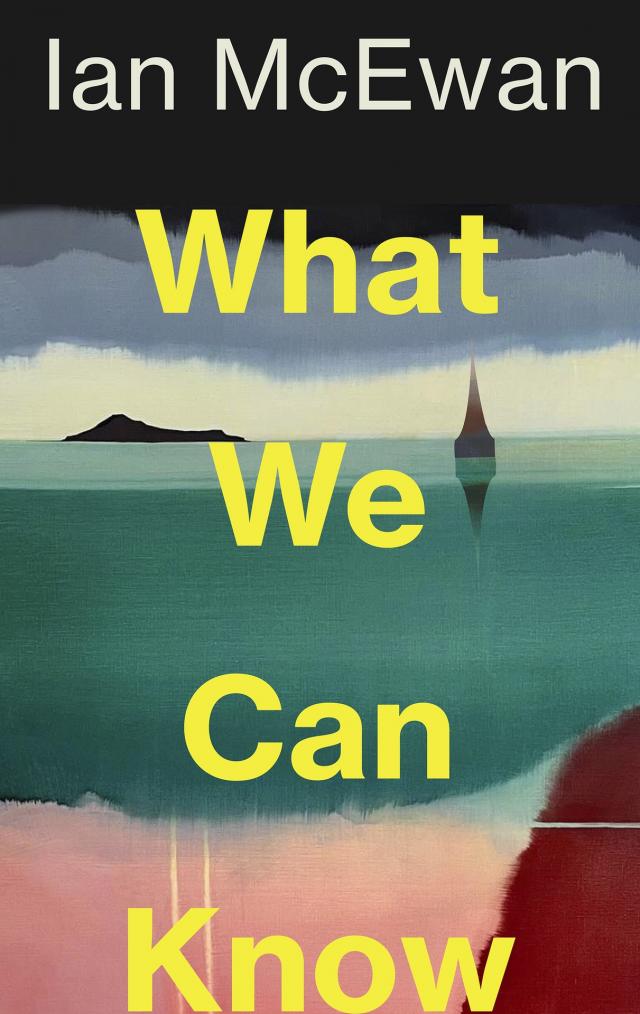
What We Can Know, page 5


A few years back we lived together for fifteen months until things went stale and we parted without drama. The university found me a one-room place in another building. Rose had a better formal education and is certainly richer than me. Or her parents were. The money she inherited embarrasses her and she prefers to live off the same meagre university salary as the rest of us. She is my brilliant young collaborator who knows more about the literature of 2000 to 2050 than anyone I know. My Blundy project has come to mean little to me without her. I need her good sense. But there has hung over us a question we prefer not to address. We had ceased to be lovers, but after I moved out we became good friends, determined not to let each other go. We had affairs, even talked about them, and colluded in the idea that it was a relief to be intimate, like siblings. It was as if we were waiting. We were close, and something would have to happen to force us apart or even closer.
We were taken on by the university when Rose was in her early twenties and I was thirty-two, thrown together to teach a course, ‘The Politics and Literature of the Inundation’. It was hard work. These were surly second-year students, not the sparkiest bunch. Rose and I mapped out the sessions over a recess. Before covering the shifting global alliances, the resource wars and the literature that came out of the turmoil, we thought we should deal with the background in terms of nuclear war, the water cycle and the Derangement. We invited a couple of friendly specialists to address the group, one from Earth Sciences, the other a politics professor. In two hours the students offered no more than a grunt or a reluctant simple sentence. They did not want to know or think about a hostile sea. It bored them in advance. They lived on and among islands. So what? Fourteen young men and women were slumped around the table. They had grown up with the consequences, heard their grandparents go on about it. The past was peopled by idiots. Big deal. The matter was dead. The kids attended our course because it was compulsory. But they had moved on. What animated them in those days was a twenty-minute two-string bass guitar solo. Or possession of fashionable pale green and purple linen pants, worn low on the hips by both men and women and secured by a large tin buckle.
Rose and I met that evening for a post-mortem. We were inexperienced and took matters personally. It was as if we were teaching a dead language. No point asking the specialists back. Too embarrassing. We would get our minds round the material and do it ourselves. So at the next seminar we laid it out, we spoon-fed them a short history of sea levels. We spoke in cheery sing-song voices, as if addressing a pre-school class. We made jokes. We showed colourful animations, simple to understand. Twentieth and twenty-first centuries, sea-level rise two millimetres a year, mostly driven by anthropogenic (we explained the term) warming. Warmer water expands, adding to the rise. Freshwater lakes drained by human overuse, the water recycled as rain and snow back into the oceans – more rise. Melting ice, albedo effect explained – more warmth, more rise. But more significant, the nuclear politics of the mid-twenty-first century and the fatal concept of limited nuclear war, then a poorly engineered Russian intercontinental missile aimed at the southern United States exploding in the mid-Atlantic ocean, catastrophic tsunamis devastating Europe, West Africa and coastal North America, the suspicion that the mighty explosion was planned, the political pressure for revenge, further catastrophe before a panicked peace was arranged. We spoke of the newly created inland seas, enlarged over time by increased rainfall. The land beneath them compressed and lowered, so they did not drain, but persisted like glacial lakes. Scores of vanished cities. (We showed old pictures of Glasgow, New York and Lagos.) The globalised economy and its distribution networks broken. Markets and communities became cellular and self-reliant, as in early medieval times. Those science and technology institutes, seed- and databanks, museums, libraries and universities not destroyed took to the hills and mountains. The knowledge base and collective memory were largely preserved, along with the internet, mostly maintained later by Nigeria, whose rise we also covered. Heavy industry and fossil-fuel use collapsed. So-called war-dust from Middle East battlefield nuclear exchanges rose to the upper atmosphere and average global temperatures dropped. By way of tsunamis, wars, starvation and disease, earth’s population dropped below four billion around the time a shattered Germany was incorporated into Greater Russia. Amid the disasters, world literature produced its most beautiful laments, gorgeous nostalgia, eloquent fury – and those masterpieces, so we promised, we would study together.
Were all the kids asleep by the end, or just most of them? That night Rose and I went back to her place and got drunk. We were so young then, and in my despair I believed that I could not go on with my career. I’d find something else to do. Rose was of the same mind. But gallows humour rescued us.
At some point in the small hours she said, ‘Tom, I think I’ll walk down to the beach and hang myself by the lifeguard station.’ She didn’t move.
I said, ‘Off you go then.’
And she said, ‘Come with me.’
We laughed at ourselves and kissed and became lovers that night.
8
The varieties of silence are as numerous as those of speech or thought. Or of listening. After Francis had read the last word of the final line of the final sonnet of his Corona, there were ten distinct silences around the table. The poet’s was the simplest. Francis reported in his journal ‘a return to earth, to the present, to the self I had forgotten for twenty minutes’. He experienced a pleasant sensation of emptiness and exhaustion. He had nothing more to say, and he did not wish to hear anyone else. The matter was complete. While the room remained silent, he rolled up the vellum, looped the ribbon around and secured it with two neat bows. He may have had in mind lines from his early poem about a garrotting in the Spanish Civil War: ‘with the transferred competence / of lifelong shoelace-tying …’ He stepped around his wife’s chair, stooped to kiss her and presented his gift.
She pressed it against her and whispered to him, ‘Thank you. Thank you darling.’
As Francis walked stiffly towards his seat – he had a glass of champagne in mind – there was a sound, a suppressed sob. It came from Harriet as she lifted her hand from her wet face, half smiled at the others and began timidly to clap. With relief, the rest joined in, including Vivien, and the applause grew louder and there were murmurs of ‘terrific’ and ‘beautiful’. Easier to applaud than to attempt something apt. To drink as they had, then listen to fifteen sonnets in Blundy’s condensed style was a cruel demand. Helpless daydreaming was inevitable. But the sense of a serious historic occasion was not diminished. Everyone loved the poem. Much of what follows is drawn from journals, emails, various social media, a handful of letters and some reasoned supposition.
Harry Kitchener stood to lift the magnum and fill the poet’s glass and went round the table. When all glasses were filled, Francis proposed a toast to Vivien. Then Harry proposed a toast to Francis and the Corona. The silence, instantly forgotten, had lasted as long as thirty seconds, according to an email Vivien wrote to her sister. Loudly toasting the poem – only Vivien and Harry knew it as a corona – was all anyone could think of. What had brought Harriet to tears, as she explained later to Chris as they headed home to relieve the babysitter, was the gorgeous music of the words and the evocation of companionable love, and love of teeming nature. ‘So warm,’ she said as she drove, ‘so luscious and tender and wise. And so threatened with death. I felt it pouring all over me and I wanted to shout for joy and terror all at once. When it ended, I had to keep my big mouth shut.’
Chris nodded and said, ‘Yeah.’ Poetry had a lowering effect on him. Classical music too. Their cultural weight and solemnity and self-importance oppressed him. He suspected that people were subtly bullied into faking appreciation in order not to appear uneducated fools. Long ago he had proposed this to Harriet. She was so dismissive and irritated that he never mentioned it again. Among the craftsmen and women, marquee erectors and roadies he worked with, string quartets and sonnet sequences never came up. Stoically, he kept his suspicions to himself. But during the reading, his attention was briefly held by the poet’s word ‘proscenium’. It set Chris wondering how he would organise the transportation of some scenery flats from a children’s theatre in east Oxford to a similar theatre outside Carlisle. It was a cost and logistical problem which he was determined to solve. Neither theatre had any money. The van he could get for almost nothing was too small for the flats. He could call in a favour and borrow a truck and drive it up north himself. He would pay for the petrol too. He knew that Harriet would approve. He did not notice the recitation ending or the silence that followed. What brought him back to the room was Harriet’s little sob. He was happy to join in the applause and was the first to murmur ‘beautiful’.
Graham Sheldrake had remained focussed for the first few minutes. He felt obliged as a house guest to give his host his full attention. Or the appearance of it. At the emergence of a rotund father-figure and then a certain significant phrase, something about a fracture, he started to wander. A crack now lay across his existence. If the marriage was over … or was it? Untracked minutes later he forced himself back and discovered he was lost. Francis was outside a church porch, when not long before, he had been contemplating a swim in a river with Vivien, if it was her. So … in which case, if the marriage was over, he was under no obligation to resume with June. She probably would not want him … manager at the golf club, a wonderful woman, but sort of … and Mary herself might like some kind of informal, occasional … By the fire it had been hard to read her mood.
He came back at last to the dining table, into an alarming silence. It was over and they were sitting there like mannequins. For such a worldly, easy-living man, he had a refined sense of social obligation. He thought someone ought to say something, for the sake of an old friend. He and Vivien had gone to such trouble. The hospitality, as always, was splendid, and they were the only ones staying over. In desperation, Graham was close to saying he liked the bit about the church. But it may have been a house. Or a pub. There was also that crack, but in what? Not in a marriage. It might have been between sickness and health, or youth and age. When lovely Harriet started the applause, he could have leaned across the table to kiss her.
Many years before, Tony Spufford had published a guide to the wildflowers of Shakespeare’s plays and poems. It was long out of print. The illustrations, though exquisite, were line drawings. In the bookshops there were now colourful books on the same subject at half the price. His was more scholarly, and botanists and Shakespeareans preferred his edition, but that made little difference to sales. In the Oxford house he shared with John, there were still a dozen copies on the shelves and Tony sometimes gave one, specially dedicated, to a botany colleague he admired. When Francis spoke of honeysuckle in his second sonnet, Tony thought of Shakespeare’s ‘over-canopied with luscious woodbine’ and Clifton Darke’s drawing. And then, as more meadow, woodland and riverbank plants appeared in the poem, some with beautiful and accurate descriptions, the professor suddenly remembered – Francis knew nothing about plants. Tony was a practised reader and knew to separate the implied narrator from the poet. Sometimes they overlapped and parted in the same poem, but could they diverge so wildly throughout and be emotionally honest? Once, in Tony’s presence, Francis had called a dandelion a but-tercup. When corrected he had muttered, ‘Same difference.’ When Vivien was away, the houseplants suffered. Some withered and died.
It was a trick then, impressive, probably legitimate. The poet wore a gorgeous mask. His apparent expertise was easily and rhythmically born, lightly folded into the lines with close observation and melodic grace. There was a clumsily symbolic Lord of Nature figure, set for destruction, but otherwise these were songs of seductive complicity. But Tony could not free himself from an ungenerous thought. This was fraudulent, it was fakery. Francis had no love for the things his poem seemed to love. Or was this an aspect of the murderous destruction that seemed to permeate the poem? The professor knew all the flowers of the poem’s first five sonnets, and he could never have conjured them so vividly. The poetry would have been easier to dismiss had there been coldness in Blundy’s pretence, but it was fondly intimate with the living fabric. Better not to have known the poet personally. Like drifting clouds over a full moon, Tony’s musings occluded sonnets six to fourteen. He listened to the fifteenth but could not be moved. When it ended, he sat in silence with the rest. The poem was accomplished, he was sure, but he could not eliminate a thread of dark feeling which he identified, as the applause began, as contempt. He clapped all the harder.
As soon as her brother began his reading and the social moment was in temporary suspension, Jane Kitchener tumbled inwards into self-reproach complicated by familiar sibling resentment. It was bad enough to have seen Mary drop the salad bowl she had made for Francis and Vivien, but her own shouted expletive shamed her. She knew that in this vaguely bohemian milieu no one minded, but she minded, and she thought her brother did too.
But Jane had deeper reasons for shame. She and her brother had a strict upbringing by the standards of the time. Their parents were observant High Anglicans. Francis, two years older, shrugged off the wasted hours of Sunday school and extra Bible classes more easily than Jane. In her mid-teens she had turned her back on the entirety of her parents’ beliefs, but by late middle age had come to accept that she was shaped by her past and could do nothing about it. This was who she was. She did not believe, but she could not bear to read or listen to atheists, and crude expressions made her wince.
Jane entered the well-trodden labyrinth of fondness and resentment towards her brother, one she could never escape. The azure bowl she had made for him had been one of her best. It gleamed. Its faint lack of symmetry was its charm, its human touch. When she presented it before the wedding, he did not acknowledge it. Their childhoods together had been corrupted by imbalance. She had helped him with all that interested him – joining in to build his ‘camps’, collecting stones for his deafening polisher, pretending to be passionate about his favourite football team. But nothing of hers – music, running, clay modelling, wood carving – featured for him. He could not see what she did, or what she did with and for him. Even books, once her passion, were his in adult life. He had stolen them from her.
That she rejoiced in his talent and success was a continuation of their childhood pattern. He had never visited her studio, never asked about her work, did not read the article she sent him from a local paper about her exhibition. When Francis came to dinner, it was to talk to Harry about Francis’s work. She resented being introduced to people as Francis Blundy’s sister. Now Jane was expected to listen awestruck to his latest and join the adulation. This was the self-denying arrangement fixed in place since she was five years old.
She knew herself well. Her grudges surfaced because she had no choice – she loved her brother and longed for him to return her love. She had spoken to Harry about her feelings. He pretended not to understand. ‘Just tell him how you feel!’ But he quietly worshipped and resented Francis too.
At the dining table she drifted back into the reading. Unaccountably, an old man was lying face down in lush wet grass at the foot of a waterfall or was it a flight of stone steps? Jane was of a mind to stage her own form of rebellion. At last, the poem ended. During the silence she was determined not to speak. When Harry proposed a toast to Francis, she raised her glass to her lips, but she did not drink.
Francis was on his first sonnet and John Bale was thinking again about the snake and how touched he had been by the elderly couple who brought it to his practice at the end of a working day. They knew it was a grass snake and were not afraid to handle it. But when the woman went to lift it out of its cardboard box, John put his hand on hers to dissuade her. It was a spinal injury. It would be hazardous to move the patient. Though the creature was conscious, he thought that it would die and that he should wait for the couple to leave before putting it down. But as they said goodbye, they promised to be back the next day to see how their snake was doing. Such faith in him was touching. He cut away the sides of the box – he was unable to afford an assistant yet – and carried the snake on its cardboard tray into the operating theatre. It was a large barred grass snake, over three feet long, probably a female. The distinctive black and yellow collar and the black bars along its flanks were vivid under the theatre lights. Her eyes, black encircled by orange, seemed to be on him as he made his first inspection. The damage was in two places, both, fortunately, towards the tail, and not as bad as it looked. A bike, not a car. Snakes have an impressive capacity for axonal regrowth and neurogenesis from special cells in their spines. The immune system would kick the process into action. John administered an anaesthetic and sedative, phoned Tony to tell him he would be late home, scrubbed up and set to work with special cement, repairing what he could of the broken, feathery bones of the vertebrae, then stitching the wounds.
He worked for two hours, seized by a familiar passion, when rescuing a particular animal stood in for all that was important in his life: keeping his struggling practice together, maintaining his loving relationship with Tony – the best thing that had ever happened to him – and doing his best for his younger brother, who suffered from MS. The three elements of his existence were grafted into the body of a serpent, and therefore she had to be returned to full health. It drove him on, this mode of metaphorical thinking – and it often worked. The couple, Sam and Jackie Bryant, came the next day to check, and again a week later to take the patient home in a grass-lined aquarium, into their convalescent care. He wrote out instructions on diet and the rest. Earthworms would have to do. A month later they were back and together, vet and clients, drove after work to Wytham woods. He chose a quiet corner away from the main tracks, and not far from a pond. For ten minutes the snake lay still before sliding slowly into the undergrowth. When its tail vanished at last, the trio gave a cheer. On the way back, they stopped at a Thameside pub, the Trout, for a celebratory beer.