The Pulsar Files, page 9
part #1 of Matt Flynn Series


‘I’ve been so wrapped up in my shooting drama I forgot to ask about your day. How did the trip to Oxford go?’
‘We told the local plod we were interested in the case due to the large loss of life, public interest in the story and all that and they didn’t have a hernia about talking to us, which makes a change. I think they’re more concerned about getting their story straight before a big meet next week with the Chief Constable and local dignitaries. Overall, we didn’t learn much other than they don’t have any reason to believe it was anything other than a hellish accident.’
Her fork stopped in mid-air, about to put a large piece of fish in her mouth. ‘You’re doing the opposite of detective work, you’re not investigating a crime, but trying to find out if a crime has been committed. Is this Serbian gunman the real deal?’
‘For sure. He’s been implicated in the assassination of a Kuwaiti oil minister in 2004, the killing of an American general on leave from Iraq in Cyprus in 2006, and the shooting down of a French helicopter containing twelve anti-terrorist officers attending a conference in Nantes about six years ago.’
‘I remember the last one. I thought they put it down to bad weather and pilot error?’
‘They did, but don’t you think it would cause more alarm if they said the helicopter had been shot down by person or persons unknown?’
She gave him one of her sceptical looks. ‘If he’s so ruthless, why hasn’t someone lifted him before now?’
‘He’s been in custody several times but he does every job cleanly, leaving no evidence of his involvement. In fact, I hope Interpol have got something solid to throw at him otherwise he could be taking a walk again.’
‘What makes a guy do a job like that?’
‘What you’ve got to remember is the war in the Balkans kicked off in the 1990s. It’s not like World War Two that happened generations ago, and not in some far-flung desert kingdom in the Middle East either, here on Europe’s doorstep in cities and towns like ours. Guys who were soldiers then aged nineteen or twenty are in their 40s and 50s now. Memories of all the horrors and terrifying moments will still be with them and, who knows, in Katić’s case, maybe he didn’t stop being a soldier.’
‘It’s more recent than you think.’
‘The thing with a modern conflict is not only do the people involved still possess all the skills they learned while they were in uniform, they’re still young enough to use them and many of the weapons still work.’
‘We often take guns away from street kids,’ Emma said, ‘and they can be traced back to wars in Africa or have been smuggled from Iraq and Syria. The anti-terrorist guys say the same thing. What are you planning to do now? It sounds like you don’t have many leads.’
‘There’s nothing we can do about the Serb shooter, he’s with Interpol now and anyway, he told us nothing when we interviewed him. Our main focus now is finding who hired him.’
‘Is that what he is, a gun for hire?’
‘Yep, no allegiances to anything but money.’
‘How will you find the guy who paid him?’
‘We need to go back to Oxford and talk again to Chris Anderson. There’s something he’s not telling us about his father, or something he’s involved in himself.’
‘Chris? He’s only twenty-one. The hardest thing for a kid of his age is getting out of bed in the morning and writing a personal statement on a university application form. I can’t see how he would have done anything so major it would provoke someone to hire the Serb to kill his family.’
‘You sound like Rosie, but the answer to this must be there. It can’t be anything else.’
‘Mind you, I’m thinking about some middle-class kid whose father owns a defence business in Oxford. Many of the kids I come across are breaking into houses at fourteen and have a serious drug habit before they can legally drive. If they can avoid drugs, they’re out boosting cars, robbing off-licenses and nicking mobile phones. If Chris has got just a small part of what they have, then maybe you’ll find a motive.’
Chapter 17
It had been a long day. Kevin Anderson had spent the afternoon interviewing candidates for the Sales Director position, left vacant when he moved into the Managing Director’s chair.
The last guy he interviewed exuded all the confidence required to walk into a room full of uniforms and tell them what they needed to know, but where he excelled in salesmanship, he lacked in technical knowledge. Kevin hadn’t anticipated this problem but realised now it could be a showstopper, as he didn’t have the time or the inclination to train a new person.
Kevin had never trained to be a salesman but it didn’t stop him being successful. However, the nuances of his new role as Managing Director eluded him. He knew enough not to call the overweight women working in the staff canteen ‘fat’, or the disabled people on the shop floor testing electronic circuits ‘cripples’, but trying to get the best out of people in a one-to-one meeting was harder than it looked.
Looking back over the completed interviews, he’d been too eager to talk about his own background, or finish sentences when the candidate couldn’t think of the next word. As a result, several candidates faded from his memory as effectively as someone he’d passed in the street.
He could do with the comfort of his secretary, Lucinda, with the door closed and her sitting beside him, ostensibly taking notes while her other hand worked its magic, but she’d left for home several hours before. She’d been Stephen’s secretary before him but even then, the two of them had been at it like rabbits whenever the opportunity arose.
He pushed the CVs to one side and stood. He couldn’t do much more tonight and began packing up to go home. Like the optimistic salesman he’d always been, it would all look better in the morning. He turned off all the lights, a habit ingrained into all the staff by Stephen, and locked the front door of the building.
They didn’t employ a doorman or feel the need for a caretaker. The company didn’t operate a night shift and the nature of the work meant no member of staff needed to stay beyond the normal knocking-off time of five-thirty. Kevin had been the last one out of the building every night since assuming his new role, but he didn’t do it willingly.
He walked down the stone steps at the building’s entrance and walked around the corner to the car park at the rear. He could see his car under the glare of the security lights and beside it another car. In all his time of doing the new job and being the last one out of the building, his car had always been the only one left in the car park.
He assumed a member of staff had left it before heading out to one of the pubs or restaurants nearby. Galleon was located at the Oxford Business Park and while some of the pubs in the area were satisfactory for a quick working lunch, far better bars and restaurants could be found by the river and in the city centre, both only a short drive away.
He walked to his car and as he got closer, the doors of the other car opened and two men got out. They headed towards him.
‘Kevin Anderson?’ the taller one said.
Kevin’s heart sank; they were either cops or journalists, neither of whom he wanted to talk to right now.
‘Who wants to know?’
‘You need to come with us.’
‘Show me your–’
A punch in the gut floored him and before he could respond, he was knocked to the floor and duct tape wrapped around his hands and his mouth. They pulled him upright and an arm grabbed him around the throat causing him to gag. They frogmarched him to their car and seconds later, hands grabbed his body and threw him on the floor in the back of their car.
He didn’t waste any energy struggling or trying to shout over the gag. Two against one was unfair odds. He would wait until they reached their destination and try to do something then. If they were cops, they sure hadn’t been on the same interviewing course as Inspector Morse.
He could tell by the bump and sway of the car they weren’t taking him out to the country, where they would tell him to strip and he would be forced to walk home naked, the sort of stunt his mate, Bob Taylor was likely to pull on his birthday; but today wasn’t his birthday. They were heading into town as he could feel the car slow and stop at various points which he assumed to be traffic lights, and swing left and right as it sailed around a succession of roundabouts.
Ten minutes later the car stopped. The door opened and they hauled him to his feet. He felt drizzle on his face and, looking around, realised they were parked in a back alley. They bundled him towards a door, blank without any signs or insignias to say what was inside. One of the guys pressed a buzzer and a few seconds later he heard a click as the door lock was disengaged. He realised now would be the best time to try and escape before he disappeared into the bowels of this building, but not only did his captors do a good job of trussing him up, they stood on either side him and gripped his arms.
They led him up a steep, narrow staircase into what could only be described as a well-appointed office. Too red and opulent for his tastes, with thick carpets and heavy furniture, making him think he was in a room at the back of a nightclub or casino. The realisation hit him, making him shudder: casino. If tonight’s strong-arm charade was about his gambling debts, it meant he was about to meet one of the Swift brothers.
Declan and Gary Swift had built up an impressive gambling empire of betting shops, on-track betting and casinos, all from the inheritance of their dad’s betting shop in Woking fifteen years ago. The brothers were chalk and cheese; Declan the brains, Gary the brawn. He’d known several habitual gamblers who had fallen on hard times after a run of bad luck and received a visit from one of the brothers.
If Declan turned up at your workplace or home, the Swifts considered you a valuable customer and he was there to provide reassurance of your continued admittance to their gambling establishments and discuss a payment regime to reduce the outstanding debt. If Gary arrived, they wanted their money now and he didn’t care how many bones he broke or ligaments he ripped to get it.
They untied his hands and dumped him in a chair in the centre of the room, but the relief was temporary as strong hands grabbed his wrists and tied him to the arms of the chair. He still wore the gag and couldn’t ask why he was there or what they wanted.
Five minutes later, he found out the answer when Gary Swift walked into the room. Decked out in a smart dinner suit he looked to the punters in the casino like one of the croupiers, but to Kevin he resembled an old-fashioned gangster, clever on the outside, evil on the inside. He had a well-styled mop of black hair, perfect teeth and a handsome face, but to those on the receiving end of his bad temper, looks could be deceiving.
He removed his jacket and rolled up his sleeves; tattoos vied for space on muscled arms. He walked around the desk and sat on the edge looking at his prisoner. He nodded to one of his heavies who pulled the tape away from Kevin’s mouth in a quick movement, making him wince.
‘You are here, mate, because you owe me a lot of money.’
‘I know, I know but I can pay you back.’
He laughed, flashing those famous pearly whites. ‘I hear that more times than I’ve busted people’s arms, and that’s saying something.’
The two heavies joined in the merriment but Kevin didn’t find it funny.
‘I can get you the money, I’ve got a good job.’
‘Kevin, I know what you do, I know where you work, I know you and Hannah live in a nice house and your children are all grown-up and moved away.’
He was gobsmacked. How did Swift know all this about him? Kevin was a cautious man working in a tough business and routinely checked his street and car to ensure no one was watching and someone hadn’t followed him home. Had the furore surrounding Stephen’s untimely death: the reporters at the door, Hannah’s bouts of crying and Chris in the upstairs room, distracted him, or had he just become too complacent?
‘The problem is how will you pay me back if I burn down your little business? I’m tempted to do it and there are many in Oxford who would thank me for doing so.’
‘You wouldn’t.’
‘Don’t underestimate me Kevin, or what I’m capable of. Maybe to make it interesting, I’ll wait until all the employees, including yourself, are inside, eh? I’ve done a lot worse.’
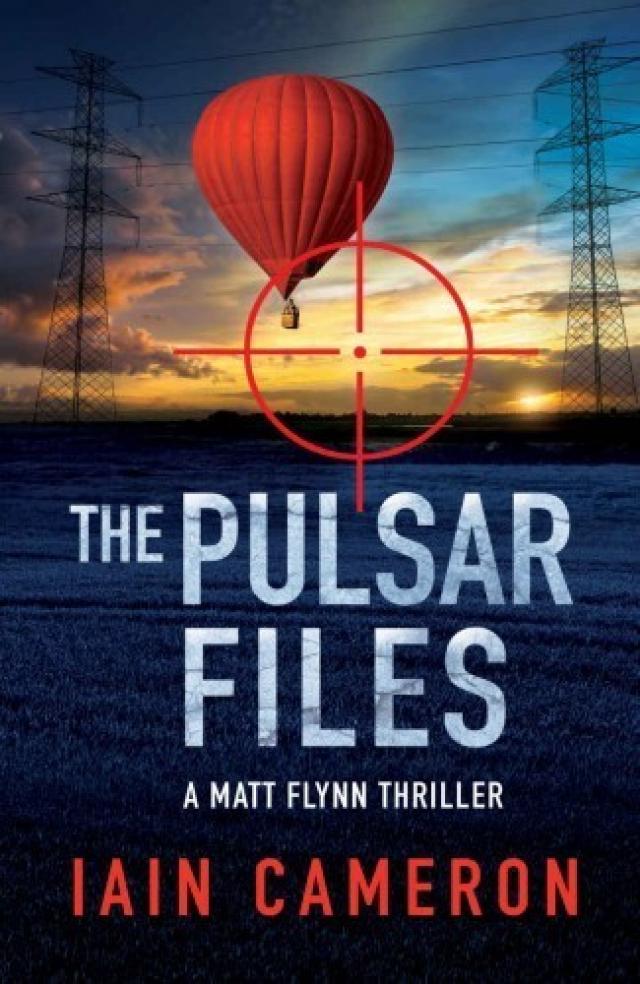
It came to him in a flash; Chris was right to think the balloon had been brought down deliberately. Maybe it had been done by Swift to demonstrate his reach and ruthlessness.
‘Gary can I ask–’
He held his hand up. ‘No, you can’t ask. The time for discussion is over. I brought you here today, Kevin, to show you we mean business. When the manager of my casino in Oxford asks you to pay back the money you owe, he shouldn’t need to ask you a second time.’
Swift nodded to one of the heavies.
A fist came towards him and smacked him in the mouth. Then another, then another. Swift said something and the beating stopped.
Kevin spat out blood, then a tooth. Blood and snot dribbled on his trousers and down his white shirt. He tried to open his mouth wide but the excruciating pain made him stop. His head felt heavy, he couldn’t lift it. Someone grabbed his hair and lifted it for him; Swift.
‘You will make a payment of the money you owe this week. You will make this your top priority. Do you hear me, Kevin?’
He nodded.
‘Just remember, I won’t ask a second time, Understand?’
He nodded again.
‘Every time you look in the mirror, your damaged face and broken nose will remind you of this commitment.’
Broken nose? Too late, Swift’s fist drew back and came flying towards him.
Chapter 18
The problem with living in Essex, according to Matt Flynn, wasn’t the local accent or the blonde jokes, but that everyone he wanted to see lived in London or further west. As a result, he spent more time negotiating the M25 than many and like always, today it was choked with traffic. His phone rang.
‘Hello Gill.’
‘Where are you?’
‘On the way to visit Sir Raymond and see how his daughter’s doing.’
‘Poor girl. Give Raymond my fondest regards when you catch up with him, will you? We haven’t talked for a while.’
‘You and Sir Raymond were best friends at one time.’
‘Stop fishing, Flynn, nothing’s changed between us. It’s difficult sometimes to find the time.’
‘Tell me about it.’
‘I heard about Emma’s shooting incident.’
‘It’s a sorry business.’
‘Is she all right? The report I read said there were no other casualties other than the man killed.’
‘You would be the first to hear if anything went wrong. Your niece is fine as so is the rest of her team, but I think it’s all set to get worse.’
‘How do you mean?’
‘I hear an organisation called Victims Against Police Aggression are planning a march this afternoon. Met analysts are predicting it could attract up to ten-thousand people and they expect it to turn nasty after it gets dark.’
‘What’s your take? Should the Met pick a fight with the CPS if they take the ARU officer to court?’
‘Emma says she would’ve done the same thing as Eddie Johnson, the ARU officer, and opened fire. If you wait until a perp shows you what he’s got in his pocket and it’s a gun, it’s too late. Eddie’s mistake, if I can call it such as these things happen so fast, was not shouting a warning to Powers to keep his hands still.’
‘I bow to you and your partner’s more contemporary operational experience; I’ll pass your comments on to the Met Commissioner when I see him and offer any help we can give. I also wanted to ask, what’s the latest in trying to find out what our Serbian gunman, Dejan Katić, has been up to?’
Matt brought him up to date, including details of the research done by Sikandar Khosa. The traffic ahead of Matt’s car started to speed up.
‘Is Kevin Anderson out of your reckoning?’
‘I think so. We’ve looked at the big withdrawals from his bank account and tied them to gambling debts, but I don’t think the magnitude warrants the engagement of a Serbian sniper.’
‘I agree. This leaves the Anderson boy who you believe is harbouring something?’
‘We’ve eliminated nearly everything else and it’s not something we can dismiss, despite what Rosie says. Chris is studying Computer Science at university and according to his tutor, he’s a natural. What if he hacked into a company’s systems and saw something he shouldn’t, or messed up a system, making life difficult for serious criminals or a bad-ass gang?’
‘If you remember, the guy who developed the Silk Road website on the dark web wasn’t much more than a teenager himself when he set it up, and we know the sorts of characters who inhabit that space. You might be on to something there. What I don’t get is why Katić’s results aren’t more visible. Hits done by people like him in the past were never so subtle.’
‘I understand your frustration, but maybe Katić wasn’t trying to disguise it. If he did shoot down the Anderson family balloon I think he struck lucky when the envelope hit the cable and caught fire. If it didn’t ignite and fell more or less intact, a bullet hole might have been spotted by AAIB investigators.’
‘Maybe. Go and talk to the boy, do what you need to get the truth out of him. We’re missing something and you know me, I don’t like us being out of the loop. Talk to you soon.’
Forty minutes later, Matt turned off at the Windsor junction and ten minutes after that, his car crunched along the pebbled driveway of Clifton Manor, a large baronial house set in twenty acres of beautiful Surrey countryside. He loved the view here, long sweeping slopes of grass dotted with small clumps of trees, a herd of cows in the distance, but he didn’t like the house. The family seat since the late seventeenth century, the house felt cold and draughty and cost its owner a fortune in utility bills and maintenance to stop it falling apart.