Hail Mary, page 1
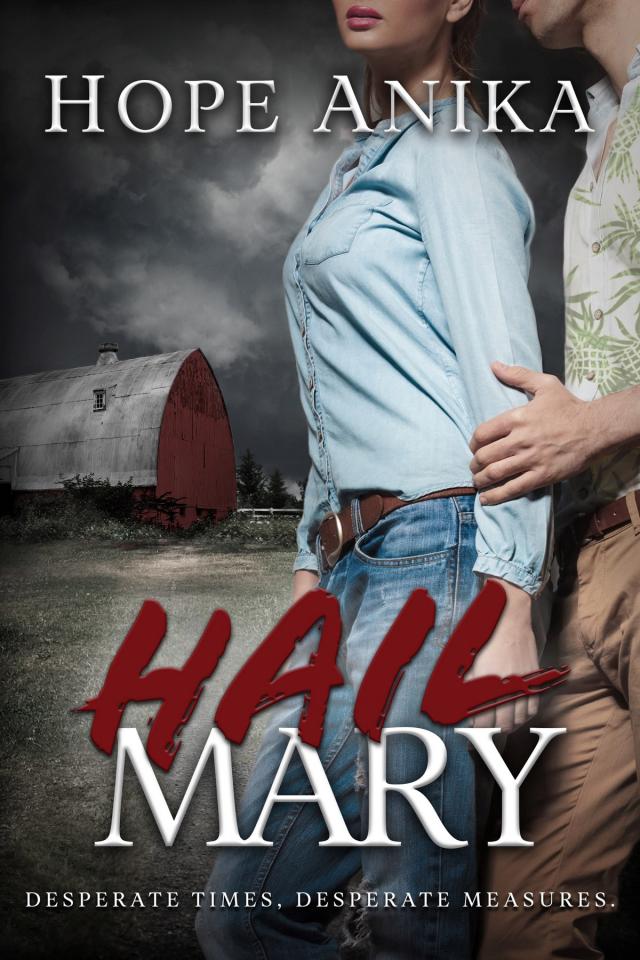


Hail Mary
Hope Anika
Copyright © 2020 by Hope McKenzie
All rights reserved.
No part of this book may be reproduced in any form or by any electronic or mechanical means, including information storage and retrieval systems, without written permission from the author, except for the use of brief quotations in a book review.
Even cowards can endure hardship; only the brave can endure suspense.
Mignon McLaughlin
Contents
Prologue
Chapter 1
Chapter 2
Chapter 3
Chapter 4
Chapter 5
Chapter 6
Chapter 7
Chapter 8
Chapter 9
Chapter 10
Chapter 11
Chapter 12
Chapter 13
Chapter 14
Chapter 15
Chapter 16
Chapter 17
Chapter 18
Chapter 19
Chapter 20
Chapter 21
Chapter 22
Chapter 23
Chapter 24
Chapter 25
Chapter 26
Chapter 27
Chapter 28
Chapter 29
Chapter 30
Chapter 31
Chapter 32
Chapter 33
EVOLUTION AWAKENING
Evolution: Awakening
About the Author
Also by Hope Anika
Prologue
In the beginning, the dream is always good.
Her hand gripping his; her scent filling his head. Her smile. Anticipation and joy for the night to come.
Them, together.
As it should have always been.
The evening is balmy; humid and fragrant. The electric pulse of club music ripples toward them on a salty breeze. To the west, the sun is sinking in a ball of fiery orange-red, streaked by brilliant strands of pink and gold. Palm fronds dance where the pavement gives way to pale white sand, whispering as the wind strokes through them.
He can taste chocolate and hops; his belly is full, his wife is laughing, and life…
Life is fucking good.
The tingle whispers across his nape as they cross the street; slight, probably nothing. He ignores the flash of awareness that immediately follows.
Because no one would dare take him. Not here.
Not now.
The Jeep’s door sticks when he opens it for her. Unusual but not surprising; it’s an old Jeep. A creak as he closes it, and he makes a mental note to oil the hinges.
Seagulls watch as he circles the front of the Jeep, and the tingle hardens to a bristle; the fine hair that covers his frame stands abruptly to attention. He hesitates. And then his wife smiles at him through the glass, and he discounts the flicker of unease, intent on the invitation she emanates.
Arrogant and thoughtless and fucking stupid. So many signs—
He smiles back, and the dream tears like a worn piece of paper; he shimmers into ghostly being, a handful of feet from his fate. Even knowing the words are futile, he begins to scream.
Stop. Stop! Get her out. Don’t go forward—go back.
Go the hell back!
It’s wrong—all wrong—you saw the signs, pay attention, know—KNOW—don’t open that goddamn door—
The Jeep’s handle is warm from the fading sun; he thinks nothing of taking it in hand. Of pulling open the door of the vehicle that will take him home, where he will pull his lovely wife beneath him and—
Click.
The explosion is instant, ignition so quick there is nothing but sound—a deafening blast and a shock wave so violent it shatters bone. His eardrums perforate; her scream is soundless as he is launched like a rocket across space and time only to crash abruptly back to earth, his body bouncing over the unforgiving concrete like a stone skipping across water. His ears ring; his head throbs. Blood fills his mouth.
Debris pelts him as he skids to a stop; smoke clogs his throat. Her face is burned into his mind’s eye; that brief, horrific instant of realization. And then…flames. Eating her up.
He rolls over, his heart ready to burst, adrenaline like acid in his blood. Ready to leap into action, to save her…only to realize there is nothing left of his right leg but jagged bone and charred flesh connected by only the tiniest sliver of tendon. For a moment, he feels nothing, as if his mangled femur and disintegrated kneecap belong to another; as if the blood spilling out around him is being pumped from someone else’s veins.
But he tries.
To roll onto his good leg, to get it beneath him, to fucking stand up. But his brain is churning in his skull, and his arms are numb, and his good leg—the only one left—won’t work. He fights to drag himself to her, but nothing is cooperating, and he can only lie there and watch her burn, smoke acrid on his tongue, his blood a thick, deep, pool in which he hopes he will drown.
God willing.
Because the Jeep is black smoke and hungry white flame, and he can’t see her, he can’t hear her, but he knows—he knows—she is in there—just as he knows this is his fault.
His arrogance. His stupidity. The unforgivable certainty of his ability to keep her safe, protected from the realities of his existence.
She is burning because of him.
The pool of blood grows deeper, but it isn’t enough. He has no desire to survive this atrocity. He is prepared to go—has always been prepared to go—but she isn’t like him. She is good and strong and true; she brings hope and light and love.
While he brings only death.
She has saved him a million times. From war; from apathy. From himself. Tempted him into trying. Enticed him into believing.
Seduced him into living. To live…as she burns.
Murdered right in fucking front of him.
As he imagined taking her home to bed, someone watched and waited, breathless with anticipation. He knows; he can feel them. Still watching. Still breathless.
Hungry for his pain.
He should want revenge; to survive so he can peel away their skin and splinter their bones; make their world bleed red. Burn it to fucking ash.
As his now is.
But he doesn’t care. There is no part of him that would sacrifice death for life in search of vengeance. To avenge her means he must survive. Without her. And that is not something he is prepared to do.
The river of blood that streams away from him is a relief.
Be with her.
There is no other option: he will not survive without her.
Fate could not be so cruel.
Could it?
A thought he cannot bear; he turns it aside, tells himself, soon.
Soon.
The Jeep burns. She burns.
And he watches.
Chapter 1
I’m being watched.
Wynn Owens did her best to ignore the heavy weight of the stare that tracked her as she made her way through the collection of booths that lined the Superior County fair building. Her neck prickled as she surveyed the goods for sale: Mr. Glenn’s raw honey, Mrs. Baker’s ceramic pigs, and old Hanley Jenkins’ homemade salsa. Organic herbs, fresh cheese, free-range eggs. A collection of fruits and berries and homegrown vegetables. There was even a booth with fresh fish and an earthy array of wild mushrooms.
The sight gave her a pang.
“Next year,” she consoled herself.
Because stupid birds.
Greedy and voracious, the raucous black starlings had decimated her yield. Her apples and cherries and sweet, crisp pears. Heartless vultures. It wasn’t like there wasn’t enough to go around, or that she begrudged them an easy meal.
But come on.
Then, unexpectedly, last week a red-tailed hawk had appeared. Two days later, its mate had arrived—and together, they’d made a meal of the starlings.
“Circle of life,” she’d told the pile of feathers left behind.
She hadn’t exactly celebrated—death always made her sad—but she had taken heart that her fruit might make it to, well, fruition. And beyond that, the hawks’ presence was evidence that—finally—the land was beginning to heal.
Nine long years of fighting blight and pests and leaching toxins out of the soil; of composting and growing field cover and coaxing life from the earth had finally begun to pay off. This year, there would be plenty of food, and, if she was very lucky, some to sell as well.
Her heart fluttered at the thought.
Not just because it meant extra money—which was always welcome—but because it meant success.
The farm had recovered. Without fertilizer; without pesticide; without eradicating wildlife.
It could be done. Sustained. And profited from.
“Shove it up your arses, Superior County Farming Association.” She punched the air. “You can suck it!”
Because she’d done what every farmer in the valley had told her was impossible: she’d turned a barren, overworked, and lifeless patch of ground into a thriving, diverse ecosystem that maintained and enriched the food she grew. The soil was rich and black; the trees were thriving; the wildlife had started to return. And while she’d had to ride out a long transition—one that tested the limits of both her patience and her hope—the wait had been worth it. Watching the land reawaken had been a profound experience, one that mended places inside of her she hadn’t known were broken.
It also provided a much-needed stock of food that was growing more bounti ful every year. And the purpose and joy it gave her elderly tenants…well.
“Priceless,” she declared and turned down the next long row of booths, acutely aware she was still being watched. The gaze that followed her was unwavering and intent.
But Wynn refused to look.
Don’t do it.
No matter the temptation.
She passed fresh pastries and jams but stopped to consider a collection of delicate handmade chocolates.
They looked…like celebration.
And didn’t she deserve some festivity? Not just her—everyone who lived at the Owens Boarding House had worked tirelessly to make the farm a success. Even Jenna, her fourteen-year-old sister, had given up afternoons with friends and after-school events to shovel manure and dig planting beds. This victory belonged to them all.
“Thank you, Fran,” Wynn whispered, a deep and painful ache in her chest.
If only you’d lived to see it.
Life was nothing if not a consistent kick to the face. That her aunt had not survived to witness the germination of the seeds she’d planted so long ago was profoundly unfair.
Fran hadn’t gotten the chance to taste the fruit or harvest the corn; she’d never had the pleasure of thrusting her hands into that rich, silky soil. She’d never—
“Don’t ruin it,” Wynn scolded herself.
But old hurts died hard deaths. Many years had come and gone since her jagged, dark and—let’s face it—fucked up childhood, and yet still, there were nights when she awoke cold with sweat, her heart a drum in her chest, certain she had to run.
Run!
Even though those days were long gone.
Missing Fran was like that—no matter the bounty, all Wynn felt was loss. And that made her angry. So angry. That the beauty and richness of today could be soured and undone by the ugliness of yesterday was infuriating.
“Looking back just points you in the wrong direction,” she reminded herself.
And then snorted, because motivational poster, much?
That Fran had suffered so badly before she’d died—so much so that she’d chosen to pass before her time—didn’t help the healing. Or the forgetting. Or the moving forward.
Not that Wynn could blame her. There was mercy in letting go.
Even if it hurt like hell.
“Stop it,” she ordered.
Because her grief would change nothing; it would just undermine her joy in this accomplishment. And she deserved a little joy.
“A butt load of joy,” she decided.
Abandoning the chocolates, she moved on.
The gaze watching her refused to waver, like a fiery beam of x-ray vision burning a hole into the back of her head. But she resisted the urge to look. Instead, she turned down the next row of booths.
Hand-painted scarves…homemade lotions…stamped leather bags…there.
Buck Ferris and his impressive collection of Damascus steel.
The best bladesmith in Superior County, no one could match the quality of Buck’s work. Everything from hatchets and short swords to daggers and the finest kitchen knives decorated his booth, but Wynn was in search of more delicate fare.
She had two of his pieces: a sweet, serrated hunting knife, and a tactical edge he’d given to her when she turned sixteen, the latter of which she was never without.
Another remnant of her childhood: her love of steel.
Or maybe just her love of survival.
“Wynn? Is that you?”
Aw, crap on a cracker!
Which was not, Wynn knew, the response the man who suddenly stood behind her was going for. A fact he’d made clear—more than once.
Crap!
She had zero desire to deal with him. All of those fragile male feelings took too much stinking effort; men were exhausting. But blatantly ignoring him would be inexcusably rude—even for her. So she made herself turn and look at him.
“Hey,” Eric Henry said and smiled.
It was a nice smile, friendly and warm; it really shouldn’t have annoyed her.
“Hey,” she replied reluctantly.
Then she continued toward Buck.
Maybe Eric wouldn’t—
He followed. Tall and broad, with coal-dark hair and glinting blue eyes, he was handsome, she supposed. If you went for that sort of thing.
She didn’t.
“It’s been a while,” he said.
Not really. Less than a year, since she’d walked into the Department of Natural Resources office where he worked and picked up a firewood permit. He knew that; he’d issued it to her. Along with an invitation to dinner, which she’d politely declined.
Eric was a decent human being. She’d had biology with him in ninth grade, and he hadn’t wanted to dissect a frog any more than she had. But that didn’t mean she cared to date him.
She didn’t care to date anyone.
“How’s everything going?” he asked.
She stopped in front of Buck’s stand. “Fine.”
“So what have you been up to?”
A sigh escaped her. She shrugged. Buck approached, his long red beard filled with silver beaded braids, his thick fingers smudged with black.
“Winifred,” he said with his customary lack of inflection.
“Buck,” she replied.
He spared Eric a glance and then ignored him. “What do you need?”
“A filet knife.” She looked down at the array of finely honed blades spread across the counter of his booth. They were beautiful, dazzling, and deadly. “But I need something with a wider handle. It’s for Earl, and his grip isn’t what it used to be.”
“I can make you one if none of these work,” Buck said.
“His birthday is next week.”
Buck only folded his arms across his chest and shrugged. He was a giant of a man, with a thick neck and arms heavy with muscle. His red hair was cropped short; a fine spray of freckles covered his alabaster skin. Clad in a Packers sweatshirt and a matching beanie, his coveralls were scuffed and stained. There was nothing soft in him; his manner was gruff, his pale green eyes were hard, and he seemed much happier in the company of his forge than people.
But Wynn had known him a long time. Buck’s mother had been Fran’s best friend, and he knew far more about Wynn than she liked anyone knowing. Which would have annoyed her if he was normal. But he wasn’t. Like her, he was an odd duck in a pond full of swans. Which made her far more tolerant—and besides, Buck never trespassed. He didn’t gossip or prod or poke his nose where it didn’t belong.
And they’d always been—if not friends—friendly.
“I can do something with a wide walnut handle,” he said. “You want the blade a little wider, too?”
“No, just the handle.” Wynn eyed him. “How much?”
Another shrug. “We can trade.”
“Sweet.” Because the barter system was much kinder to poor folk—of which she was one—than the financial system was. She could almost always find something to trade; she couldn’t always find cash. “Thanks.”
“What kind of trade?” Eric wanted to know.
They both ignored him.
“I’ll get to work on it in the morning,” Buck told her. “I’ll bring it by when it’s ready.”
“Perfect,” she said and smiled. “I really appreciate it.”
He only nodded curtly. Then he gave Eric a black look and turned away.
Which cracked Wynn up. Buck knew she was never unarmed; he’d made the blade she carried. Still, she appreciated the thought.
It was nice to know someone cared.
“What kind of trade?” Eric repeated, his tone hardening.
Annoying. And presumptuous. And why he was always a pain in her rear end.
She sighed. Made herself look at him. Again. “See you around, Eric.”
Then she moved to step around him.
He planted himself in her path like a stubborn weed. “Why do you always blow me off?”