

The Faceless Thing We Adore, page 1


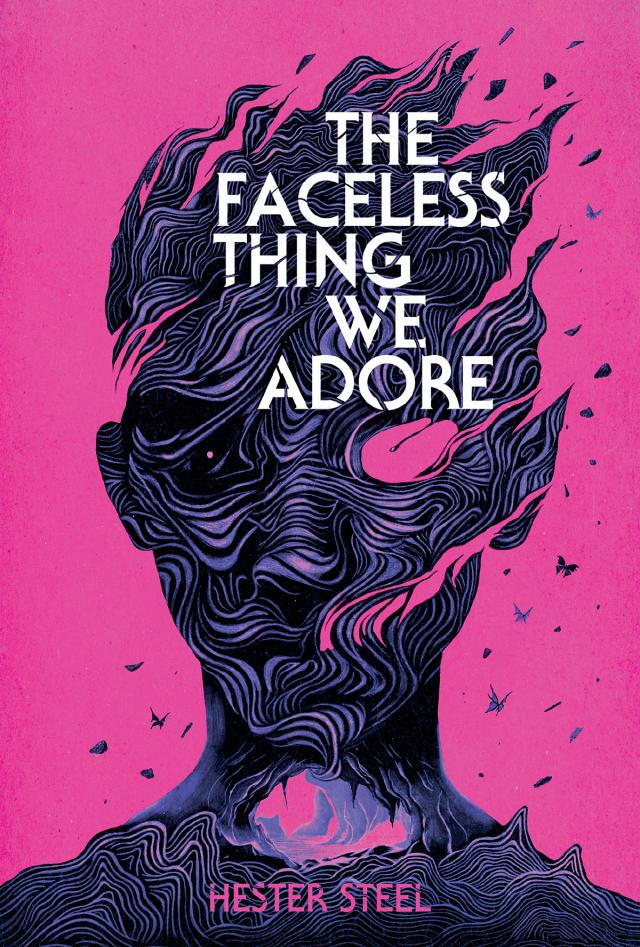
THE
FACELESS
THING
WE
ADORE
HESTER STEEL
Begin Reading
Table of Contents
About the Author
Copyright Page
Thank you for buying this
Page Street Publishing Co. ebook.
To receive special offers, bonus content,
and info on new releases and other great reads,
sign up for our newsletters.
Or visit us online at
www.pagestreetpublishing.com
The author and publisher have provided this e-book to you for your personal use only. You may not make this e-book publicly available in any way. Copyright infringement is against the law. If you believe the copy of this e-book you are reading infringes on the author’s copyright, please notify the publisher at: http://us.macmillanusa.com/piracy.
To Jennifer & Cemil—middle finger up, and thank you x3
And to Megan, who I accidentally wrote this book for
“I have spent an all but sleepless night, I have told lies and made a fool of myself, and the very air tastes like wine. I have been frightened half out of my foolish wits, but I have somehow earned this joy; I have been waiting for it for so long.”
—Shirley Jackson, The Haunting of Hill House
CHAPTER ONE
INTO THIN AIR
I CUT OFF MY HAIR AT 3:00 A.M. IN AN AIRPORT BATHROOM.
I find the scissors in my bag; I must have slipped them in during the fight. So here I am, alone in a bathroom, with scissors I’ll have to chuck out at security anyway, another scrap of my life I can’t keep.
They gleam.
They say, you’ve lost almost everything. Give a bit more.
My hair hangs down my spine when it’s loose. Every morning, I sit on the bed, wrapped in the duvet because the heat’s always out, and weave my hair into an intricate plait while Craig plucks at his guitar and traffic grinds by.
I mean, I used to. Past tense.
So many memories are woven into that hair. I imagine them cut away, leaving me light like a bubble in a wide sky. Iridescent, insubstantial, pop.
I could go home. I could beg and be forgiven.
I eye myself: pale, skinny, with flower tattoos spilling over my shoulders. My eyes are red from crying. I don’t look like someone who hesitates.
Fluorescent light flickers off the blades. I snip off my plait.
It coils into the sink and sits there, hairs unspooling like worms. I examine my new self, head cocked. Messy. I keep chopping; every time I look up, I expect to have this badass pixie cut, but I just look alien and disheveled. So messy. I keep cutting. My jaw’s tense.
“You all right, love?”
The woman behind me in the mirror wears a cleaning uniform, too much mascara, and a look of concern. Fair. Bits of hair cling to my neck, itching, and to my cheeks where I tried to wipe my tears and rubbed my skin raw.
“I’m fine.” I give her a big, bright grin. “I just … need to change my identity. Um. For a job. I’m a spy?” My laugh comes out all frayed and untethered.
The cleaner reaches for her walkie-talkie, face flat. That familiar Aoife, you’re screwing up look. I don’t think the joke hit.
I look hideous.
“I, um, have to go.” I push past her, only to hesitate in the doorway; the airport exit’s there, the way back to my life. I can’t do this. Look at me: My hair’s a mess.
I imagine lemons, sun-warmed bark, the slippery skin of olives. So vivid they fill my senses. I can do this.
I walk toward the departure gates.
As the door swings shut, I glimpse the cleaner, sighing, preparing to sweep away the remnants of me.
Thirty-six hours ago, I stole something from my boss.
In fairness, you take what fun you can in Tallerton. Picture it: a town all faded under shop signs. All the gray anonymity of a city, none of the thrill, a dormitory town of accountants and consultants under a flight path. The best you can hope for there is a job in a chain pub where the customers’ imaginations never go any further than what’s under your shirt. Dreams die under concrete in that place.
That was me a day or so ago, dying under concrete, at my job at a chain pub, pouring drinks, ignoring my aching feet. Carpet patterns swirled, bleach and cider reeked, cheesy pop jangled, the TV scrolled local news, and I was being shouted at.
Being shouted at is quite normal for me, and there’s a reason for that: I’m useless. Which is exactly what I was being informed of by a burly man in a farmer cap and suspenders. He thinks those give him personality, but I know his imagination, too, doesn’t go much further than what’s under my shirt. I learned that quickly when I first worked a late shift with him, and since I’d informed him that I had a boyfriend, my share of the tips had mysteriously shrunk and my workload had mysteriously doubled. Mind you, that might also be because I was useless.
“What the fuck is this? Don’t try and answer, I know you’ll struggle, I’ll help you. This is a pile of post. Delivered this morning. Sitting here behind the bar. Let me guess, postman came and dropped it off and you … forgot what post was? Didn’t know what post was in the first place? It goes. In. The. Back. Office.” He enunciates slowly, like I’m a toddler. “On. The. Desk. Big wooden thing, four legs. Go! Go and do it before you get distracted by a pretty bit of fluff or something.” The fluff in here was never pretty, only ever concerning. I nodded, hoping my blush wasn’t too obvious, and slipped into the back office while my manager tutted and apologized to two pinstriped women waiting to order.
I was used to this. Some people bring out the rage in others, and it’s a way to be noticed, at least. So I don’t think it was any kind of resentment that drove me to flick through the letters and packages before putting them on the big wooden thing with four legs. Definitely not an urge to throw away something important just to make his life difficult. I wasn’t even really aware what I was doing until my hand hesitated on a thicker brown paper envelope with a weight inside.
The handwriting on the address was bouncy and curly, little circles for the “I”s in my boss’s name and a full-on smiley face scrawled in the corner. This was definitely personal, not work, and I was definitely meant to pass this on to him; the weight and shape of the object inside felt very much like a biscuit.
I peered through the door; he was deep in conversation with one of the regulars, ignoring a growing queue. I slipped a fingernail under the flap of the envelope.
Inside: a postcard, text side up; I didn’t flip it yet, like the picture would be a fun surprise. I get so few fun surprises these days. Alongside it: a sandwich bag containing, yes indeed, a biscuit, flaky and flecked with poppy seeds.
Hi! Just wanted to wish you well and let you know no hard feelings about the whole firing thing. Including a biscuit so you’ll know what lovely food I’m eating every day, and a picture so you’ll see what a lovely place I’m living in now. Truly, thank you! Enjoy life in Tallerton! Elise xxx
I covered a snort. I vaguely remembered hearing about an Elise who worked here before me, but although our town’s small, it’s not the sort of place where you know people. Still, just from that, I liked her. What a deliciously petty thing to do. Imagine the courage and vividness a person must have to do something like that.
Perhaps that playful pettiness was contagious, because without really thinking, I unwrapped the biscuit and placed it on my tongue, flipping the postcard for my surprise.
The world flickered, like the connection was bad.
Crumbling on my tongue: honey-sugar, lemon, poppy seeds, spices I’d never known the name of; a little stale, must have been weeks in the mail, but still rich and sweet.
In my hands, images: ocean; cliffs; coves with twisty pines; a whitewashed village; spilling pink flowers; a vivid, cerulean sky—
Dizziness. The rush of blood in my ears echoed the pounding of waves.
My hand holding the postcard felt alien; the idea that it was a postcard—four photographs printed on cheap cardboard and already fraying at the edges—felt alien; the dank, beer-scented storeroom felt alien. Reality was there. Here, this me, was a shadow. My senses were with wind and chattering insects, warm earth, the taste of lemon. My skin blossomed with the touch of a sun I couldn’t be feeling.
A logical part of me wondered if the biscuit was drugged somehow. I strangled the thought and stared down at the pictures of that place, at the name of the country scrawled in a corner, as though I could fall into them.
Time was off; how long had that biscuit been crumbling on my tongue? I swallowed, and in its place my mouth filled with an unaccountable laugh, which felt like relief. Something like bubbles and light condensed in my belly, like I was holding that place inside now, pine trees pressing against my stomach walls, flowers twining through my lungs, saltwater crashing inside my bones—
“Aoife, are you going to be in there all day? We have customers!”
I jolted, and reality fell back together, small and cold. “Coming!” I slipped the postcard into my back pocket, slapped the crumbs away from my fingers, and hurried back out to the bar.
I stumbled through my shift, muddling orders, jumbling numbers, baffling customers. All the while, something sang in me. I walked home like the pavements were clouds and dreamed of tumbling through saltwater, of a cave in a cliff. I woke restless and crushed my life between my fingers.
CHAPTER TWO
BIRD OF PAR ADISE
AND NOW I’M OUTSIDE AN AIRPORT IN A CITY I’D ONLY HEARD OF A FEW DAYS ago, watching dried flowers swept up in hot wind and traffic. The sky is pastel-pink at the edges, the mountains are craggy, sleeping beasts. I’m gripped with panic: What have I done? I’m glowing: I did it.
I hunt for a taxi rank, adjusting the straps on the little canvas backpack that contains my whole world now. I packed it in a tearful rush, Craig yelling. I wonder what he’ll do with the stuff I left. Burn it? Keep it, in case I come home—
My eyes burn. It’s not home, just a place where I was waiting for my real life to start. I always thought there was a door in it somewhere, and me and Craig would step through into something better. If there was, it’s slammed shut for me now. But that’s the universe, right? It’s full of doors. There’s one here somewhere, creaking open for me; I’m going to find it.
Instagram and Pinterest and travel blogs promised pastel architecture and fruit pastries, gorges and forests, a sliver of coast giving way to a clutch of islands. Feels far away from the glass and cement and tarmac, the peeling signs for resorts and car-hire firms, the corrugated-plastic taxi stand—there it is. But the windblown palms and pink-soaked hills hint that those promises weren’t a lie.
A wild to vanish into, and something out there, calling.
I jump into a battered taxi with a dashboard plastered with stickers of saints and footballers. The driver’s got a farmer cap. It smells of must and dirt in here. Must and dirt smell like adventure.
“Hotel?”
I’m buzzing; no way I could sleep. “Take me somewhere interesting?” I feel like a pinball pinging, trusting spin and gravity. Something’s tugging me but won’t give me a direction yet; it doesn’t compel me, just tempts me to follow and find out. “City center, I guess.”
We roll onto the highway, following signs toward the city. Billboards I can’t read flash by; trees I can’t name bask under the sun. Travel-bleary and overexcited, I let it all blur into colors and try to listen to that tug, like it’s the universe talking, guiding me toward that open door, rather than just a fragment of fantasy. If I listen really carefully, it sounds like waves whispering, wind in lemon trees, laughter, rhythmic song—
And there it is, as my eye catches a signpost: a mad sense that I’ve seen it before, been here before. The rushing in my ears redoubles; can I taste lemon?
“Here,” I say, before I can second-guess it. “There. That one. The archaeological site.”
The driver looks at me sidelong but turns onto the dusty side road, pulling up into a car park under regimented trees. We’re still far from any sign of a city, but this can’t be too weird, right? I’m a tourist, here’s a tourist attraction. Though by the looks of it, not one that many people bother to come to. I fumble for my wallet; my stomach plummets. Fuck. I forgot to get cash.
How are you even alive? Craig would laugh, when I had what he called my “Aoife moments.” And I’d say, You, and he’d grin and say, Bloody right, you wouldn’t last a day without me.
And now I am. Without him.
The driver gives this exhausted sigh. The kind of thing I usually inspire.
I end up doing some probably illegal money exchange with an equally exasperated ticket seller, but pretty soon the driver’s grumbling and my excitement’s slumped into nausea. I collapse onto a bench, head in hands, sun starting to burn. What am I doing?
I look up. A path between trees. Olive, I think. Those little pale leaves.
I’m meant to be here. I waited my whole life for the universe to direct me to the path it was opening for me. I think I finally heard it speak. Refusing to prepare or plan can be freeing, if I don’t look down.
The path’s dappled. My steps stir dust; crickets chirp.
I don’t read the information signs, just step through the tree line. The shame and sickness evaporate.
A cluster of monoliths stand sentinel before a panorama of trees, cliff, and ocean. I’ve never seen a sea like that: royal-blue, edged with jade and lacy foam. The stones loom, shadows sharp.
Nobody’s here. I’m alone with something ancient and a sky a thousand miles too wide.
My breath’s shallow. This is more than excitement. The word might be holy.
The breeze breathes in the treetops, but all else is quiet, even the insects and birds muffled. My heartbeat reverberates as I approach the stones. So ancient that the fingers that carved those images must be dust now. Simple shapes: a closed circle inside an open circle, bisected by a single line.
Is it the sun that’s making me dizzy? I rest my fingers against the stone.
The cave yawns. It’s dark out here, stars and branches, but in there the blackness is complete, drawing me in—
A laugh echoes, startling in the stillness.
I blink; I can’t remember what had me so absorbed. I look around, like I’ve been caught doing something, but nobody’s there. The sound came from further on.
Past the fence hung with signs saying DIG SITE, NO ENTRY, and DANGER. The fence with a hole in it.
What’s the worst that could happen? Booby traps. Gateways between worlds. Monsters. Quicksand?
The tugging inside my skin whispers, Yes.
I peel back the wire and slip through.
Among the trees, the crickets are even louder. Leaves rustle, shivering shadows. Two bags are propped against a tree, a rainbow tote bag and a practical leather rucksack; a sketchbook sits on top, creamy pages open.
My fingers itch with jealousy at the drawings, of spindly trees and clustered rocks. I forgot my sketchbook, didn’t I? It’s in my underwear drawer. Craig will—
No. I slip off my bag and lay it next to the others. Look, they’re together. I’m part of something.
Hidden among the trees, I peer out.
A patch of dry grass edges a plunging cliff. There’s another standing stone, bigger. At its foot are two women: early twenties, around my age.
One’s cross-legged, khaki dress spread around her, hands in her lap. She’s small and snub-nosed, mousy-brown hair in a bun, smile clear and pure. I sometimes spotted people at home and felt this kind of immediate liking, twisted into yearning this way, imagining them as my friends. Never spoke to them. What would I say?
It’s the other girl who captivates me, though.
She’s colors. Her plump chest swells under a mustard-yellow vest, her wide hips and belly curve inside blue trousers, a hot-pink scarf binds her curls. She’s expansive in a way that fills the world, mouth lipsticked and laughing.
I think of bright-colored coral reef fish. I don’t know what a bird of paradise is, but that’s what enters my head.
What turn did the world take that she gets to be so vivid, and I’m stuck as me?
“Go on, then,” her friend says. Softly accented English. “If you dare.”
“Of course I dare,” the bird-of-paradise girl says, her accent American, words caught in the eddy of a laugh.
She wriggles out of her vest and trousers, snatches off her scarf, and stands naked.
I should, um. Walk away. This is evidently not archaeology going on here.
The girl inhales. It’s not her body that’s captivating me—that’s just making me go red—it’s her expression, like she feels the sun in every cell. Like she feels something else.
Something else. Something more. I don’t know what it is she’s soaking in, but it’s something I’ve craved throughout a quiet, ordinary lifetime. Something childhood stories and commute fantasies promised and never delivered.
She kneels in front of the other girl. I hadn’t noticed the wreath of flowers on the rock beside her, but the seated girl places it on the bird-of-paradise girl’s brow, reverent: brilliant pink blooms, a froth of grape leaves, and pine sprays.
They begin to chant, softly. My chest tightens. There’s a familiarity to its rhythm; I’ve never heard it, but it’s like it’s been echoing in my breath and heartbeat since I was born. I strain to make out the words. Something about surrendering?
The naked girl’s hands come together, fingers twisting, eyes closing, face transcendent; she stretches toward the sky and begins to dance.


