Gone Before Goodbye, page 1


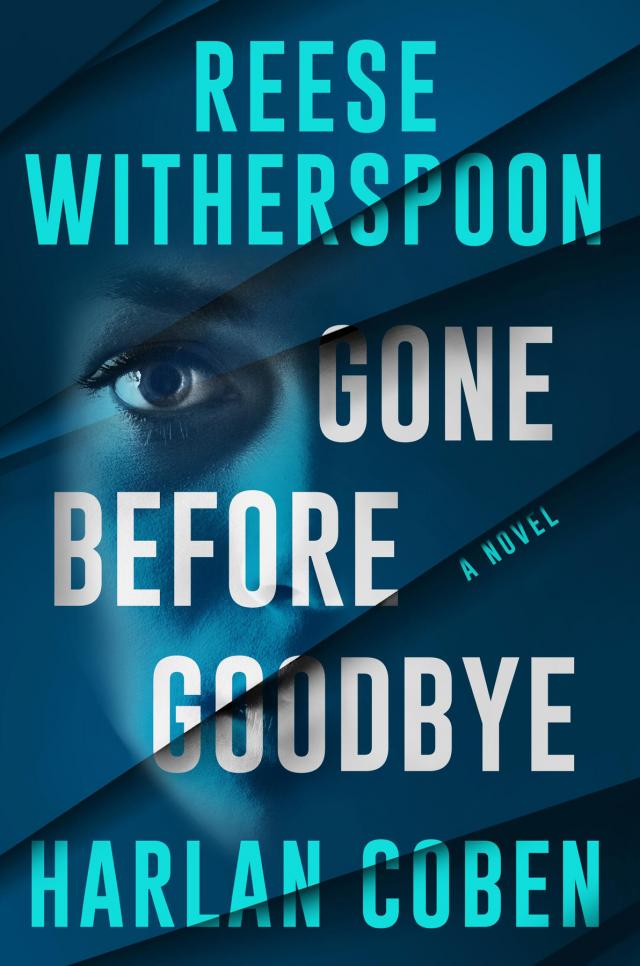
This book is a work of fiction. Names, characters, organizations, businesses, places, and incidents are the product of the authors’ imaginations or are used fictitiously. Any resemblance to actual events, locales, or persons, living or dead, is coincidental.
Copyright © 2025 by Harlan Coben and Reese Witherspoon
Cover design by Alan Dingman and Albert Tang
Cover images by Getty Images and Shutterstock
Cover copyright © 2025 by Hachette Book Group, Inc.
Hachette Book Group supports the right to free expression and the value of copyright. The purpose of copyright is to encourage writers and artists to produce the creative works that enrich our culture.
The scanning, uploading, and distribution of this book without permission is a theft of the authors’ intellectual property. If you would like permission to use material from the book (other than for review purposes), please contact permissions@hbgusa.com. Thank you for your support of the authors’ rights.
Grand Central Publishing
Hachette Book Group
1290 Avenue of the Americas, New York, NY 10104
grandcentralpublishing.com
@grandcentralpub
First Edition: October 2025
Grand Central Publishing is a division of Hachette Book Group, Inc. The Grand Central Publishing name and logo is a registered trademark of Hachette Book Group, Inc.
The publisher is not responsible for websites (or their content) that are not owned by the publisher.
The Hachette Speakers Bureau provides a wide range of authors for speaking events.
To find out more, go to hachettespeakersbureau.com or email HachetteSpeakers@hbgusa.com.
Grand Central Publishing books may be purchased in bulk for business, educational, or promotional use. For information, please contact your local bookseller or the Hachette Book Group Special Markets Department at special.markets@hbgusa.com.
Library of Congress Control Number: 2025940630
ISBN: 9781538774700 (hardcover), 9781538779361 (signed edition), 9781538779354 (special edition), 9781538774717 (ebook), 9781538775158 (large print trade paperback), 9781538775028 (international trade paperback)
E3-20250821-JV-NF-ORI
Contents
Cover
Title Page
Copyright
Dedication
Chapter One
Chapter Two
Chapter Three
Chapter Four
Chapter Five
Chapter Six
Chapter Seven
Chapter Eight
Chapter Nine
Chapter Ten
Chapter Eleven
Chapter Twelve
Chapter Thirteen
Chapter Fourteen
Chapter Fifteen
Chapter Sixteen
Chapter Seventeen
Chapter Eighteen
Chapter Nineteen
Chapter Twenty
Chapter Twenty-One
Chapter Twenty-Two
Chapter Twenty-Three
Chapter Twenty-Four
Chapter Twenty-Five
Chapter Twenty-Six
Epilogue
Acknowledgments for Gone Before Goodbye
Discover More
About the Authors
Also by Reese Witherspoon and Harlan Coben
To the many military doctors and nurses who have placed themselves in peril to help save every soul they could. Thank you for your courage and compassion.
Explore book giveaways, sneak peeks, deals, and more.
Tap here to learn more.
TriPoint, North Africa
I don’t hear the scream.
The nurse does. So does the anesthesiologist. I am too deep in the zone, the zone I can only enter in an operating theater, when a sternum is cracked open like this, and my hands are inside the boy’s chest.
This is my home, my office, my sanctuary. I am Zen here.
More screams. Gunfire. Helicopters. An explosion.
“Doctor?”
I hear the panic in her voice. But I don’t move. I don’t look away. My hands, the oldest medical instruments known to mankind, are inside the chest cavity, my index finger palpitating the pericardium. I am totally focused on that, only that. No music is playing. That’s weird in an operating room nowadays, I know, but I relish silence in this hallowed space, even when we’ve done heart transplants that last eight hours. It annoys my staff. They need the diversion, the entertainment, the distraction—and that’s the problem for me. I want no distractions. Both my bliss and my excellence come from that singular focus.
But the sounds invade.
Rapid gunfire. Another explosion. Louder screams.
Getting closer now.
“Doctor?” The voice is shaky now, panicked. Then, because I’m clearly not listening: “Marc?”
“Nothing we can do about it,” I say.
Which is hardly a comfort.
Trace and I arrived in Ghadames eight days ago. We flew into Diori Hamani airport, where we were met by a young woman Trace and I knew named Salima, if that is her real name, and a burly driver who never introduced himself or said a word to us. The four of us traveled northeast for two long days, sleeping in a safe house near Agadez and then tents under the stars in Bilma. We left the driver in northern Niger, traveling through the desert by night, until we met another car.
Salima and Trace have eyes for one another. I’m not surprised. Trace is the pure definition of a “playah.” Even surrounded by death… well, maybe that’s just it.
When you’re close to death, that’s when you feel your most alive.
Salima kept us moving north, straddling the border between Algeria and Libya. East of Djanet, a half dozen heavily armed militants stopped us. They were all young—teens, I would guess—and tweaking from some sort of potent narcotic. They were called the Child Army. Blood was in the air. Wide-eyed, they grabbed me first, then Trace. The young militants made me kneel.
They put a gun to the back of my skull.
I would be first to die. Trace would watch. Then it would be his turn.
I closed my eyes and pictured Maggie’s face and waited for someone to pull the trigger.
The Child Army didn’t shoot us, obviously. Salima, who speaks at least four languages fluently, fell to her knees and talked fast. I don’t know exactly what she said—Salima wouldn’t tell us—but the child soldiers moved on.
More screams. More gunfire. Closer now. I try to hurry.
I didn’t tell Maggie the truth about how risky this last mission was on so many levels, not because I thought she would worry but because of the promises we had made to one another—she would have insisted on coming.
That’s how Maggie and I are built.
You wonder what makes a hero? There’s altruism, sure. But there’s also ego and recklessness and thrill-seeking.
We don’t fear danger. We fear normalcy.
Trace, wearing a surgical mask, pokes his head in. “Marc?”
“How much time do we have?”
“They’ve burned down the north side of the camp. Dozens are already dead. Salima is moving everyone out.”
I look at the nurse and the anesthesiologist. “Go,” I tell them.
“You can’t save him,” the nurse says to me, as she pulls away. “Even if you finish in time, even if he could somehow survive the surgery, they won’t let him live.”
I don’t know who “they” are. I don’t know the justifications, the origins, the history, the factions, the tribes, the warlords, the fanatics, the extremists, the innocents. I don’t know who the good guys or the bad guys are, why these people are in this refugee camp, what side is the oppressor or what side is the oppressed. It’s not that I’m not political, but for Maggie and Trace and me, it can’t matter.
I continue to work on my patient, a fifteen-year-old boy named Izil. I hope everyone I treat is an innocent, but I doubt it. It just can’t be our job to figure out who is on what side. Our job, not to get too grandiose, is to save their lives. They say, “Kill them all and let God sort them out.” It’s close to the opposite for us—save them all and let God… You get the drift.
I’m not being “both sides” here. I’m being “no sides.”
“Everyone out,” I say. “I want the room cleared.”
“Marc,” Trace says.
Our eyes meet over the surgical masks. Trace and I have known each other a long time. We did our surgical residency together. We have provided medical aid in humanitarian crises like this one across the globe. He is one of the most gifted cardiothoracic surgeons in the world.
Trace says, “I can help you close.”
“I got it.”
“We’ll wait.”
I shake my head, but he knows.
“Leave me an ambulance,” I say. “They won’t shoot up an ambulance.”
We both know this is no longer true, not in today’s world.
We should never have come. I shouldn’t have allowed it. I should have taken care of business and said goodbye and flown home.
I should be with Maggie.
I don’t say goodbye to Trace. He doesn’t say goodbye to me.
But this will be the last time I ever see him.
Seconds later, it’s only Izil and me in the room. I hurry, stupidly thinking I can make it. I am closing the boy’s chest when the doors burst open.
Armed militants storm in. I don’t know how many. They all have that crazed look in their eyes. I have see n that look before. Too many times. I saw it just a few days ago east of Djanet.
And sometimes I see it when I look in the mirror.
I close my eyes and picture Maggie’s face and wait for someone to pull the trigger.
CHAPTER ONE
Baltimore
ONE YEAR LATER
Maggie McCabe shouldn’t have come.
“Where are you?” Marc asks.
Maggie looks down at her husband’s face on the phone screen. “I told you.”
“Johns Hopkins?”
“Yes.”
“You on the quad?”
“Yes.”
“Where we met,” he says. “Orientation week of medical school. You remember?”
“Of course I remember,” Maggie says.
“I knew you were the one the moment I saw you.”
“Don’t make me gag.”
“I’m trying to boost you up.”
“It’s not working.”
“So what are you doing?”
Maggie flashes back to her first time on campus, all dewy-eyed and fresh-faced, as they say, full of hope and optimism and vim and vigor and all that nonsense. How naive. But then again, when your world falls apart—when you had everything and even understood and appreciated that you had everything and never took any of it for granted, not for a second, knew how lucky you were, and because you were so grateful, you somehow naively expected karma to reward you, or at least leave you be—you learn in the hardest of ways that fate is fickle, that life is chaos and no one gets out unscathed, that you can have everything one moment and have it all snatched away so easily…
“I’m throwing myself a little pity party,” she says.
“Stop. Go inside.”
“I want to go home.”
Marc frowns. “Don’t do that.”
“I’m not ready.”
“Yes, you are. Please? I want you to go. Do it for me.”
“Seriously?”
She looks up at the white cupola sitting atop Shriver Hall and blinks back a tear. An hour ago, she’d reluctantly put on a long-sleeve, navy blue, mid-calf-length formal dress. Not black. That would be too morbid. Navy seems like a safe bet—respectful of the occasion, but not trying to pull attention. In fact, she would rather melt into the floor than be anywhere in the vicinity of conspicuous on this particular night.
“Maggie?”
“I’m here.”
“Go inside. It would mean a lot to me. And your mother.”
“Wow,” Maggie says.
“What?”
“You never used to be this sentimental and manipulative.”
“Sure, I was,” Marc says.
Her voice is soft. “Sure, you were.” Then: “This sucks.”
“What?”
“Nothing, never mind.”
Twenty-two years ago, Maggie had graduated from these esteemed halls with every kind of honor they could bestow upon a medical student. She did her surgical residency at NewYork-Presbyterian, became a renowned reconstructive surgeon, served her country on the front lines in Afghanistan and the Middle East as a Field Surgeon 62B, married Marc, moved with him overseas to heal the underserved.
Marc’s voice from the phone: “Hello?”
“They’ll stare.”
“Of course they’ll stare,” he says. “You’re smoking hot.”
Maggie frowns. Some things never change.
“Go,” he says again.
She nods because he’s right and disconnects the app. Her phone case features two M&M candy characters, the Yellow M&M guy holding flowers to the Green M&M woman. Marc had given her the phone case as a half-serious/half-gag gift. Maggie & Marc. M&M. Marc bought M&M pillowcases. He bought M&M throw pillows. Marc thought it was adorable. Maggie thought it was pure cringe, which, of course, only encouraged him.
“Maggie?”
She startles at the sound of the voice and drops her phone in her purse. She turns and sees her old classmate Larry Magid, a dermatologist. The last time she’d seen Larry was five years ago in Nepal when he’d flown over to help her and Marc with an outbreak of Hansen’s disease, more commonly known as leprosy. They both ended up working out of the same hospital, even working out of the same floor, so he was intimately familiar with her current woes.
“Hey, Larry.”
He squirms. “Are you here for… I mean, uh, are you going…?” He semi-gestures toward the building.
“Sure,” Maggie says.
“Oh.”
“What?”
“Nothing.”
“They’ve named a scholarship in my mother’s memory,” she says.
“Right, I heard.”
“So that’s why I’m here.”
“Right. Gotta go. Mickey will be waiting for me.”
He hurries away as though, Maggie is tempted to shout out loud, she has leprosy. She wants to grab her phone, get Marc on again, and whine, “See what I mean?” but the phone is already in her bag and now she’s a little annoyed so to hell with it.
Maggie hesitantly trudges up the same steps she’d enthusiastically marched up to get her diploma two decades ago. The banner pinned above the door reads:
SCHOLARSHIP RECOGNITION EVENT
WELCOME BACK, JOHNS HOPKINS ALUMS!
The hall is buzzing. The music, a string quartet of current students, plays Mozart’s String Quartet No. 19 in C Major. Her hands at her sides, Maggie can’t help half consciously moving her fingers along with the music, as though there’s a violin in her hand. There are something like five hundred people—physicians and scholarship winners—milling about the esteemed hall. You know it’s a medical event because too many men are wearing bow ties. That’s a big look with doctors, mostly because regular ties hang loosely and get in the way during exams. Her father, an army surgeon who also saw combat as a Field Surgeon 62B—in his case, in Vietnam—always wore bright flowery ones. He claimed it let his patients see him as a bit goofy and thus comfortingly human.
When Maggie finally enters the grand hall, the room doesn’t stop or go silent or any of that, but there is definitely some hesitation in the air.
She stands there for a few long seconds, feeling beyond awkward, as though her hands were suddenly too big. Her face flushes. Why had she come? She looks for a friendly or at least familiar face, but the only one she sees is from the poster on an easel up on the dais.
Mom.
God, her mother had been beautiful.
The photo they’d blown up had been taken for the school directory five years ago, Mom’s last year teaching here. This was right before the diagnosis, something she hid from her two daughters for the next three years, until she finally called Maggie at their new clinic in Ghana and said, “I’m going to tell you something if you promise you won’t come home when I do. Your work is too important.” So Maggie promised and Mom told her and they both cried but Maggie kept her promise until her sister Sharon called and said, “It’s almost time.” Then Maggie kissed Marc goodbye at Dubai International, told him to finish up and come home soon, and flew home to sit vigil with Sharon for her mother’s final days.
Maggie locks eyes with her poster-mother because right now it is the only friendly face in the room. She holds her head high as she walks toward the dais. She hopes that it’s narcissism on her part, but conversations seem to halt or at least quiet as she passes. Murmurs ensue, or again maybe that’s just in her head. Still she does not look away, does not let herself use her peripheral vision. Her eyes stay on her mother’s, but she feels the stares now.
A familiar figure steps in her way and says, “Surprised you’d show your face.”
It’s Steve Schipner, aka Sleazy Steve, another reconstructive surgeon like herself and yet hopefully nothing like herself. He has over a million followers on an Instagram account where he displays “before and after” photos and calls himself the Boob Whisperer. She and Steve graduated in the same class and did a surgical rotation together at NewYork-Presbyterian/Columbia University under the tutelage of Dr. Evan Barlow. Steve is that guy who can’t say good morning without making it sound like a sleazy double entendre, ergo the nickname. He lives in Dubai now and specializes in, to quote his profile bio, “ambitious influencers looking to enhance their social media hits, their lives—and their cup size.”
“Yeah, well, I’m full of surprises,” Maggie says.
He looks around, notices the hostile stares. “At least I’m happy to see you.”