The Waterborn, page 46


“Always so sad,” she said, rising from the water before him, “even from the first.”
She looked older, too. Her skin still dazzled whiter than the snow on the hills around them, her eyes shone purest amber, and yet in the jet of her long hair lay wisps of silver, lines etched on a face that before had been smoothest ivory. She remained the loveliest woman Perkar had ever seen; the sight of her caught at his breath.
“Goddess,” he said.
“The same, but not the same,” she answered. “Farther downstream, more children. But I know you, Perkar, I remember your arms and kisses, your sweet silly promises.”
She stepped up and out of the water, stretched a tapered finger out to stroke his chin. Her touch was warm, despite the chill wind. Her unclothed flesh was raised in goosebumps, but other than that she showed no discomfort.
“What have they done to you, my sweet thing?” she asked, moving her hand down, to the thick scar on his throat where a lance had passed through his neck; across his coat, beneath which hidden scars bunched like a nest of white caterpillars.
“I did it to myself,” he muttered.
“You did it for me,” she corrected.
“Yes, at least I thought I did.”
She moved to embrace him, though his thick coat must have been rough against her. She pressed her cheek against his, and it was so warm it was nearly hot. “I tried to stop you,” she reminded him. She stepped back, and he stood there, not knowing at all what to do.
“I tried to stop you,” she repeated.
He shrugged uncomfortably. “I loved you. I did foolish things.”
She nodded. “I have heard rumors, flying down from the mountain. He sang of you, where he eats me. Do you feel more a man now, Perkar? Do you feel more a match for a goddess?”
“No,” he said, his voice small but firm. “No, you were always right.”
“What do you want of me now?” she demanded, and her voice was a bit sharp. She had always been like that, hard and soft, comforting and angry, all at once.
“I only want for you to forgive me.”
“Forgive you?” she asked, as if she were repeating words in a foreign language.
“Forgive me for killing in your name. Forgive me for…” He searched his brain, but despite his rehearsal, he could not find the words.
“Forgive you,” she repeated. She shook her head slowly. “So many things men have done for me, over the years—so many stupid things. At first, you know, I did not try to stop them. They amused me. But the blood of this girl, this form you see, oh, it sleeps for long, but sometimes I am almost Human. I feel sorrow, feel ashamed, just as you might—though I hate it. And I feel love, Perkar. You can hurt me, I think. I was always afraid you would hurt yourself and add to my sorrow. And so you have.”
“But I am alive,” he told her. “Here I am.”
“But so terribly hurt,” she said, “so scarred. Can I forgive you for that, for scarring my sweet Perkar?” She shook her head, pursed her lips. “Take whatever you want,” she said at last. “If you want my forgiveness, take that.”
“You have to give it to me, I think,” he replied.
She spread her arms wide, gesturing up and down the river, spreading her naked body before him. “Here is all that I am,” she answered. “Upstream, downstream—anything in me is yours. If you can find forgiveness here, take it—I give it to you. But I cannot find it for you.”
He nodded, unsure what to say next, and she gazed at him long and thoughtfully before she said anything else. Then, with a little sigh, she approached him again and took his hand. Together they gazed into the water. “There are some things I can find for you,” she confided. “Things that have come downstream to me.”
“Yes?” he said hopefully.
“From your father’s people. See, there—and there.” She gestured at the flowing water, but he saw nothing noteworthy.
“What?”
“Blood,” she said, gripping his hand tighter. “It is their blood.”
Perkar did not believe that any news could stun him now, and yet as he walked back up to where Ngangata waited, he felt numb, and not from the cold. The goddess had talked for some time, explained as much as she knew, then left him with a faint kiss on the lips to remind him of his first lesson in passion, so long ago. But even the kiss of a goddess dimmed next to what she had told him.
“Well?” Ngangata inquired, rising from his haunches and shouldering his laminated bone bow.
“War,” Perkar mumbled. “My people are at war with the Mang.”
“Your people are always at war with the Mang,” Ngangata replied, though rather tentatively.
“No. The Mang have always raided us, and we have always repelled them. But now my people have invaded the Ekasagata Valley and established damakutat to defend what they have taken.”
“Why haven’t Brother Horse and his people heard of this?”
“Perhaps they have,” Perkar said darkly.
“No, I don’t believe that,” Ngangata disagreed.
“Well, maybe they have heard rumors but assume it is the same sort of raiding that has always gone on. The border with my people is many hundreds of leagues away.”
“True. And the Mang are not all one people. What troubles the Mang of the western plains need not have any effect on the Mang of the South.”
“Except,” Perkar noted, “in times of war. Their confederacy exists for mutual protection and mutual raiding.”
Ngangata shook his head unhappily. “This means trouble for us. Brother Horse may find it difficult to treat us with hospitality when the news arrives.”
“Ngangata!” Perkar cried. “Hospitality! My people are dying, and it is my fault. You know that, you were there. The Forest Lord had agreed to give our king more land. Because of me, that offer was withdrawn and will never be made again. Now it seems, unable to expand west, my people have chosen to move into the Mang borderlands. My fault, all of it.”
Ngangata regarded him for a moment. “Apad and Eruka—” he began.
“Are dead,” Perkar finished. “I am the only one left to shoulder the blame. In any event, Apad and Eruka would have lacked the courage to do anything without me.”
Ngangata’s face was grim. “I know that,” he replied. “I agree; much of the blame for this lies with you. But if I understand Piraku, you should be thinking of something to do about it, rather than blaming yourself over and over again—rather than telling me about your guilt yet again.”
Perkar clenched his fist and shook it in Ngangata’s face. “And just what is it I can do?” he shouted. “How is it that I can set this right, resurrect those already dead, my father perhaps among them?”
Ngangata watched the fist impassively. “If you don’t intend to hit me,” he growled, “unclench that.”
For one awful, helpless moment, Perkar did want to hit the half man. But at last he let the fist drop, uncurling it. He was opening his mouth to apologize when his head yanked around of its own volition—or rather, Harka’s.
“In the trees,” he suddenly whispered, just as an arrow struck him in the shoulder. He gasped at the impact, surprised that there was no more pain. He had a confused glimpse of Ngangata in motion, heard the dull flat whine of his bow.
“Watch out!” Harka warned, as Perkar fumbled him out. The blade trailed out into the light, a sliver of aquamarine ice.
As he stumbled back to his feet, his gaze was again drawn to the trees; another shaft whirred from them, though not in his direction. Ngangata—the likely target—was nowhere to be seen. Of more immediate concern were the two horsemen churning through the snow toward him, both mounted on striped Mang horses. The men were Mang, too, multiple braids indicating that they were warriors of some rank, the red-dyed horsehair plumes on their leather helmets a sign that they were at war. Perkar had never seen Mang at war until now. They looked like wolves.
They bore down on him, one with a lance, the second with a short, curved sword. Perkar whooped at them, his father’s battle cry, and waited, Harka held steady with both hands. The arrow, he now guessed, had not penetrated more deeply than his outer flesh, halted by the thick coat of elk hide and the light lacquered armor beneath.
He waited until they were nearly on him, and then suddenly darted to his right; both horsemen swerved, still hoping to catch him between them, but Perkar sank to one knee and cut through both front legs of the nearest horse. The animal shrieked piteously and pitched past him, into the snow, the rider sprawling over his mount’s neck.
An absolute master of his steed, the second Mang pulled in tight, but had to strike awkwardly to reach Perkar. Perkar avoided the blow entirely, stepped up, and slashed deeply into the warrior’s leg. The man uttered no sound, but his face registered a vast surprise as the blade sliced through the heavy lacquered layers of wood, bone, and leather that protected his thigh.
Perkar turned back to his first opponent, who was rising to his feet, murder on his face. Unfortunately for him, his lance was too long to bring around effectively, and though he managed to graze Perkar’s shoulder, he soon held only a wooden pole, the steel blade severed from it by a quick blow from Harka. The Mang shot one glance at his mutilated steed, snarled, and hurled himself weaponless at Perkar, though a knife flapped against his hip. Harka took him in the heart, yet the man remained on his feet for a few instants, the purest look of hatred Perkar had ever seen only reluctantly replaced by death’s cold gaze.
The second man was lying on his horse’s neck, teeth clenched; as Perkar watched, the blade dropped from his hand into the blood-spattered snow. The horse itself pranced nervously, as if unused to having no direction.
Another shaft sped past Perkar, but almost at the same moment, he heard a sharp cry from the direction of the trees. He crouched behind the quivering body of the downed horse, waiting for more attacks, but none came, and Harka remained still and quiet.
After a moment, Ngangata emerged, cautiously, from a clump of trees. “Are there more?” he asked, eyes nervously picking through the valley.
“I don’t think so. Harka?”
“No more. But there is someone else.”
“What?” Perkar turned to Ngangata. “Harka says no more Mang, but there is someone else.”
Ngangata nodded. “Someone killed the archer.”
“Ah. I thought you did that.”
“No,” Ngangata denied.
Perkar drew a deep breath. “Come out, if you are a friend. If not, ride on.”
There was a pause, and then a stirring in the trees. The figure of a man emerged and began walking leisurely toward them.
“That,” Harka informed him, “is not Human.”
Buy The Blackgod Now!
ACKNOWLEDGMENTS
Ken Carleton, Veronica Chapman, Tom Deitz, Pat Duffy, Nell Keyes, Charles Hudson, and Nancy Ridout Landrum
About the Author
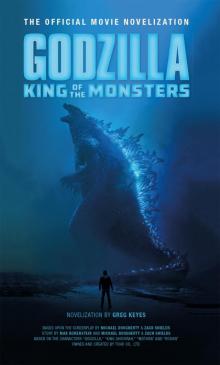
Greg Keyes was born in 1963 in Meridian, Mississippi. When his father took a job on the Navajo reservation in Arizona, Keyes was exposed at an early age to the cultures and stories of the Native Southwest, which would continue to influence him for years to come. He earned a bachelor’s degree in anthropology from Mississippi State University and a master’s degree from the University of Georgia. While pursuing a PhD at UGA, he wrote several novels, including The Waterborn and its sequel, The Blackgod. He followed these with the Age of Unreason books, the epic fantasy series Kingdoms of Thorn and Bone, and tie-in novels for numerous franchises, including Star Wars, Babylon 5, the Elder Scrolls, and Planet of the Apes. Keyes lives and works in Savannah, Georgia, with his wife, Nell; son, Archer; and daughter, Nellah.
All rights reserved, including without limitation the right to reproduce this book or any portion thereof in any form or by any means, whether electronic or mechanical, now known or hereinafter invented, without the express written permission of the publisher.
This is a work of fiction. Names, characters, places, events, and incidents either are the product of the author’s imagination or are used fictitiously. Any resemblance to actual persons, living or dead, businesses, companies, events, or locales is entirely coincidental.
Copyright © 1996 by J. Gregory Keyes
Cover design by Kat Lee
978-1-5040-0209-7
This edition published in 2015 by Open Road Integrated Media, Inc.
345 Hudson Street
New York, NY 10014
www.openroadmedia.com
EARLY BIRD BOOKS
FRESH EBOOK DEALS, DELIVERED DAILY
BE THE FIRST TO KNOW ABOUT
FREE AND DISCOUNTED EBOOKS
NEW DEALS HATCH EVERY DAY
CHOSEN OF THE CHANGELING EBOOKS
FROM OPEN ROAD MEDIA
Available wherever ebooks are sold
Open Road Integrated Media is a digital publisher and multimedia content company. Open Road creates connections between authors and their audiences by marketing its ebooks through a new proprietary online platform, which uses premium video content and social media.
Videos, Archival Documents, and New Releases
Sign up for the Open Road Media newsletter and get news delivered straight to your inbox.
Sign up now at
www.openroadmedia.com/newsletters
FIND OUT MORE AT
WWW.OPENROADMEDIA.COM
FOLLOW US:
@openroadmedia and
Facebook.com/OpenRoadMedia
Greg Keyes, The Waterborn